One thing I’ve always thought Goodreads was missing was a visualisation of the books you’ve read - specifically as a timeline. So I spent last weekend adding that very feature to my own website as a three-track scrollable timeline, and moved my reading history and reviews there.
Quite pleased with how it turned out. Getting the algorithm for positioning the books correctly was a little tricky, to avoid them bunching up in the wrong places, but I think it landed in a good place.
It’s a nice way to record brief thoughts and reflections on books, without needing to write a whole formal blog post about them.
I’ve also experimented with adding a markdown mode, for agents to use with the right HTTP header, though I’m dubious of the use here as they almost never try to do so.
https://t.co/tpzKIGXBgL
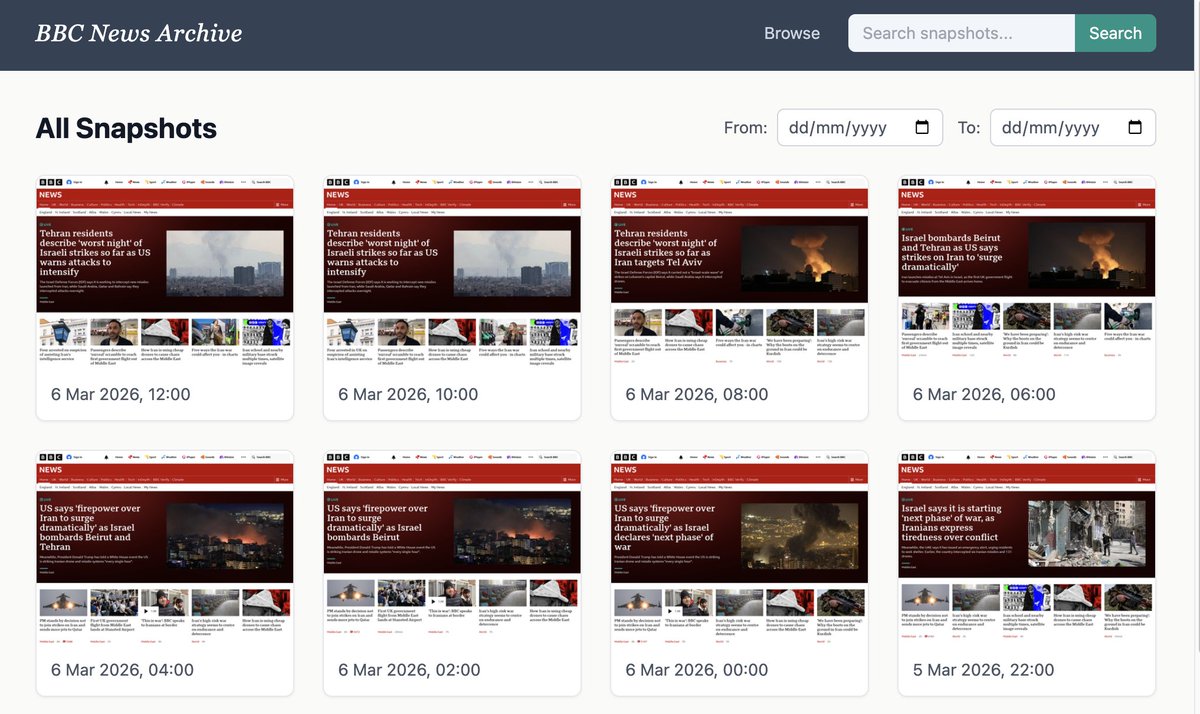
I've always wished this existed, and now it does: https://t.co/y1Rvx9xFcn. See what the front page of BBC news looked like at any point in the past* and search for specific headlines.
(*'any point in the past' meaning any time since the archiving started, which is currently yesterday.)
The most interesting problem was schema management - the API has ~100 searchable attributes, each with different valid operators. You can't hard-code them without instantly being out of date, but fetching on import adds latency. Ended up with a cached auto-update approach.
It's really about API design - hiding complexity from users who don't need it while still letting power users access everything. Three layers: simple one-liner search, node helper functions, or full control over the query object.
@adamwathan I would love this, but I worry that it would create selective pressure for hosts to really disguise ad reads as regular content, to fool the AI.
Tiktok has been given a temporary reprieve - if you'd like to use it to archive your liked and saved videos before the end, you may find this useful.
https://t.co/9Q7LJSp7e0