✅ Fix leaks in your home instantly with this waterproof insulating sealant! ✅ After application, it will form a waterproof protective coating to prevent leakage!
➤ https://t.co/qWZPrtVco1
The most forgotten part of fitness:
Flexibility.
I’ve created the perfect stretch routine.
Steal my easy 10-minute routine to improve your body's mobility (bookmark this):
The smartest scientist in the game:
Andrew Huberman.
I’ve listened to 100+ hours of his podcast and interviews.
Here are 11 lessons you can use to level up your life:
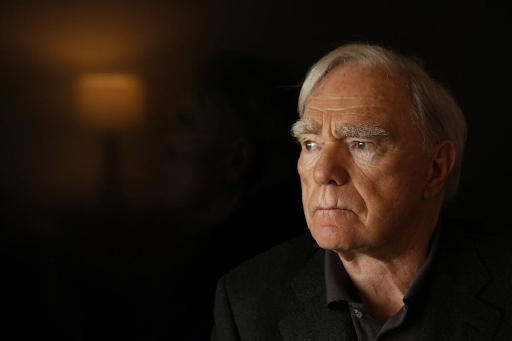
Robert McKee may be the most interesting Storyteller alive.
He taught screenwriting to:
• Julia Roberts
• Russell Brand
• Peter Jackson
And re-designed the marketing of:
• HP
• Nike
• Microsoft
To be centered around story.
So I spent hours devouring his books and classes. They're wonderful. The most interesting framework I learned from him is the 'Purpose-Told Story.'
In it, McKee lays out 8 stages to develop a great story. Here they are:
1. The 3 Targets
Before considering your story, you must understand your:
• Target audience – who you’re talking to
• Target need – what problem they have your product solves
• Target action – what you want them to do
Without defining those three, you’re guessing.
2. Subject Matter
The constraints and subjects that make up your story.
McKee breaks it into 3 components:
• Core value – the value your brand couldn’t exist without
• Protagonist – the Hero your audience empathizes with
• Setting – society, time, and place
3. The Inciting Incident
Launch the story by throwing the protagonist’s life out of whack.
McKee says, “fine storytellers seek out the negative side of life.”
Your goal is two-fold:
• Grab your audience’s attention
• Propel the protagonist to action
4. The Object of Desire
What does the protagonist feel they need to get their life back on track?
McKee says the most compelling objects come with the highest price tags.
5. First Action
The tactical choice the protagonist makes to re-balance their life.
This cannot succeed. That’d be too easy.
Introduce antagonists – anything keeping the protagonist from the Object of Desire.
6. The First Reaction
The reaction to the First Action should be different or more powerful than expected.
That gap in expectation vs. reality leaves space for the protagonist to gain insight.
Two key aspects:
• Turning points
• Violation of expectations
7. Crisis Choice
The moment of truth – the protagonist must take their earned insight and make a decision.
It’s now or never.
This final action must be more risky than the first. Raising stakes and all that.
The protagonist will either re-balance their life or remain in chaos.
8. Climactic Reaction
The protagonist gets their life back on track.
Neuroscientists find the brain’s response to a good story’s climax is a few seconds of heightened memory.
***
The brilliant part of McKee’s process?
It’s built outside in.
He starts with the end – your audience, their problem, and the desired action.
Then he figures out the beginning – the event to trigger the entire story.
From there, you build the narrative arc to connect beginning and end.
He says, "Purpose-told stories do far more than entertain. They trigger an action in the listener: a purchase, an investment, a job well done. A purpose-told story needs talent, imagination and time to conceive, create and hone to its audience."
Navy SEALs are some of the world's most elite warriors.
What's their secret weapon?
Breath control.
Here's how they train it (and how you can master it too):
Your left arm is sabotaging your swing! 🚩
🏌️♂️Allowing your left arm to pull across the body in the takeaway causes you to lose width, leading to poor downswing sequencing. Try this simple drill to fix it.
#golf#golfswing#golflesson