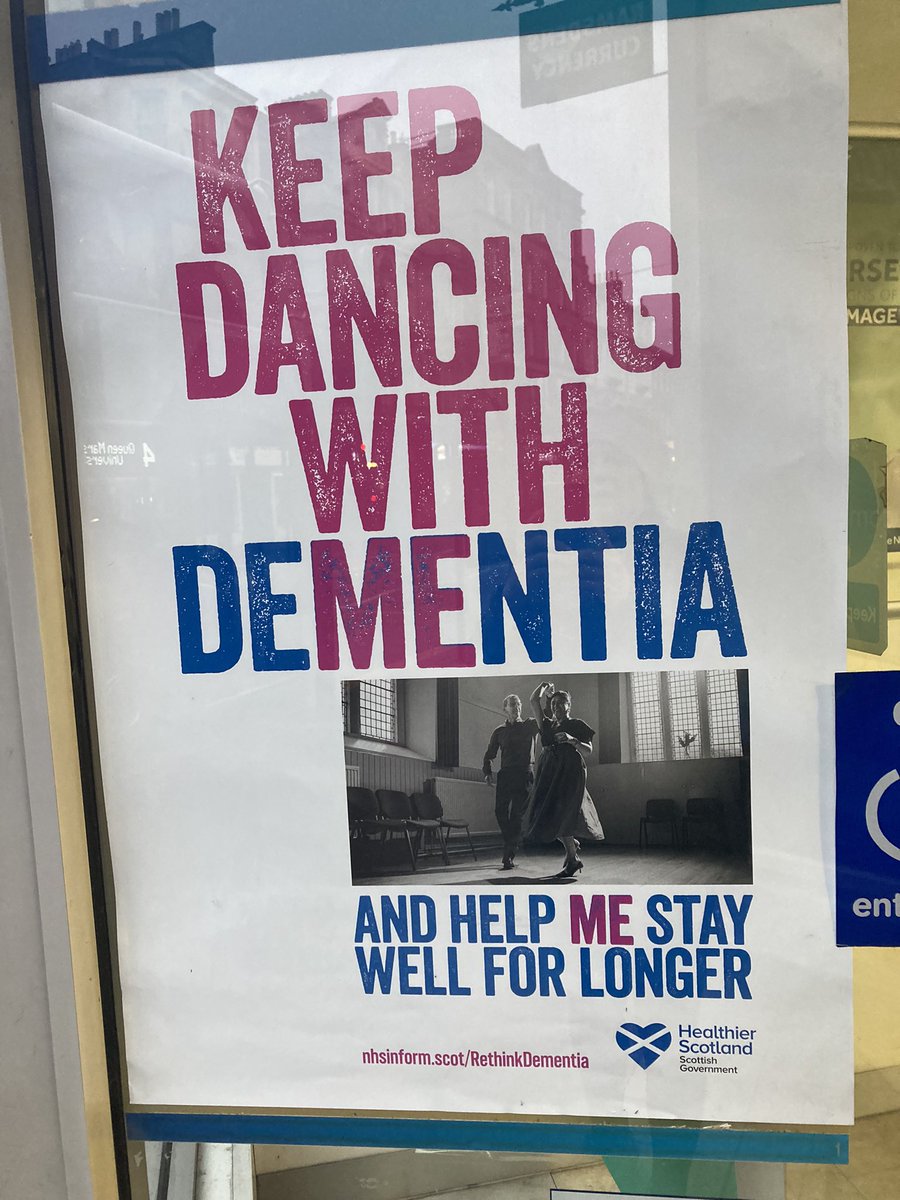
Are you a UK #SLT working with people with #dementia? Have you used #telehalth? We need your perspectives & wisdom on interventions and telehalth use with people with dementia. Participant information on 90-min focus groups & sign up here 👇🙏
https://t.co/BwdzBCJs7E
Please RT!
A year ago tomorrow I stood with Israel, sickened beyond belief by the actions of Hamas.
But today, like Amnesty UK, I realise it didn’t start a year ago, and that Israel’s murderous occupation over the Palestinians will only ever provoke armed resistance. It’s that simple.
To mark October 7, the BBC made a film about atrocities committed against 1,200 Israelis for a day one year ago called We Will Dance Again.
Al-Jazeera, meanwhile, has made a documentary, Investigating War Crimes in Gaza, showing the other side of the story: the relentless atrocities – revealed in footage few will ever have seen before – committed by Israel and its soldiers against 2.3 million Palestinians for a whole year. Those war crimes continue to this day – and are expanding.
Hamas's October 7 atrocities have been endlessly aired by the BBC and others (though it needs pointing out both that a portion of those atrocities have been inflated or invented, such as the non-existent 'beheaded babies' and 'mass rapes', and that the author of some of the October 7 atrocities was actually Israel, through its invocation of the so-called Hannibal directive to shoot and kill its own civilians rather than let them be taken hostage.)
Unless you spend lots of time on the margins of social media, you'll know almost nothing of Israel's far more numerous, far worse atrocities against the Palestinian people since October 7. Al Jazeera has given the victims of these war crimes a face, a back story, the chance to tell and show through video footage what really happened.
The BBC has used the British public's license fees to keep the issue of October 7 at the very forefront of our minds, just as Israel wishes, to justify Israeli war crimes.
And the same BBC has avoided showing the scale of extent of Israel's atrocities, and humanising its victims, because that would further fuel public opinion against these war crimes, as well as implicate not just Israeli leaders but also western leaders and media in what the World Court has ruled is a 'plausible genocide' in Gaza.
Everyone needs to watch this documentary to gain a proper understanding of the events of the past year –an understanding the BBC and other media have worked so hard to deny them: https://t.co/xqbdFolPLs
Thrilled to meet Claire today, our first adults' speech & language therapy #apprentice! I'm so excited that @nhs_scft are now able to support talented staff to achieve their SLT ambitions! Thank you @scft_learning for funding these opportunities! #SLT @scft_ahp @sheffielduni
“We’re going to do the Environment Agency’s job for it."
@NickFerrariLBC has challenged @Feargal_Sharkey to test the toxicity of England’s rivers.
First up is the River Avon in Bristol…
What can these five babies teach us about language development?
This week I’ve been exploring the stages of infant language acquisition.
And today, I’ve done something special: curated a compilation of five videos tracing the progression of infant vocalizations over time.
As you watch, note that each new clip represents a step forward in expressive language (and, obviously, age).
So let’s meet our five babies!
1) Baby Number One, shared to TT by natashatenen, illustrates a concept I first introduced yesterday: Cooing.
Note that her happy vocalizations are mostly extended vowel sounds. One of the first sounds babies make other than crying, cooing typically begins between 6 weeks and 3 months.
2) Now let’s meet Baby Number Two (shared to TT by putdewyy). He’s not far past the cooing stage… lots of vowel sounds are on display here…but he’s starting to make the transition to babbling.
Notice how his vowel sounds are now supplemented by some initial consonants. He adds some “buh” and “bah” sounds. Babbling typically begins with single syllables (often buh, muh, and/or duh) between 4-6 months. It’s a subtle but important step forward.
3) You’ll notice that Baby Number Three’s speech is marked by a real qualitative upgrade in terms of both clarity and content.
This little one, shared to TT by Vanessa.Fiorella, is demonstrating what is known as canonical babbling - which involves the repetition of a single syllable.
While Baby Two managed a “bah” sound, Baby Three is firing them off in rapid succession: “bah-bah-bah-bah.” Canonical babbling often begins around 6-7 months.
4) Baby Number Four takes the complexity up a notch further.
What you see in this video (shared to TT by sofiaandsofie1) is called variegated babbling - which combines multiple different syllable combinations. (“Duh-dah-di-di-di-dah”)
Do you notice how variegated babbling is starting to resemble conventional/adult speech more and more? It’s commonly exhibited around 10-12 moths.
5) And then, just for the fun of it, I’ve included Baby Number 5 - who became a viral sensation last winter for the amazing complexity of his variegated babbling. The video, shared to TT by Xxbur5, shows a little guy with a cold diaper and a linguistic capacity that - only months after first babbling - has progressed exponentially and will soon make way for his first words.
Isn’t it amazing to trace this progression? Grateful to all these creators for capturing videos so we can all learn from them together.
Hope you enjoyed this language development super cut!
Great new @RCSLT website section 'SLT voices' launched today. I co-wrote a short piece on fruitful NHS-independent #SLT collaboration, which can be especially beneficial for underserved populations like people living with #PPA & adults with #DLD
https://t.co/7I7Q5j2Q2R
What's happening in Gaza is totally unacceptable.
A school turned shelter for around 12,000 people was hit by Israeli airstrikes again today.
Six of our @UNRWA colleagues are among those killed.
These dramatic violations of international humanitarian law need to stop now.