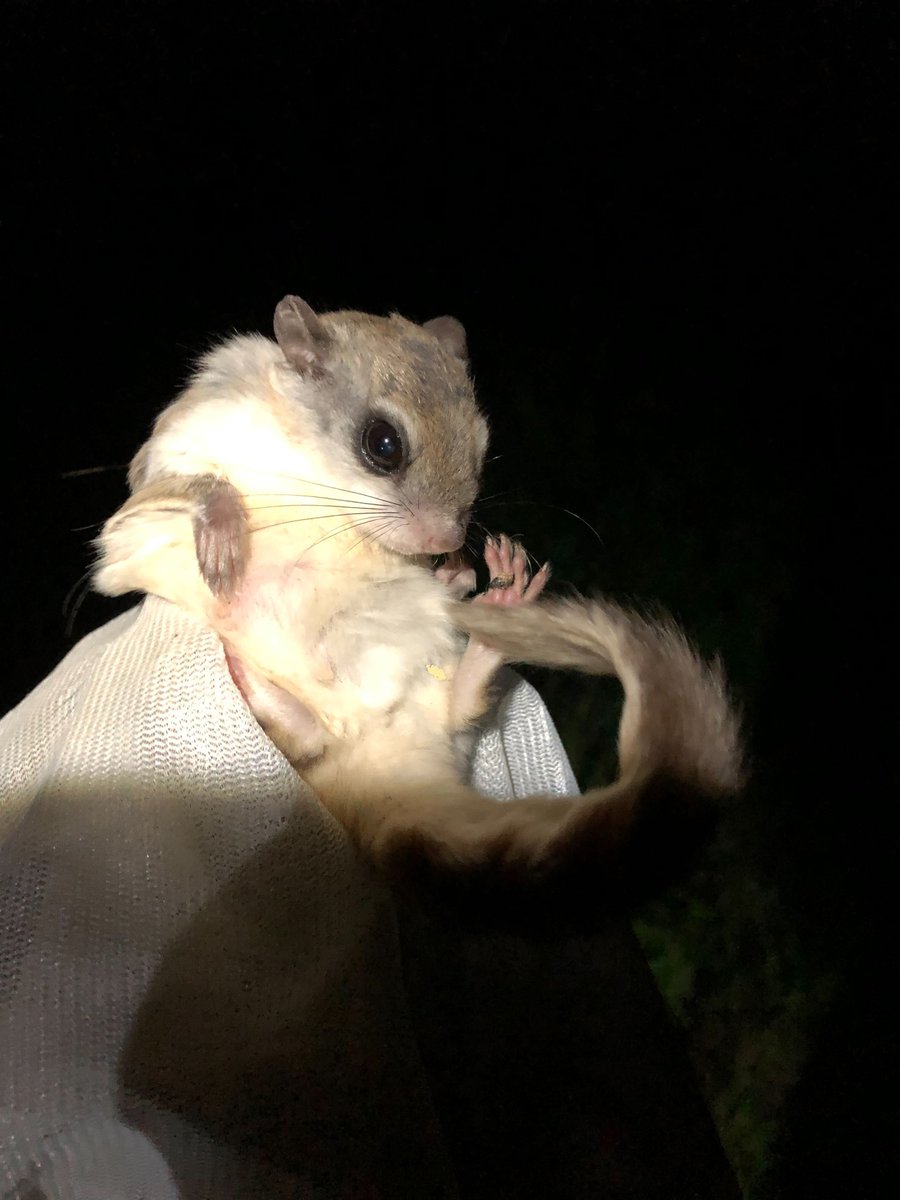
Southern flying squirrel near Kawartha Highlands
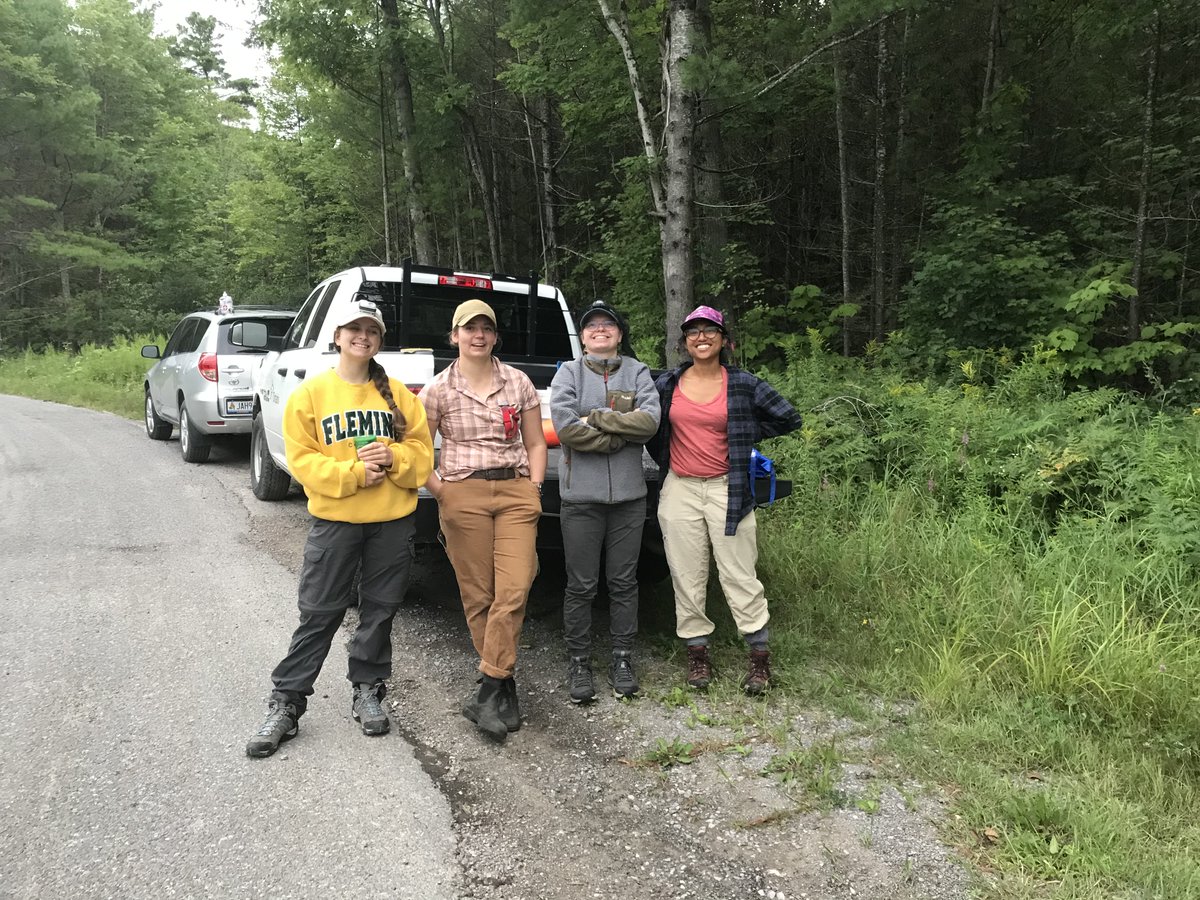
It’s been almost 5 months since I started my PhD fieldwork and I’m loving the nights that I get to spend with these gals & guys + our awesome research team! @KawarthaFlyer@RebekahPersad@liz_gallant@jeffcbowman
@KrisSabbi That would definitely help! The meta-analysis I'm working on includes all mammals, but about half the studies that fit my criteria ended up being on primates
🚨 Very excited to share my first co-first authored article with @arseneaurobar, @Teichroeb_Lab and Pascale Sicotte where we show that an individuals vulnerability to feeding competition impacts their motivation to learn efficient foraging techniques 🍌
https://t.co/GTELVewX81
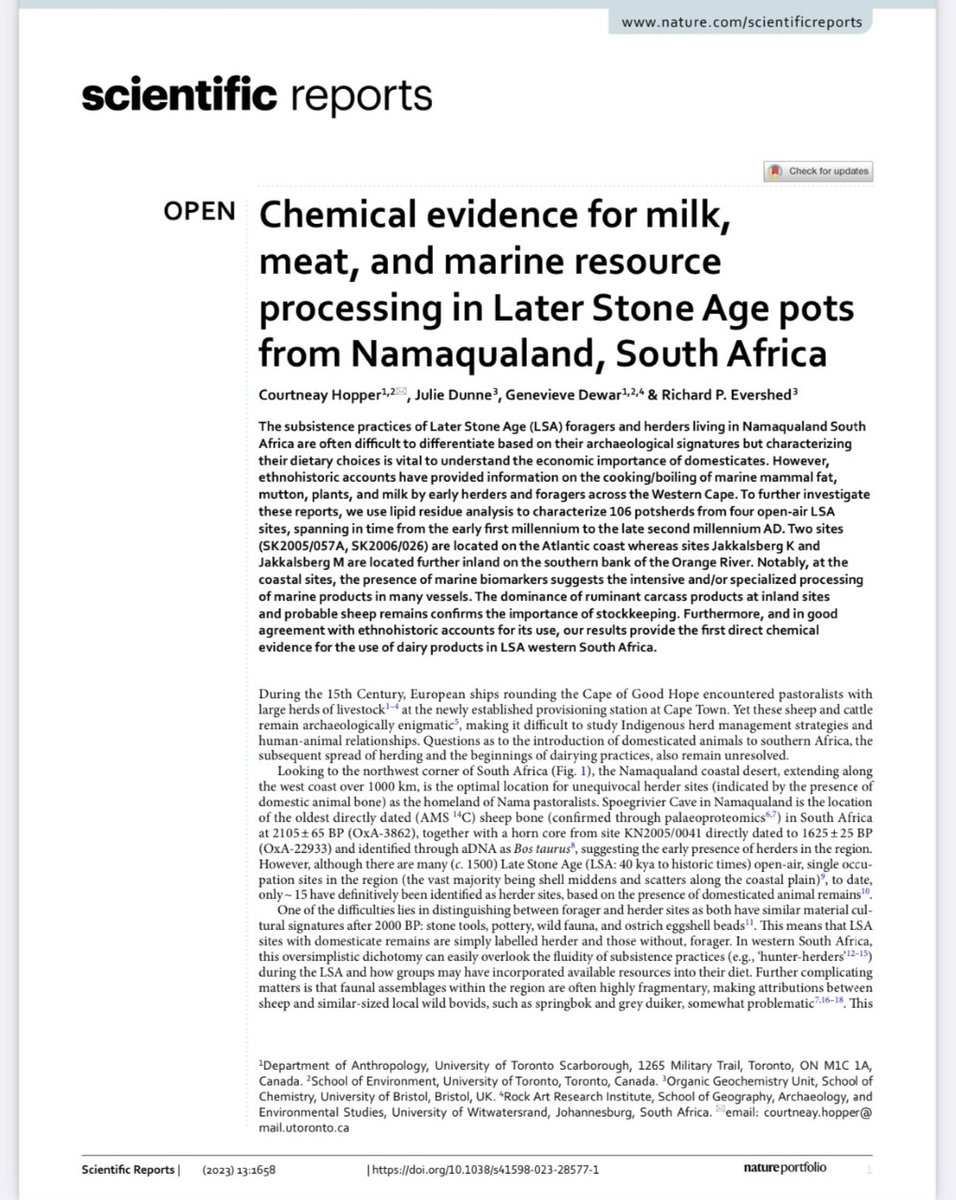
Excited that the 2nd paper from my PhD, with
@thepotlady, @ProfDewar, and Richard Evershed is out today #OpenAccess in @SciReports. Have a read if you're interested in lipids + pots and what they can say about LSA herder/forager diets in NW South Africa https://t.co/WqnNFMXpHO
Flying squirrels’ best known trait may be nocturnal glides through the treetops, but researchers are finding other startling adaptations that hint at how entire ecosystems are responding to climate change.
👉 https://t.co/IZTC13aAUi @sammstead@RebekahPersad@KawarthaFlyer
Privileged to assist with the Disney+ documentary "Super/Natural" which features @kawarthaflyers and is streaming starting today. The flying squirrels are in episode 1. (1/n)
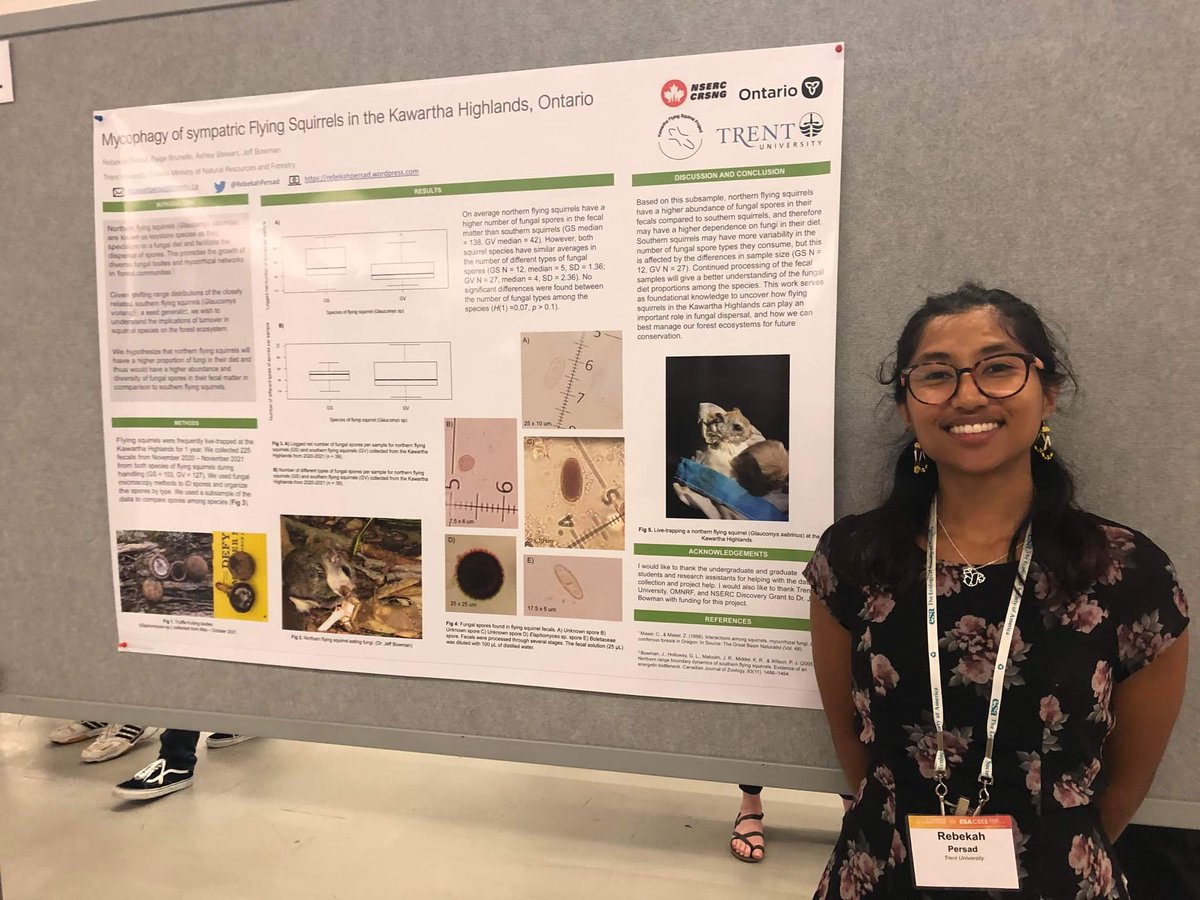
I was very excited to present my MSc work at #CSEE2022 on #flyingsquirrel#mycophagy! My team and I have worked so hard collecting data in the field last year, and now in the lab looking at #fungalspores. I'm excited to start analyzing this data to understand #diet!
Meet Brenda, the matriarch of our Kawartha Highlands study. First tagged as an adult in summer 2017, and still roaming her home range today, she is at least 6 yrs old, and features in at least 7 student theses. Photo by @sammstead.
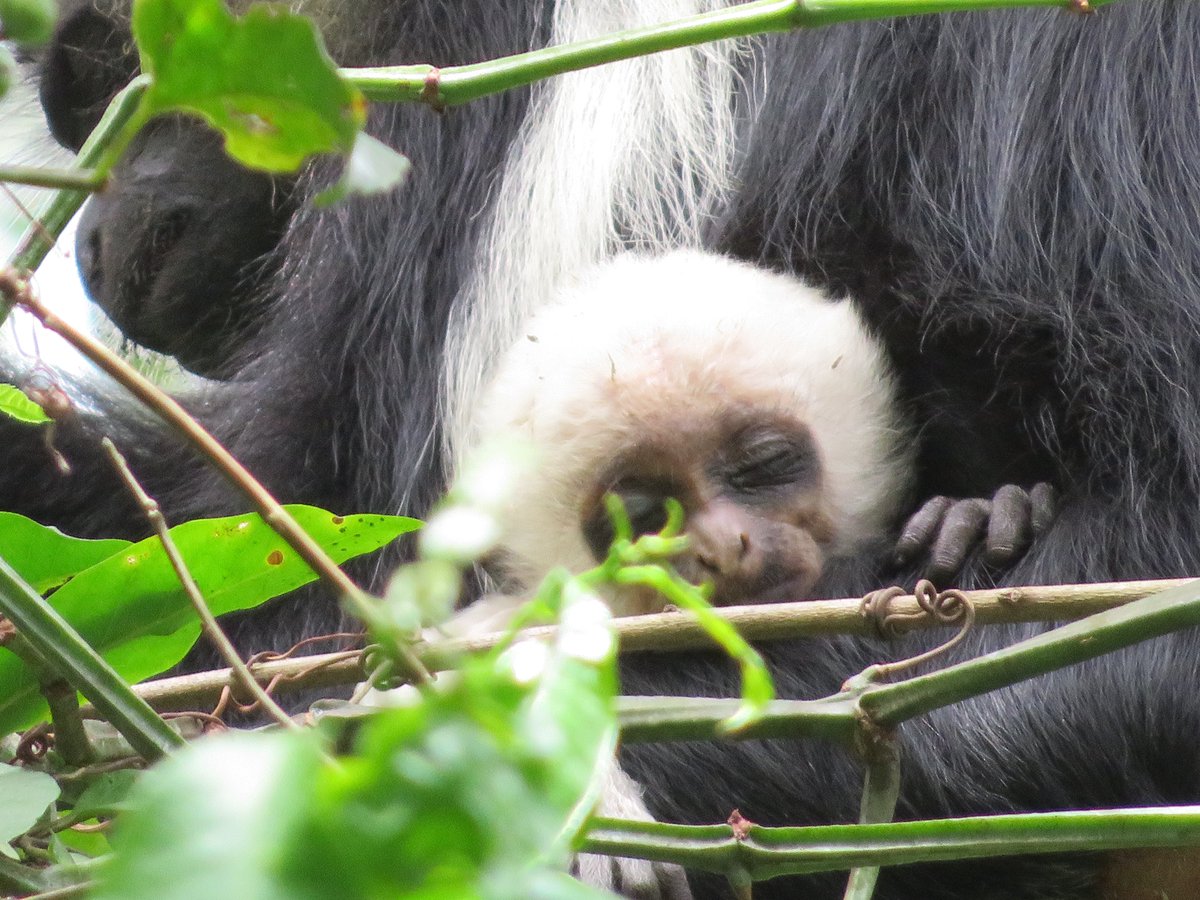
In the poster session tonight, @sammstead presents on the #Goldilocks effect we found in core unit size in Rwenzori Angolan #colobus (PS 48-135) and Emily Glotfelty presents on the consequences of increasing #folivore#density for tree survival in Ghana (PS 47-128)
Prof. Julie Teichroeb @Teichroeb_Lab with Samantha Stead @sammstead & Frances Adams @adamsfran96 co-published a paper, "Tight quarters: ranging and feeding competition in a Colobus angolensis ruwenzorii multilevel society occupying a fragmented habitat." https://t.co/xyvosoSSn6
Our new paper, reviewing the many ways social #status affects #hormones and #sleep quality and all the potential effects, which are vastly under studied! And our first collaboration with @_TheSHEL_
First shared lead co-authorship was a success! Check out our review on how social status could impact sleep in mammals💤🐭🐒🐺🐴
Congrats to co-authors Eve Smeltzer, @mfli18, @Primalprimate, @tamarakumpan, @Teichroeb_Lab
https://t.co/P2yReXmNM9