You can't beat Payoneer on features. You can only beat it by being the thing Fiverr lets you pick instead. Nobody's building for that. Everyone's building a nicer wallet.
https://t.co/97DoRRi8dr
@faizansiddiqi@FarhanGMallick@raftardotcom Real skill takes years with no feedback telling you it's working. Vanity metrics give you a hit in minutes. People choose easy because it's rational short term. The ones who build real skill just tolerate feeling invisible longer than everyone else can. Good to watch.
PVARA ran a public consultation on its virtual asset framework, open until July 2.
Was a similar process run with scholars and technical experts before the fatwa, or is that dialogue only starting now?
Process matters as much as outcome.
A broader question is about the process. Shouldn't these conversations happen before a major ruling is issued? Early engagement between scholars, regulators, and technical experts can help ensure the discussion reflects both the technology and the Shariah considerations.
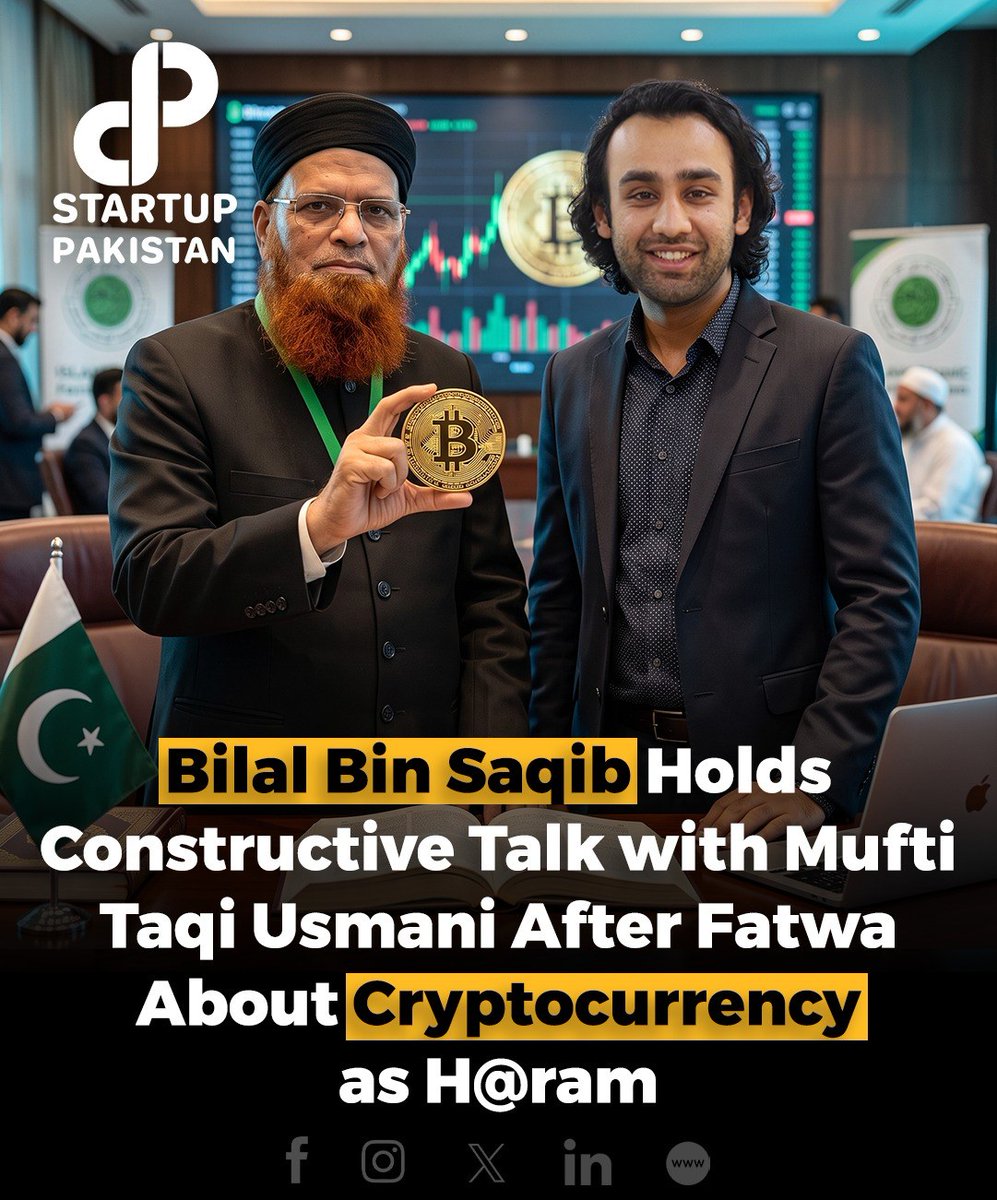
Bilal Bin Saqib, Chairman of the Pakistan Virtual Assets Regulatory Authority, met with Mufti Taqi Usmani following the scholar’s recent fatwa declaring cryp-tocurrency "h@ram" under Shariah.
Bilal described the discussion as constructive, saying both sides agreed on the importance of protecting Pakistanis from fr@ud, exploitation, and financial loss. He explained that blockchain, digital assets, stablecoins, and tokenized real-world assets should be evaluated through both technical analysis and comprehensive Shariah review.
Bilal also called for continued dialogue between religious scholars, regulators, and industry experts to help shape Pakistan’s approach to emerging financial technologies.
Disclaimer: This content is informational purposes only and based on available reports. Image is AI generated and just for reference
#BilalBinSaqib #MuftiTaqiUsmani #DigitalAssets #Blockchain #Pakistan #Shariah #Technology #Finance #Crypto
@Bilalbinsaqib One important question remains: Did this engagement begin only after the fatwa was issued, or were scholars, regulators, and technical experts already in discussion beforehand?
@UmairNauman_ I wonder if there were any discussions with industry experts before the fatwa was issued. Digital assets are a complex topic, so early dialogue is important.
@inspirdanalyst A scholar defines the boundary; crossing it is your choice. Just don't confuse a government regulatory approval with religious permission.
@faizurrehman113 I am waiting for someone who can come up and prove crypto is halal.
If Mufti declared it haram, there must be a legitimate counterargument.
This is bigger than crypto. It's a test of how Pakistan handles emerging technologies when regulation, public sentiment, and religious guidance intersect.
Leading Islamic scholar Mufti Muhammad Taqi Usmani has issued a fatwa declaring cryptocurrency trading impermissible (h@ram) under Islamic law.
The ruling, released in June 2026 and shared by scholars associated with Darul Uloom Karachi, states that cryptocurrencies, crypto tokens, and stablecoins such as USDT do not qualify as wealth or property in Islam. Consequently, buying, selling, or investing in these digital assets is considered impermissible.
The fatwa emphasizes that changing terms like virtual currency, token, or stablecoin does not alter the ruling. While not legally binding, the opinion may significantly influence Muslims’ views on cryptocurrency investments.
Disclaimer: This content is informational purposes only and based on available reports. Image is AI generated and just for reference
#Cryptocurrency #Bitcoin #Ethereum #IslamicFinance #MuftiTaqiUsmani #Fatwa #Blockchain #USDT #Pakistan #CryptoNews
Europe locked Binance out over compliance.
Pakistan’s regulator gave Binance preliminary NOC in Dec.
Now Mufti Taqi Usmani rules crypto isn’t even property under Shariah.. trading impermissible.
Same regulator, two contradictions. Which gets resolved first? #CryptoPakistan
@ZubairKhanPK PVARA now needs to clarify its position. A religious ruling and a regulatory framework are different, but silence will only create more confusion.
Taqi Usmani Declares Crypto Trading Haram.
Cryptocurrency is not considered wealth. Whether it is a crypto token or a stablecoin such as USDT, buying it is not permissible.
It further explains that different names, such as cryptocurrency, virtual currency, token, and stablecoin, all refer to the same category of digital assets. Therefore, the ruling applies equally to all of them.
Now what happens to Govt Crypto legalising authority?
We’ve seen strong freelancer export growth. But imagine how much bigger those numbers could be with smoother cross-border flows. Less friction and faster crediting aren’t nice-to-haves. They’re essential if we want to scale talent into real value creation.
Every bank and fintech promoting a freelancer account should answer one simple question: Which platforms can pay you directly into it, without an intermediary?
If the answer is "none," it's not really a gateway. It's just another account.
Every bank and fintech promoting a freelancer account should answer one simple question: Which platforms can pay you directly into it, without an intermediary?
If the answer is "none," it's not really a gateway. It's just another account.
Pakistan is restructuring its IT ministry to lead the digital economy at the exact moment its own numbers say the mandate has already moved elsewhere.
I've published a long-read making that case. And to be clear: this isn't opinion dressed up as analysis. Every figure is drawn from the World Bank's own Project Appraisal Document and Implementation Status Reports for the Digital Economy Enhancement Project (DEEP, P174402):
→ Two years in, roughly 7% of the $78M credit disbursed (as of the Feb 2026 status report)
→ Zero transactions recorded on the flagship business portal
→ NADRA is the only leg that has delivered its piece and beyond, it is the country's core digital identity capability. But sits under the Ministry of Interior, not MoITT
→ The 2025 Digital Nation Act already created the Pakistan Digital Authority to steer the agenda
The tender to "restructure MoITT into a modern digital governance ministry" lands in the middle of all that. The piece asks one plain question: restructure it to lead what, exactly?
Built entirely on public documents, the project's own appraisal and reporting. Read it here 👉
https://t.co/YF4lQQ33Fa
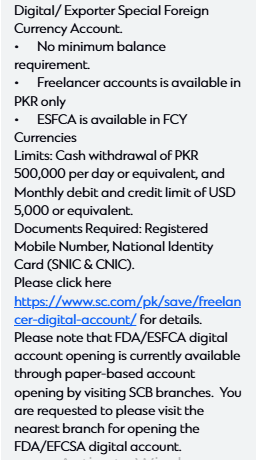
They called it a digital freelancer account.
Then asked freelancers to visit a branch and complete paperwork.
If I still have to stand in a queue, what's digital about it?