Dangote has done three things in the last 72 hours that the Nigerian government could not do in 60 years.
He cut aviation fuel to N1,650 per litre, slashed diesel and aviation fuel prices at ex-depot level, and filed a lawsuit to stop NNPC and private marketers from importing fuel that his refinery is already producing in surplus.
Now the oil marketers are crying monopoly.
Let us be honest about what monopoly means in this context. For 60 years, a cartel of fuel importers held Nigeria hostage, collecting $10 billion annually in subsidy, keeping state refineries deliberately broken, and charging Nigerians premium prices for refined crude they sent abroad themselves.
Nobody called that a monopoly. Nobody filed a lawsuit about market stability when ordinary Nigerians queued for fuel in an oil producing country for decades.
One private refinery starts cutting prices, increasing supply, and going to court to enforce a law that already says imports are only permitted when local supply is insufficient, and suddenly the marketers have discovered the language of competition and consumer protection.
The law is clear. The Petroleum Industry Act only permits fuel imports when domestic supply cannot meet demand. Dangote’s refinery is supplying over 90% of Nigeria’s daily petrol consumption. The legal basis for those import licences does not exist. He is not asking for a favour. He is asking for the law to be applied.
The marketers built their business model on Nigeria’s inability to refine its own oil. That inability has been solved by one man with private capital. Their business model is obsolete and their objection is not about market stability. It is about market access to a rent they no longer deserve.
"Suddenly, we're up there with them."
We're sharing the Artemis II crew's first images from space—keep following our 24/7 live feed for the latest mission updates: https://t.co/BezILihoZc
Today is my last day as a software engineer at Moniepoint.
It’s been 10 years since I started my career at this great company. 10 years of blood, sweat, tears, and triumph. What a journey it has been!!
BECOME A FOUNDER TODAY, YOU HAVE NO EXCUSES:
1. “i don’t have an idea” → reddit is a goldmine. people post problems they’d pay to solve every single day.
2. “i can’t code” → you don’t need to. AI tools like replit, bolt, lovable, and cursor let you ship prototypes in hours.
3. “i have no money” → sell a service. people pay you to learn their pain points. that’s your startup fund. eventually automate.
4. “i don’t have a team” → your first hires are AI agents. gpt-4o writes. claude researches. lindy runs ops.
5. “i have no audience” → document your process. build in public. specificity beats scale. literally free to sign up to social apps, and they even pay you lol.
6. “i don’t have confidence” → start anonymous. let usage build your identity.
7. “i don’t have a network” → be useful online. solve problems in public. strangers become collaborators fast.
8. "i don't speak english" → use AI and ElevenLabs to translate and dub your voice in real-time.
9. “i can’t sell” → AI writes cold emails, DMs, landing pages, and pitch decks. use ChatGPT, test with real users. iterate fast.
10. “i don’t have time” → agents now run tasks in the background. build while you sleep. carve out 1 hour/day and compound it.
11. "i dont have any mentors" → bro all your mentors are on podcasts, listen to them for free all day long
12. “i don’t know how to validate an idea” → launch a landing page in 30 minutes. run $10 in TikTok ads. see who clicks. refine.
13. “i’m not technical enough to use AI” → you don’t need to be. GPT-4o, Grok, Claude, and Perplexity speak plain English. it’s like texting a superhuman teammate.
14. “i’m in a small town / outside the U.S.” → the internet is borderless. ai agents don’t care where you live. your customers won’t either.
15. “i don’t know what tools to use” → search “startup stack for [X]” or ask ChatGPT/Grok/etc. the answers are everywhere. paralysis is just disguised procrastination.
16. i’m not a founder type” → neither was anyone until they shipped something. the only difference between you and a founder… is you haven’t started yet. everyone is a founder now.
not saying everyone should start a statup, but if you wanted to do one...
we’re in the MOST permissionless moment in startup HISTORY. congrats, you're here.
old startup playbook: raise, hire, build.
new one: prompt, post, ship.
no gatekeepers. no prerequisites. no excuses.
just a browser, an internet connection, and the relentless WILL to BUILD.
I'm rooting for you.
you used to need a reason to start a company.
now, you need a reason not to.
At 9:45 AM on Easter Monday, Cardinal Kevin Farrell, Camerlengo of the Apostolic Chamber, spoke these words at the Casa Santa Marta:
"Dearest brothers and sisters, with deep sorrow I must announce the death of our Holy Father Francis. At 7:35 this morning, the Bishop of Rome, Francis, returned to the house of the Father. His entire life was dedicated to the service of the Lord and of His Church. He taught us to live the values of the Gospel with fidelity, courage, and universal love, especially in favor of the poorest and most marginalized. With immense gratitude for his example as a true disciple of the Lord Jesus, we commend the soul of Pope Francis to the infinite merciful love of the One and Triune God."
https://t.co/eTPGsTpUWx
Mr. President, Domestic problems Beacons.
I am compelled at this time in our lives as a nation to call on our retreating President's attention to the security challenges at home, which entails that he immediately suspend his ongoing retreat in a foreign land and come home to address the overwhelming security situation across the country.
This urgent call has become necessary following the rising incidents of crimes and criminalities all over Nigeria with an apparent absence of governance.
In the 2 weeks you have been away, over 150 Nigerians have lost their lives to insecurity across Nigeria, especially in Plateau and Zamfara states.
The repeated pipeline explosions in the Niger Delta, further reflect a nation in distress.
In the North East, Borno state leaders are bemoaning the return of insurgency with troops and civilians being killed randomly. In the South East, the story is the same: killings and abduction.
Amid all these, the CEO of the troubling company called Nigeria is retreating far away land in France from the Company's headquarters.
The primary duty of any government is securing the lives and property of its citizens and one wonders the type of retreat going on in another country where peace has been secured by their leaders while blood continues to flow in our country
The fight for a better Nigeria is not about individuals; it is about ensuring that every citizen can see, feel, and benefit from the policies and decisions of those in power.
I, therefore like to urge Mr President to quickly suspend whatever he is doing in France and rush home to take responsibility by addressing these disturbing issues
That is the new Nigeria that the nation seeks.
A New Nigeria is POssible. -PO
Grok is a FREE UNIVERSITY
But 99% of people have no idea how to use it.
• You can learn to code
• You can learn copywriting
• You can learn marketing
• You can learn finance
• You can learn anything
Learn for free and be a legend in 2025
Here are the top 5 tips for learning anything faster👇👇
you don’t need a cofounder. you need a niche.
you don’t start with a deck. you start with a protoype
you don’t chase virality. you solve a boring problem in a fun way.
you don’t raise a seed round. you ship something weird and useful in a weekend.
you don’t run ads. you own a keyword.
you don't sell access. you sell outcomes.
you don’t build everything. you chain tools together like a hacker.
you don’t need scale. you need a dozen obsessed users.
you don't optimize for valuation. you optimize for freedom.
you don’t overhire. you automate.
you don’t beg for attention. you earn it by being helpful.
you don’t aim for perfection. you aim for traction.
you don’t write a blog post. you drop a loom and wait for DMs.
you don’t create noise. you build something that spreads in group chats.
you don't hire resume builders. you hire problem owners.
you don’t sell. you show.
you don’t guess. you ship, you watch, you tweak.
you don’t need funding. you need leverage.
you don’t write copy. you write what people wish they could say.
you don’t make a website. you make a rabbit hole.
you don’t build a moat. you build a magnet.
you don’t talk about the tech. you talk about the change.
you don’t sell utility. you sell identity.
you don’t build MVPs. you build moments.
you don't need an exit strategy. you need an earning strategy.
you don't need to own the stack. you need to own the relationship.
you don't need to be first. you need to be unforgettable.
you don't worry about competition. you worry about irrelevance.
you don’t A/B test the button color. you A/B test the story.
you don’t track monthly actives. you track how many people would be devastated if it disappeared.
you don’t need PMF. you need groupchat-MF.
you don’t ship what’s requested. you ship what gets screenshotted.
you don’t make it about the product. you make it about the people who use it.
you don’t start with pricing. you start with proof of obsession.
you don't need to time the market. you need to time the insight.
you don’t build a startup. you build momentum.
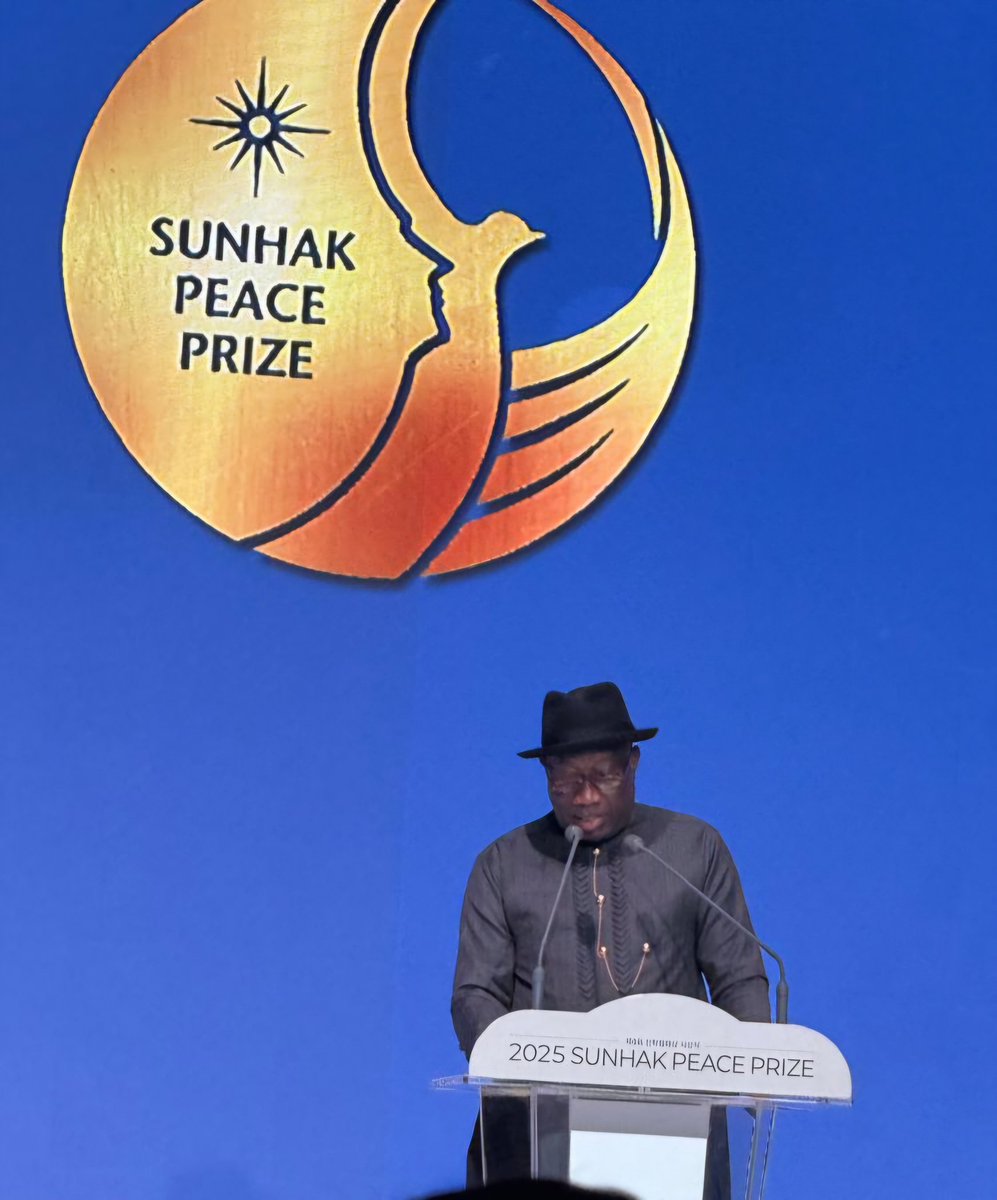
I want to warmly congratulate President Goodluck Jonathan @GEJonathan on being honoured with the 2025 Founder’s Sunhak Peace Prize in Seoul, South Korea. This prestigious recognition is a powerful affirmation of your tireless commitment to peace and democracy, not just in Nigeria, but across the African continent.
Your legacy as a peacemaker continues to inspire hope in a generation yearning for stability, justice, and transformation.
I celebrate your courage, your humility, and your determination to pursue peace in the face of adversity. May this global honour fuel even greater efforts toward the peaceful advancement of Africa and remind the world that Nigeria is home to leaders of integrity and impact.
Congratulations once again, sir. -PO
framework to find the next cursor-like billion dollar idea:
1. look for skilled professionals who spend 6+ hours a day in a specific software tool - the more arcane, the better
2. identify tasks within their workflow that require deep expertise but follow patterns - these are ripe for ai assistance
3. focus on industries with high hourly rates ($100+) where time savings translate directly to revenue or cost reduction
4. seek workflows with specialized vocabulary that generic ai struggles with but domain-specific ai could master
5. prioritize tasks that involve both creativity and technical constraints - the sweet spot for human-ai collaboration
6. build for existing interfaces people already know rather than forcing new workflows
7. start with a tiny, almost embarrassingly specific niche - e.g., not "legal" but "divorce proceedings in california"
8. solve for the 80% case that's repetitive, leaving humans to handle the complex 20%
9. the best opportunities feel like "ai-enhanced superpowers" rather than "ai replacements"
10. if it can be on the cloud, that's a good sign
Beautiful design is now a commodity.
I've spent the last 24 hours with ChatGPT 4o images, and it's clear we've entered a new reality: "Execution is cheap, ideas are everything."
For decades, we were told the opposite. Everyone had ideas. Few could execute them well. The ability to turn a concept into reality separated the winners from the dreamers.
But in an AI world, it's completely flipped.
When anyone can execute at 90% perfection with the right prompts, the limiting factor becomes the quality of your ideas. The creative direction. The strategic insight. The unique perspective.
The most successful companies I'm seeing are shifting resources from production to ideation. Less time pushing pixels, more time exploring concepts.
They're running 20-30 creative directions where they used to do 2-3, because the cost of trying ideas has collapsed.
In a world where anyone can create a beautiful website, logo, or packaging, the winners are focusing on the things AI can't (yet) simulate:
I think it's authentic relationships, innovative products, and unique perspectives.
The real advantage is in knowing when to break the rules of good design in ways that resonate emotionally.
The human touch is becoming less about execution and more about strategic deviation from the optimized norm.
This is creating strange new dynamics in hiring too. When I started our design agency @meetLCA, we hired for world class technical skills - mastery of tools, execution ability.
But now we care more about hiring for conceptual ability and creative direction. People who consistently generate novel ideas rather than perfect executions. Obviously, top tech skills still matter, but way less.
As AI makes "good enough" design accessible to everyone, the market is splitting. At the low end, good enough is actually good enough.
But at the high end, there's a premium on the truly unexpected - the ideas an AI wouldn't generate because they break conventional patterns.
I think we're heading toward a bifurcated creative world: automated beauty for most purposes, with human creativity focused on creating the unexpected, the ideas and approaches an AI wouldn't think to try because they don't follow established patterns of "good design."
The challenge for most of us now isn't "how do we execute this idea?" but "which ideas are actually worth executing?"
Execution is cheap, ideas are everything.
Tremendous alpha in it.
You're an idea person now. We all are?
I can't believe I'm tweeting this but did web3/NFTs come too early? Here me out...
We're witnessing the largest creative heist in history.
Yesterday, millions of people typed "Studio Ghibli style" into ChatGPT 4o and instantly created beautiful images that would have taken artists weeks to draw.
The value generated was enormous, but Studio Ghibli didn't see a penny.
This is happening across the entire creative landscape.
AI companies are training on billions of creative works without compensation, then selling the ability to mimic those creators back to the world.
The irony is that web3's core thesis - that creators should have automated, programmable property rights - is exactly what this market needs right now.
And most people laughed at it.
Okay, for a quick sec, put all your preconceived notions about NFTs/web3 aside and hear me out...
Imagine a system where:
1. Every "Studio Ghibli style" prompt sends a tiny payment directly to the studio
2. Artists set their own terms ("free for personal use, paid for commercial")
3. Everything happens instantly with near-zero transaction costs
4. The entire system is transparent and traceable
IT SOMEHOW DOESNT SOUND SO CRAZY RIGHT?
This is literally what Web3 has been trying to build for years.
The problem was timing. Web3 arrived before we had a clear need for it. It was a solution in search of a problem. But AI has created exactly the problem that Web3 was designed to solve.
The Web3 vision of "owning your digital creations" makes perfect sense when AI can clone any artist's lifetime of work in seconds.
We need a practical way to ensure creativity remains valuable in an age of instant, perfect replication.
Gets you thinking...
Sometimes the right idea just arrives in the wrong order.
What do you think?
The parliamentary vote held yesterday clearly demonstrates that democracy, in its true sense, does not exist in Nigeria. Where there is no functional opposition, democracy cannot thrive.
Opposition is a critical pillar of any democratic system. It ensures that the right things are done, holds the ruling party accountable, and offers alternative viewpoints. However, an effective opposition can only exist within a system that supports proportional representation—an approach practised in countries like South Africa and Indonesia.
In South Africa, for example, the National Assembly has 400 seats. The African National Congress (ANC) received about 40% of the vote and holds approximately 160 seats, while the Democratic Alliance (DA), with about 20% of the vote, holds around 80 seats—alongside several other parties. Those who contested the presidential election remain the recognised leaders of their respective parties.
A similar situation exists in Indonesia and other countries where democracy is genuinely practised. As is the norm in such systems, laws prohibit elected officials from switching parties without forfeiting their seats. This helps maintain party discipline and preserves the sanctity of the electoral mandate. These mechanisms contribute to a more balanced, accountable, and credible democratic process.
If that were the case in Nigeria, our Senate—comprising 109 seats—would be more reflective of electoral realities, with the APC holding 44 seats, the PDP 33 (under the leadership of Atiku), and the Labour Party 27 (under my leadership). Ideally, the House of Representatives should mirror this balance, with approximately 144 APC members, 108 PDP members, and 90 Labour Party members. But this is far from the case. The absence of laws restricting party defection allows politicians to switch allegiances freely and without consequence. This not only weakens the opposition but also makes a mockery of the electorate’s will and undermines the integrity of our democratic institutions.
What we are left with is not a genuine democratic system, but one that is transactional, compromised, and, in many respects, resembles organised criminality. Unless we urgently implement reforms to entrench true democratic principles, enforce party discipline, and ensure fair representation, Nigeria’s democracy will remain fragile and dysfunctional.
But we will not surrender to criminality. We shall continue to fight for democracy—genuine democracy.
-PO
Remember how VIBE CODING (replit, bolt, lovable) transformed 8-week development cycles into 2-day sprints? The same 20x acceleration is hitting marketing teams RIGHT NOW
It's called VIBE MARKETING (I'll explain what it all means).
The old world - marketing teams with 10+ specialists - copywriters, designers, analytics people, media buyers - all working in silos, drowning in meetings and Slack threads, taking weeks (and thousands of dollars) to launch anything.
The new world - a single smart marketer with AI agents and workflows testing TONS of marketing angles in real-time with hundreds of AI agents running the show launching in days not weeks.
I'm seeing stuff that sounds like science fiction:
• A CRM that autonomously finds prospects, analyzes their content, extracts data, and crafts personalized messages - all from a browser extension
• A tool that captures competitor ads, analyzes them, and auto-generates variations for your brand (free competitive intelligence)
• A system that runs IG giveaways automatically, from entry to winner selection
• A service company that built an AI-driven map showing customer segments and conversion flows using census data
• A platform that literally generates entire digital product launches - sales pages, VSLs, email sequences, ads - in 24 hours
I got introduced to vibe marketing via my co-founder @boringmarketer. You can follow him for all things vibe marketing in your feed. Our holdco will be investing ~$1M+ (of our own personal money, not VC cash!!) into vibe marketing tools because we're so bullish through @boringmarketer.
"Vibe marketing" is happening because 3 things converged at once:
1) AI got good enough at marketing tasks
2) Vibe coding tools made automation accessible to non-engineers
3) Custom tool-building costs collapsed
The cool thing is a single marketer with the right stack can now outperform entire agencies or internal team. The leverage is absurd.
This fires me up. Because there is an arbitrage opportunity right now to be 10x more efficient than the competition. That means more engagement, better ads, more automation if you play your cards right.
Where is this heading?
Marketing teams are going hybrid - humans handle strategy and creativity; AI agents handle execution and optimization.
We'll see thousands of specialized micro-tools built for specific niches. Not big platforms, but purpose-built tools that do one thing exceptionally well.
The winners will build systems that work across channels, continuously testing and adapting without human input. Set it up once, then watch it improve itself.
Want to get started? A few tools worth playing with…
• Workflow Builders: Make, n8n, Zapier
• Agent Platforms: Taskade, Manus, Relay, Lindy,
• Software (lead magnets, microsites etc): Replit, Bolt, Lovable etc
• Marketing AI: Phantom Buster, mosaic, Meshr, Icon, Jasper etc etc
• Creative tools: Flora, Kling, Leonardo, Manus etc etc
What are you building in this space? I want to hear about the tools and workflows you're creating. Granted, it’s early days. But, vibe coding was early days a year ago and look at it now.
This is a complete paradigm shift in how marketing works.
In 12 months, the gap between companies using vibe marketing and those still doing things the old way will be as obvious as the gap between companies with websites and those without in 1998.
While everyone was distracted by AI's impact on software, marketing departments are being replaced by single marketers with the right AI stack.
The $250 billion marketing industry is about to change forever. Vibe coding just demolished software development costs. Now vibe marketing is doing the same to marketing teams.
VIBE MARKETING IS THE NEW MARKETING.
How to go from 0 to $5M ARR profitably (step by step)
Here is every growth hack we used for each of our distribution channels:
- Organic Short-form content
- Influencer Marketing
- SEO
- Paid Ads
Organic Short-form content
The most important thing to remember in this new age of social media is that follower counts don’t matter at all
I would unironically sponsor a fresh account made this week vs a YouTuber with a million subs if they had similar views and I don’t even think it’s a controversial opinion
(especially when you consider that the famous YouTuber will charge you potentially 30x more for less results, but I would maybe even choose the new account if they were the same price)
The reason being that new accounts are highly volatile and if you put out a great engaging piece of content then it could easily go viral regardless of how many followers you have
But rather than finding and sponsoring these new accounts in your niche, you can just create these accounts yourself
You just need to follow this basic format:
1. Find a face for your account
2. Craft a viral video 'series'
3. Multiply your accounts
What would happen if BTS made a new TikTok account and started posting?
All videos on the new account would immediately go viral because the algo would push the videos back to their fans
Despite having zero followers, this new TikTok account will ‘behave’ as though it has hundreds of millions of followers
One great hack is to find someone who already has an audience of people that you know will convert, then ask them to create a completely new account to posts videos about your product
This is an amazing hack because creators are usually very open to this idea because it doesn’t dilute their main page, it’ll be way cheaper to pay for 20 videos on a new account every month vs 20 sponsored posts on their main account, and it’ll get way better results
For example we found a creator named Mengmengduck whose entire account at the time was teaching students how to write to employers and we paid him $4000 for 20 videos/mo
In our first month we got 7 million+ impressions, just as expected the videos on the brand new account were being pushed to the followers on his main account
When you get a new creator just follow this basic guideline:
- Repost vids on all platforms (Reels, TikTok, YT Shorts)
- Post 1+ videos per day
- Initially, post vids similar to what the influencer posts on their main account, then start experimenting with videos that feature your product
- We paid $4000/mo for MMD who had 500k followers, but you can get someone cheaper for similar results!
The entire goal when working with your creator is to find a viral “series” because a video that goes viral once will go viral again
You want a video that you can basically tweak slightly and repost multiple times a week that is still fun for the audience
Once you find a viral series, you can start creating new accounts but this time you don’t need to work with big creators, you can just find charismatic UGC creators because you’ve found content that is engaging and poised to go viral
Currently, we have about 5 different Jenni AI accounts all posting similar content
Many of our accounts have tens or sometimes just hundreds of followers and they just repost stuff from our main account
In some cases, the account with 48 followers gets MORE views than our main account with 55k followers...even when posting identical videos
Examples of viral series:
1. A guy tries to see how many sticks of spaghetti it takes to hold his weight. Then he tries to see how many coat hangers. Then he tries to use sheets of paper. Etc etc. All the same video, minimal effort but will go viral every time.
2. A guy drinks a cup of milk for every 1000 followers he has. Everyday it’s the same video where he drinks milk but people continually tune in because they want to see him suffer and drink hundreds of cups of milk. Will go viral every time.
3. For us we had “POV you have an essay due” and it was just a ridiculous plot of someone realising they have an essay due while they are taking a shit or right before they sleep or w/e and it always ended with them using Jenni AI to help them write their essay faster. Same video, slightly different 10 second intro each time.
Thinking of new viral video ideas are so hard, so just try to think of tweaking your few winning videos into “series” and just think about prolonging the lifespan of your content
The order of virality:
1. Have one account on each platform (TikTok, Instagram, YT shorts) and experiment with a ton of hooks and video ideas
2. Eventually you’ll get a video that goes viral after enough experimentation
3. Experiment and somehow turn that video into a “series”
4. Start tweaking and posting this “series” on multiple accounts
5. Translate and create the same video with creators that speak Chinese, Spanish, etc
6. Take the really mega-viral videos and sponsor other pages to repost them
7. Use the mega-viral content for paid ads
8. Eventually enough copycats will copy your video series and it’ll get played out and you restart at step 1
Our video series "POV: You have an essay due" has probably generated 300 million+ views overall
It was essentially the same video over and over, multiple times a week, yet they consistently went viral
That one video series made us over half a million dollars, and it was one of several video series’ that we were able to cook up
Influencer Marketing
Find influencers
- Go to your users' Instagram and see which influencers they are following. This should be easy if you’ve done user interviews correctly, if you have no social media handles of your users you should actually befriend your users and get to know them on a deeper level or you’re not going to make it
- Do this for several users and eventually you will find some influencers that are ‘popular’ among your target user demographic. Find these influencers and follow them all, it’s okay you only need 1-3
- Go to these influencer's profile and click "suggested similar accounts" and you'll get an easy list of hot leads that you can sponsor (you can continue to do this recursively for each new influencer that you find)
- Also, be sure to see what hashtags these influencers are using when they post and then follow those hashtags as well
- Once you have a list of influencers, create a new Instagram/TikTok account and manually follow & watch their videos all the way through and the algorithm will start automatically showing relevant influencers to you that you can then reach out to (this is a great way to lower the risk of getting scammed because the videos that show up organically on your FYP are less likely to be accounts that have bought followers/views)
- On your new account, you want to be on the hunt for smaller influencers, if a new-ish account has multiple videos with 100k+ views, it's absolute GOLD
- Once you have a list of influencers who you are ready to partner up with, you can begin reaching out to them
Reach out to influencers
- DMs > emails = higher response rate (at least for us)
- All messages need to be as detailed and tailored as possible, but most importantly as CONCISE as possible. This balance is hard but you’ll get a better feel for this as you notice what gets ignored and what doesn't
- Demonstrate that you’re genuinely a fan of their content and that you’re excited to partner up. This is such a low bar but few founders actually put in the effort.
- Why should they partner with you? Why will their audience love your product? Don’t talk about dumb shit like how many employees your company has or what round of fundraising you’re at (I suggest not talking about those vanity metrics in any situation, but I digress)
- Make sure to indicate somewhere in the message that this is obviously a PAID promotion, influencers are constantly inundated by people who are begging them for free shoutouts or weird affiliate partnerships
- Expect more than 50% of influencers to not respond, but this % is very volatile depending on what industry you’re in, and how cool/well-known your product is
- The good news is, as more influencers talk about your product it gets easier and easier to convince them to promote your product because they have heard of it before (unknown products could be risky or straight-up scams)
Negotiate
- The highest priority is to align the incentives between you and the influencer. You should both want a banger video that converts
- Never pay upfront for videos (pay half upfront at most). Most influencers are fantastic people but some influencers will just try and drop a half-ass video once they get their check
- Try to split the payment so that some % comes from the number of conversions that they bring (you can track this via coupon code or UTM link). If they don’t want to do that, try to at least have some affiliate bonus
- Ask for their viewer demographics see which countries are viewing their content and compare that with the conversion rates of those countries for your product
- See previous sponsored content that they’ve posted and see how those videos performed vs their usual content
- Negotiate the deal so that either they only receive some/all of the payment if it reaches a certain # of views (or a certain # of coupon code redemptions)
- Don’t listen to these absolute garbage articles that tell you to pay based on the number of subscribers/followers that they have. The sole question you should be asking is, will they convert or will they not (at least in the early stage of your startup).
Post content
- You can’t use a general content strategy for all of your influencer partnerships because each influencer has a certain type of content that their audience likes. Your content can’t deviate too far from it or else it will have terrible watch times and you’re basically paying for a dud
- If you don’t have experience with social media or making engaging content, just let the influencer make the video and then you approve it (after aligning your incentives, as we discussed in the last step)
- One important note is that views are irrelevant, we’ve had videos that got 30 MILLION views and gave us barely any conversions, whereas a video with 50k views converted like hotcakes. The video should make the viewers excited about what you’ve built not just have them hear what you made and then forget about it the second they scroll to the next video on their For You Page
-When in doubt, don’t be afraid of your video looking like a straight-up ad, even if it gets less views it will convert better than an influencer casually talking about your product for 15 seconds in a random “Day in the life” vlog
Final tips
- The biggest risk with influencer marketing is sponsoring a dead video or a video that gets a few hundred views or a few thousand views in low-converting countries. For that reason, make a portfolio of bets instead of hunting for the perfect deal. Do not allocate all of your marketing budget to a few large influencers
- If the account has high conversion potential, but the first video flops, don't be afraid to run it back again (often times you can get a better rate on the second video if the first video does poorly)
- You should be casting a large net and then doubling down on the winners and gathering data to get better at predicting which influencer would be great to sponsor
- One good influencer partnership can make up for several influencer partnerships with negative ROI
- The ultimate goal is to build out your influencer marketing arm and then bring on somebody to help run it so you can focus on other aspects of growth.
- You need to have all of your insights and data figured out so that when you bring somebody on, they can take your insights and devote all of their time to become even better than you are at influencer marketing.
SEO
SEO is a tricky one because it can take so long to see results
That’s why I would never start with SEO because in the early-stages you want fast feedback cycles and SEO is the furthest from it
But the flip side is, when you really need SEO, you probably should’ve started on it 6 months prior to that point
For that reason my ideal order of what growth channels I would focus on is: Organic Short-form -> Influencer Marketing -> Paid Ads
And at any point when I felt like I had a deep understanding of who my powers users were I would start work on SEO and do it concurrently with whatever growth channel I was working on at that point in time
Here are some growth hacks for when you do start SEO work:
1. Taking featured snippets
Sometimes you'll be ranking low on the first page, not getting much traffic. Pushing yourself to the top of the page can take a lot of effort and investment, but there's a way to get there almost immediately.
If the search term you're looking to rank for has a featured snippet, you can often easily take over the first spot by just tweaking your content to answer the query more precisely.
The chances are your content already answers the question well enough, but it's just not written in a way that Google realizes it. Use definitive phrases like "The answer is Yes, you can do X". Use bulleted or ordered lists to make the answer concise and clear.
To find these opportunities, you can plug your domain into a tool like Ahrefs, Semrush or Search Atlas and filter the keywords you are ranking for by the SERP containing a featured snippet.
To keep it simple:
* Plug your domain into SEO tool (ahrefs, semrush, searchatlas)
* Look at keywords you're ranking for already
* Filter results by the criteria of containing a featured snippet in the results
* Tweak your content to answer the query in the best way possible
* Jump from position 3-10 to 1
2. Increasing brand name searches
Brand searches helps legitimize your startup in Google’s eyes and will help your content be seen as “trustworthy”.
With this in mind, for your SEO you should be engaging in other marketing activities that necessitate brand searches.
To keep it simple:
* When doing organic social media marketing, encourage users to search out for your brand name instead of directly typing in the URL
* When doing paid social marketing, utilizing view-through or engaged-view conversions to still track conversions made via Google searches so you can still optimize the social campaigns while reaping the SEO benefit.
3. Make it easy for search engines to understand your website
Search engines have gotten a lot better at understanding messy websites, but that doesn't mean you shouldn't make it as easy as possible for them.
Adding schema to your pages and giving clear cut definitions to your content can make it incredibly clear to any bots crawling your site what your site is about and what it is doing.
The more the better, we've had a lot of limitations with this as we're using Framer and we've found some types of schema quite hard to implement. However, we've done what we can and any type of schema is better than nothing (as long as it's accurate)
To keep it simple:
* Add relevant schema to any page that is suitable
* Mark up your landing pages with FAQ data, mark up your blog posts with article data.
4. Accurately estimate your ROI from search engines
It's been a long time since Google allowed us to see which keywords led to conversions in Google Analytics, however it's super important to get as accurate of a picture as possible.
Many people will simply look at reports and anything under the "organic" or "search engines" column, they'll count as an SEO conversion. But that's simply not true, and it severely misinforms you.
By the nature of the tracking, it's impossible to differentiate between branded conversions and non branded conversions with SEO.
The closest we've been able to get to do this is with a custom tool, but you can replicate it manually as well
* Log into search console
* Select your time period
* Export your clicks for each query
* Remove all branded queries
* Go to your paid ads (preferably Google ads) platform and note down your conversion data.
* Slightly lower the conversion percentage (because paid typically converts better than organic, as you're bidding based on a lot of other targeting metrics too)
* Tally up all the clicks from search console
* Use the conversion percentage from paid ads (slightly lowered)
* Calculate the amount of conversions you have received from SEO (excluding brand)
* Times this by the average LTV of your customer
This is a much closer metric to reality than anything reported by any reporting software, especially if you have a lot of branded searches like us
Paid Ads
Founders will tell me their marketing strategy and marketing spend and sometimes I’ll be shocked
Many are going to end up spend a sizable portion of their entire investment on google/meta ads, and the worst part is they aren’t even acquiring users at a profit, which genuinely makes me nauseous
Especially in the early-stages, I honestly wouldn’t be burn ANY money on paid ads and only spend after some social media marketing first
This is because data is key when it comes to paid ads and you want as much accurate data as possible to feed into the ad platforms
The algorithms work very well, but they need data to make the right decisions, and you can get this data from other growth channels before starting paid ads
Why paid ads after influencer marketing and organic content:
1. From influencer partnerships and organic short-form you will have a bunch of creatives that you can work/experiment/rework for paid ads
2. You get valuable customer feedback in the comments of your posts (how do target users describe your product, what they compare it to, what they like/don’t like about your product) which can be leveraged for ad copy and positioning
3. You can use the data from your social media partnerships to have better targeting for your ads on day 1 (what countries convert better, what’s the LTV of each country, what types of users are ideal to market to, etc)
4. In early-stages your budget won’t be big enough and you won't be able to spend enough on Meta to get enough data for targeting based on purchase conversions
We only scaled paid ads after:
* PMF (Product Market Fit)
* 3x LTV to CAC (we pay less than $1 for every $3 you make from ads)
* Short payback period (we make back our money in less than 3 months)
Lastly, take special considerations of both the entire user journey and the landing page before you crank up adspend
If your landing page isn’t persuasive + effective it’ll not only get less conversions you will also pay more for each click. In Google it improves the relevancy score and in Meta it improves the quality ranking. An easy win is also just to speed up the loading time of your page, this can directly effect the quality score of your ads and will also lower spend per click
Again, do not do paid ads until later in your startup’s lifecycle
It requires a larger budget, more data, and typically has higher cost per acquisition than other channels that you can start with
I personally also think it’s just the most boring growth channel so don't deprive yourself of the joy of figuring out the other fun ones first haha
Conclusion + Final Tip:
For every level there is a new devil
As you scale up your paid ads, your cost per acquisition will continue to creep upwards
As you scale your influencer marketing you may actually run out of influencers to sponsor for your target user demographic
There’s always some content strategy that stops working on your social media accounts, or a random Google update that threatens to fuck your rankings
At each stage of scaling you’ll come across a myriad of issues that can only be solved by specialized knowledge and intense focus
Scaling to $5M ARR is too difficult for one man to do (unless you’re the Lisan Al Gaib of startups)
Now that you’ve read this entire guide you can just choose which growth channel to start with and throw your whole weight into it until you solve it and you can move to the next one
Once you start acquiring users profitably with that first growth channel, find someone who either has the skillset to take over or someone who you can train to take over
This is a critical step
To get to $5M ARR you need to know how to find, hire, and retain amazing talent
This could be an entire post on it’s own because hiring is so tricky, but I will say that I highly highly bias towards resiliency + speed over experience
Why do I care if a candidate has 15 years of digital marketing experience?
Half of our marketing work has to do with short-form content and you could’ve only become an expert in short-form (TikTok, Reels, YT Shorts) in the last 3 years anyways
A young marketer with TikTok brain rot who has a great work ethic will often times outperform the “established” digital marketing agency with a ton of fake google reviews
Today, our entire marketing team is just 3 people (me included), and I couldn’t have gotten anywhere close to $5M ARR without them
Thanks to my growth team composed of Justin and Luke who are rockstars at what they do and helped flesh out a lot of the strategies on this post
Since you’ve made it all the way to the bottom I’ll tell you one final secret
Look at the bottom right of this tweet and count the bookmarks
How many of those people will actually read this whole thing? 10%?
How many of them will then actually try to implement some of the strategies I wrote about here? 10% of the 10%?
How many of them will continue to try 1 year from now when these marketing tactics help them uncover deep flaws in their product? 1% of that?
This post will be read by hundreds of thousands of people but ultimately it will only be properly utilized by literally one or two of you
I hope you are that one person that I wrote this for and I hope you can go on a similar fantastical journey that I got to experience
Good luck!
It took me 1 year to make my first dollar on X
3 years later, I'm on track to make half a million
If I were to start all over again, here is step by step what I'd do:
(all creators looking to make a living on X should bookmark immediately)
1/🧵