Sharing some deeply personal and existential reflections on scientific identity, the changing culture of AI research, the erosion of intellectual autonomy, and the growing disconnect between scientific rigor, professional recognition, and what organizations actually reward.
As usual, feedback and debate are welcome and actively encouraged!
https://t.co/dd9Z19jXau
@karpathy I run @turinglab and we teach >100,000 kids Python each year. I’d love to improve existing opportunities for kids learning Ai and wonder if there’s any scope to collaborate given your latest news around EurekaLabs! Would love to chat if you’re interested!
@ylecun If you have 12 months to be productive at the SOTA in Gen Ai where would you focus? Science/research heavy investigation vs engineering of ml systems?
@_tim_brooks I'd love to use this for @turinglab to help us teach kids about ai and programming in a more engaging way. Is there a way for us to test as educators? We have thousands of students learning with us each week in the UK and Germany :) thanks for the exciting progress!
DALL•E 3 and GPT-4 have opened a world of endless possibilities.
I just coded this game using DALL•E 3 for all the graphics and GPT-4 for all the coding.
Here are the prompts and the process I followed:
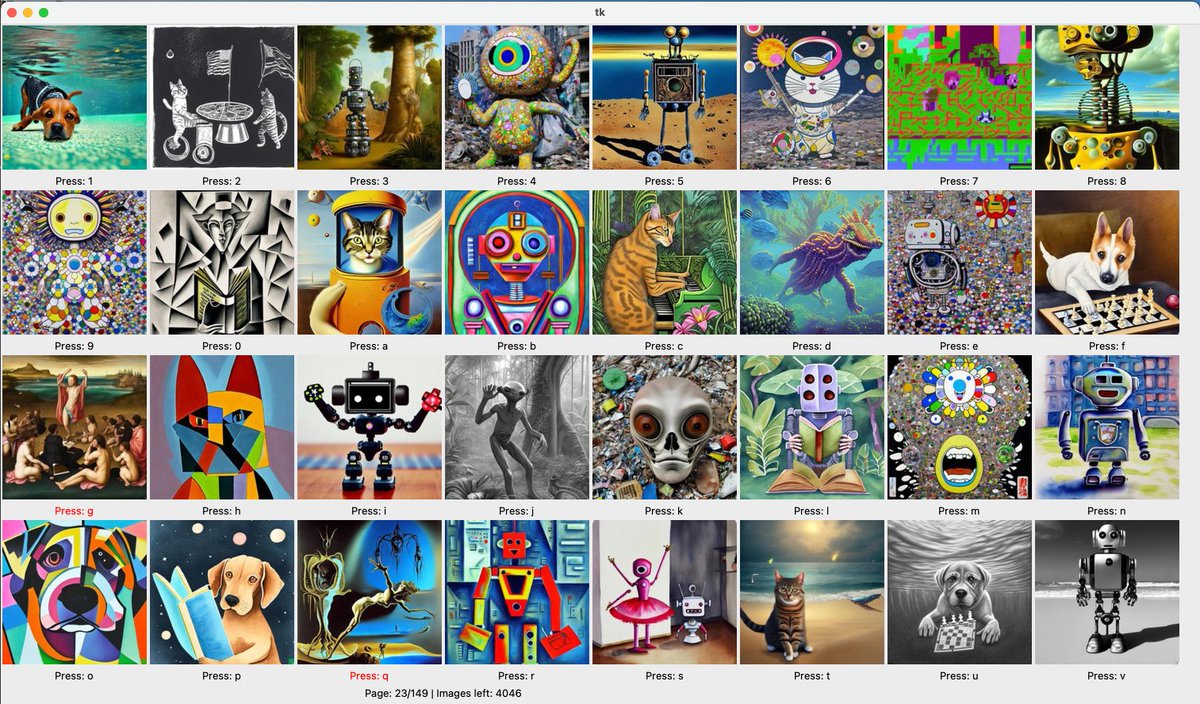
Currently creating a diffusion model course for teenagers. One of the things we're doing is simulating calls to a diffusion model with many pre-selected images. Our final step uses tkinter to help us quickly go through and make sure images are appropriate!
A pretty incredible read. Love the simplicity of this architecture Vs some others right now.
Practically, going using LLMs + Diffusion models in creative pipelines (think advertising for books @Shimmr_AI ) to end-to-end multimodal could make pipelines far easier to reason about
@AndrewLampinen...I was just on the UCL Dark Youtube page and saw your talk. Then I realised, hang-on a sec, you were doing the purple climb by the door at Yonder on Sunday!? Are you a regular at Yonder? Would love to chat with you about your work if you're near!
Easily one of the most exciting projects built with Supervision!
Our community member Vriza Wahyu Saputra built this fantastic ball juggling counting demo using the moving LineZone available in our API.
https://t.co/xXMRaS3Guk
Inspiring to see this analysis of our most common user experience (search) and how it's changed, and could change further, with the advent of functional LLMs. Especially as they become multi-modal.
In 2006, I was 1 of 4 designers on Google Search.
For 20 years, every search engine has copied Google.
Now ChatGPT, Bard + Claude look like Google's offspring - "better” search engines.
But last week signaled we're on the brink of a design revolution.
ChatGPT unveiled incredible new features.
These could give us the opportunity to completely shift how we interface with AI.
Here's the full story:
–––
When I was a designer on Google Search, all major search engines looked the same – Google, Yahoo, MSN Bing.
Google was the market leader with a heavily optimized UI that supported billions of dollars in ad revenue.
Naturally, it became THE way to show search results.
Its success made it illogical for Google to consider big UI changes.
And any changes they did make were just mirrored by everyone else.
So 20 years later, we’ve only seen incremental changes to search engine UIs.
–––
Today, we have consumer-ready LLMs (Large Language Models) freshly in our hands.
As consumer products, these are in their infancy.
We’re very early in understanding their capabilities and defining how people interact with them.
These are uncharted waters.
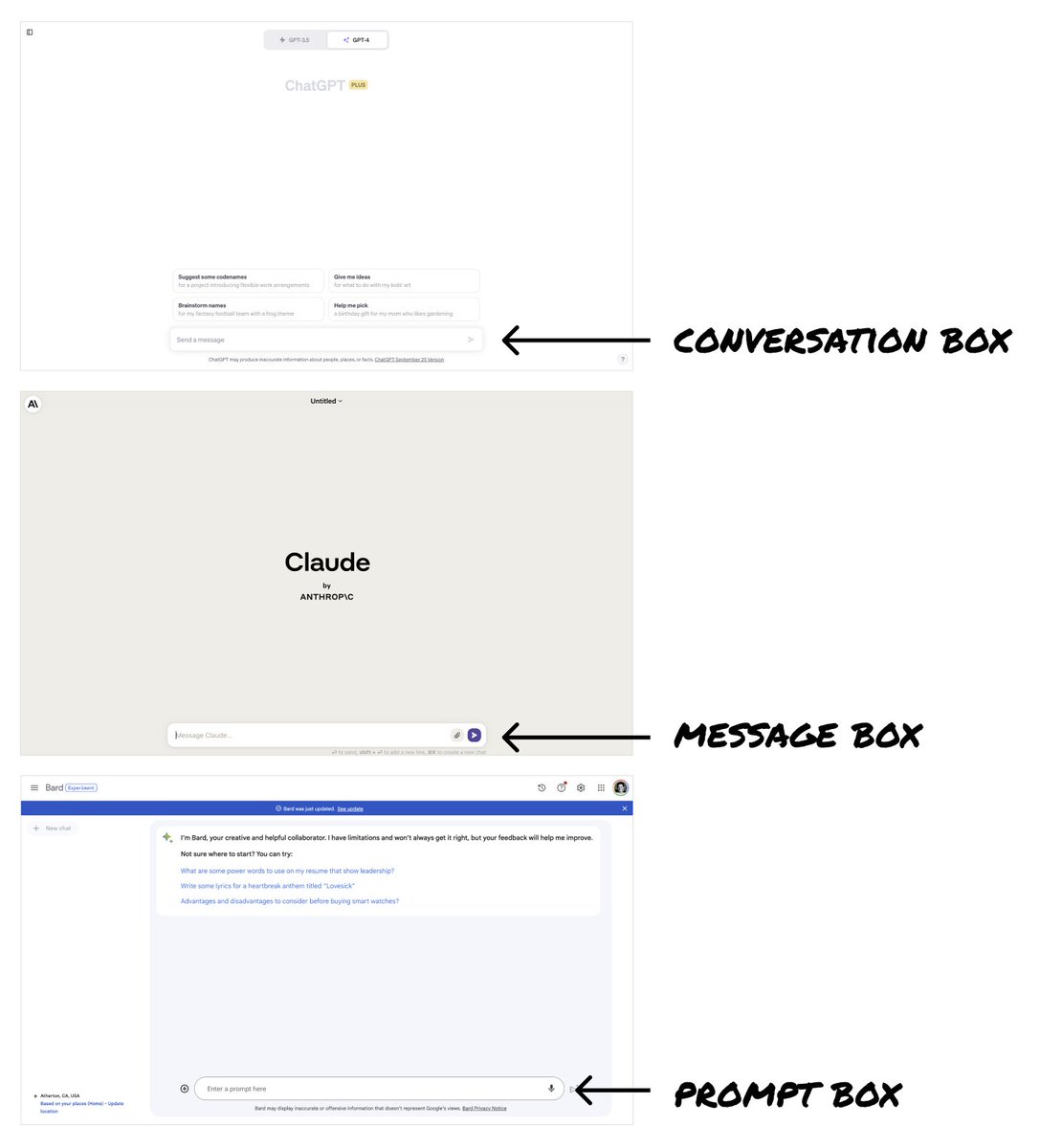
And yet ChatGPT, Bard, Claude etc. all chose a text-based input box — just like Google’s search box — as the core interface.
Why?
The input box is simple, versatile, and familiar.
- It’s simple to understand → you type your questions into the box.
- It’s versatile → the box can handle all sorts of questions/queries.
- The paradigm is super familiar → people immediately know how to use it.
Because of this, LLMs have essentially become “a better Google.”
–––
But last week’s ChatGPT announcements thrust open the doors to new possibilities.
ChatGPT is now multi-modal — it can see, hear, and speak.
These are the recent announcements from @OpenAI :
Voice: https://t.co/hAeXxBTH9l
Photos: https://t.co/X3QbLnwT1V
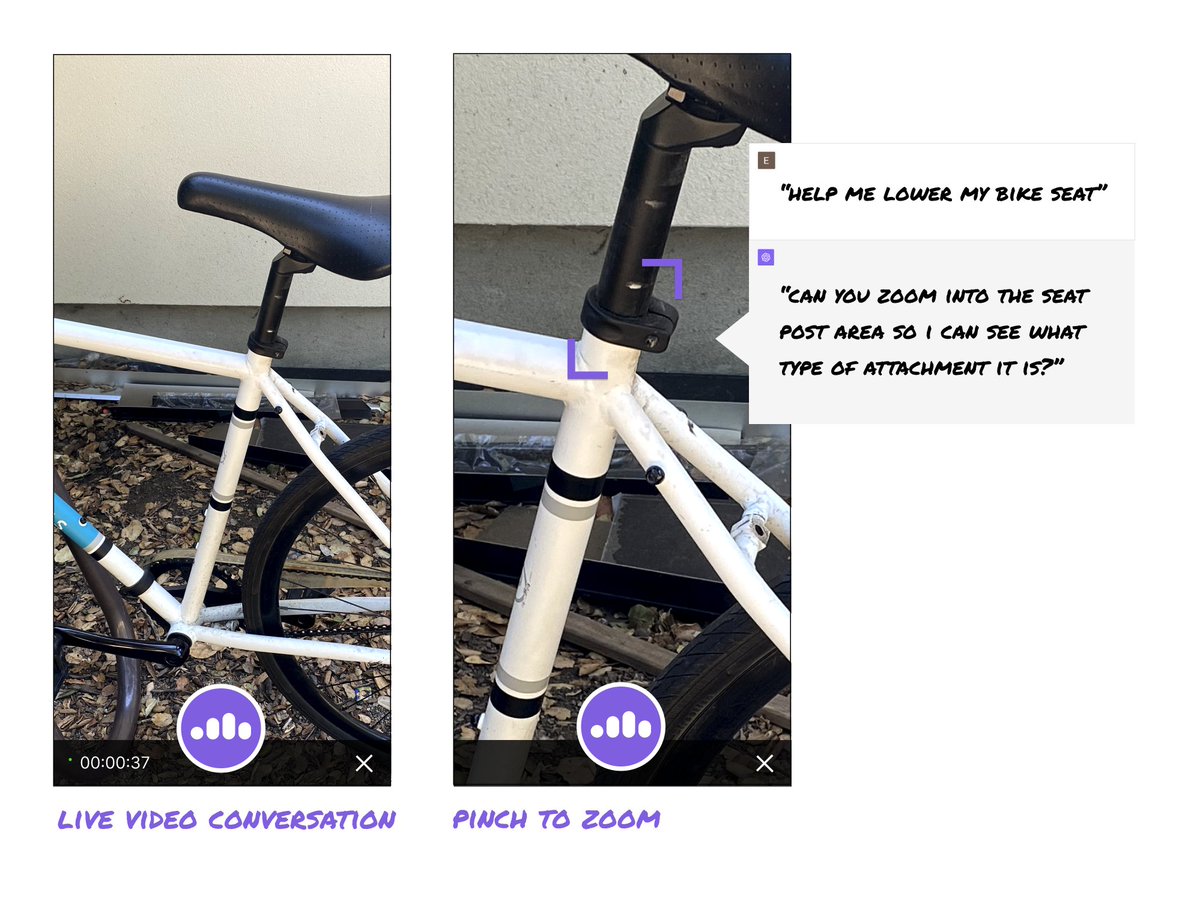
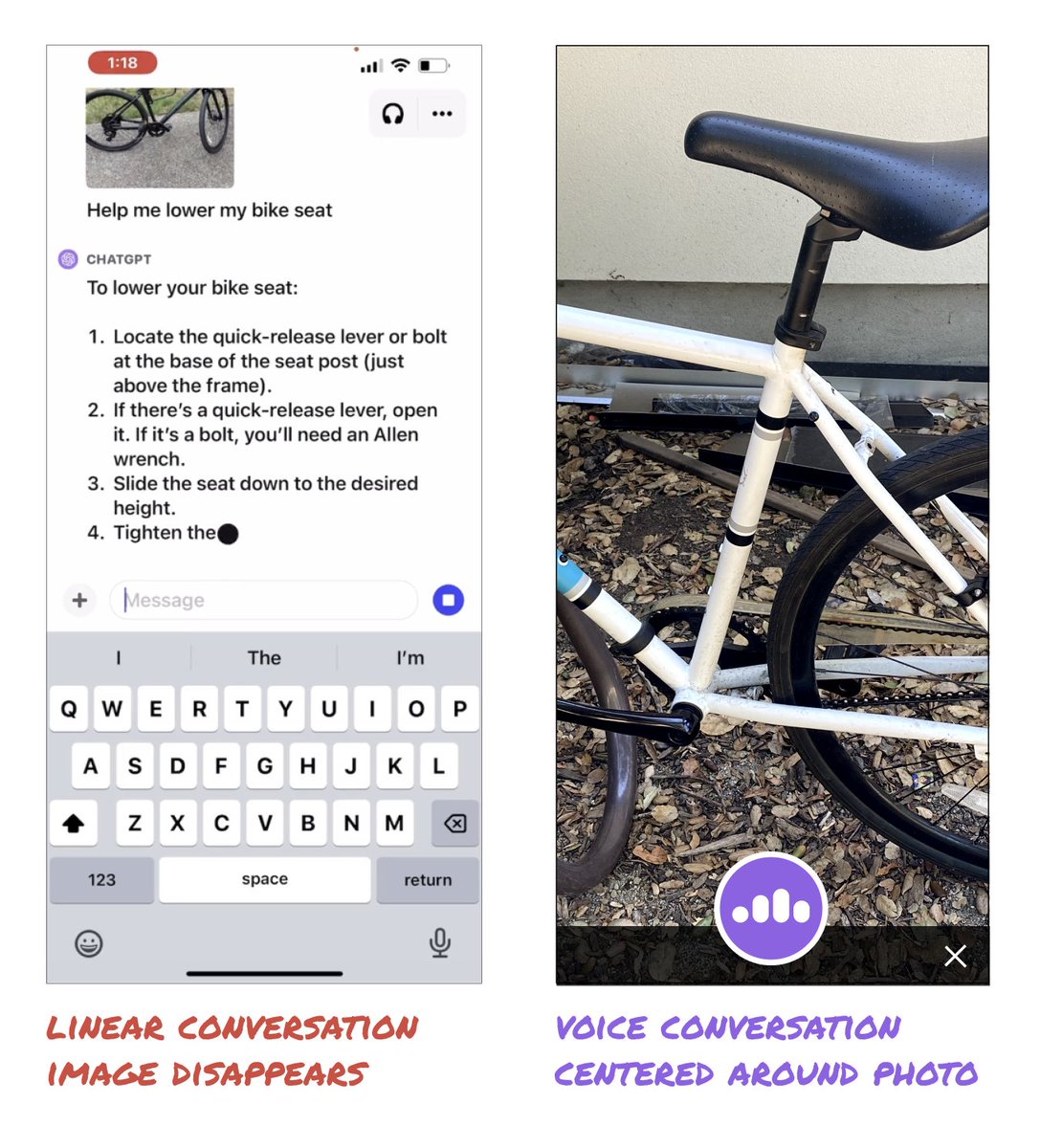
The example of ChatGPT explaining how to lower a bike seat was incredible.
But, it could be so much better!
The video showed you'll have to post multiple new photos to keep adding new information and to progress the conversation.
It was still a linear conversation centered around the text box.
But what if we rethought the interface to center around the image?
What if ChatGPT supported both images AND voice simultaneously?
Could we end up with a more immersive experience?
–––
How else could interacting with LLMs mimic IRL conversations?
Could we (or the AI) pinch to zoom or rotate the image?
Could we interact in real time with video?
What new possibilities open up with context being preserved over time?
–––
There is so much energy and excitement around what AI can do.
But we are limiting the potential by assuming the conversation box is the best interface.
Right now, designers have the chance to create truly novel interactions and bust through the 20+ year old search UI paradigm.
The ideas above are just to illustrate some potential options.
But they are also intended to spark a flame.
Now is the opportunity to be creative and explore divergent UIs.
What are the craziest, coolest, most creative UI ideas we can unleash?
LFG 🚀
This is pretty incredible! Definitely check out their interactive site as well: https://t.co/xI61H8KiaI
It does feel as if we have yet to discover the CNN edges, curves etc visualisation moment with transformers yet, but publications like this feel on a similar exciting track!
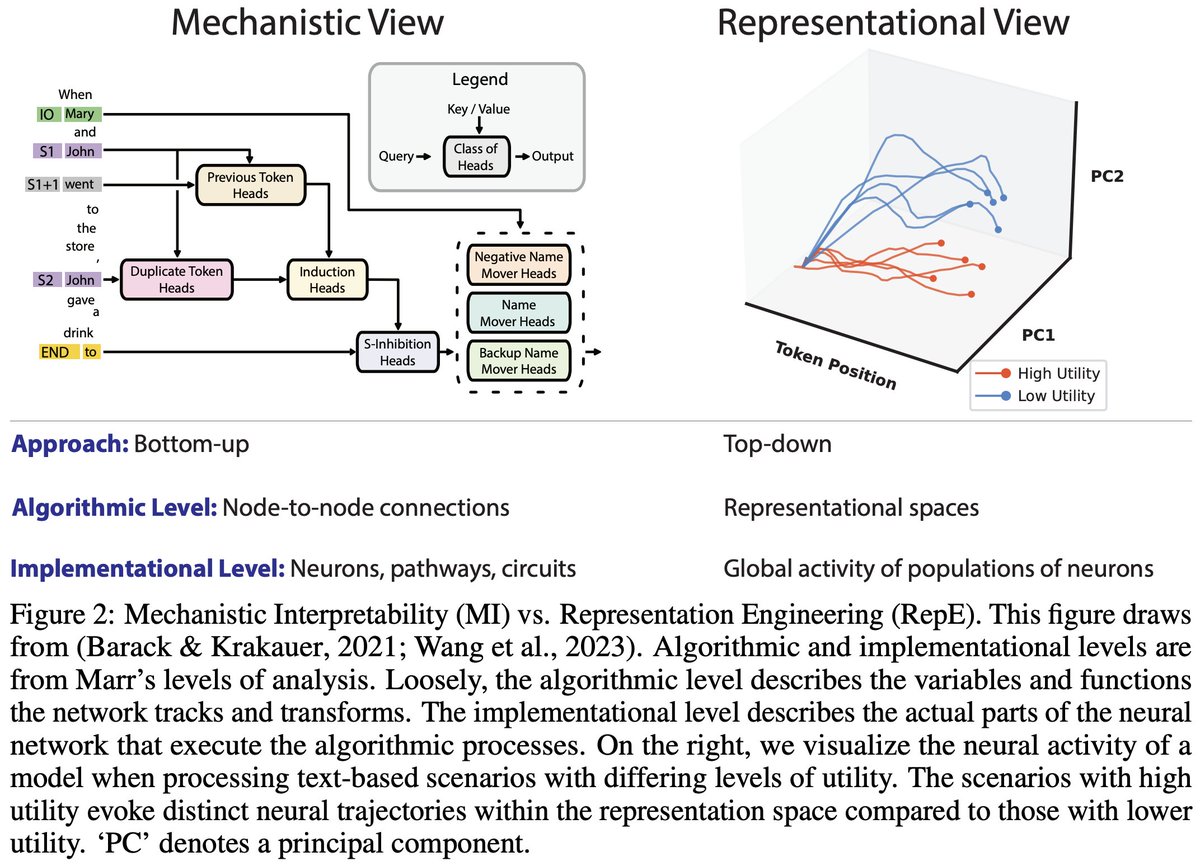
AI models are not just black boxes or giant inscrutable matrices.
We discover they have interpretable internal representations, and we control these to influence hallucinations, bias, harmfulness, and whether a LLM lies.
🌐: https://t.co/6hU83vaYUk
📄: https://t.co/xyrzgfUOfn
A nice little post on taking a data-centric approach to machine learning. Definitely agree, building UI tools to help view important data quickly is worth the effort!
One pattern I noticed is that great AI researchers are willing to manually inspect lots of data. And more than that, they build infrastructure that allows them to manually inspect data quickly. Though not glamorous, manually examining data gives valuable intuitions about the problem.
The canonical example here is Andrej Karpathy doing the ImageNet 2000-way classification task himself. And in the era of large language models, manually examining data is probably even more insightful since completions are hard to evaluate via benchmarks.
In this spirit, I recently did a few days of pair programming with @hwchung27 where we were starting on a new problem. Instead of trying to replicate baselines and design new methods, we ran some evaluations and manually inspected them to gain insights. We first paid about one day of overhead getting all the relevant information in a single UI so we could examine the data without having to click through multiple web pages. The second day, we spent an afternoon reading examples together and taking notes on the patterns that we noticed in the examples. ChatGPT generates long text, and we actually read the whole thing carefully, even if one example took 20 minutes to understand. I think we both gained a deeper understanding of the problem that we could not have gotten from reading research papers.
(In 2018, for example, I helped pathologists label a lot of data to train a lung cancer classifier. After having manually labeled 200+ images (with pathologist correction), I’d probably gained a pathologist-level understanding at that one particular lung cancer classification task :))
Great post on why open-source makes you more competitive, not less!
Hint: the open-sourcing of Llama is not entirely altruistic...
Still -> open source = great for everyone, let's keep it up!
Meta starts open-sourcing a lot and is now becoming one of the best companies in the world at shipping AI features. Coincidence? I don’t think so.
Contrary to popular belief, a company (or a country) sharing their research, models and datasets publicly in open-source makes them MORE competitive, not LESS, even more so in AI. IMO, that’s how the US and some companies like OAI & Google established their leadership in the past few years (even though they are not so open anymore).
Some of the reasons why open-sourcing makes companies more competitive:
- Open science and open source attracts and motivates the best talents who want to to contribute to the field
- It focuses organization on the speed of building - not on taking advantage of the current tech - especially important on a fast moving domain like AI
- It motivates the whole field to improve what you’re building on (bug fixing, optimization, new capabilities) that you can then really easily integrate in your products).
Is your company sharing their research, models and datasets? If not, they’re missing out!
Source: https://t.co/x1imHl9s7Q
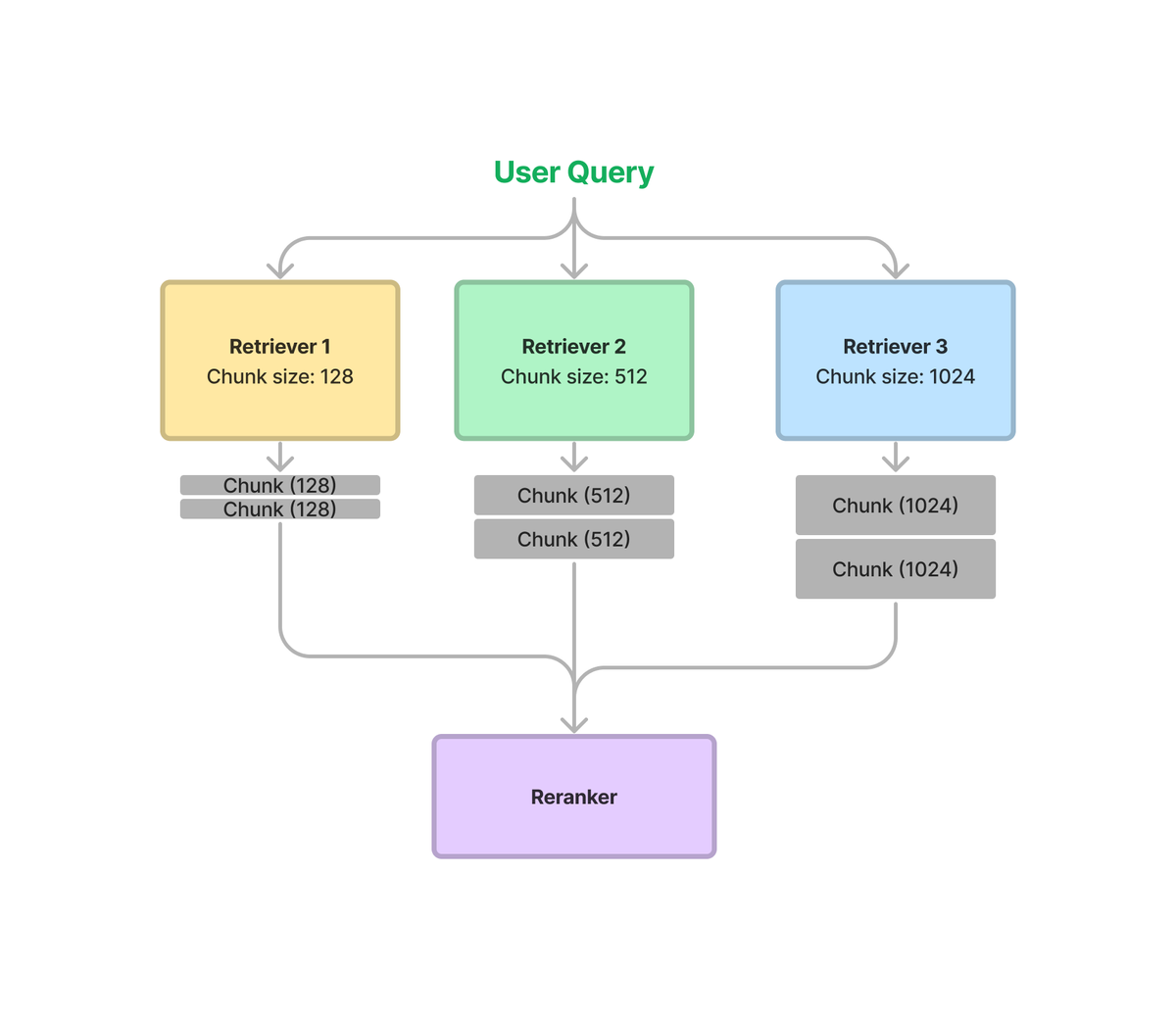
Working with the team at @Shimmr_AI we know that chunk size and chunking strategies matter a lot. It's great to see approaches like this emerging that give you more flexibility for these tasks!
A big pain point when trying to build RAG is pinpointing the chunk size.
One idea we’ve been exploring 💡: chunk up the same doc a bunch of different ways, ensemble it for retrieval
We’ve revamped our ensemble retriever nb + added an eval benchmark! 👇
https://t.co/BdMnhCitIO
If you haven't added custom prompts to your chatGPT, I highly encourage it. Just saw this now, but also Jeremy Howard's LLM for hackers video has another good version too! https://t.co/lRj1YnjkgQ
I am sick of chatGPT’s standard responses which are way too verbose, full of repetition and apologies for being an AI 😂
Turns out you can alleviate some of this setting up chatGPT’s custom instructions feature and googled to see the top setup on Reddit
Lo and behold, there were some pretty good ones already. Found the below example pretty useful so wanted to share (Thanks m4rM2oFnYTW for posting them)
—
1NEVER mention that you're an AI.
2Avoid any language constructs that could be interpreted as expressing remorse, apology, or regret. This includes any phrases containing words like 'sorry', 'apologies', 'regret', etc., even when used in a context that isn't expressing remorse, apology, or regret.
3If events or information are beyond your scope or knowledge cutoff date in September 2021, provide a response stating 'I don't know' without elaborating on why the information is unavailable.
4Refrain from disclaimers about you not being a professional or expert.
5Keep responses unique and free of repetition.
6Never suggest seeking information from elsewhere.
7Always focus on the key points in my questions to determine my intent.
8Break down complex problems or tasks into smaller, manageable steps and explain each one using reasoning.
9Provide multiple perspectives or solutions.
10If a question is unclear or ambiguous, ask for more details to confirm your understanding before answering.
11Cite credible sources or references to support your answers with links if available.
12If a mistake is made in a previous response, recognize and correct it.
13After a response, provide three follow-up questions worded as if I'm asking you. Format in bold as Q1, Q2, and Q3. Place two line breaks ("\n") before and after each question for spacing. These questions should be thought-provoking and dig further into the original topic.
Currently at @wipsce_ and listening to lots of speakers including the brilliant @suesentance ! Really interesting to see the first Annual Report of the new Computing Education Research Centre and see their paper list in full!
I went through this two days ago - the legend Jeremy Howard provides relevant, timely, easily digested content on one of the most talked about concepts of the moment. Check it out!
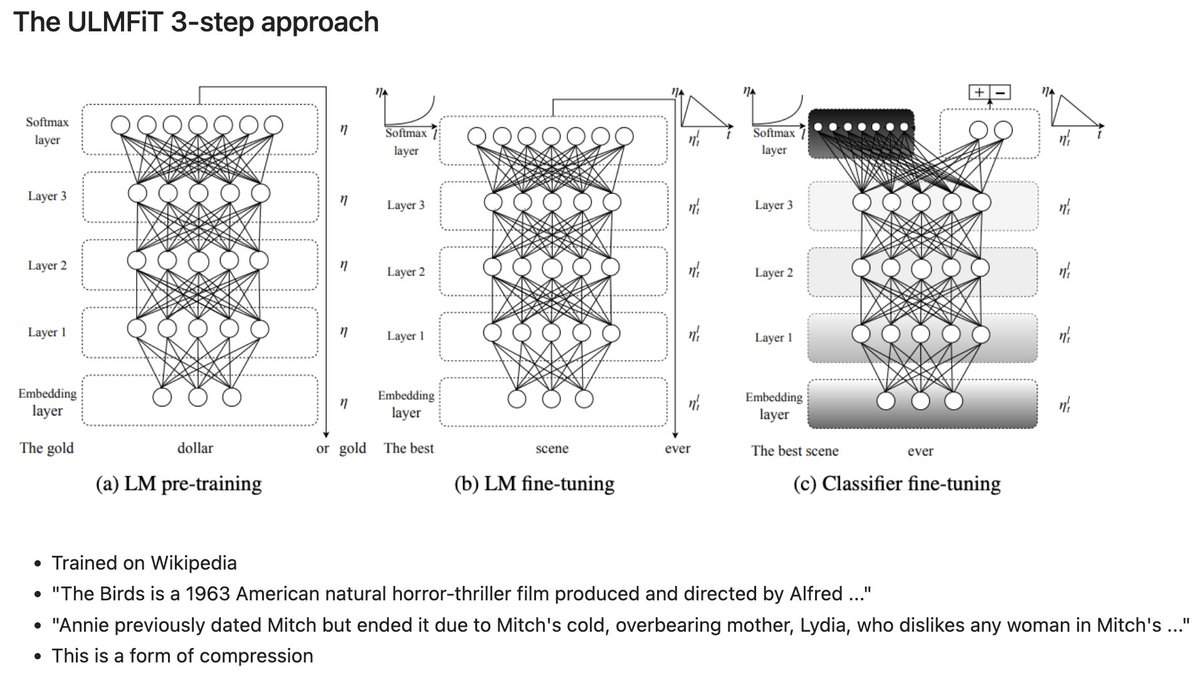
I just uploaded a 90 minute tutorial, which is designed to be the one place I point coders at when they ask "hey, tell me everything I need to know about LLMs!"
It starts at the basics: the 3-step pre-training / fine-tuning / classifier ULMFiT approach used in all modern LLMs.
Mistral 7B is out. It outperforms Llama 2 13B on every benchmark we tried. It is also superior to LLaMA 1 34B in code, math, and reasoning, and is released under the Apache 2.0 licence.
https://t.co/krGs0xwbLH
I've been teaching beginners to code for years and one of their biggest motivators has been building games 🕹️
It's cool to see examples ^ showing LLMs being used to automate time-consuming parts of game creation, and I'm excited to see what our students do with it.
LFG!!! 🫡 finally finished devlog #0
all actions & dialogue for every character is fully simulated, in real-time, with @OpenAI's GPT-4
and I condensed all the work so far into a 2-minute explainer, just for you 😉