@iranidaturan@SecRubio@marklevinshow@POTUS I hope so.
I think the world is playing checkers, he and Bibi are playing 3D chess, and the regime is just playing with themselves.
Of course, HaShem is playing infinite D chess.
If there’s only one thing I want you to remember as someone who actually grew up in Iran, it’s this:
A bully only backs down when he faces a bigger bully.
Trump’s approach is messy, unconventional, and disruptive, but that’s exactly why it has a real chance of working. Because the regime itself is messy, unconventional, and disruptive.
This is not a normal government. It doesn’t play by any rules, and it doesn’t care about looking good or ethical.
Anyone who tries to act diplomatic or “proper” with them has already lost. For the mullahs, diplomacy has always just been a fancy word for lying, deceiving, and hiding their true intentions.
Now they’ve run into someone their old tricks don’t work on. Someone who flips the table whenever he feels like it, who doesn’t care about diplomatic etiquette, and who is completely unpredictable to them.
They can’t outsmart him like they used to. Messing with the lion’s tail this time could cost them dearly, because unlike Obama, Trump actually has his finger on the trigger, and unlike @netanyahu , nothing is holding him back.
Another reason his style seems so chaotic is that the global system and other powers have long benefited from keeping the status quo, a corrupt system that quietly protected the regime. Trump is breaking that old order apart.
For Trump, this whole negotiation and deal-making process is basically a soft war. It’s a deliberate strategy to gradually disarm and weaken the regime piece by piece, at minimum cost.
Even if a deal is reached, he won’t stop, He’ll continue until the regime is so eroded and weak that the Iranian people finally have a fair chance to confront and defeat it themselves.
It won’t happen overnight, but if you look at the direction things are going, the trend is clear.
President Trump knows exactly what he’s doing. He’s not performing for us. He’s taking massive risks with his political capital.
It’s a big gamble, yes, but it doesn’t mean it won’t work. And if one person can actually pull Iran out of this cancer, it’s him. No one else. Trust the man, trust the process.
My gut started shrinking without changing a single thing about my workouts.
A simple daily shake designed specifically to feed your body with all essential micronutrients most men are missing.
India is one of the only countries, if not the only country, where Jews were never persecuted.
That's why the Jewish people will always stand with India.
Our destiny is one, and our bond will be forever. ❤️
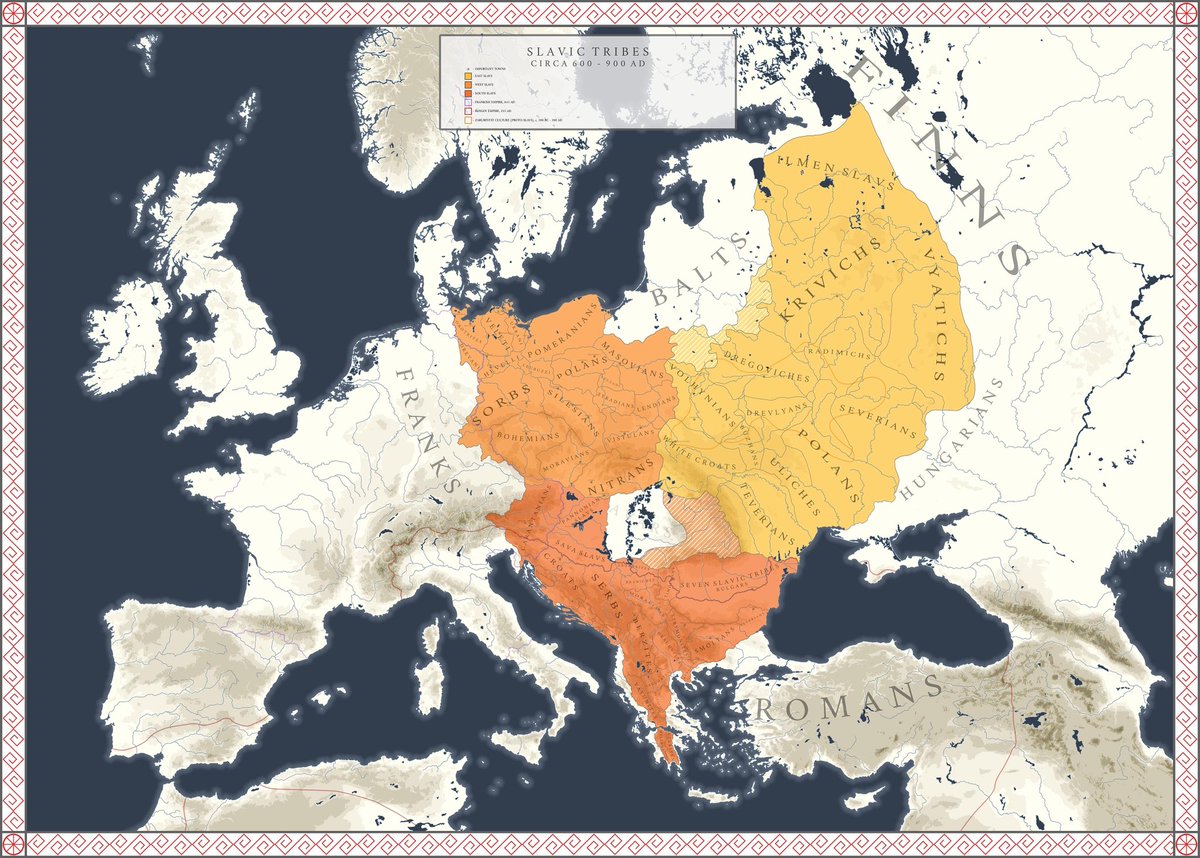
𝑺𝒉𝒂𝒄𝒌𝒍𝒆𝒔 𝒐𝒇 𝒕𝒉𝒆 𝑺𝒍𝒂𝒗𝒔
𝑻𝒉𝒆 𝑼𝒏𝒕𝒐𝒍𝒅 𝑯𝒊𝒔𝒕𝒐𝒓𝒚 𝒐𝒇 𝑾𝒉𝒊𝒕𝒆 𝑺𝒍𝒂𝒗𝒆𝒓𝒚 :
The term “white slavery” has often been misused or sensationalised in modern contexts, but historically it refers to the enslavement of Europeans, including a significant number of Slavic peoples, over centuries. One of the most striking linguistic legacies of this phenomenon is the English word “slave” itself, which derives from “Slav”. This etymology reflects the extensive enslavement of Slavic populations during the Middle Ages, when they became a primary source of captives for various empires and traders.
The connection is well-documented in historical linguistics. The word entered English around the 14th century via Old French “esclave” and Medieval Latin “sclavus”, which originally meant “Slav”. This shift occurred because, from the 9th century onward, large numbers of Slavs were captured and sold into bondage, particularly by Germanic conquerors, Viking raiders, and later Muslim powers. Byzantine Greek used “sklábos” for both Slavs and slaves, highlighting how the ethnic name became synonymous with servitude.
In the early Middle Ages, Slavic tribes, expanding across Eastern and Central Europe, frequently fell victim to organised slave trades.
Viking raiders, known as Varangians in the East, played a central role. Operating along rivers like the Volga and Dnieper, they captured Slavs during raids and sold them to Byzantine, Arab, and Jewish merchants. These captives, often referred to as “saqaliba” in Arabic sources, were transported to markets in the Islamic world, including Baghdad and Córdoba. Prague emerged as a major hub for this trade, where Slavic pagans were castrated and sold southward.
The scale was immense, though precise numbers are elusive. Archaeological evidence, such as hoards of Arabic dirhams in Slavic lands, points to a thriving exchange of silver for human captives. Estimates suggest millions may have been enslaved over centuries, fuelling economies from Scandinavia to the Abbasid Caliphate.
Later, under the Ottoman Empire, enslavement of Slavs continued through raids by Crimean Tatars and the notorious devshirme system. Known as the “blood tax”, this practice forcibly recruited Christian boys from Balkan Slavic families, converting them to Islam and training them as elite Janissary soldiers.
Between the 14th and 18th centuries, hundreds of thousands were taken, devastating communities in regions like Serbia, Bosnia, and Bulgaria. Tatar raids, dubbed the “harvesting of the steppe”, targeted East Slavic lands, supplying the Ottoman markets with captives.
This history of Slavic enslavement was not unique in its cruelty, slavery has afflicted nearly every society, but it was widespread and systematic. Slavs served as soldiers, eunuchs, concubines, labourers, and domestic servants across Europe, North Africa, and the Middle East. Unlike the racialised chattel slavery of the transatlantic trade, much of this was driven by warfare, religion, and economic demand, with pagans and non-Muslims as primary targets.
The suffering of Slavic peoples in bondage remains underrepresented in broader historical narratives, partly because it challenges simplistic views of slavery as confined to specific racial or colonial contexts. Recognising this chapter does not diminish other atrocities but enriches our understanding of human exploitation as a tragic constant across cultures and eras.
Appreciating the son of Cuban immigrants who rose from Miami roots to become the first Latino Secretary of State. Leading U.S. foreign policy with grit, principle, and real love for America.
How would you describe his performance so far?
1. Good
2. Excellent
3. Bad