❤️🩹Michael Jackson y la increíble historia del niño que recibió un trasplante de hígado gracias a él. Sin la ayuda de Michael, Bela Farkas no habría sobrevivido.👉
Michael Jackson is the reason I’m an artist today. Even if the sound wasn’t for you, the fact that you heard his influence in it is the biggest compliment you could give me. ❤️
Seeing the biggest pop star in the world address the crowd right here in the middle of NEW YORK CITY, just a month after 9/11, was such a powerful moment.
We were all still grieving, still processing, and there was so much fear and uncertainty.
Moments like this gave New Yorkers a chance to come together, find comfort, feel a sense of unity and solidarity, and begin to heal. This is the POWER of Michael Jackson’s music: bringing people together, especially when the world feels like it’s falling apart. #INVINCIBLE25
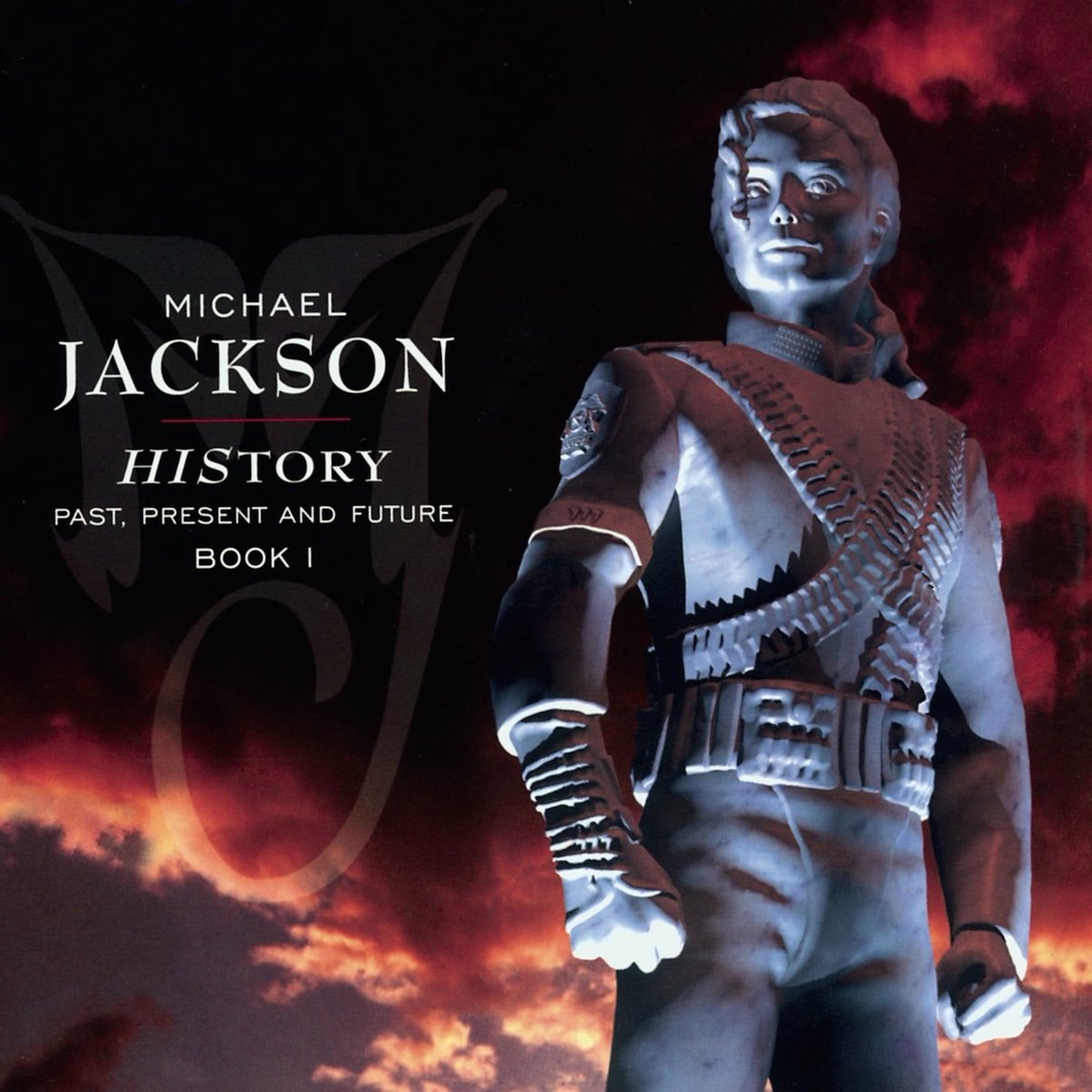
Michael’s love for classical music runs through his entire discography, however his use of certain samples and sounds from this genre throughout HIStory album is very intentional and goes a lot deeper to the overall meaning of the album.
This is a VERY LONG but much needed thread. Grab a tea and a snack and admire the beauty and genuis of Michael's brain and how he used his gift of music to create the greatest album to ever exist.🧵
happy 30th anniversary of ghosts!👻 i did a little dramaturgical reading of this legendary short film for my fellow ghosts enthusiasts. hope you enjoy reading it!🤍
En 1984, el presidente de Estados Unidos, Ronald Reagan, concedió a Michael Jackson un reconocimiento especial por su contribución a la Campaña Nacional contra la Conducción Ebria, alertando de los peligros de conducir bajo los efectos del alcohol.
“There is no question Michael Jackson was different. The question is why this difference incited such fervent disparagement and abuse. One of the qualities of Jackson is that he refuses to compromise his "difference." He never becomes "normal”. Rather, he is true to himself and flaunts his unique, multi-faceted identity, to the frustration of those who would like him to fit in more predictable boxes. His differences were "impenetrable, uncontainable, and they created enormous anxiety. Please be Black, Michael, or white, or gay or straight, father or mother, father to children, not a child yourself, so we at least know how to direct our liberal (in)tolerance. And try not to confuse all the codes simultaneously."
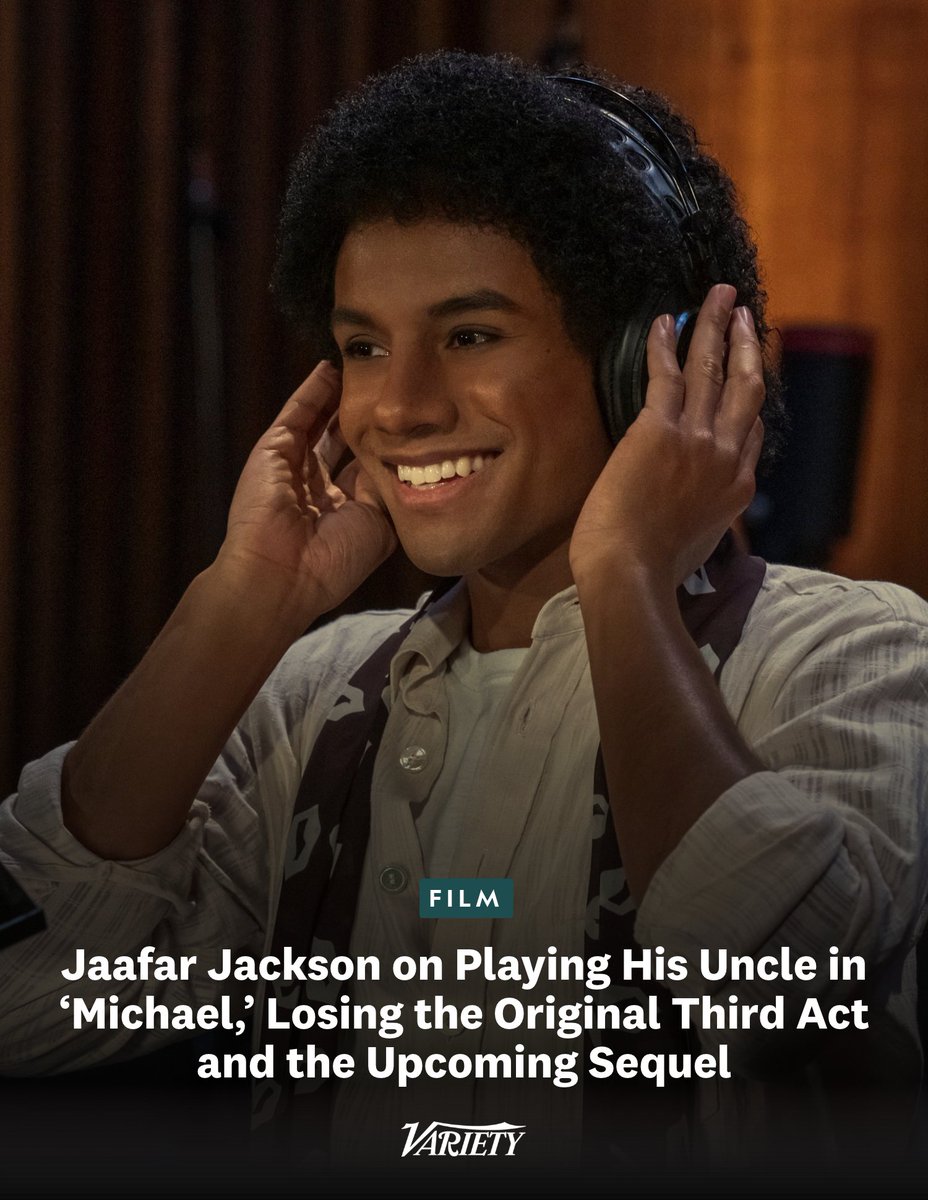
Jaafar Jackson says he's "more than ready" to start filming the "Michael" sequel:
"I haven’t been told anything concrete, but whatever decision is made, I’m more than ready to get back into it and excited for where that goes. I haven’t been told a date or anything solid yet. As far as my schedule, it’s open."
https://t.co/qbI0gJe3Vd
In 1993, Michael Jackson wrote a heartfelt introduction to a family cookbook, ‘Pigtails and Frog Legs’ by Neiman Marcus.
“Remember when you were little and your mother made a pie for you? When she cut a slice and put it on your plate, she was giving you a bit of herself, in the form of her love. She made you feel safe and wanted.”
You don’t write words like these unless that compassion genuinely comes from within ❤️
It is time to put to rest a nearly 40-year-old narrative of betrayal portraying Michael Jackson’s acquisition of ATV Music Publishing as a moral failure toward Paul McCartney.
What the historical record shows is that Jackson not only respected his friendship with McCartney; he recognized its significance and took the necessary steps before proceeding with the acquisition.
In its 2021 decision, Estate of Michael J. Jackson v. Commissioner (T.C. Memo. 2021-48), the United States Tax Court recorded a significant detail about the acquisition.
Jackson was concerned about purchasing what he regarded as the creative property of a friend. Before submitting a bid, he instructed his attorney, John Branca, to contact both Paul McCartney and Yoko Ono.
According to the court’s account, both indicated that they were not interested in purchasing the catalog.
Branca’s account provides further detail: Yoko Ono reportedly preferred Jackson to acquire the rights rather than a major corporation, while McCartney’s attorney considered the asking price too high.
There is also a separate account documented by The Paul McCartney Project, citing Bert Reuter, who represented the seller, Robert Holmes à Court. According to Reuter, McCartney had been given the first opportunity to purchase the catalog but did not take it.
What began as a legal and highly successful business acquisition, undertaken after documented consideration for McCartney, has been framed for nearly forty years as an act of personal betrayal.
In the end, the problem does not appear to be that the catalog was under third-party ownership, as it had been since 1969. The problem appears to be who eventually owned it: Michael Jackson.
Sources
1. [Estate of Michael J. Jackson v. Commissioner, T.C. Memo. 2021-48, p. 13](https://t.co/PDOJXnTkT7)
2. [The Paul McCartney Project — Michael Jackson Buys Northern Songs](https://t.co/dOCYsw0QoB)
stranger in moscow tells the story of a forgotten soviet, little susie is the story of a child's suffering. the earth is screaming through michael on earth song. history is his history, but michael took his pain and made it a reflection of society's larger pain. a concept album.
@venuswiz Haven't people seen the movie "Grease"? Michael was literally inspired by this film for TWYMMF. Even Michael's dance moves are very similar to John Travolta's. I don't see anyone criticizing the movie "Grease"... Come on
Ever wonder why Earth Song sounds so raw, so fierce, so visceral, so … unhinged?
It’s Because of Who Michael Jackson is talking to.
Not who you think 🤔
Earth Song is not a lecture to humanity.
It’s an angry prayer.
Lamentation from a man to his Creator.
Look at the lyrics again:
Michael Jackson confronts God.
Now, not many humans have the balls to put God on the witness stand, for interrogation.
Maybe, a few crazy type Bible prophets: Jeremiah, Job, Jonah, Habakkuk,
angry about the state of humanity,
or their own suffering.
And, God’s answer may never come.
But, That’s where we come in.
We are witnesses to the cross examination.
When we react, we can become the answer to Earth’s deepest prayers.
In another song, Cry (2001), Michael Jackson admits,
You're the chosen one,
If we all cry at the same time tonight
And when all calls
I will answer all your prayers
You can change the world (I can't do it by myself)
You can touch the sky.
Much earlier, in 1984, Michael Jackson teaches us not to wait for Anyone, because, WE Are the World, and WE can make the world a better place.
In 1991, Michael Jackson says WE have the power of healing: Heal the World.
Divinity was Michael Jackson’s mission.
And he taught us we can be like God.
The name Michael means, Like God.
This is why he is misunderstood.
Because he was operating at a level beyond most minds.
But in a 100 years to come, when lies have fallen to the ground like dead leaves in winter, his words will remain,
reminding us to protect earth,
and fight for the children he lived, cried & died for.
Earth Song is the Winner of the Doris Day Music Award (presented by the Humane Society of the United States),
Grammy Awards 1997 Nominated for Best Music Video, Short Form,
No. 1 for six consecutive weeks on UK Singles Chart & Jackson's best-selling UK single of all time.
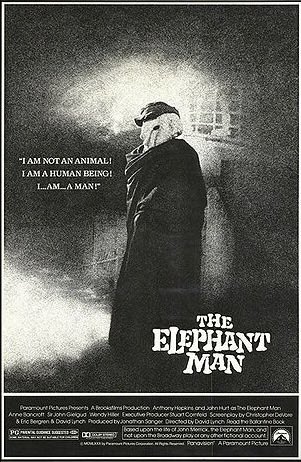
For anyone who doesn’t know the story, Joseph Merrick was a real man who had severe physical deformities. Because of his appearance, he was exhibited to the public as “the Elephant Man.” People paid to come and look at him. His life became a spectacle. Sound familiar? I highly, highly recommend watching the film too! It will tear you to pieces, but you’ll definitely gain more insight into Michael’s inner world.
This is so interesting to me. What is it about Michael that affects people this deeply? How did one person create such a powerful parasocial bond with so many people?
The biopic seems to be doing it so well too. But being an MJ fan has always felt a little like this. There’s really something worth thinking about here.
Here’s my take: I think part of it is the contrast. Michael could seem almost superhuman on stage, yet incredibly vulnerable and sensitive off it. The more you learn about him, the more you feel there’s another layer to understand.
And then there’s the urge to protect him. I see this so much in MJ fans. It’s not only I love his music or I wish I could have met him. IT BECOMES I WISH SOMEONE HAD PROTECTED HIM. I wish he knew how loved he was.
Maybe that’s part of what makes the bond so intense. You don’t just feel like you’re receiving something from Michael.
SOMEHOW, YOU WANT TO GIVE SOMETHING BACK TO HIM TOO. AND BECAUSE YOU CAN’T, THAT FEELING NEVER REALLY GETS RESOLVED.
I also think people recognize parts of themselves in himself: loneliness, shyness, childhood wounds, feeling misunderstood, wanting to be loved. His story gives people somewhere to place their own feelings.
And what fascinates me most is that this is still happening to people who never experienced Michael while he was alive. If a whole new generation can form the same kind of attachment, then it can’t just be nostalgia.
I’d love to know what you think. Why do you think Michael has this effect on people?
Michael Jackson buys a publishing catalogue → “He exploited other people’s work.” “He got rich off their compositions.” “Immoral.”
Paul buys publishing rights to other people’s songs → savvy businessman, smart investment, legitimate publishing business.
Same business model. Different framing. Predictable
And what exactly did Michael Jackson owe Paul McCartney that he supposedly failed to pay?
Can you explain what the obligation was and provide a source for it?
Michael Jackson had entered a position of institutional and economic power in relation to one of the most canonized bodies of work in Western popular culture.
That altered the symbolic hierarchy.
In the British cultural imagination — and beyond it — the Beatles function as something close to national cultural property, part of a cultural heritage.
Despite the fact that the Beatles catalogue had already spent years under corporate ownership, what changed in 1985 was not the existence of third-party ownership, but the identity of the owner — and with it, the language surrounding ownership itself.
Once the publishing rights passed to Michael Jackson, ownership became personalized.
What would ordinarily be understood as a commercial transaction within the publishing industry was increasingly narrated as the appropriation of something culturally sacred.
He was no longer only a Black American artist who had conquered the pop marketplace. He was now the owner of part of one of Britain’s most powerful cultural myths.
The controversy was never only about ownership. It was about symbolic power: who is culturally imagined — or allowed — to have the natural right to own what.




2. [The Paul McCartney Project — Michael Jackson Buys Northern Songs](https://t.co/dOCYsw0QoB)](https://pbs.twimg.com/media/HUviFYRXAAAC4C7.jpg)












2. [The Paul McCartney Project — Michael Jackson Buys Northern Songs](https://t.co/dOCYsw0QoB)](https://pbs.twimg.com/media/HUviF0fXIAAT-ie.jpg)