Un agradecimiento especial al Presidente Nayib Bukele y al pueblo salvadoreño por estar entre los primeros países en extender su mano a Venezuela en estos momentos de necesidad. La rapidez de su respuesta y el envío de equipos de búsqueda y rescate son un poderoso ejemplo de liderazgo, solidaridad y compromiso con la vida humana. 🇻🇪🌎🤝#BúsquedaYRescate #Solidaridad #Resiliencia #Esperanza
Un agradecimiento especial al Presidente Nayib Bukele y al pueblo salvadoreño por estar entre los primeros países en extender su mano a Venezuela en estos momentos de necesidad. La rapidez de su respuesta y el envío de equipos de búsqueda y rescate son un poderoso ejemplo de liderazgo, solidaridad y compromiso con la vida humana.
🇻🇪🙏🌎🤝
#Venezuela #BúsquedaYRescate #Solidaridad #Resiliencia #Esperanza
The deeper reason Shakespeare remains essential is that he offers something increasingly rare: compression of truth. In a world saturated with information, he distills complex human behavior into clear, observable patterns. He shows how ambition grows, how language manipulates, how power destabilizes, and how individuals fail themselves long before external forces defeat them. This is not simply literary value; it is practical insight. Great insight from @CultureExploreX
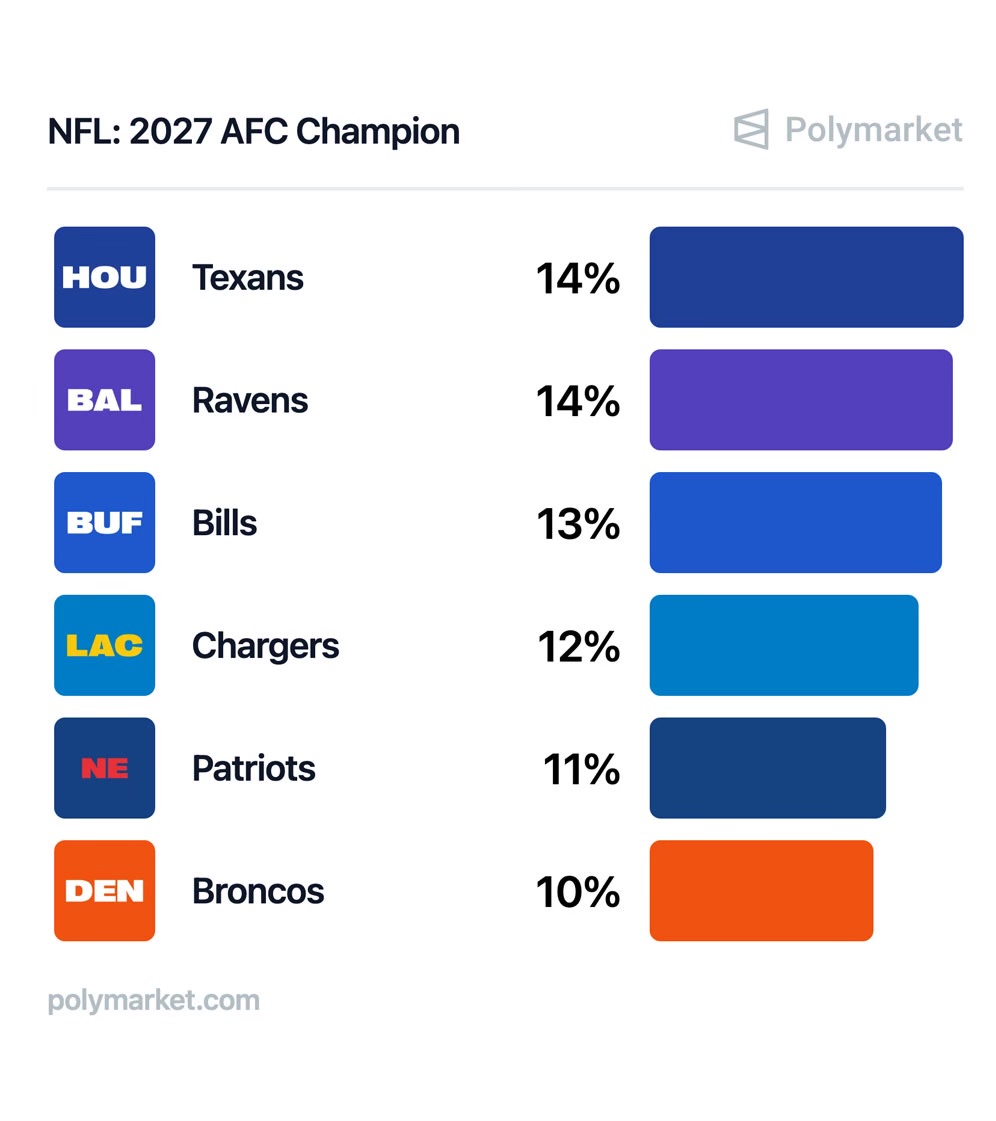
𝗕𝗿𝗲𝗮𝗸𝗶𝗻𝗴: The Texans are now the favorites to win the AFC championships next season on Polymarket.
CJ Stroud is an elite franchise QB and is finally getting the respect he deserves from the market makers.
Houston will be a PROBLEM next season 😈
“The problem in middle life, when the body has reached its climax of power and begins to decline, is to identify yourself, not with the body, which is falling away, but with the consciousness of which it is a vehicle. This is something I learned from myths. What am I? Am I the bulb that carries the light, or am I the light of which the bulb is a vehicle?
One of the psychological problems in growing old is the fear of death. People resist the door of death. But this body is a vehicle of consciousness, and if you can identify with the consciousness, you can watch this body go like an old car. There goes the fender, there goes the tire, one thing after another—but it’s predictable. And then, gradually, the whole thing drops off, and consciousness rejoins consciousness. It is no longer in this particular environment.”
— Joseph Campbell
Just returned from my first trip to China, mostly looking at the energy and robotics industries. Fascinating. Random observations, both business and general, below...
1/x
First book of 2026 finished and it’s wonderful. A lovely, lovely read. Thank you, @ClerkofOxford. Inspired to return to The Wanderer and The Dream of the Rood. I don’t think I’ve read them since university.
Tatiana Schlossberg has passed away at 35. Please read this beautiful essay she published last month. It's one of the best things I've read in a long time.
https://t.co/eVU8UzYi46
Every Christmas Eve, I think about George Bailey.
He dreamed of escaping Bedford Falls—of shaking off the dust of a small town, building skyscrapers, exploring the world. Instead, he stayed. He ran the Building & Loan his father left behind. He sacrificed his college money, his honeymoon savings, his chance to see the world, over and over, because people needed him.
By the time the crisis hits, George feels like a failure. His life looks like one long series of missed opportunities, thwarted ambitions, and quiet resentments. He stands on the bridge, convinced the world would be better without him.
Then Clarence shows him the truth: a Bedford Falls without George Bailey is a darker, meaner, hollowed-out place. The people he quietly helped, the small acts of integrity he performed without recognition, the risks he took to protect others—those weren’t detours. They were the substance of his life.
The film’s deepest insight isn’t just that “no man is a failure who has friends.” It’s that real impact is almost always invisible in the moment. The lives you steady, the small kindnesses you extend, the responsibilities you shoulder when no one else will—these things ripple outward in ways you may never see.
A strong sense of purpose doesn’t erase pain; it transforms it. It doesn’t merely explain why hard things happened. It asks: What are you now responsible for because they happened?
Faith, at its best, does the same. It doesn’t promise that everything was “meant to be” in order to make suffering palatable. It invites you to look at what has been entrusted to you in light of what you’ve endured.
George’s story reminds us that meaning is rarely found in the grand escape, but in the faithful presence. The dreams we surrender don’t always vanish—they often become the raw material for something more enduring than we imagined.
If you’re carrying the weight of roads not taken, of dreams deferred, of a life that feels smaller than you once hoped—watch It’s a Wonderful Life again tonight. Not as nostalgia, but as revelation.
You may not see the full difference you’ve made yet.
But it’s there.
And it matters more than you know.
Merry Christmas, friends.
🎄🇨🇽🎅🦌☃️⛪️✝️❤️
I'm obsessed with cognitive biases.
A "cognitive bias" is a systematic error in thinking that destroys decision-making.
11 most powerful (and dangerous) cognitive biases I've found: 🧵
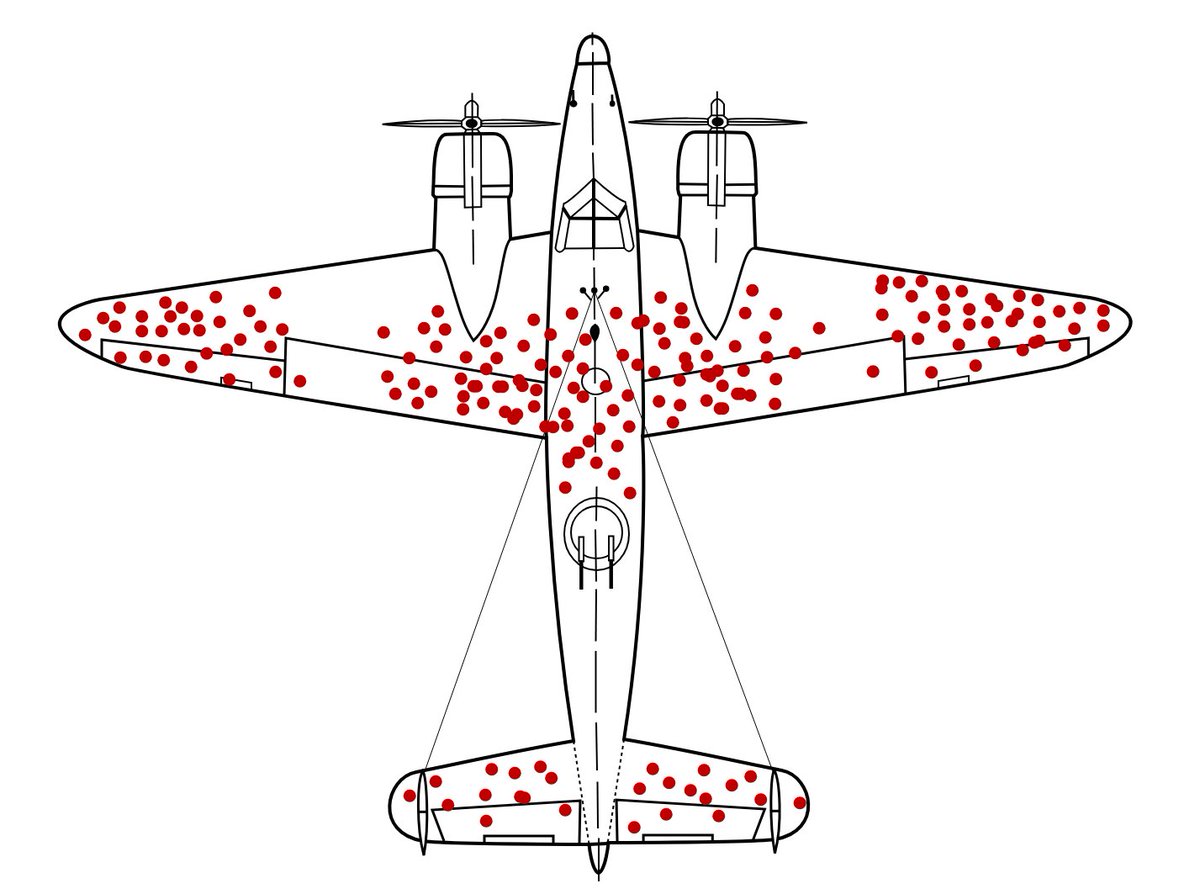
1. Survivorship Bias:
Most countries build disaster partnerships reactively, usually after an event exposes vulnerabilities. But resilience requires partnerships created and empowered at the sovereign level. For a partnership to work, it must begin before an emergency and be formalized at the highest level of government. It must include the public, private, and philanthropic sectors, and clearly define who leads, who supports, and how decisions are made under stress.
These relationships form an ecosystem where policies can align rather than conflict. Successful responses happen when the highest levels of government come together to formally recognize and integrate each and every partner who will ultimately be asked to respond in the event of a disaster.
Prometheus is committed to helping governments and organizations build those relationships and strengthen those systems. Check out our latest article "Making Partnerships Work in Disaster Response: Why the Highest-Level Relationships Determine Success or Failure".
This is only the beginning of a broader, ongoing conversation that is long overdue. In the months ahead, we’ll continue sharing resources, frameworks, and insights that help nations build more resilient futures. #DisasterPreparedness #DisasterResponse #CrisisCoordination #DisasterPartnerships #NGO
https://t.co/MaEPLlN65m
If you are one of the expected 60 million visitors to Japan in the next three year you are likely to visit Tokyo, and if you do may I recommend possibly the last outdoor experience in central Tokyo that is the closest you will ever get to pre-modern pre-concrete old Tokyo: the Yagiri no Watashi ferry service. You can be ferried across the Edogawa river on the border between Tokyo and Chiba Prefecture, the ride takes just a few minutes and is completely pointless since there is nothing to do at all on the Chiba side, you just get off, and then return to the boat to get back to Tokyo. A trip is 300 yen. There are no life vests. The ferryman is sullen and tightlipped (if you are lucky). There are no facilities and the ride isn't even manual anymore (the ferries have motors), operating hours are tight and the walk to the ferry is long and not very interesting.
Still, if you keep your head down, before the engine starts, and you focus on the watery distance, you can almost imagine it is 1825 again. Or 1225. It doesn't matter.
A few seconds of time travel away from despicable modernity is as good as it gets.
#矢切の渡し
I'M BACK! After getting hacked on Oct. 27, I'm back on X and will be tweeting and retweeting like a fiend. I lost about 6,000 followers. I want to thank those who stuck with me. I really do appreciate it. Also, thank you to everyone who reached out to see if I'm still alive!
Finland's underground data centers heat entire city blocks using server waste heat
In Finland, several data-centres now feed their waste heat into municipal district-heating networks instead of simply dumping it into the air. For example, waste heat generated by data-centre cooling is captured and transferred into the district-heating grid, providing carbon-neutral heat to thousands of homes and public buildings. This reuse of thermal energy helps reduce reliance on fossil-fuel heating, cuts emissions, and turns the by-product heat from digital infrastructure into a genuine resource rather than waste.