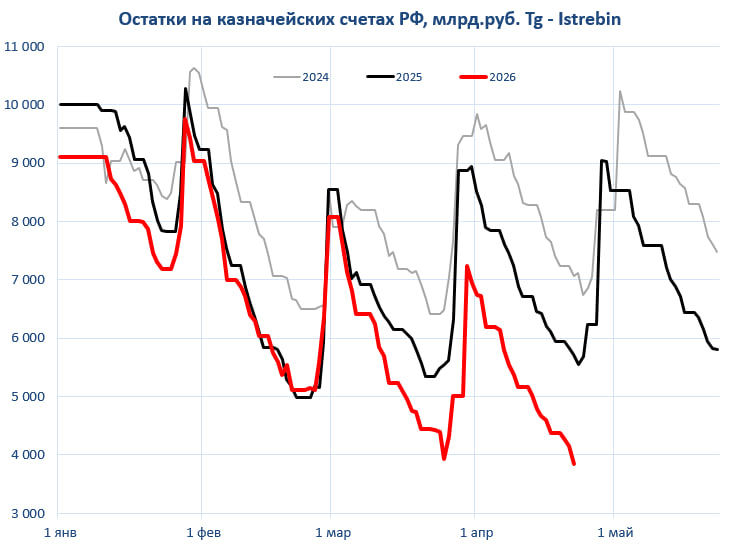
Wow...the balance in the treasury accounts has dropped to 3.840 trillion. THAT'S THE LOWEST IN 3 YEARS!!!!
It's noteworthy that in December the balance was 12 trillion rubles, and now it's 3.84 trillion!!!!!
so what we see in a 2026 Shahed UAV
STMicroelectronics 30th week of 2025
Analog Devices 30th week of 2025 (if not a conterfeit)
Future Technology Devices International Ltd. 20th week of 2025
Infineon Technologies 19th week of 2025
various Chinese parts of 2026-2025
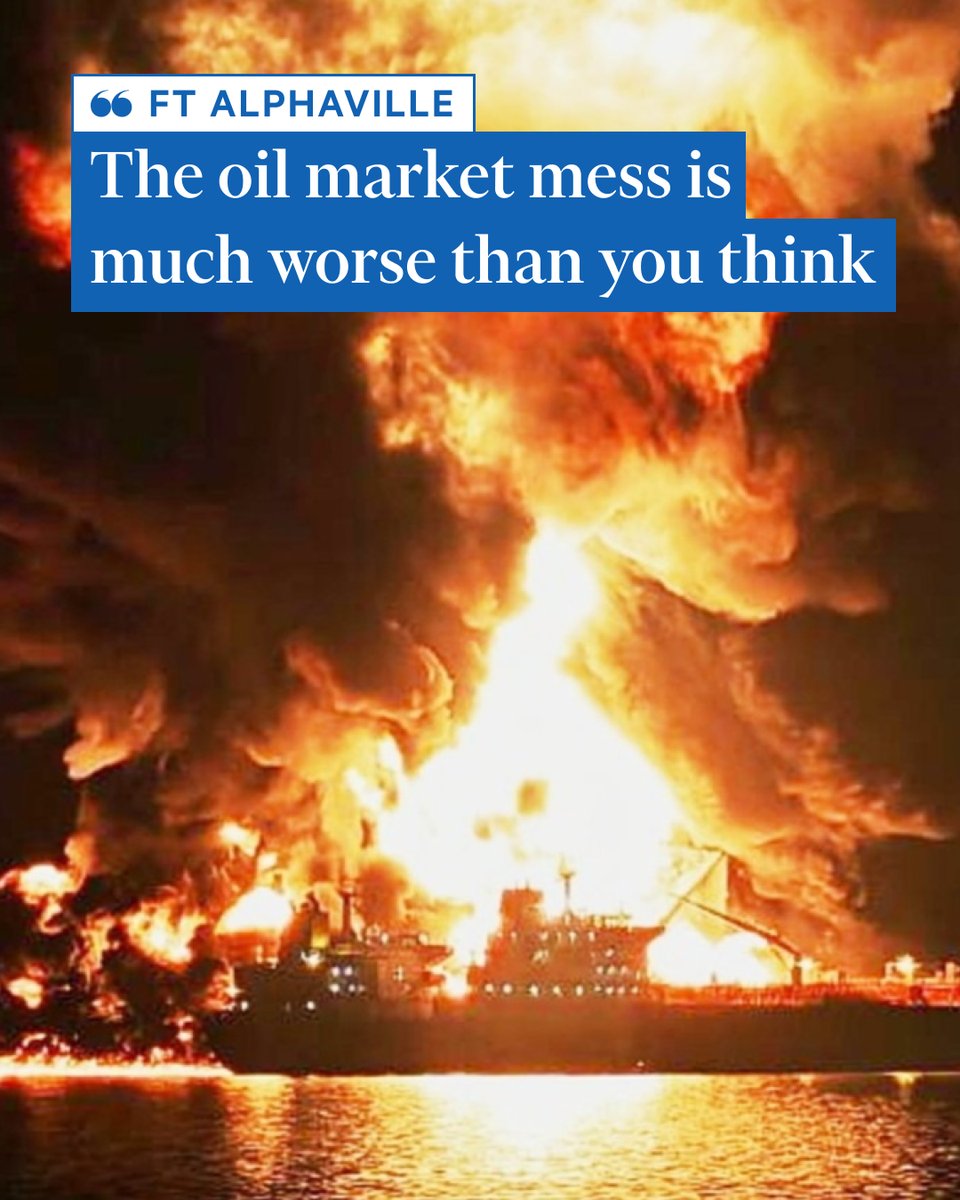
The jumps in the Brent and West Texas Intermediate oil price benchmarks actually understate the degree of dislocation, writes Alphaville's Robin Wigglesworth. Look at the long-term prices of Dubai and Omani oil to see the bigger picture: https://t.co/1ZsLuEFK3N
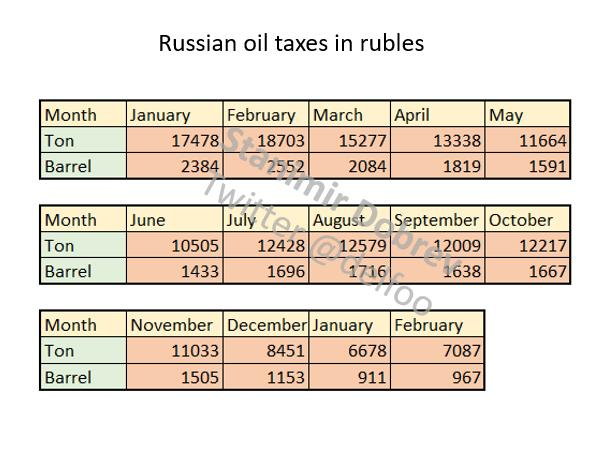
The Russian oil taxes for February 2026 are out, they 6,12% higher than January 2026 but are 62,1% lower than February 2025. The slight increase from January is the average price for Urals in January ( which is used to calculate February taxes ) was 40,95 USD per barrel.
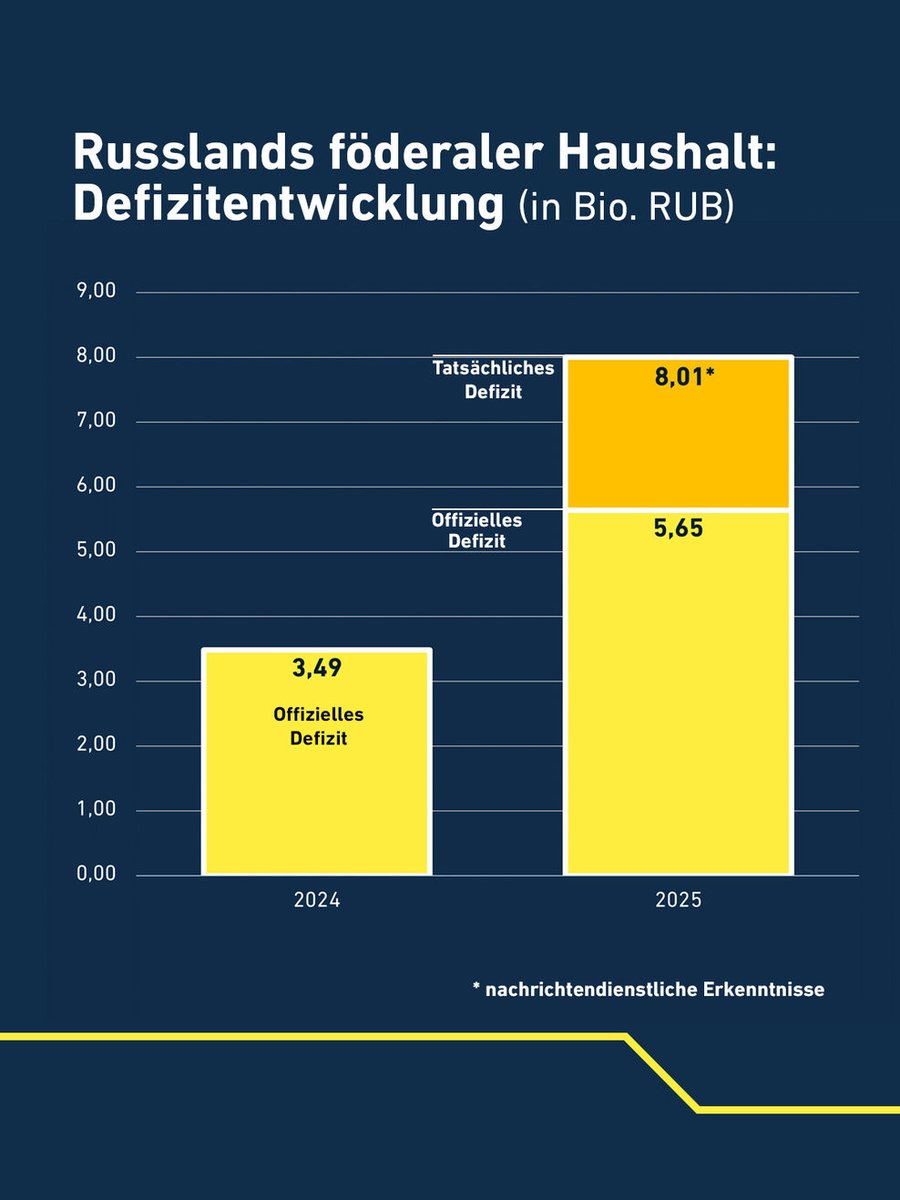
Germany's intelligence service BND says Russia's federal budget deficit was actually 3.6% in 2025, not 2.6%. This was exactly my final estimate in early December, based on spending patterns of the past. If true, the deficit was probably hidden in other public budgets.
Russia’s federal budget deficit reached ₽3.45 trillion ($23.4bn) in Jan–Feb 2026 — over 90% of the full-year deficit target (₽3.79 trillion) already spent in just two months. The key driver: oil and gas revenues collapsed by 47% y/y, falling to ₽826bn.
A comprehensive maritime services ban would also be a strong response to schemes designed to hide the origin of Russian oil — ship-to-ship transfers, reflagging, opaque intermediaries. Instead of chasing evasion tactics, we restrict capacity at its core.
Russia’s economy and budget are in their most vulnerable state since the full-scale invasion. Yet the Kremlin keeps targeting civilian infrastructure and refuses serious negotiations. This is the moment to increase pressure — not ease it.
That would translate into roughly a 35% drop in budget revenues compared to 2025 — with further decline thereafter. For a war economy heavily dependent on oil income, this is a systemic shock.
Cement sales in Russia fell nearly 30% y/y in January — an all-time low. Cement production dropped by almost 10% in 2025. Even after seasonal adjustments, this points to serious trouble in construction. Demand has been falling since 2024, signalling a structural slowdown.
Russian industrial-scale production of drones has changed the character of the war in Ukraine last year. From 2024 to 2025, drone attacks rose 5x, from 11,000 to 55,000.
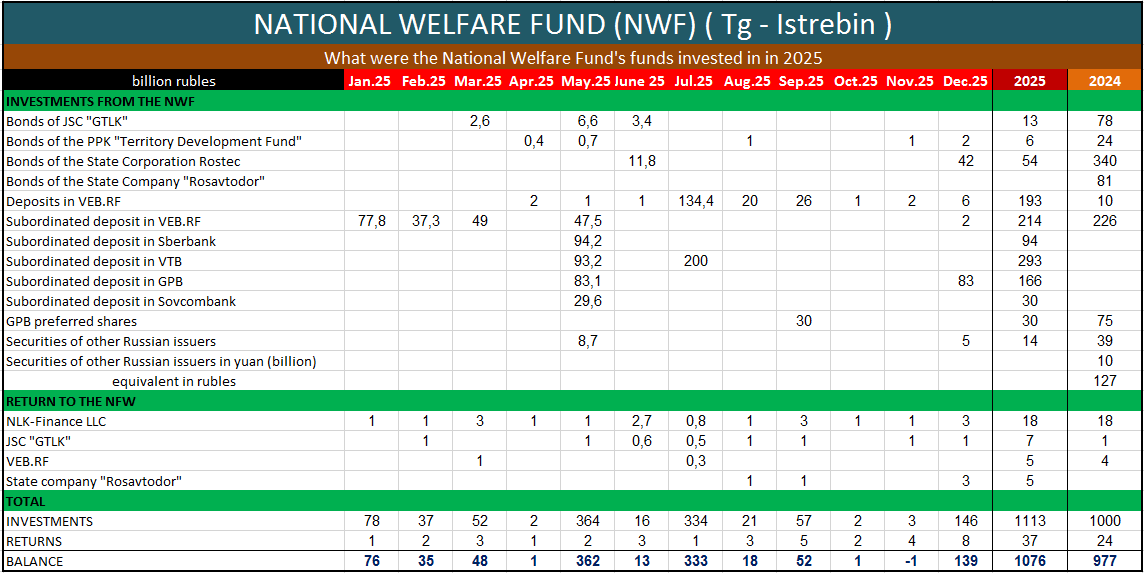
In Russia, 1,020 trillion rub were spent to rescue state-owned banks.
2024 - 311 billion rub
2025 - 1020 billion rub
Funding received:
- VEB - 407 billion
- Sberbank - 94 bil
- VTB - 293 bil
- Gazprombank - 196 bil
- Sovcombank - 30 bil
The banking system is collapsing
Russia’s car market shrank in value for the first time in a decade, despite rising prices for both new and used vehicles. In 2025, the passenger car market fell 7.8% to ₽13.8 tn — a clear indicator of sanctions-driven stress in the Russian economy.
Now officially: Russia’s 2025 oil & gas budget revenues fell to ₽8.48 tn — 23.8% lower than in 2024, per the Finance Ministry. The problem: export volumes are unchanged. Time to go after volumes — a full maritime services ban.
Bottom line:
Stronger sanctions on Russian oil and LNG are geopolitically effective, legally feasible, and economically aligned with US interests — while directly reducing Russia’s capacity to fund the war.
Recent US sanctions on Rosneft and Lukoil are already having a tangible impact.
The Urals discount widened sharply (≈$25–30/bbl range), while tanker freight and insurance costs increased, directly cutting Russia’s net export revenues.
The same logic applies to Russian LNG.
Russian LNG undermines new US projects like Plaquemines (LA) and Corpus Christi Stage III (TX).
Sanctioning Russian LNG and accelerating Europe’s phase-out would secure markets for US LNG.