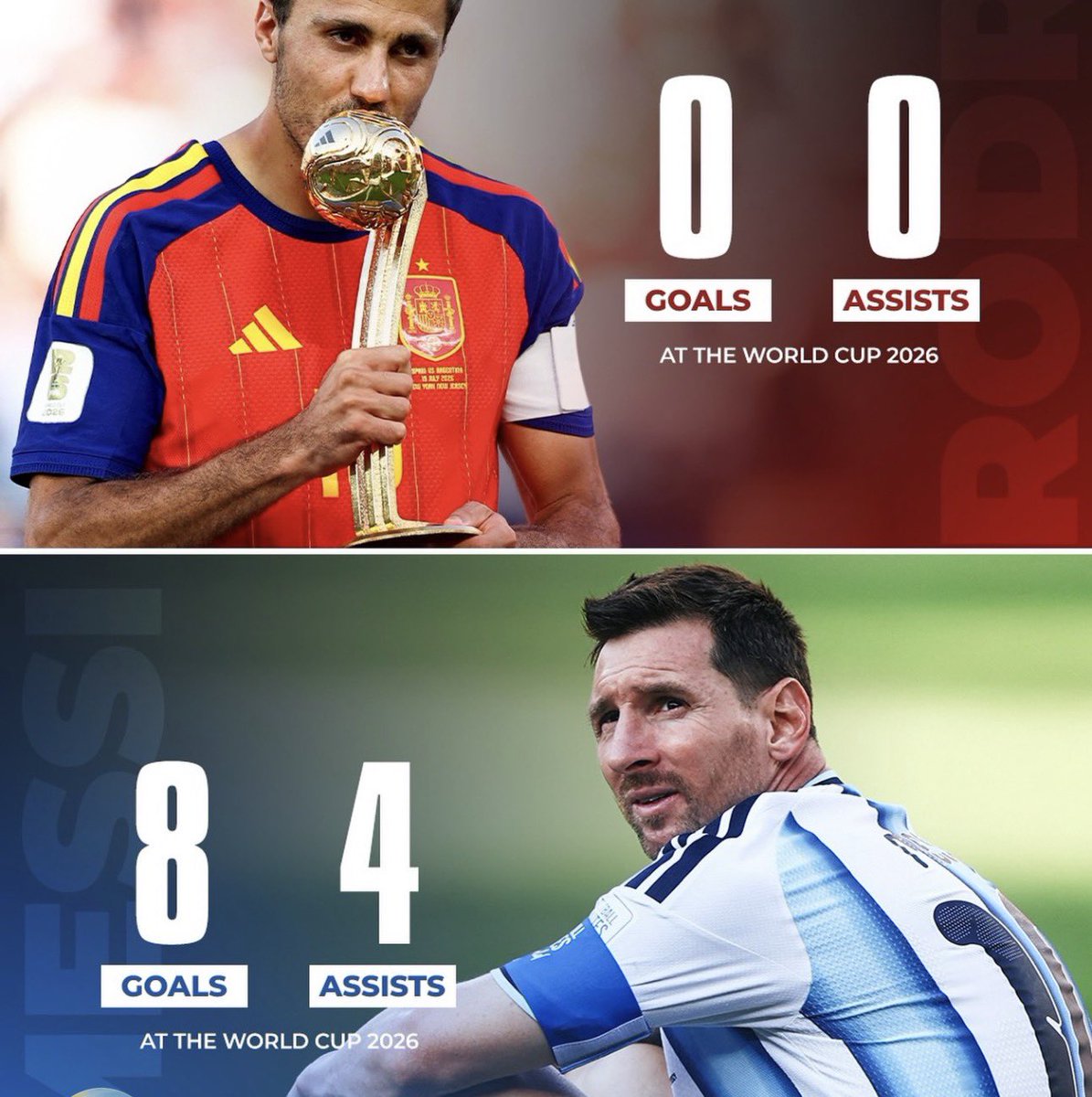
A terrifying fact you should know:
Imagine a parallel world where 39-year-old Maradona was the best player at the 1998 World Cup and led Argentina to the final.
Where 39-year-old Zidane was the best player at the 2010 World Cup and led France to the final.
Where 39-year-old Ronaldo Nazário was the best player at the 2014 World Cup and led Brazil to the final.
Where 39-year-old Ronaldinho was the best player at the 2018 World Cup and led Brazil to the final.
Sounds absurd, right?
Yet that’s exactly what Lionel Messi did at the 2026 World Cup.
Messi’s longevity is something football may never witness again and to maintain that level at 39 years old is simply unprecedented. 🐐
Mesopotamia was never the cradle of civilisation. India was.
I spent forty years in international shipping, not academia. When I began researching the history of maritime trade, I had no orthodoxy to defend. I followed the evidence, and it kept arriving in the same place: the Indian subcontinent.
Nineteenth century archaeologists dug in Mesopotamia because the climate preserved artefacts, the biblical sources pointed them there, and the Ottomans allowed the excavations. That is the entire basis for the myth of Mesopotamia as "the cradle of civilisation."
Nobody applied the same rigour to India. Mohenjo-daro was not discovered until 1922. By then the narrative had already hardened.
What was actually there was the largest civilisation of the ancient world. Three hundred cities. Fifty thousand people in each, by 2600 BC. Two thirds of them stood on the banks of the Sarasvati, the central and greatest of the seven rivers described in the Rig Veda, flowing down from the Himalayas before the river vanished entirely by 1900 BC. The Vedic kings claimed territory stretching "sea to sea," from Afghanistan to Maharashtra, some 1.5 million square miles, against Egypt's 13,000. A dock at Lothal built to handle thirty ships of sixty tons, unmatched in Europe for four thousand years. When it was first excavated, it was recorded as a bathing pool.
When the scale became impossible to dismiss, the theory was not corrected. It was replaced with a story of pale-skinned nomads from the steppe who supposedly arrived around 1500 BC and brought civilisation with them. There is no evidence. The chronology doesn't work. The Vedas describe no invasion.
In 2019 a Harvard-led genetic study revived the claim, and the press reported it as confirmation. It was not. The same study found the builders of these cities were indigenous. The Sarasvati river that the Rig Veda described had already dried up before these newcomers arrived. What the study also found is that a small group of men, arriving after the Sarasvati had already dried up, interbred with the existing population and left a genetic signature. That is all.
So, where they chose to dig was mostly an accident of climate and access. The Aryan invasion theory was constructed because an Indian civilisation that owed nothing to Caucasians was a fact the late nineteenth century could not accommodate.
Link to full Substack essay with sources in the comments below.
@rusterx24@LeoMessiFanZone well, there's no denying Spain had a wonderful tournament that's why they are Champion but this doesn't take away the credit from Argentina. Its a fact that as an Individual, Messi had more impact throughout the Argentinian campaign that helped them reach finals.