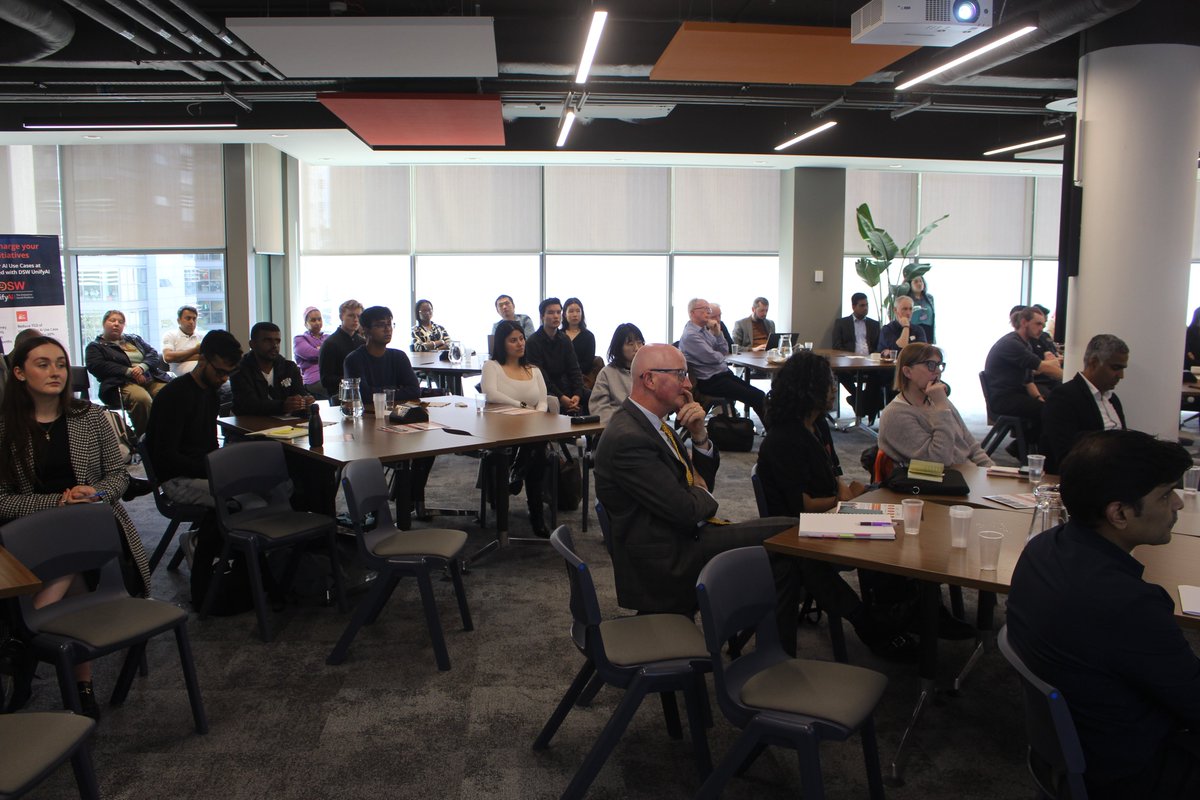
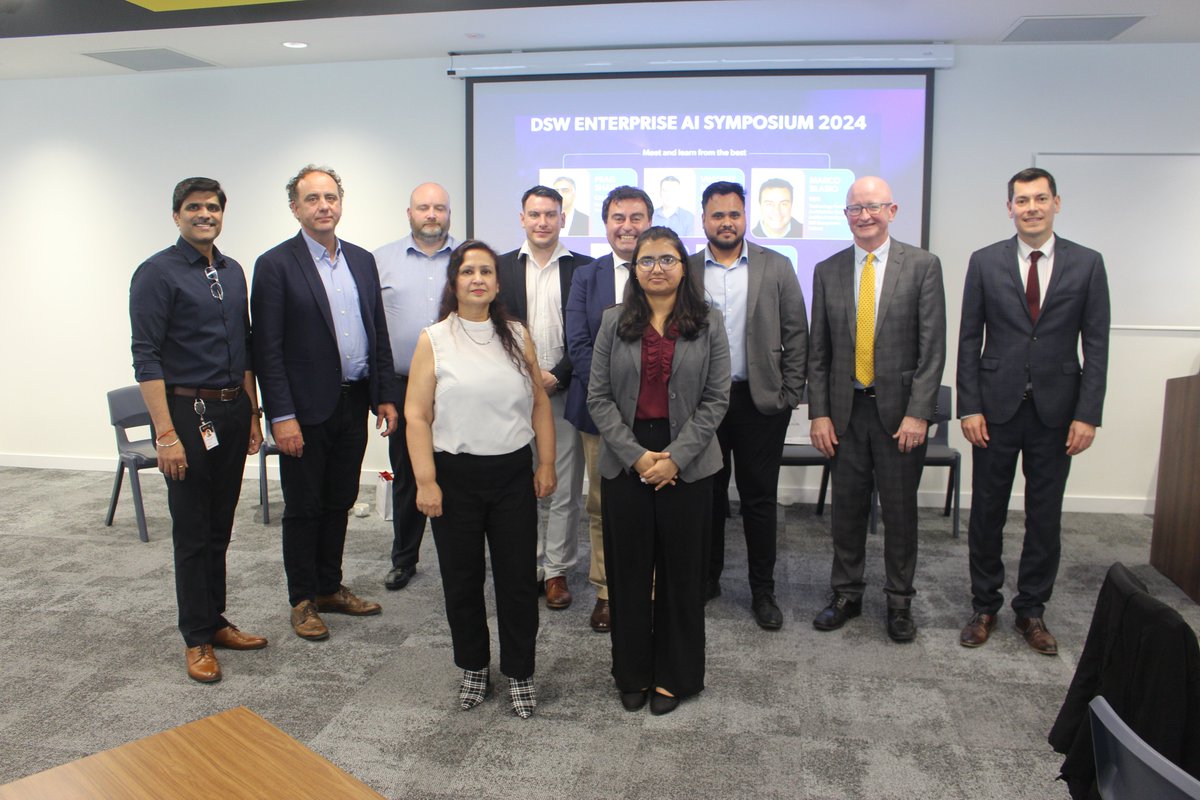
11 July was outstanding! What an incredible and fulfilling #experience it was for us at the DSW #Enterprise AI Symposium. With the exponential footprint of over 85 #AI professionals in Ireland, we witnessed an evening of #insights and discussions.
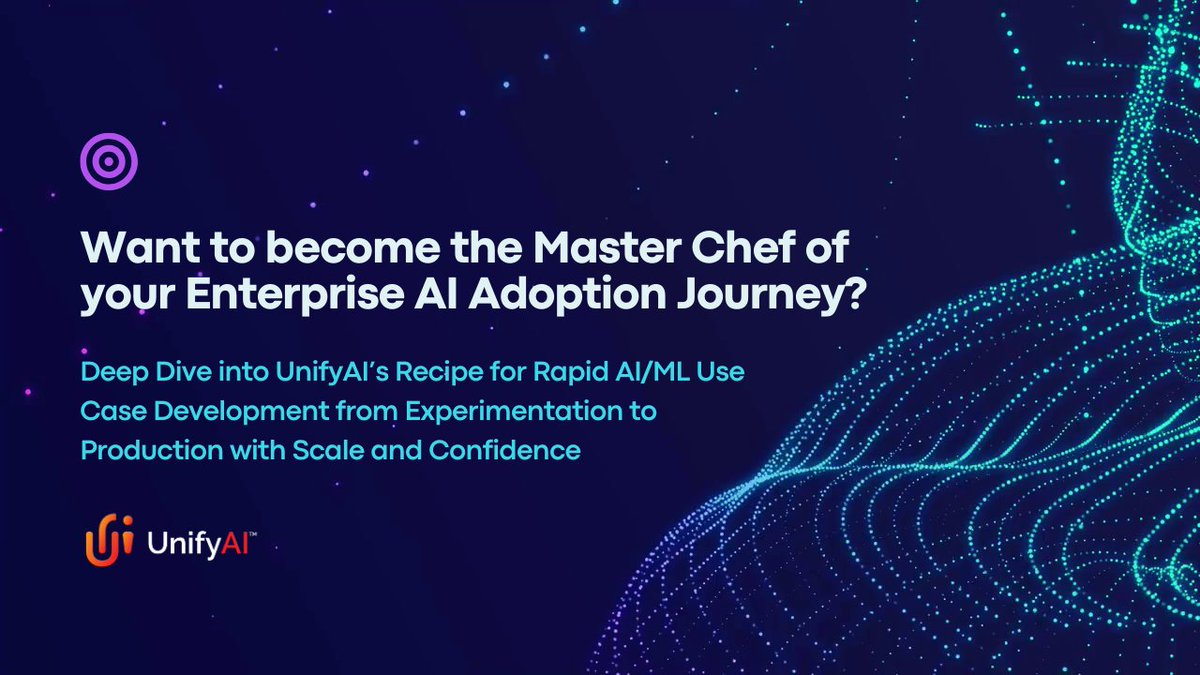
This week in "DSW AI HUB", let's dive into our blog for insights on how UnifyAI simplifies the progression from #AI experimentation to scaled #production, ensuring your enterprise's AI endeavors are as seamless and refined as a culinary masterpiece.
Under "India-Ireland Friendship Lecture Series", Mr Sandeep Khuperkar @sandeeplinux, CEO & Co-Founder, @dswizards will speak on 'Ireland As A Hub For Indian Start-ups' along with an introductory address by Ambassador @AkhileshIFS on Thursday, 16-Feb-2023 @ 12:00 PM (5.30 PM IST)
Data Science Wizards at Dublin Tech Summit 2022!!
It was a great pleasure and experience to be part of #Europe's one of the largest and fastest-growing B2B technology summits and to interact and exchange views with Tech giants and promising #startups.
Data analysts and data scientists represent two of the most in-demand, high-paying jobs in 2021. The World Economic Forum Future of Jobs Report 2020 listed these roles at number one for increasing demand across industries, followed immediately by AI and machine learning.
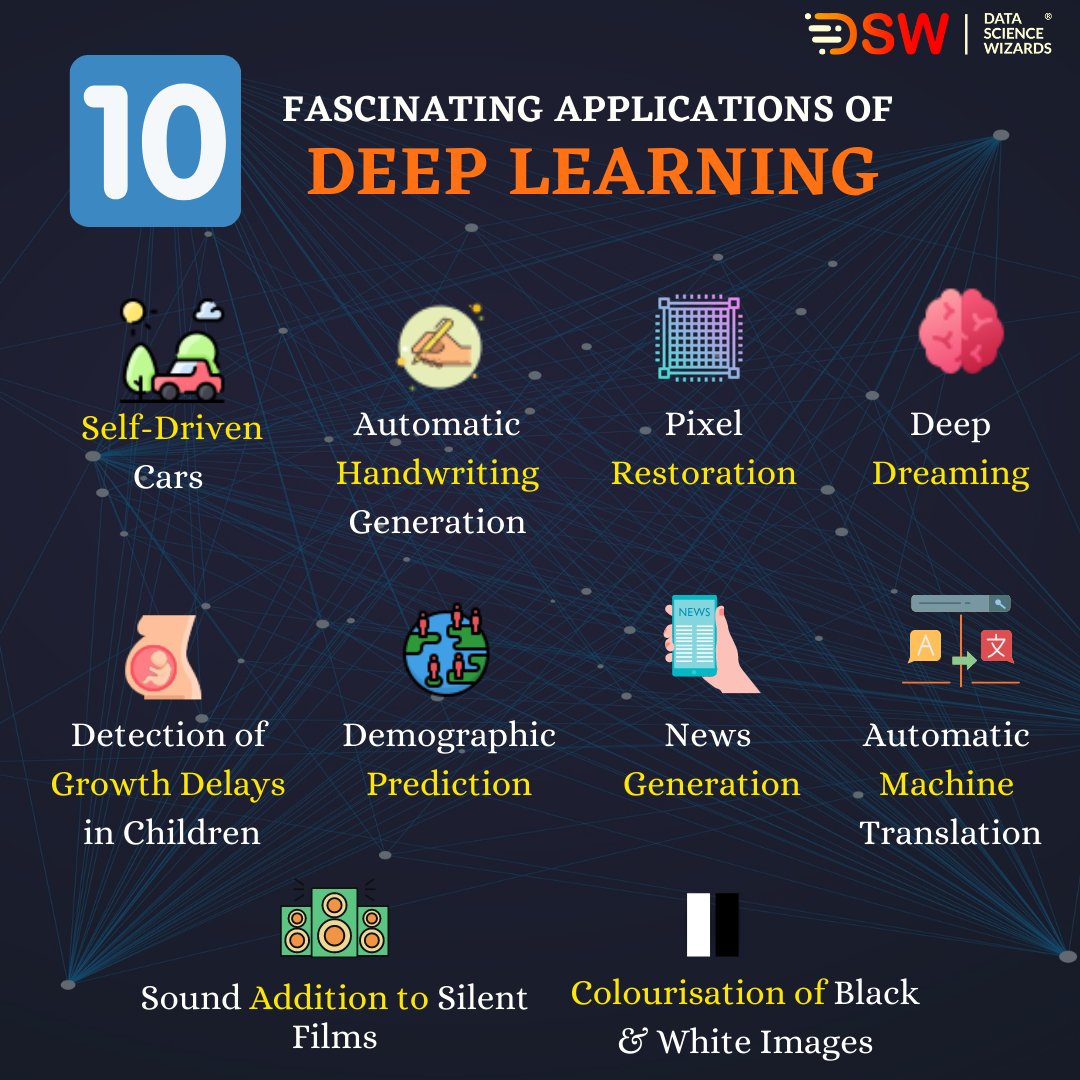
Deep learning is a type of machine learning and artificial intelligence (AI) that imitates the way humans gain certain types of knowledge. Deep learning is an important element of data science, which includes statistics and predictive modeling.
#MachineLearning#DeepLearning
A non-technical application of this pattern is in org design, but I'll leave that to your own imagination. Please do share other examples if you found this useful.
End of 🧵
Another example (meaningful for engineers) is setting up, tearing down, of cloud resources (e.g. a VM) being a control plane activity, while using the resource is a data plane activity.
This realisation helps you design the technicals & commercials of the system much better.
Control-plane, data-plane patterns show up in other places too, e.g. in supply chain technology, all worker units (e.g. picker, delivery executive, etc) are working in the data plane, while "the orchestrator" (in what order should items be picked) is sitting in the control plane.
Obviously there are other unaddressed aspects to this example, but hopefully you got an idea of how web2/web3 can co-exist, if we limited blockchains to control plane activities.
If we replaced the email itself with something being on-chain (no idea why anyone would want that, but it's a crazy world), the blockchain will have to scale to throughput needs of the global email system, which is highly inefficient, costly and unnecessary.
In such a model, my declaring the "rate card" is a control plane activity (I'll probably do it once a month, probably even automatable via the provider), while processing the handling cost per email is a data plane activity.
Say, my email provider honours this SMTP extension, and for every incoming email checks against (a cached view of) the latest blockchain DB to see if the declared value by the sender (included as an SMTP header in the email), is higher than the one I'd set or not.
e.g. imagine an extension to SMTP (email protocol) where the sender needs to pay to show up in my inbox. I update a list of (sender/domain, cost) tuples, signed by me, into the blockchain, on a regular basis (monthly, quarterly, whatever). I keep high, non-zero costs for spammers
Blockchains (at least the truly decentralised ones), require distributed consensus by nature, which, by definition, is going to be noticeably costlier and slower than centralised systems. This is what shows up in the much higher latencies & throughput.
Relevance to web3: In many private conversations, I've shared with folks that blockchains are potentially great* for control plane use cases, but not data plane. Let me elaborate.
*(leaving aside a few unaddressed concerns)