DGMA has relaxed ship-age limits. Old ships are cheap to buy and expensive to run. It also takes orders away from shipyards and the defence industrial base. Support shipowners with finance and cargo, not with old ships. @shipmin_india
https://t.co/lBFMOJVv6g
The future of boating is electric. ⚡
Meet Navalt at the Dubai International Boat Show 2026 and explore sustainable marine mobility.
📍 Dubai Harbour | 25–29 Nov
📌 Stall WS-14
1,000+ MSC vessels live on Oceanix. A milestone worth celebrating.
MSC Navika III became the 1,000th MSC vessel to go live on our platform.
Today, Oceanix has 1,100+ vessels live and 1,800+ vessels analysed over the years. And we're only moving forward.
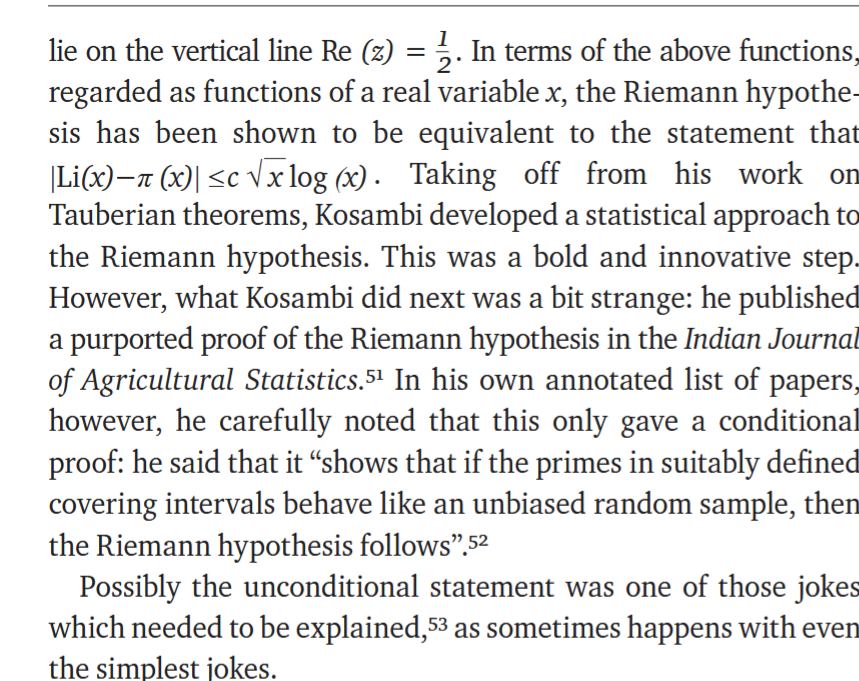
2. The AI proof of the Riemann hypothesis is machine- verified deductive proof. WHY does it require human verification?
Anyway, they have finally admitted that validity of a complex deductive proof is NOT certain as I have long been pointing out (pic1). 🤣🤣🤣
Complex deductive inference is error pone and most humans err, as is clear from the errors of math students in giving axiomatic proofs or the fact that humans lose to a machine in the game of chess which is purely deductive.
Since humans make mistakes, they have to repeatedly or inductively check a proof to verify it. That is the validity of a deductive proof is dependent on induction.🤣
Hence deduction is weaker than induction.
Deductive proofs are especially error prone when the axioms of mathematics are pure metaphysics and there is no way to empirically test the validity of the theorems proved or the axioms used.
Just ask yourself, which were the theorems/axioms whose validity you empirically tested?
But these rascals are NOW asking for verification because AI has put them in their place with their pants down.😀
Why trust humans who also lie and mislead so easily to preserve their privileges?
These axiomatic mathematicians need to be kicked out of their jobs until they can demonstrate how exactly they are useful to society, or why one should not revert to normal mathematics or ganita.
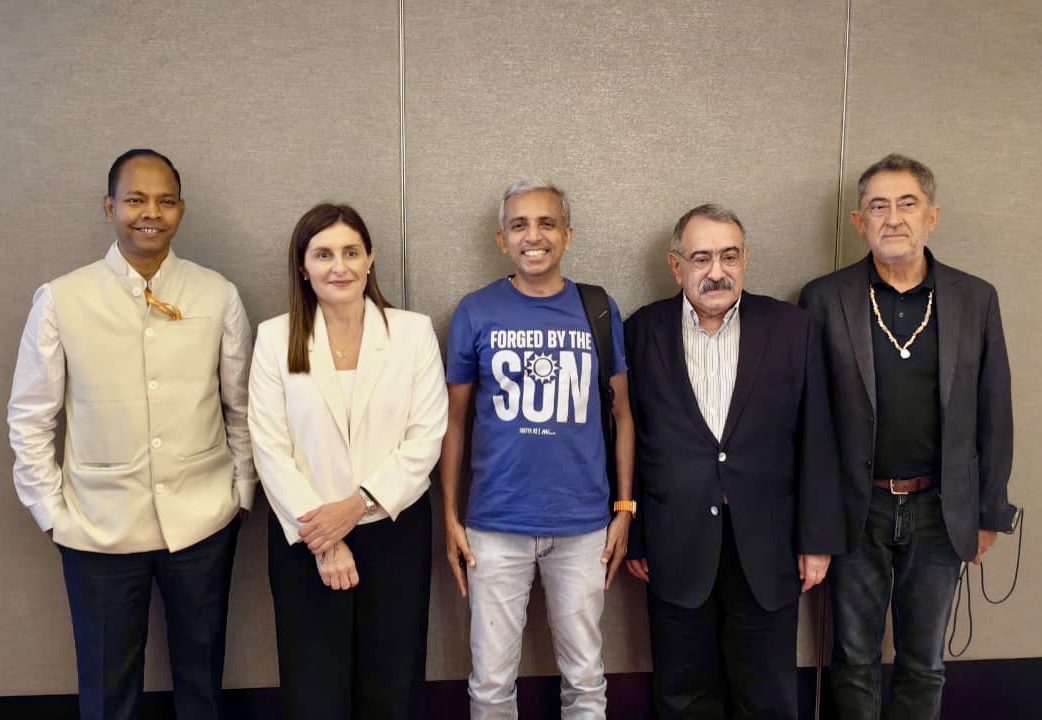
Forged by the sun. Built for the sea.
Today we welcomed a delegation from Cyprus to Kochi. They visited @cochin_port, @cslcochin Shipyard and the @NavaltBoats shipyard.
Put those together and the opportunity is clear. Thank you, MarinaHadjimanolis , Shipping Deputy Minister, Republic of Cyprus, for your time and openness. Thank you, Stavros Stavrou, President, Cyprus Chamber of Commerce & Industry, for the support.
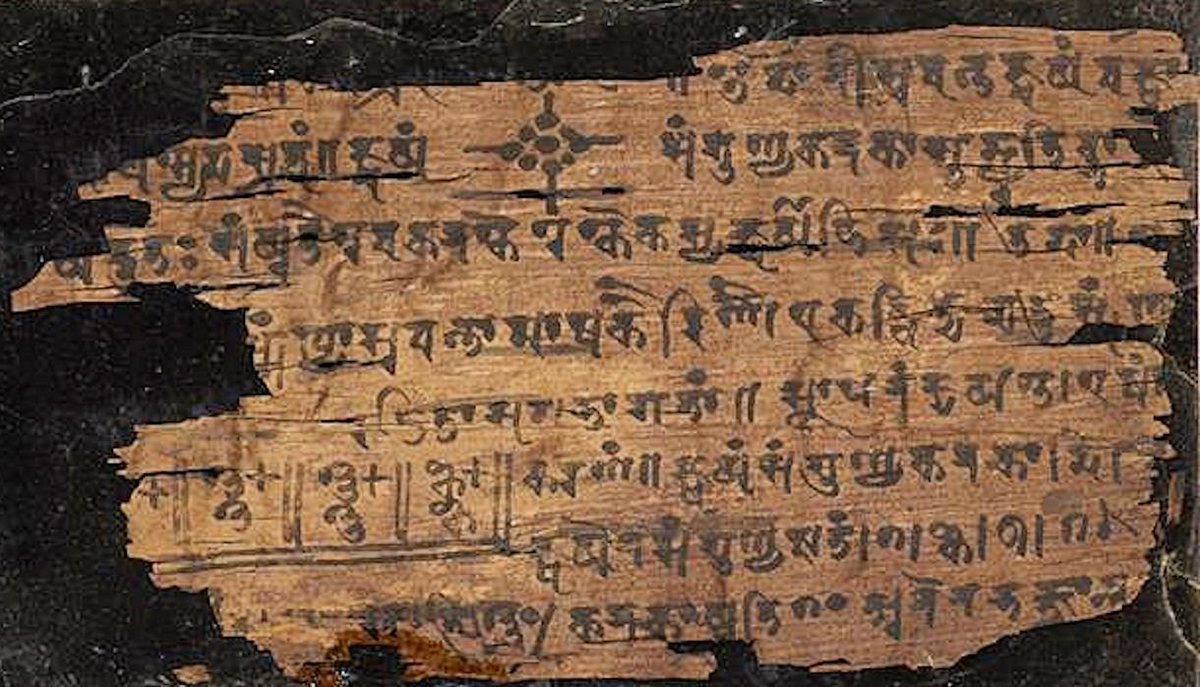
A farmer digging in a ruined place near Peshawar in 1881 found 70 fragile leaves of birch bark. They carried mathematics that still surprises us.
One leaf holds a rule for the square root of a non square number. Subtract the nearest square. Divide the remainder by twice that root. Apply one correction. That is all.
How good is it?
The manuscript itself computes the square root of 339009. Its answer is correct to 11 decimal places.
In another problem it checks its own answer using a fraction whose numerator has 23 digits. No decimals. No calculator. Just digits in a row, and dots for zeroes.
The bark reached Oxford's Bodleian Library in 1902, and the rule sat there, admired but shelved. Then in 1976, M.N. Channabasappa, a mathematics prof. at Karnataka Regional Engineering College, Surathkal, re-deciphered the sutra and turned the rule into an iteration.
In 1979 he reported that, iterated, the Bakhshali rule reaches the square root of 41 to ten decimal places 38% faster than Newton's method.
A rule from a birch bark, beating Newton at his own game.
In 2012, David Bailey and Jonathan Borwein proved why. One Bakhshali step is secretly 2 Newton steps rolled into one, so every step multiplies the correct digits by about 4.
They wrote that the Western tradition knew no square root method this powerful until well after the Enlightenment.
How old is the bark?
Oxford's 2017 carbon dating says its leaves come from at least 3 different periods, the oldest from the 3rd or 4th century. The rule itself cannot be dated. It may be older than the bark it sits on.
We do not know the scribe's name. We do know the professor's. Why is it not in our maths textbooks?
Sources: Indian Journal of History of Science, Ganita Bharati, American Mathematical Monthly, MacTutor, Bodleian Libraries
Photo: A folio of the Bakhshali manuscript on birch bark. The dots are its zeroes. Credit: National Geographic / Bodleian Libraries
In Burma, a man from Kerala gave a Vishnu temple a lamp with a specific instruction: it was to burn constantly in the hall he had built.
His name was Irayiran Siriyan, also called Sri-Kulasekhara-Nambi, and the Tamil letters recording his gift have been dated to the 13th century.
He named his home as Magodayarpattanam in Malaimandalam, identified as Cranganore, today's Kodungallur, on the western coast of the Indian subcontinent.
The temple stood at Pagan, in present-day Myanmar. Its name was Nanadesi-Vinnagar, which the epigraphist E. Hultzsch translated as "the Vishnu temple of those coming from various countries".
The record was carved on sandstone: a Sanskrit verse in Grantha script, then Tamil prose. Before it gives his name or his gifts, it opens with a prayer from Kulasekhara's Mukundamala:
नास्था धर्मे न वसुनिचये नैव कामोपभोगे
यद्यद्भव्यं भवतु भगवन् पूर्वकर्मानुरूपम् I
एतत्प्रार्थ्यं मम बहुमतं जन्मजन्मान्तरेऽपि
त्वत्पादाम्भोरुहयुगगता निश्चला भक्तिरस्तु II
Hultzsch's translation: "(I have) no regard for merit, none for a heap of wealth ... In every other birth also let (me) possess unswerving devotion to the pair of Thy lotus-feet!"
Centuries later the stone was found at Myinpagan, south of Pagan. Taw Sein Ko sent ink impressions to Hultzsch, who published the text and translation in Epigraphia Indica.
The Tamil part records what Siriyan gave: a sacred mandapa, a sacred door, and "one fixed lamp to burn constantly in this mandapa."
Sources: E. Hultzsch; Taw Sein Ko; Mukundamala of Kulasekhara.
Photo 1: The published text and translation, prayer and lamp lines highlighted in saffron. A scan of the printed page, not the stone. Credit: E. Hultzsch.
Photo 2: Nathlaung Kyaung temple, Bagan, 2015. Context only, not proof it is the donor's hall.
Photo 3: deity sculpture in a niche at Nathlaung Kyaung. Context only.
Riemann hypothesis proved by AI. (pic1)
But proving theorems axiomatically has little practical or epistemic value as in my remarks on Kosambi's attempted proof (pic2,3,4).
Experience the thrill of the open waters, where every ride becomes a statement and every sunset creates a memory.
Shesha by Navalt. Crafted for unforgettable journeys.
Oceanix X-Emission – a maritime emissions intelligence solution designed to help the maritime industry navigate evolving environmental regulations and achieve cleaner operations.
Oceanix X Mach transforms machinery data into actionable insights, helping operators monitor main engines, auxiliary engines, and other critical machinery to identify issues early and reduce downtime.
Subsequently, some people in the 20th c., casually speculated on the possibility that the infinite series could have been transmitted TO India.
In a seminar at IGNCA ca. 1997, David Pingree claimed "independent rediscovery". This talk was attended by just two persons, myself and A. K. Bag.
I provoked Pingree by commenting that the calculus originated in India and was transmitted to Europe.
Pingree's response was odd. He remained silent for a whole minute. Then asked "what is the evidence?" His goof up of a prolonged silence, hence the ongoing conflict in his mind, encouraged me that I was on the right track.
I responded that I would produce the evidence in six months.
To this end of collecting evidence to settle the issue, I undertook a project to determine the true origin of the calculus.
The project was sanctioned by INSA in 1998.(pic1)
../4