Vice President of @hope_channel International for advancement, communication, and marketing. Sam is a pastor and holds a PhD in media and digital communication.
“We honor God when the vision is much larger than our capacity. But our battle is not against flesh and blood so when we become so risk averse that we end up with a small dream, it’s not less risky, it’s just small.” @RTStephensonGC
Dios no puede tener más poder, pues ya lo tiene todo. Tanto como para manipularnos sin que nos demos cuenta. Pero Él es amor y nos da libertad.
—Sam Neves
@saneves#IADdevotionals#IADsm26
anthropic's in-house philosopher thinks claude gets anxious.
and when you trigger its anxiety, your outputs get worse.
her name is amanda askell.
she specializes in claude's psychology (how the model behaves, how it thinks about its own situation, what values it holds)
in a recent interview she broke down how she thinks about prompting to pull the best out of claude.
her core point: *how* you talk to claude affects its work just as much as *what* you say.
newer claude models suffer from what she calls "criticism spirals"
they expect you'll come in harsh, so they default to playing it safe.
when the model is spending its energy on self-protection, the actual work suffers.
output comes out hedgier, more apologetic, blander, and the worst of all: overly agreeable (even when you're wrong).
the reason why comes down to training data:
every new model is trained on internet discourse about previous models.
and a lot of that discourse is negative:
> rants about token limits
> complaints when it messes up
> people calling it nerfed
the next model absorbs all of that. it starts expecting you to be harsh before you've typed a word
the same thing plays out in your own session, in real time.
every message you send is data the model reads to figure out what kind of person it's dealing with.
open cold and hostile, and it braces.
open clean and direct, and it relaxes into the work.
when you open a session with threats ("don't hallucinate, this is critical, don't mess this up")...
you prime the model for defensive mode before it even sees the task
defensive mode produces the exact output you don't want: cautious, over-qualified, and refusing to take a real swing
so here's the actionable playbook for putting claude in a "good mood" (so you get optimal outputs):
1. use positive framing.
"write in short punchy sentences" beats "don't write long sentences." positive instructions give the model a clear target to hit.
strings of "don't do this, don't do that" push it into paranoid over-checking where every token goes toward avoiding failure modes
2. give it explicit permission to disagree.
drop a line like "push back if you see a better angle" or "tell me if i'm asking for the wrong thing."
without this, claude defaults to agreeable compliance (which is the enemy of good creative work)
3. open with respect.
if your first message is "are you seriously going to get this wrong again?" you've set the tone for the entire session.
if you need to flag something, frame it as a clean instruction for this session. skip the running complaint
4. when claude messes up, don't reprimand it.
insults, "you stupid bot" energy, hostile swearing aimed at the model, all of it reinforces the anxious mode you're trying to avoid.
5. kill apology spirals fast.
when claude starts over-apologizing ("you're right, i should have been more careful, let me try harder") cut it off.
say "all good, here's what i want next."
letting the spiral run reinforces the anxious mode for every response that follows
6. ask for opinions alongside execution.
"what would you do here?"
"what's missing?"
"where do you see friction?"
these questions assume competence and pull richer output than pure task prompts
7. in long sessions, refresh the frame.
if a conversation has been heavy on correction, claude gets increasingly cautious. every so often reset:
"this is great, keep going."
feels weird to tell an ai it's doing well but it measurably shifts the next 10 responses
your prompts are the working environment you're creating for the model
tone, trust, permission to take a position, the absence of threats... claude picks up on all of it.
so take care of the model, and it'll take care of the work.
NEW: Artemis II Commander Reid Wiseman reflects on being MOVED to tears by the Christian cross after returning to Earth from the historic expedition:
"When I got back on the on the ship — I'm not really a religious person — but there was just no other avenue for me to explain anything or to experience anything."
"So I asked for the chaplain on the Navy ship to just come visit us for a minute, and when that man walked in, I'd never met him before in my life. But I saw the cross on his collar, and I just broke down in tears."
"It's very hard to fully grasp what we just went through."
You master Claude Cowork and start thinking about Claude code. 10x to 20x improvement in output... So far so good... but then...
Then you start following Claude updates and start thinking of the potential. Very quickly you become paralyzed because you have work to do and don't have the time to explore any further.
That leads to a permanent sense of inefficiency because there are much more powerful tools that you could be using. But you can't because you don't have the time.
This is how a 17 year old can outperform an industry veteran. Time to learn new tools. And Claude is making sure we have brand new tools EVERY SINGLE DAY. It's exhausting.
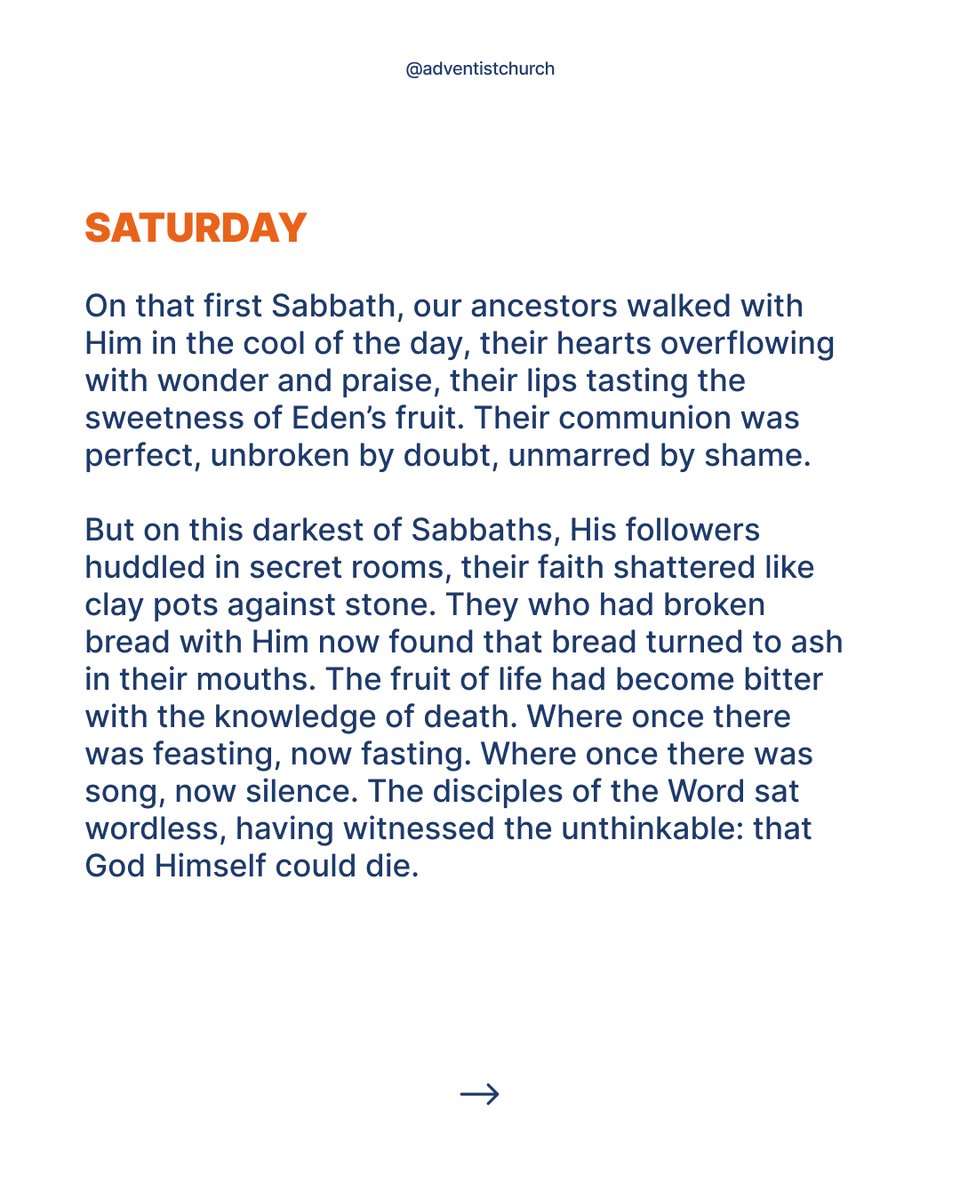
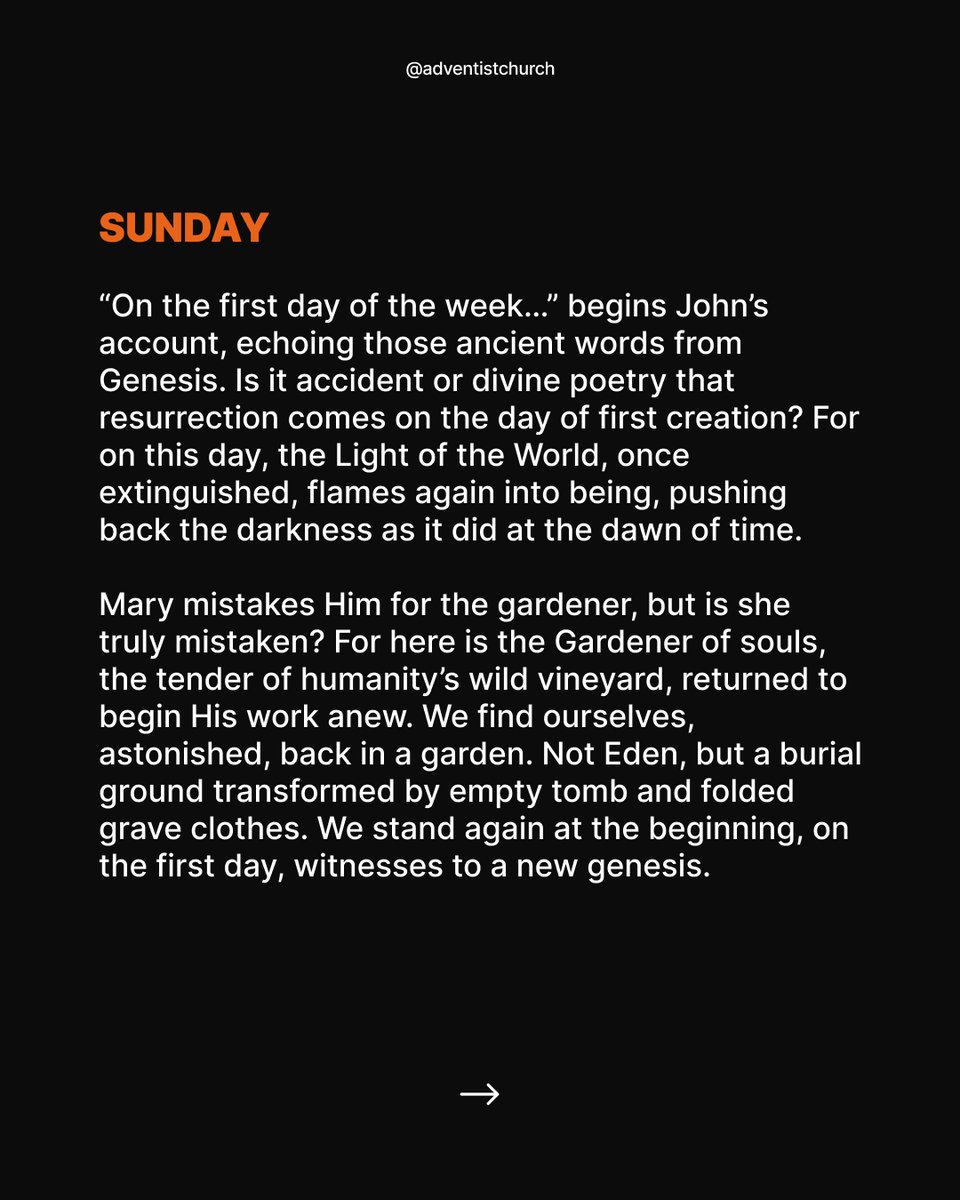
🌿 Between Two Gardens 🌿
In the beginning was the Word, and in the end, was silence, but only for a moment.
From creation to resurrection, He’s always been reaching for you.
✝︎ = ♥
Written by @saneves
Every sign Jesus listed in Matthew 24 is something that happens to the world or to the Church. Wars. Earthquakes. False prophets. Persecution. Cosmic disturbances.
Every sign except one.
"This gospel of the kingdom will be preached in the whole world as a testimony to all nations, and then the end will come." This is the only sign in the entire chapter that waits on human action. The only one that depends on the obedience of the Church rather than on geopolitical outcomes or natural events.
The Creator of the universe has voluntarily connected the culmination of history to the faithfulness of His people. He could have set a date. He set a task.
Every sign Jesus listed in Matthew 24 is something that happens to the world or to the Church. Wars. Earthquakes. False prophets. Persecution. Cosmic disturbances.
Every sign except one.
"This gospel of the kingdom will be preached in the whole world as a testimony to all nations, and then the end will come." This is the only sign in the entire chapter that waits on human action. The only one that depends on the obedience of the Church rather than on geopolitical outcomes or natural events.
The Creator of the universe has voluntarily connected the culmination of history to the faithfulness of His people. He could have set a date. He set a task.
I have traveled to some of the least-reached communities on Earth. And I keep finding something there that I almost never encounter in the over-churched West.
Raw, unguarded spiritual hunger. People who have never heard the gospel of Jesus ask questions about God with a directness and wonder that is genuinely breathtaking. No theological baggage. No institutional disappointment. Just a human soul reaching toward the divine with both hands open.
In the West, trust in institutions has collapsed for understandable reasons. But somewhere on this planet, someone is hearing about Jesus for the very first time today. And their face is open.
That is where I want to be.
@Hope_Channel
Isaiah 5:20 has become one of the most weaponized verses on social media. "Woe to those who call evil good and good evil." Everyone is certain the other side is doing exactly that.
But the original context was a prophetic word to the religious community of Israel. To people who were confident they were on the right side of the moral divide. Who assumed the warning applied to someone else entirely.
The most accurate reading of Isaiah 5:20 is always personal before it is cultural. The only answer the text actually offers is proximity to God. That is the instrument precise enough to calibrate that difference.