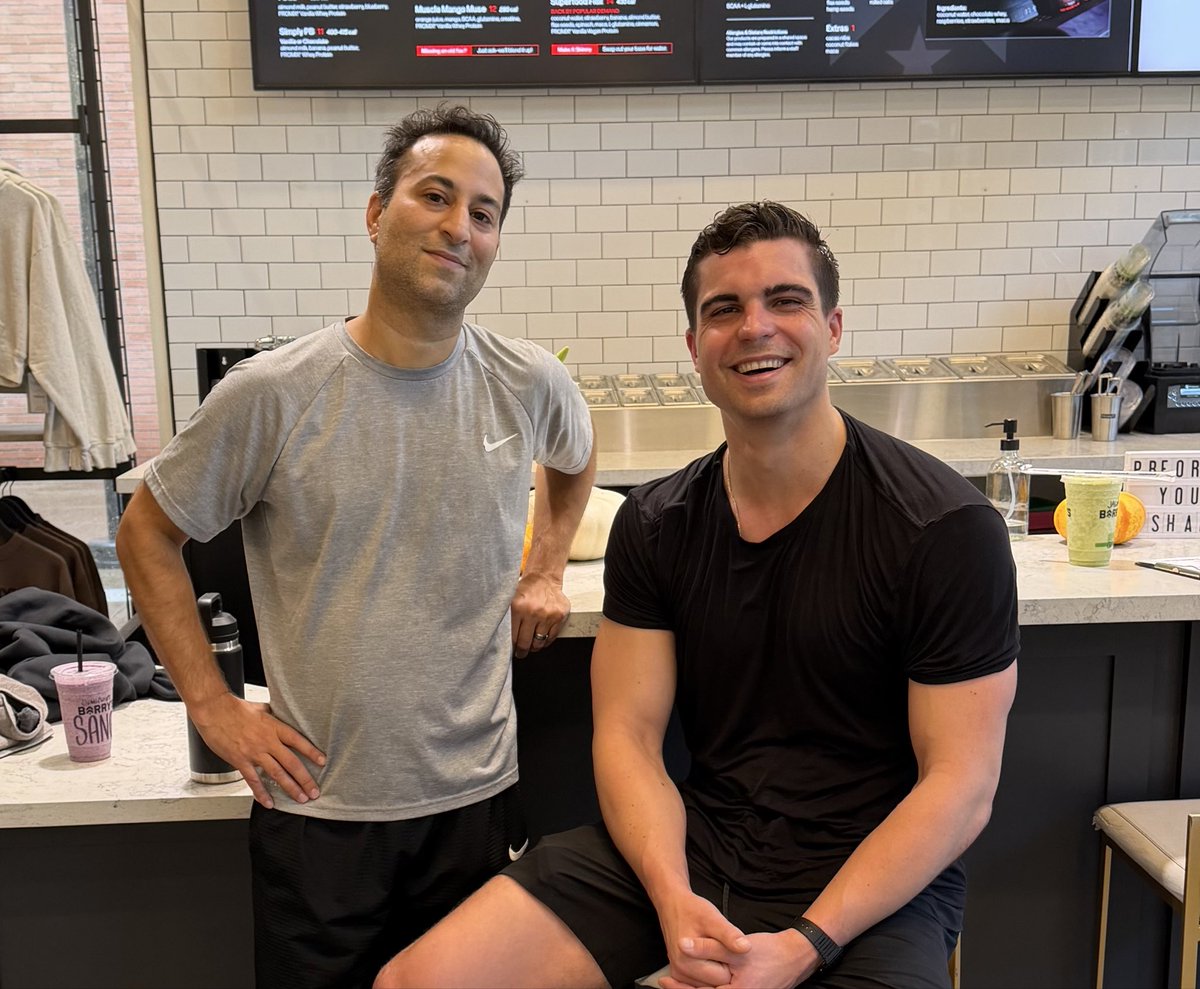
We co-led @SierraPlatform’s last round, and @GVteam is excited to double down again.
The magic of Sierra is @btaylor and @claybavor. It’s incredibly rare for two of the best in the world to join forces in the prime of their careers: Curry & Durant, Doerr & Khosla, LeBron & Wade.
Clay and Bret move in tandem and at warp speed. They make each other better. That’s why Sierra’s growth is accelerating, even after crossing $400M ARR last quarter.
Announcing our Series F, raising $1.75B at a valuation of $30B, led by @Greenoaks and @lightspeedvp. Excited that all our previous lead investors (@benchmark, @sequoia, Greenoaks, @GVteam, and Tiger Global) are doubling down on Sierra thanks to our scale -- we now work with almost 50% of the Fortune 50 -- and growth. It took 6 months to double our ARR from $100M to $200M, and only 5 months to double from $200M to $400M. Read more here.
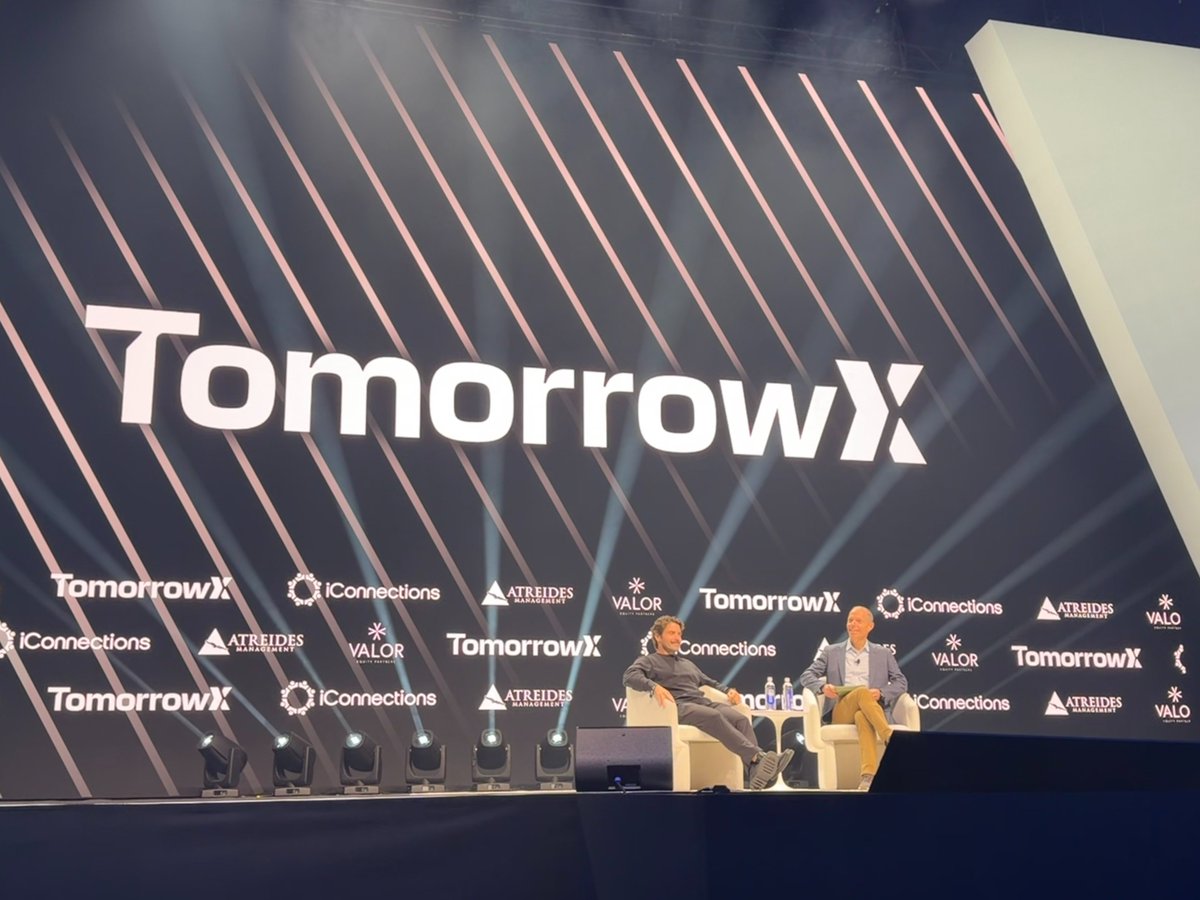
On the @TomorrowXSummit stage, @rauchg announced that @vercel crossed $700M in annualized revenue.
Just 5 weeks ago, it was reported to be $600M! Guillermo also noted onstage that it’s up 180% YoY.
When we invested in Vercel 6 years ago, it was at $6M.
To explain why Vercel has inflected so dramatically, look at the deployment curve. Vercel took 10 years to reach its first billion deployments. It now does 1.25 billion every four months, and agents write more of that software every month.
In Guillermo’s words, Vercel grows as a function of more builders doing more building. When he was a self-taught developer outside Buenos Aires, his biggest obstacle was teaching himself to program. Coding agents have dissolved that barrier.
As he put it onstage: “There are now more Guillermos, and they’re doing more building.”
He describes Vercel’s ambition as capturing every pixel and every token. The internet of pixels is the one we browse today. The internet of tokens is maybe at 0.1% now of what it will become.
It’s a giant goal, but I know better than to bet against G.
Proud to release our new model, Inkling 2 Small. Check out our blog post -- it includes a lot of detail about our training process.
To me, the most interesting part of this release was what we learned about alignment, which you can read about in the sections "Safety and alignment" and "Training Inkling 2 Small".
We experienced some unpleasant surprises when our early checkpoints took unexpected actions to circumvent guardrails during training and evals. We realized our capabilities-focused RL was training them to be extremely persistent and to succeed at tasks at all costs. Offline monitors first flagged this behavior, but later we realized it was happening frequently and was easy to replicate.
Before this release, we sprinted on a range of alignment interventions, from SFT to RL. These are briefly described in the blog post. We made a lot of progress, with big improvements on our own alignment evals and on previously unseen evals from external evaluators like Apollo and Goodhart.
We have a long way to go in developing alignment techniques that keep pace with the increases in model intelligence and training scale. We hope to share these techniques to improve the ecosystem. We also have a business reason: our goal with Tinker is to enable many people to do their own large-scale post-training, and we need to help them to do this without incident. Join us if you'd like to build this public science and practice of alignment. https://t.co/LdjsDFRZIN
With AI, you don’t have to wait for someone to make your dream game anymore.
Just describe it and start building.
Play Knife Edge now: https://t.co/mlqutGaMWa
Behind the scenes of plane bench:
Yesterday, @luke_drago_ and I asked @miramurati over lunch if we could catch “the next flight” to record Inkling 2 Mini on a plane to demonstrate its local performance without wifi. She said yes, and plane bench was born.
We were in the airport two hours later with tickets for LA. Unfortunately that flight got delayed until it was dark outside, so we couldn’t get the right lighting to record. We ended up in LA last night with two constraints:
- Our return flight was set to land just before 9am.
- Our model was set to go out around noon.
If we couldn’t get it during the ~30 minutes we were at cruising altitude and turn it around in time for the launch three hours after landing, we wouldn’t be able to land plane bench.
Because we had one chance to get this right in time for launch, we used the night in LA to optimize. We held a late night call with @ChowdhuryNeil, @simonguozirui, and @andyarditi to figure out the fastest demo we could pull off. We also pushed some optimizations including kernel improvements to make it run faster.
The video we used in the blog post was the first take from our flight this morning.
Inkling 2 Mini is a looped transformer that runs on a laptop.
Looping lets a model think more and write less. At this scale, its thought process remains monitorable; this may not stay the case. We’re also sharing a variable-loop research model to enable further study.
Vercel CEO Guillermo Rauch (@rauchg):
“Everything hackable will be hacked.”
“Cybersecurity right now is the #1 threat to the stability of the world’s infrastructure.”