The paper speaks to the politics of the energy transition in resource-rich democracies: public support for mining depends not only on economic gains, but also on who bears costs, who controls extraction, and how benefits are distributed.
Article here: https://t.co/D38t7fbQgj
🚨New article out with @sarahmbrooks and @ErikVoeten.
We study how citizens in Argentina (a middle-income democracy ranked 4th in the world in lithium reserves) evaluate the tradeoffs around critical mineral mining: environmental harm, jobs, ownership, and local redistribution.
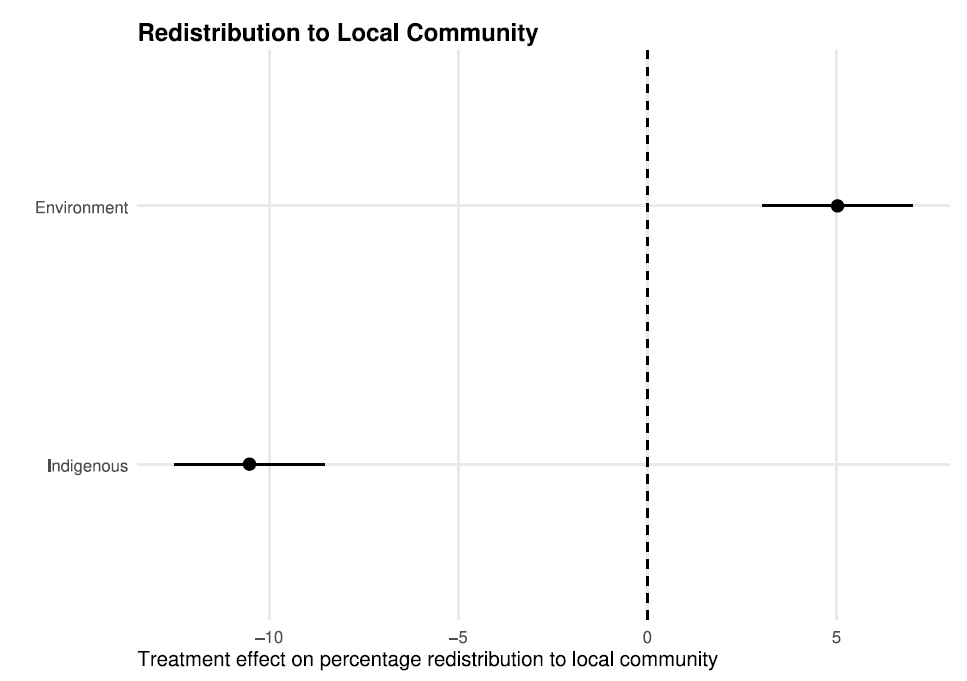
We also examine redistribution. Respondents are more supportive of directing revenues to local communities when this is framed as compensation for environmental damage, but less supportive of indigenous communities.
Excited to share our new paper in @cps_journal with @ipekcinar_ic, Sue Stokes & @andresdu! Using text analysis of AMLO’s speeches and a survey experiment in Mexico, we examine how leaders build tolerance for backsliding by "trash-talking" democracy.
Muy contento porque ya está disponible en @Foro_Int mi artículo sobre los "superdelegados". Analizo el perfil de quienes ocuparon ese cargo durante el sexenio de AMLO, sus trayectorias previas y por qué se fueron. Se descarga aquí https://t.co/UKJ4LNJ0zQ
Politólogos que estudian democracia, elecciones e instituciones estamos firmando esta carta que insta al gobierno de Venezuela a reconocer el triunfo de González Urrutia, cesar la represión, e iniciar una transicion a la democracia. Considera firmar https://t.co/ojZ1OpkGeL
Estoy pensando en el marco para un paper sobre el Estado en América Latina y una distinción q encuentro útil es la de @SLMazzuca entre formación y construcción del Estado.👇
Aunque estudiado por muchos, no he encontrado una forma tan clara de distinguir y vincular los 2 procesos
This Friday, join us for the roundtable "The Argentine Election: What Happened and What's Next?" with Dr. Sarah Brooks and @santilacroix from @osupolisci and Dr. Ana Del Sarto and Gabriel Guzman Camacho from @SPPO_OSU.
📆 February 16, 2024
⏰ 2:20-3:40 P.M.
🏫 046 Hagerty Hall
Hace 10 años, desde CIPPEC empezamos a medir la transparencia de los presupuestos públicos de las provincias.
Desde entonces, se generó un claro incentivo para que todas las provincias vayan mejorando qué, cuándo y cómo hacían pública su información presupuestaria.
Sigue
𝐒𝐩𝐞𝐜𝐢𝐚𝐥 𝐈𝐬𝐬𝐮𝐞 𝐨𝐟 𝐑𝐞𝐠𝐢𝐨𝐧𝐚𝐥 𝐚𝐧𝐝 𝐅𝐞𝐝𝐞𝐫𝐚𝐥 𝐒𝐭𝐮𝐝𝐢𝐞𝐬 📰
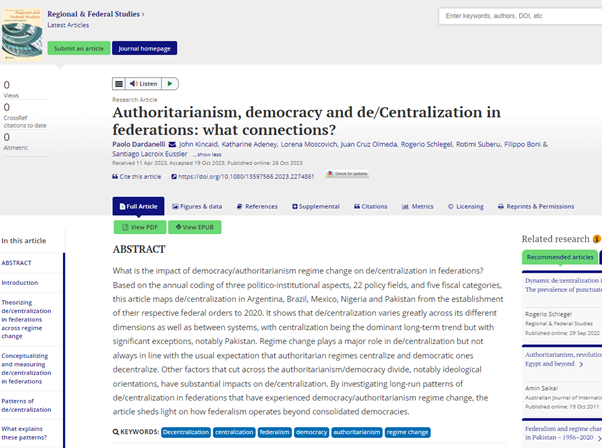
Authoritarianism, democracy and de/centralization in federations: what connections?
📖➡️https://t.co/k4QeGilSpZ
Read more about de/centralization at: https://t.co/nKVRC4jnfM
🚨 Nuevo Artículo!🚨 ¿Hay conexión entre regímenes y de/centralización? ¿La autocracia siempre centraliza y la democracia siempre descentraliza? Spoiler: No.
V pleased to see our collective efforts have resulted in a comparative analysis of how democracy & authoritarianism interact with (de)centralization in the federations of #Pakistan, #Nigeria, #Brazil, #Argentina and #Mexico. The article is OPEN ACCESS 1/n https://t.co/2hyU5KBXfn
Special thanks to @PaoloDardanelli and John Kincaid for outstandingly leading the “Why De/centralization in Federations?” project. Know more about the results of this work, published with OPEN ACCESS on @RegFedSt here: https://t.co/cdFW3q3jRf
🚨𝗡𝗲𝘄 𝗮𝗿𝘁𝗶𝗰𝗹𝗲 Alert🚨 What is the connection between political regimes and de/centralization? Is autocracy always centralizing and democracy always decentralizing?
Spoiler alert: No.
Political regimes' link to autonomy levels are not just based on the level of democracy, but also on distinct impacts within different authoritarian types. One important takeaway is that 𝐟𝐞𝐝𝐞𝐫𝐚𝐥𝐢𝐬𝐦 𝐦𝐚𝐲 𝐩𝐞𝐫𝐬𝐢𝐬𝐭 𝐚𝐦𝐢𝐝𝐬𝐭 𝐚𝐮𝐭𝐡𝐨𝐫𝐢𝐭𝐚𝐫𝐢𝐚𝐧𝐢𝐬𝐦.