ASHG 2024 🧬highlights🧬
Unfortunately, I couldn't attend ASHG this year. But I did browse through the abstracts to learn about all the exciting science being presented this year, which I've summarized in GWAS Stories. The range of topics is as always exhaustively broad. I was able to cover only a fraction of them. Hope you find this list helpful. Happy #ASHG24 !
https://t.co/ABnzTpg2Io
Thrilled to be in Denver with 14 colleagues from @AstraZeneca’s Centre for Genomics Research, ready for 5 days of human genomics #ASHG24
The perfect chance to learn about how genomics is transforming drug discovery!
Here’s a thread of our presentations - see you there 😀
@santoshatanur : "A phenome-wide association study of the structural variants in 467,152 UK Biobank genomes identifies non-coding structural variants associated with human diseases." Fri, Nov 08 11:15am - 11:30am Complex Traits and Other Omics session
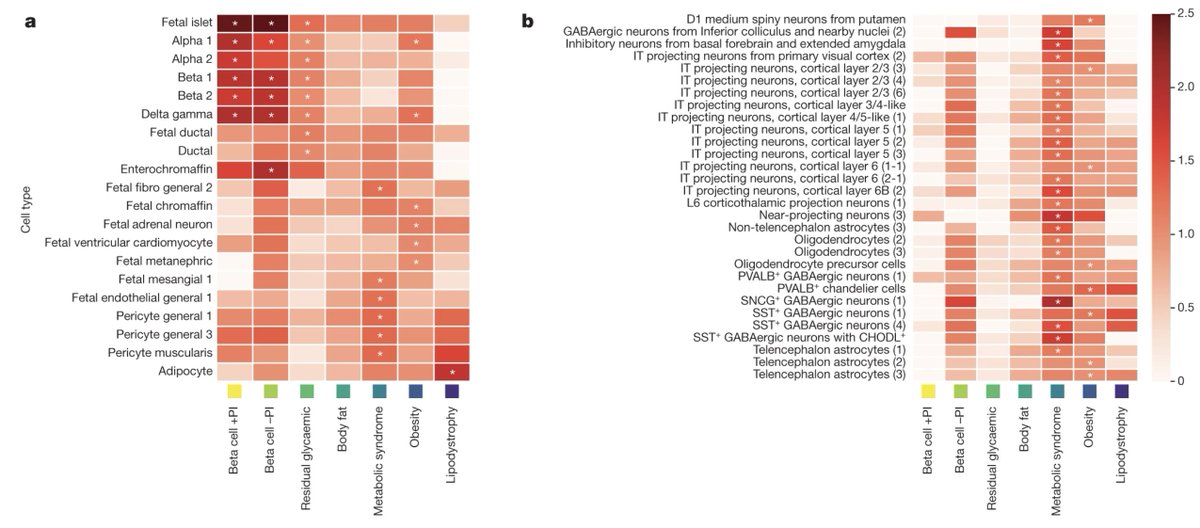
New exciting GWAS of type 2 diabetes in Nature in ~2.5 million individuals (>0.4 million cases), ~40% of which are from non-European ancestries.
The sample size is so big that now the authors can dissociate the genetic signals in different clusters and use the cluster-specific variants for all downstream analyses. For example, the plot below shows the tissue and cell types enriched for different genetic clusters. Note the strong enrichment for obesity-related clusters with brain cell types.
The authors further show the polygenic scores based on these genetic clusters (pathway-specific scores, if you will) predict diabetes complications while the full T2D polygenic score didn't. Great work!
https://t.co/HltV1EBnJH
It was fun to write this with Nadya Dimitrova. We tried to summarize what we've learned about transcription-regulating lncRNAs, including “stabilizer” lncRNAs that work as TF gene rheostats, activating lncRNAs, and emerging roles of lncRNAs in disease https://t.co/DphAXx4MlP
We are excited to kick off our 2023 Scientific Conference! Tune in online to hear about the data #release of whole genomes from 500k #UKBiobank participants, #dementia research, and our plans for enhanced #healthcare data: https://t.co/xuX5AK8edW #UKBSC23
🧬 We’re excited to announce that we have sequenced the whole genomes of 500,000 UK Biobank volunteers! 🧬
The dataset is the world’s largest of its kind and we’re proud to make it available to approved researchers around the world 🌍
https://t.co/m2EeGLTr1d
#500KGenomes
As part of #gnomAD v4, in collaboration with the @TalkowskiLab, we have released 1,199,117 genome SVs and 66,903 rare exome CNVs. These data represent the first gnomAD SV dataset released native to the GRCh38 reference genome. (1/2)
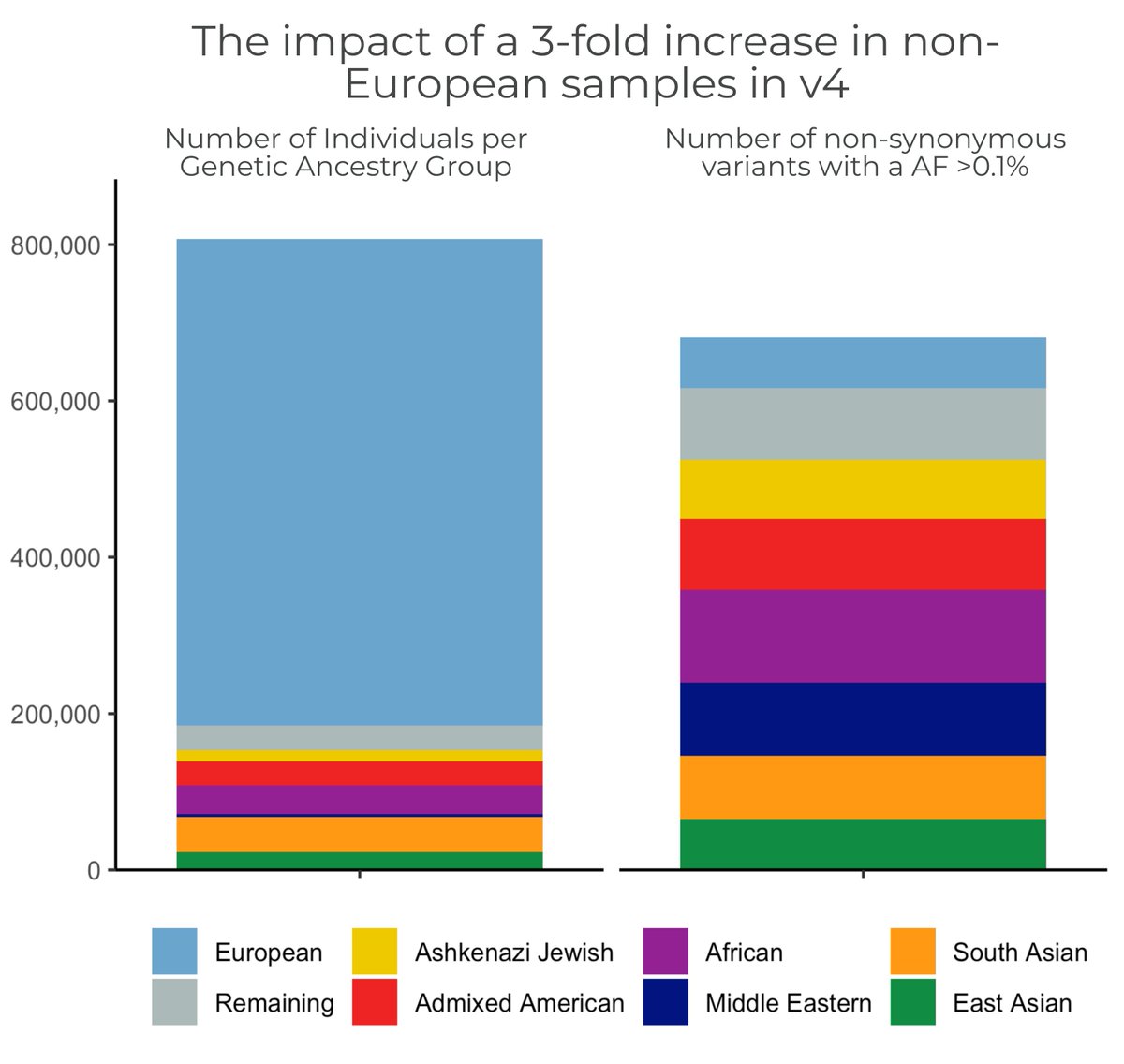
The #gnomAD team is proud to announce the release of gnomAD v4! The v4 dataset includes 730,947 exomes & 76,215 genomes, which is ~5x larger than the v2 & v3 releases combined, & includes nearly 120K indivs of non-European genetic ancestry https://t.co/YKXIFlZwSi #ASHG23 (1/11)
Breakthrough research published today in @Nature shows never-before identified connections between rare genetic variants and proteins.
By applying insights from these findings to our ongoing drug discovery efforts, we are turning science into medicine: https://t.co/6w2ezjaKWu
Thrilled to see our paper on rare variant associations with plasma protein levels in the @uk_biobank published in @nature today
https://t.co/M4YOHCzAqn
Summary statistics are publicly available at https://t.co/YB9bNtGX1k and an interactive portal https://t.co/9wQ82ig4hx
Super excited a series of THREE @UKBIOBANK#proteomics papers are now online on @Nature!
https://t.co/gC0OwiuX0O - flagship paper and two sister companion pieces: https://t.co/zO5qdZPTVC and https://t.co/KWeiRf0dwp - Herculean team effort across so many teams! More to follow.