People who don't listen to music: "AI is going to replace all music"
People who don't read: "AI is going to replace literature"
People with no friends: "AI will replace all relationships"
People who don't practice law: "AI will replace all lawyers"
Do any of you do anything
@JuliusNotes That's the cruellest part. Hiding works. It protects you, until one day you look up and realize you protected yourself out of your own life...
@ZeljkoKisa I pravo u centar sa žalošću shvatiš da ovo itekako važi i kod nas - "...jer reforma ne počinje tamo gde nepravda nastaje, nego tamo gde dovoljno ljudi poveruje da se tiče njih."
@jordanbpeterson Nope. Unfortunately, country that should be a beacon to the world, turned out, is the one big bully trying to keep its privileges at all cost, including printed money and other's lifes
Znaš onaj trenutak:
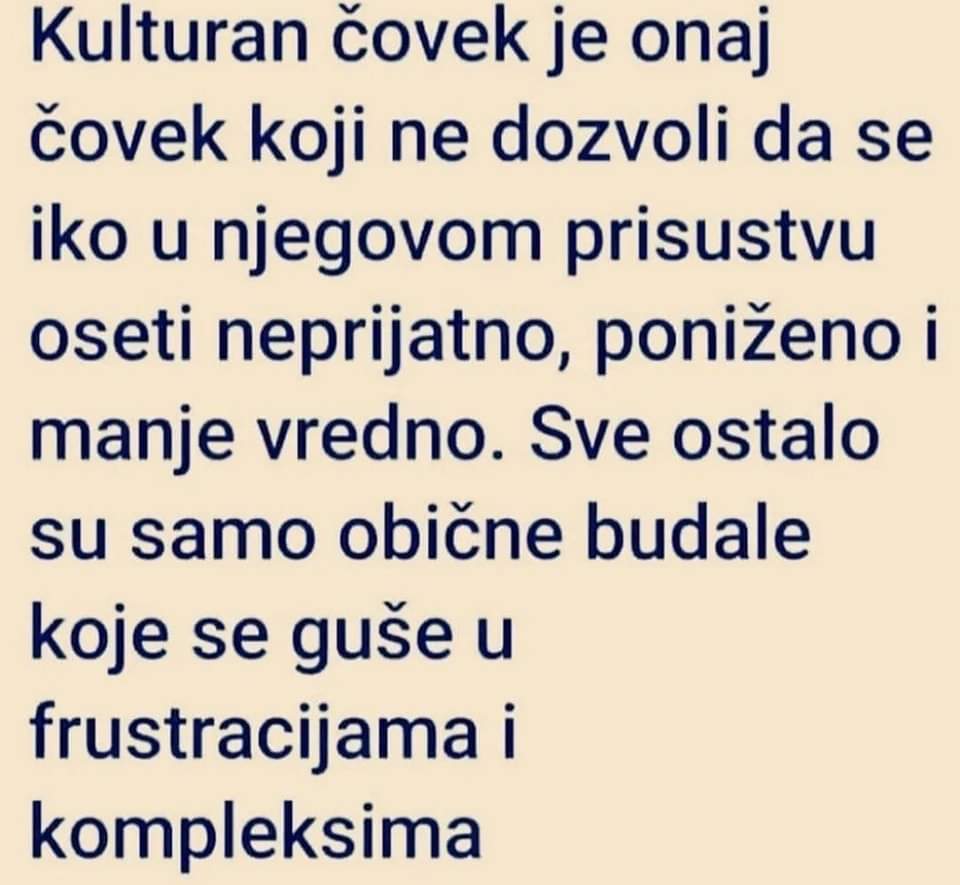
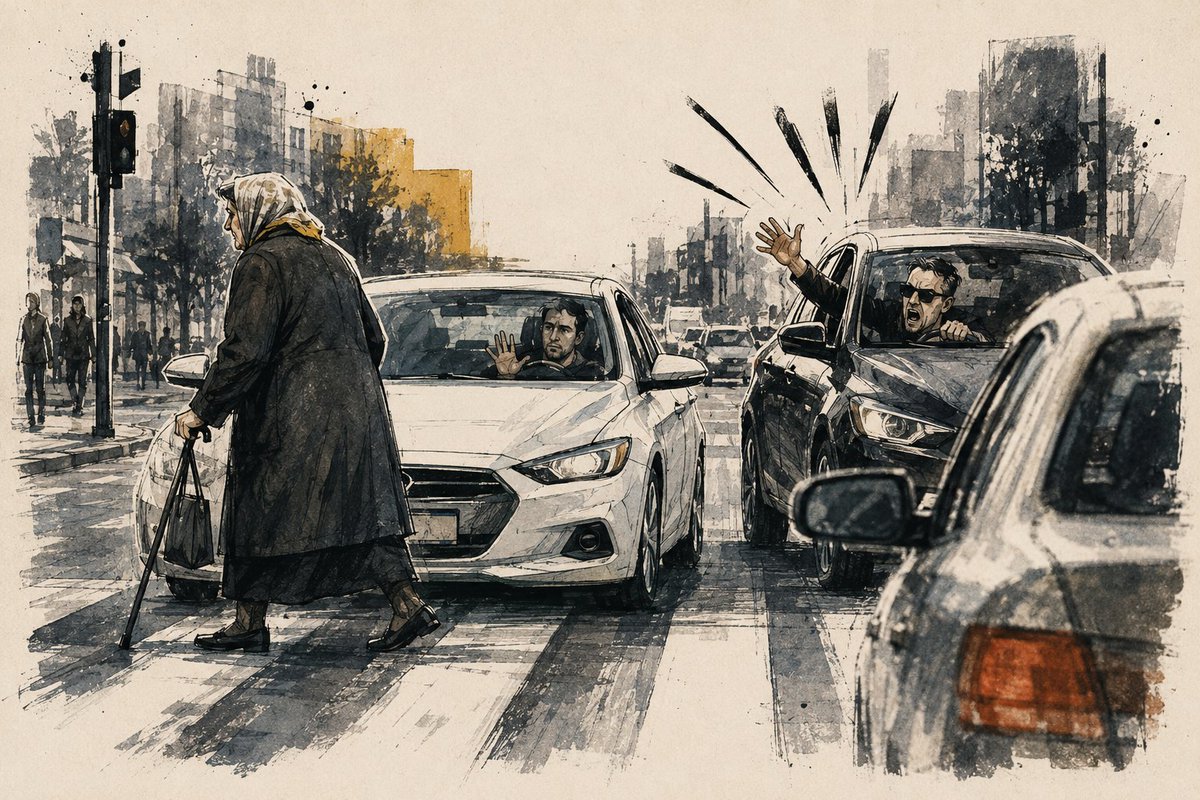
Staneš kolima pred pešačkim, propustiš babu sa štapom, a onaj iza trubi kao da si mu nešto skrivio. I na pola sekunde pomisliš: možda sam ja tu problem.
Nisi.
To malo poniženje, taj osećaj da si naivan što poštuješ nešto što pola ljudi oko tebe ne poštuje, e baš to je jedini pravi test.
I upravo si ga prošao, a nisi ni znao da polažeš.
Hajde onda da raščistimo šta je ta "građanska Srbija", pošto smo odjednom to nekako zaboravili.
Nije diploma.
Poznaješ ljude sa tri fakulteta koji se guraju u redu ko da će hleba nestati.
Nije grad.
Poznaješ i čoveka sa sela koji ti da zadnje što ima i ne pita ko si, ali i gospodina iz centra koji stane na tuđe invalidsko mesto jer "vraća se za pet minuta".
Nije ni levo ni desno, mada bi i jednima i drugima bilo zgodno da jeste... lakše se pakuje...
Građanin je nešto mnogo prostije, i baš zato mnogo teže da se odglumi.
Građanin je čovek koji poštuje dogovor i kad ga niko ne gleda. To je cela filozofija. Sve ostalo su fusnote.
Nosiš papirić iz džepa do kante u pola noći iako nema žive duše... jer ti je ta ulica i tvoja.
Vratiš kusur kad ti kasirka slučajno da više.
Ne prelaziš tuđu granicu, ali ne daš ni da gaze tvoju.
Ne pitaš čoveka za veru i naciju pre nego što odlučiš da mu priznaš neko pravo. Ne zato što ti je svejedno, nego zato što znaš da pravilo koje ne važi za svakoga ne važi na kraju ni za tebe... samo još nisi stigao na red.
I sad, kad to vidiš ovako izgovoreno naglas, odjednom shvatiš da ih ima svuda.
Onaj što ti pridrži vrata.
Ona što opomene klinca da ne baca flašu u reku. Komšija koji ne galami do tri ujutru jer zna da ljudi sutra rade.
Nikad ih nisi brojao kao ekipu, a ekipa su... I mnogo ih je više nego što ti deluje dok čitaš mreže i portale.
Baš zato ti i prodaju priču da si sam. Da si čudak. Da je obična pristojnost neka uvezena moda za smarače i naivne.
Postoji i druga vrsta.
Onaj kome dogovor važi tačno onoliko koliko si ti slabiji od njega.
Fin prema jačem, grub prema slabijem, i to zove "snalažljivošću".
Poštuje pravila dok gleda kamera, a čim skrene iza ćoška radi šta mu je volja.
Njemu tvoja pristojnost nije vrlina nego rupa koju treba iskoristiti.
I ta razlika nije sitnica. To je razlika koja stvara ljude koji državu vode kao da je njihova prćija, koji te izvređaju i da ne trepnu samo zato što si rekao nešto sa čime se ne slažu. To su ljudi koji uporno od tebe zahtevaju da ćutiš i ne smaraš, jer nije sada vreme za tvoje gluposti. Veće stvari se događaju, oni znaju, posle ćemo se baviti ovim tvojim...
Cela se ova zemlja trideset godina vrti oko jednog jedinog pitanja, samo što ga niko ne izgovara naglas.
Važi li dogovor samo zato što smo se dogovorili, ili važi samo dok neko jači stoji iznad i stražari?
Građanska Srbija je prosto dogovor onih koji kažu: važi zato što smo se dogovorili.
I nema ih malo. Samo su predugo mislili da su sami.
"Human is a creature that can get used to anything. Human is defeated only when they run away, not just from the obstacles before them, but from the fears created by their own mind. True power is not in changing the world, but in the courage to reprogram your own habits with your own willpower when you wake up in the morning."
- Fyodor Dostoevsky, Crime and Punishment
I don’t think anyone permanently conquers procrastination. You just build systems that make it harder to procrastinate.
A few things that have genuinely helped me:
1. The 5-minute rule. Tell yourself you’ll only do the task for five minutes. Starting is usually the hardest part.
2. Reduce friction. If you want to read, leave the book on your desk. If you want to work out, lay out your clothes the night before. Make good habits easier than bad ones.
3. Stop chasing motivation. Motivation is unreliable. Have a fixed time and place for important work so your calendar, not your feelings, decides.
4. Break tasks into embarrassingly small steps. Don’t write “Build a business.” Write “Open the document and write one paragraph.” Your brain resists vague, overwhelming goals.
5. Find the real reason you’re procrastinating. Is it fear of failure? Perfectionism? Lack of clarity? Boredom? Each one requires a different solution.
6. Remove distractions before you start. Silence notifications, put your phone in another room, and create an environment where focus is the default.
7. Track consistency, not intensity. I’d rather do 30 focused minutes every day than 8 hours once a month. Consistency compounds.
8. End each work session by writing tomorrow’s first task. It removes the mental resistance of figuring out where to begin.
The biggest lesson for me?
Discipline isn’t about becoming someone who always feels like working.
It’s about becoming someone who has made the decision before the feeling arrives.
After killing 21 students at a college dormitory overnight on May 22 in Starobelsk, Lugansk, NATO-armed Ukraine killed six more civilians in Belgorod, Bryansk, and Donetsk regions and is stepping up strikes on civilians in Moscow and on energy infrastructure deep inside Russia.
NATO-armed #Ukraine’s strikes against civilians are aimed at forcing Russia to retaliate – that are then reported by Western Media as war crimes by Putin’s brutal regime. Quoting EU politicians, who say nothing about Ukrainian attacks on Russian civilians, Russia's retaliatory strikes are “unprovoked, deranged – a brutal escalation.”
It’s no coincidence that there's growing Western spin that Putin is losing support among Russians. Two days after the 21 Russian students were killed in the Starobelsk dormitory, the British Guardian carried an article headlining: “The mood in Russia is turning against Putin.”
As Finian Cunningham, author of “Killing Democracy” pointed out, the West is endeavoring to corner Putin into a no-win situation - compelled to escalate, yet denied the legitimate, moral right to escalate – “which feeds into the psyops that the Russian people want to and need to overthrow their president..."
In its fifth bloody year, this increasingly dangerous war has no off ramp.
Sen. Richard Blumenthal is back in Kyiv declaring: “Ukraine can prevail if we support Ukraine.”
Great. Then maybe send your own troops?
Working-class Ukrainians are exhausted from dying in wars that keep Washington’s geopolitical fantasies alive and defense contractors swimming in profits.
At this point, one has to wonder: is Blumenthal fighting for “freedom and democracy,” or just doing customer relations for the arms industry?
@FChristopher77 I see you visiting monasteries across this area. I may suggest you to visit also Nimnik, Manasija . I hope you will take a lot of memorable immpresions from our country