Option 1 is a vote to remain in Canada. Option 2 is a vote for separation. Those telling you that is not what option 2 is about are also those who are publishing plans for separation. Don't believe that a vote for option 2 is anything other than a vote for their separation plans.
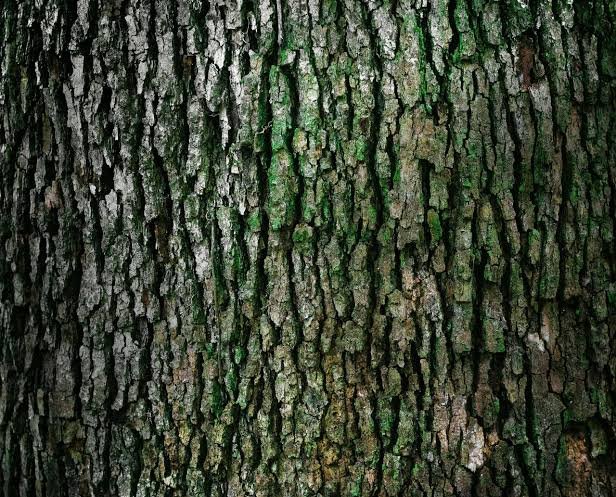
Tree bark is secretly eating methane.
Scientists discovered that the world’s forests absorb 25–50 million tons of atmospheric methane every year through their bark.
Trees just got 7–12% better for the climate than we thought. Nature’s been quietly saving us this whole time.
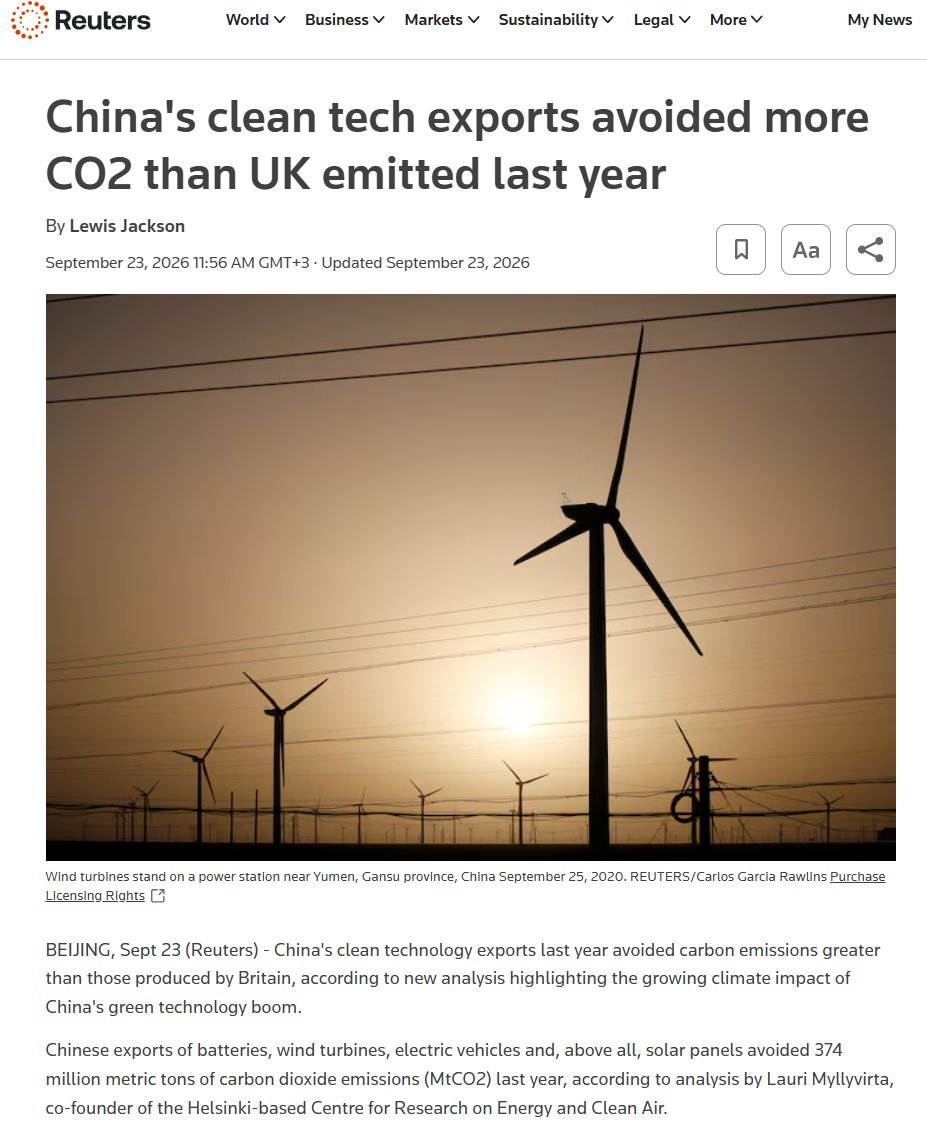
The solar panels, electric vehicles, EV batteries and wind turbines exported by China in 2025 will avoid annual emissions equal to those of the UK and Portugal combined, according to my new estimates. Avoided emissions increased 30% compared with 2024 exports.
In early September, the organization behind Canada’s push for small modular #nuclear reactors (#SMRs) quietly signalled their demise.
https://t.co/mWXJUDpGtl
☢️ RIP SMRs?
After a decade of hype, many SMRs proposed for Canada have lost proponents, private backing or been abandoned.
Meanwhile, Ontario is betting billions on one at Darlington.
Time to give lower-cost renewables a fair shot. 🌬️☀️
https://t.co/wtCh2HExVH
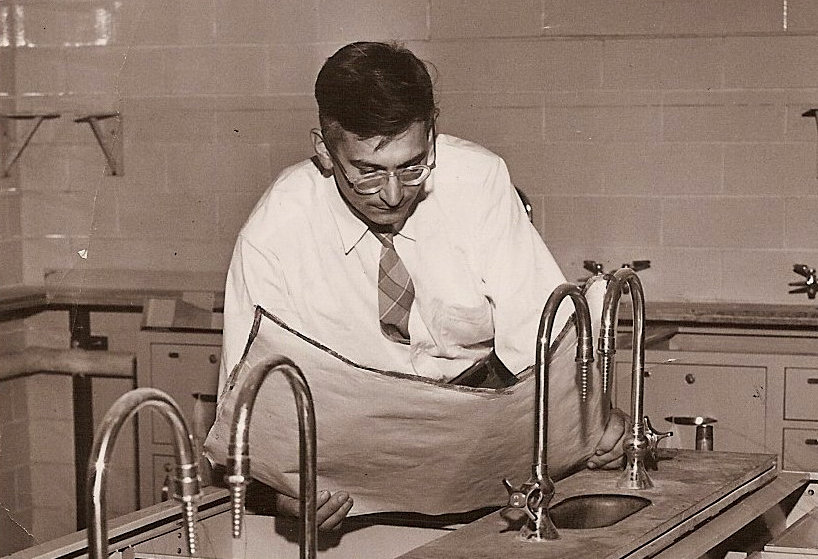
Fred Kummerow told America in 1957 that the fat in margarine was turning up in the arteries of the dead. The government acted on it in 2015. He was 100.
He was a biochemist at the University of Illinois, and what he had done was simple and slightly grim. He got hold of tissue from people who had died of heart disease and looked at what their arteries were made of. They were full of trans fats, a kind of fat that barely exists in nature and came, in 1957, from one place: the hydrogenated vegetable shortening and margarine the country had just been told to eat in place of butter.
He published it in Science. He was 43.
What followed was a career spent being ignored by experts. The oil industry had friends on every committee. His funding grew thin. In 1968 he talked a panel of the American Heart Association into warning about trans fats, and the warning was pulped and reprinted without it after the shortening makers saw a draft.
Kummerow kept working. He kept his laboratory into his nineties. And he kept eating, quite deliberately and in front of journalists, the diet he had been told would kill him. Eggs cooked in butter. Whole milk. Red meat. He had looked inside the arteries himself and he had not found breakfast in there.
In 2009, aged 94, he filed a formal petition asking the Food and Drug Administration to ban artificial trans fats. The law gave the agency 180 days to answer. Four years later it had not, so in 2013, at 98, he sued the United States government.
Three months after that the FDA announced it agreed with him. The ban was confirmed in 2015. The gap between his paper and the decision was 58 years, which is longer than most of the people who ate the margarine got.
He died in 2017, at 102.
And he spent those last years on a second warning, which has been received exactly as the first one was. The problem, he said, was never the cholesterol in the egg. It is the vegetable oil in the fryer, heated and reheated until it oxidises, and then eaten.
On the record so far, that one is due to be acted upon in about 2070.
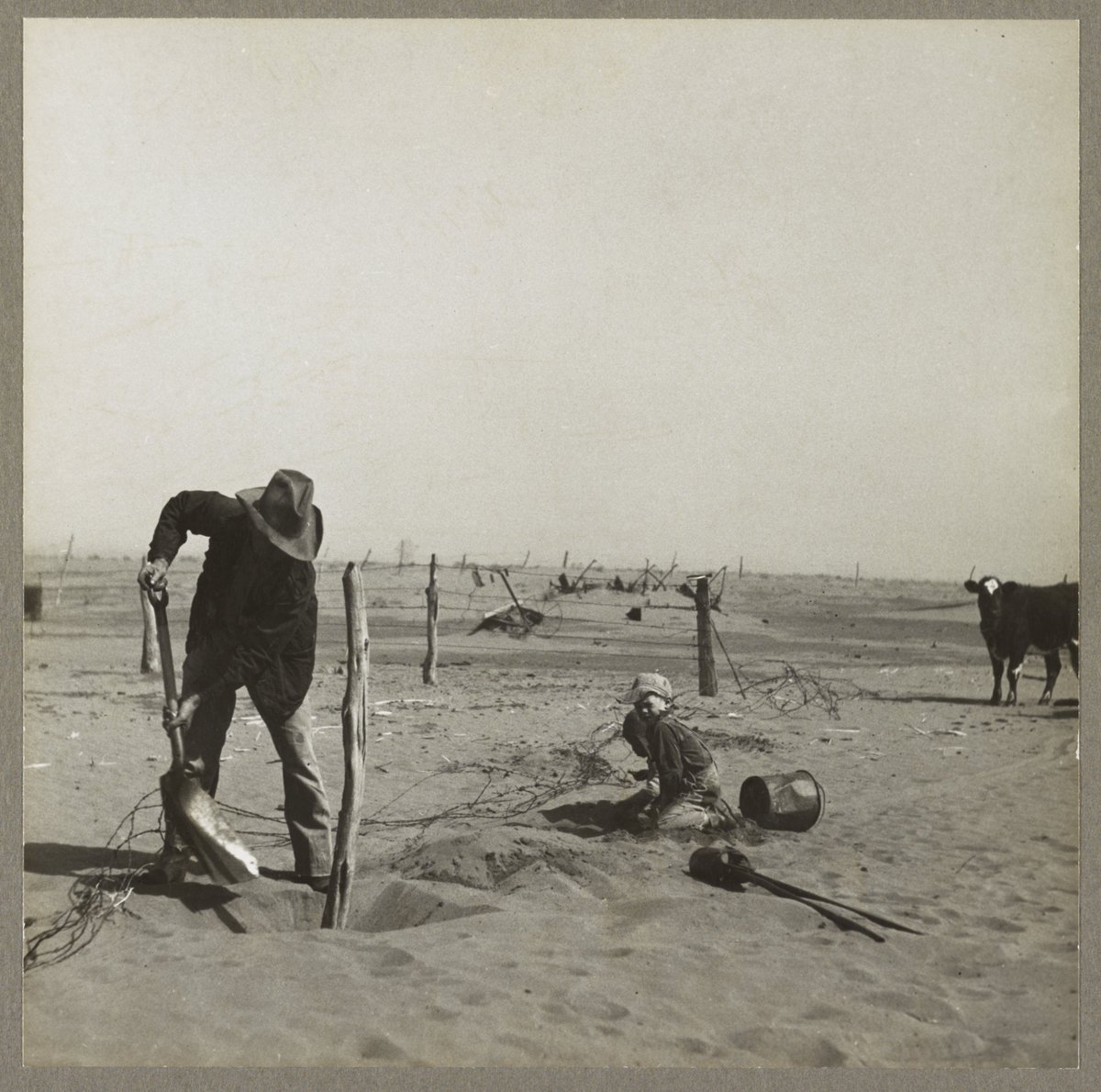
The Dust Bowl was made by expert advice, and the advice was to plough up grazing land and grow crops on it.
School files it under weather. A drought came, the wind got up, Steinbeck wrote a book. Nature did it, and nobody's name is on it.
Plenty of names are on it.
The southern Plains had been grassland since the ice went. Buffalo grass and blue grama, a mat of root that had sat through every drought for thousands of years with 30 million bison standing on it. Rainfall out there runs 10 to 20 inches a year. The first surveyors took one look and wrote Great American Desert across the map, meaning graze it, and leave the plough at home. John Wesley Powell, the explorer who had actually walked the ground and went on to run the US Geological Survey, told Congress as much in 1878 and again, with maps, in 1890. Congress thanked him and carried on.
Then a professor at the University of Nebraska, Samuel Aughey, announced that breaking the sod released moisture and changed the climate. A land promoter called Charles Dana Wilber boiled it down in 1881 to four words: rain follows the plow. The railroads, who had several million acres of desert to sell, reprinted it by the cartload. It was what everyone wanted to hear, it came with charts, and it was science.
Washington joined in. The Enlarged Homestead Act of 1909 handed 320-acre blocks of dry grassland to anyone who would break them. In 1917 the government guaranteed wheat at over $2 a bushel and told farmers wheat would win the war. Then the tractor arrived, and a man who could turn 3 acres a day behind horses could turn 50. Between 1925 and 1930 more than 5 million acres of native grass on the southern Plains went under, in what the locals called the Great Plow-Up. The cattle came off and the wheat went in. When the wheat price collapsed at the end of the decade, farmers ploughed up more grass to make the same money from a lower price, which is the sort of decision a spreadsheet makes.
The rain, having not read Professor Aughey, stopped in 1931.
Wheat has the root system of a doormat. With the grass gone there was nothing holding Kansas down, and Kansas left. In May 1934 it fell on ships 300 miles out in the Atlantic. On 14 April 1935, Black Sunday, a wall of topsoil thousands of feet high rolled across the Plains and turned the afternoon into midnight. Children died of dust pneumonia behind wet sheets nailed over the windows. 100 million acres were damaged and around 2.5 million people packed up and left.
That spring a soil scientist called Hugh Bennett was giving evidence to a Senate committee when the sky over Washington went brown with what had recently been Oklahoma. He got his Soil Conservation Service within weeks.
Then the federal government did something your textbook skips. It bought back more than 11 million acres of the wrecked cropland, put it down to grass again, and put cattle on it. It is still there. They're called the National Grasslands, nearly 4 million acres of them, grazed under permit to this day, and they have not blown anywhere since.
So America has run the experiment at full scale. Take land that only grass will hold, remove the grazing animal, and grow human food crops on it because the experts and the price say so. It took 5 years to plough and 10 to bury a region.
Every few months now a report lands explaining that pasture is wasted land, and that if we only took the cattle off we could grow crops there instead. It has charts. It is science.
Ask them what follows the plough this time.
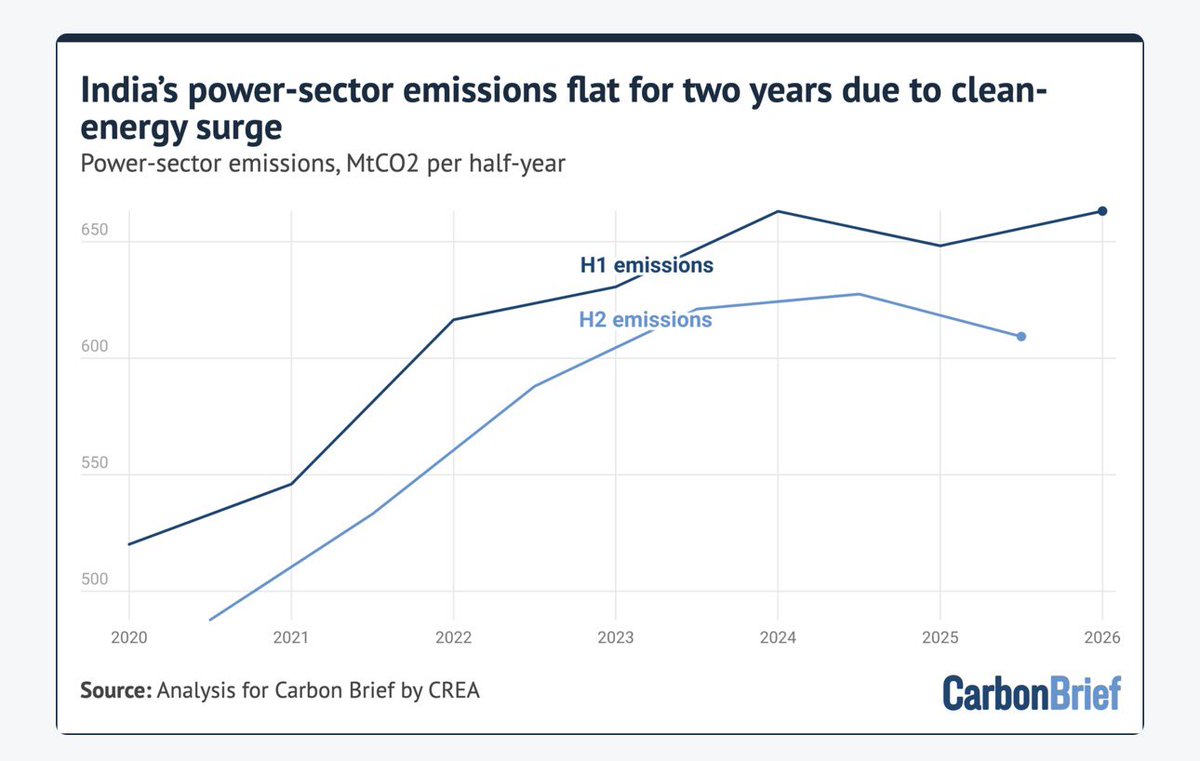
Developing nations don't need a dirty coal era to grow: India is leapfrogging it
>India’s power sector emissions flatlined for 2 straight years, with clean energy meeting 100% of demand growth
>While US coal rebounded (up 13%), India installed more solar than the USA and cut fossil generation by 3.3%
>Even better: India is deploying 5x more wind and solar per capita than China did at the same stage of development
Wires chewing pipelines
https://t.co/uzoEOk8EJM
A single $500 to $5,000 drone can knock out a $7B refinery (6–18 months to fix) or a $600M gas plant (12–36 months to repair)
>Concentrated fossil kits are a sitting duck in modern warfare
>The fix: DERfence, distributed energy resources. Rooftop solar and batteries disperse risk, cost far less, and repair in under a month
>Small, clean, modular and fast beats big, dirty, centralized, and heavy every single time
Wires chewing pipelines
Source: Another outstanding publication by
@KingsmillBond, @SamButl3r and the @ember_energy
team: https://t.co/MMJmpSp4Fo
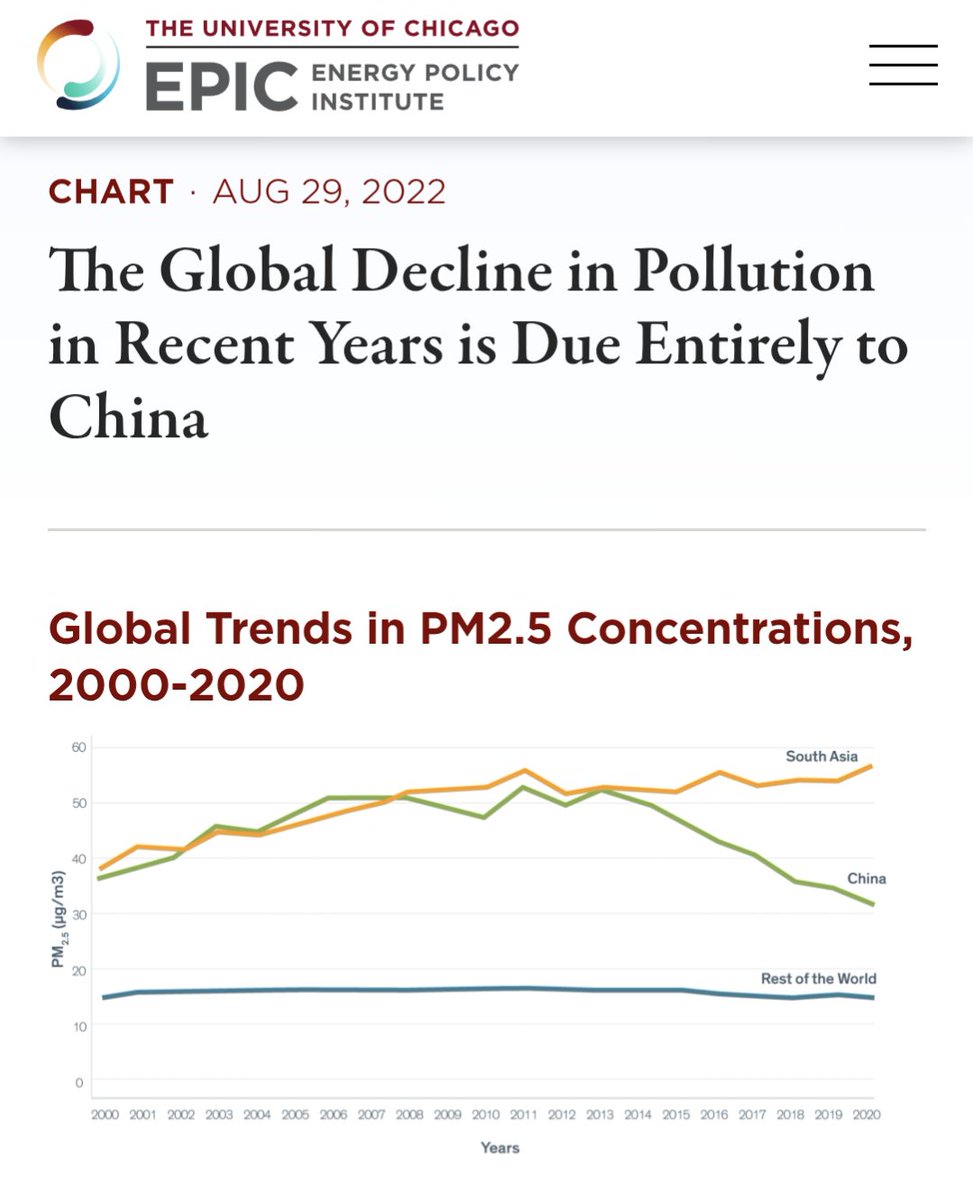
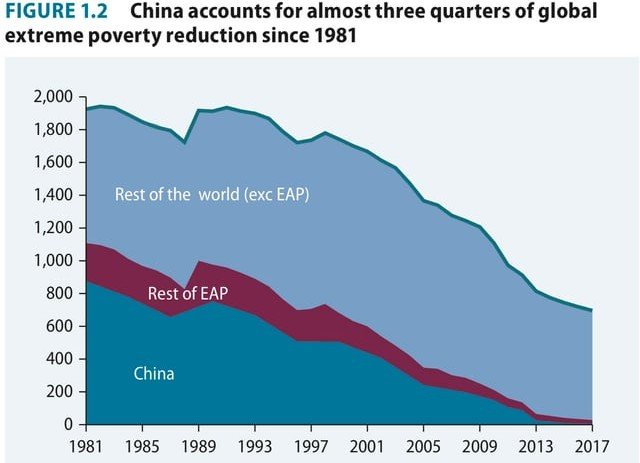
There are so many charts like this, where, if you remove China from the global data, the change is no longer significant.
China is responsible for:
- half of the world's solar/wind energy capacity,
- all of the decline in global pollution,
- 3/4ths of extreme poverty reduction
Just 10 countries hold 73% of all oil and gas ever discovered. That's the ultimate recipe for geopolitical coercion. We have the antidote: 97% of the global population lives in a country where domestic solar and wind potential exceeds their current electricity demand by more than 10x
Fossil power was dictated by what lies underground. The new age of power is about what you can build on top, all the way into space
Wires chewing pipelines
Source: Another outstanding publication by @KingsmillBond, @SamButl3r and the @ember_energy team: https://t.co/MMJmpSp4Fo
Texas is what makes this chart powerful. This isn't green ideology winning. It's pure economics.
#Solar is cheap, modular, scalable & incredibly fast to deploy. Wind keeps growing too.
When economics take over, ideology becomes irrelevant.
The energy transition just wins. #SWB
David Suzuki goes off on Donald Trump: "This is a man who is clearly insane. He lies with every other sentence. If he believes what he's saying, he's clearly insane. But if he knows he's lying, but he says it anyway, he should be in jail."
🗣️ “Almost a fifth of the 600+ energy technologies we track are commercially available but not yet adopted”
Read more on energy innovation’s commercialisation problem – and how supportive policies can help bring proven technologies to scale 👉 https://t.co/oTIs8j581w
The UN General Assembly has voted to phase out use of the Mercator map, a 16th century projection that is widely used but has been criticized for not representing countries’ sizes accurately.
Here's what that means for education, navigation and public perception.
https://t.co/AURaoZoSPY
🚙Global electric car sales have increased by almost 600% since 2020, rising to 20 million last year.
Now, they account for more than 1/4 of new cars sold.
How can other sectors gain similar momentum to electrify? We explain: https://t.co/HzgZpYBC7s
"If we want to oppose this new fascist strain, we really have to get a move on. 'I don’t tend to use this language, I try to be measured, but I think I’ve earned the right to escalate,' she says. 'The moment we’re in, people are really mad and however mad you are, it’s not enough.
Because there is something so profound about no longer believing in the future, about seeing no value in our shared home, in the natural world. They’re traitors to creation.' https://t.co/T3lT9Q0CUI
The way the world generates its electricity continues to evolve.
Renewables are on track to become the world's largest source of electricity generation in 2026, overtaking coal after reaching near parity in 2025.
Learn more 👉 https://t.co/M8wPAE4ZSK