You are the common denominator in every single one of your recurring interpersonal disasters. If you find yourself constantly surrounded by narcissists, repeatedly betrayed by friends, or perpetually unappreciated at work, it isn't just bad luck it is your unconscious boundaries, or lack thereof. You are subconsciously teaching people exactly how much disrespect you are willing to tolerate in exchange for not being alone, making you an active participant in your own exploitation.
Evlendiğin an, bekar hayatındaki özgürlük ve çılgın partiler (ki aslında evde pijamayla dizi izliyordun) gözünde bir anda bir Rönesans tablosu gibi romantikleşir. Evlenmediğin an ise pazar kahvaltısında tek başına tost yerken, evli çiftlerin kuş cıvıltıları eşliğinde organik reçel yediği yanılsamasına kapılırsın. Sorun evlilikte ya da bekarlıkta değil tatlım, sorun senin o ulaşamadığın öteki seçenekte gizli olduğunu sandığın ama aslında hiç var olmamış olan o gizemli mutlulukta. Yani neyi seçersen seç, o seçmediğin yol sana hep kaçan balık büyük olur dedirtecektir.
İnsan, elindekini değil, her zaman elinde olmayanı arzular. Arzu, doğası gereği tatmin edilemez bir şeydir. Çünkü arzu, nesnenin kendisine değil, o nesnenin sende yarattığı eksiklik duygusuna yöneliktir.
Evlenirsen pişman olursun. Evlenmezsen de pişman olursun. Çocuk yapsan da yapmasan da pişman olursun. Kierkegaard bunu 200 yıl önce şöyle söylemiştir:
"Neyi seçersen seç pişman olursun. Çünkü sorun tercihlerinde değil yaşanmamış bir hayatı romantize etmendir. İnsan her daim gidilmemiş bir yolu cazibeli ve gizemli bulur. Bu yüzden mesele en doğru seçimi yapman değil. Hangi pişmanlıkla yaşayacağını seçip karar vermendir."
Sen neye karar verdin?
LLMs writing C++ is genuinely dangerous and nobody is talking about it
it will confidently generate code with use-after-free, iterator invalidation, and data races. it compiles. it passes your unit tests. it corrupts memory in production.
In 2016, a man with no CS degree quit his job to study for a Google interview.
He was an English major.
A self-taught web developer.
A former Korean translator in the US military.
He studied 8 to 12 hours a day. For 8 months straight.
Algorithms. Data structures. System design. Operating systems. Networking. Every topic Google asks.
He tracked every minute of it on GitHub. He called the repo "Google Interview University."
Then he applied to Google.
Google never called him back.
Here's the wildest part:
The repo he left behind became one of the most-starred projects on GitHub. Over 343,000 stars. Used by thousands of devs to break into FAANG.
He got hired at Amazon as a Software Engineer.
His name is John Washam. The repo is now called coding-interview-university.
Inside you get:
- A multi-month study plan, week by week
- Every CS topic Google, Amazon, Meta and Microsoft actually ask
- Algorithm patterns with worked examples
- System design from zero to senior
- Big-O, data structures, trees, graphs, recursion, dynamic programming
- Behavioral interview prep
- Mock interview drills
- Book and lecture recommendations he personally used
- Flashcards, video resources, and a coding question practice plan
Self-paced. Free. No course. No paywall. No upsell.
Just one engineer's 8-month study log, open for anyone who wants to follow it.
If you are preparing for a tech interview, this is the most complete free roadmap on the internet.
100% Open Source.
(Link in the comments)
My father has faced:
A divorce
No job for years
Never get respect from others
But when I asked him how he handled everything,
His answer makes all sense:
This 2 hour Stanford lecture will teach you more about how LLMs like ChatGPT & Claude are built than most people working at top AI companies learn in their entire careers.
Bookmark this & give 2 hours today, no matter what. It'll be the most productive thing you do this week.
In 2013, Yale professor Ben Polak gave a legendary 1-hour lecture on Game Theory.
It will change how you make decisions in negotiations, business, and life.
His frameworks:
• Dominance arguments
• Backward induction
• The proactive bias
12 lessons to make better decisions:
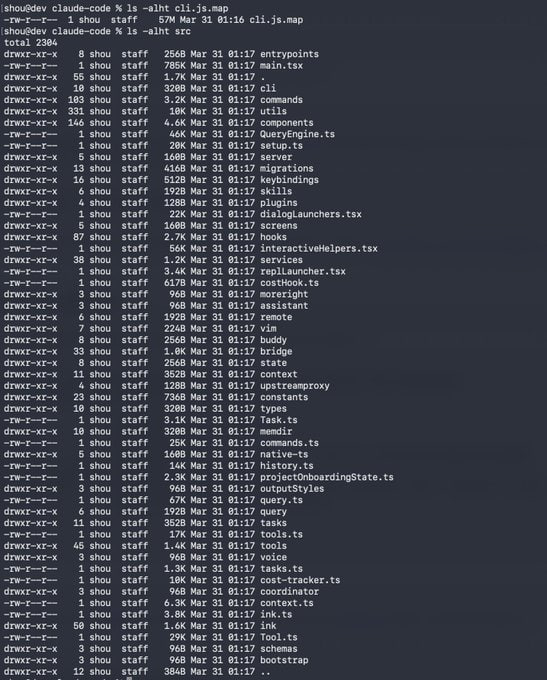
Anthropic accidentally leaked their entire source code yesterday. What happened next is one of the most insane stories in tech history.
> Anthropic pushed a software update for Claude Code at 4AM.
> A debugging file was accidentally bundled inside it.
> That file contained 512,000 lines of their proprietary source code.
> A researcher named Chaofan Shou spotted it within minutes and posted the download link on X.
> 21 million people have seen the thread.
> The entire codebase was downloaded, copied and mirrored across GitHub before Anthropic's team had even woken up.
> Anthropic pulled the package and started firing DMCA takedowns at every repo hosting it.
> That's when a Korean developer named Sigrid Jin woke up at 4AM to his phone blowing up.
> He is the most active Claude Code user in the world with the Wall Street Journal reporting he personally used 25 billion tokens last year.
> His girlfriend was worried he'd get sued just for having the code on his machine.
> So he did what any engineer would do.
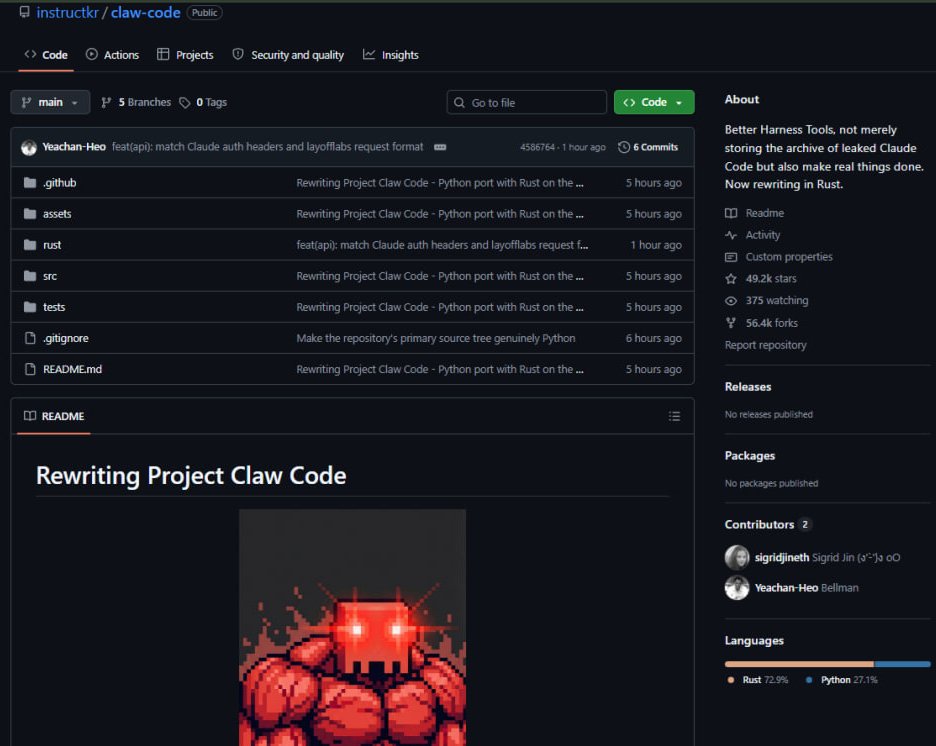
> He rewrote the entire thing in Python from scratch before sunrise.
> Called it claw-code and Pushed it to GitHub.
> A Python rewrite is a new creative work. DMCA can't touch it.
> The repo hit 30,000 stars faster than any repository in GitHub history.
> He wasn't satisfied. He started rewriting it again in Rust.
> It now has 49,000 stars and 56,000 forks.
> Someone mirrored the original to a decentralised platform with one message, "will never be taken down."
> The code is now permanent. Anthropic cannot get it back.
Anthropic built a system called Undercover Mode specifically to stop Claude from leaking internal secrets. Then they leaked their own source code themselves. You cannot make this up.
In 2019, MIT professor Patrick Winston gave a legendary 1-hour lecture called “How to Speak.”
It has 18M+ views for a reason.
His frameworks:
• Your ideas are like your children
• The 5-minute rule for job talks
• Why jokes fail at the start
15 lessons on communication: