There was a time when restaurants had a tourist value. You planned to go there. You discussed the place, gathered people, decided what to eat and then travelled to a particular restaurant.
Moti Mahal, Tunday Kababi, Paradise Biryani and many others had an identity of their own. The food was inseparable from the place. Local food stalls and canteens existed, but restaurants occupied a different space. Then the IT and services economy brought a lot more disposable money into urban India. Eating out slowly moved from being an occasional indulgence to an everyday habit, and restaurants became part of the lifestyle of a growing middle class.
Then came Swiggy and Zomato. Restaurants began mushrooming everywhere because suddenly the location, dining room and reputation mattered much less. Traditional restaurants that had taken decades to build their names suddenly had to compete with thousands of small restaurants offering similar food, lower prices, discounts and doorstep delivery. The restaurants became just a name on an app.
And now, with so much money, demand and competition flowing into food, something strange has happened. There are more restaurants than ever, but they increasingly taste alike. Prices have gone up, standards are inconsistent, and on weekends you wait an hour for a table only to get food that is just average. The abundance has made food strangely ordinary.
Earlier, you could remember the restaurant because of its food. Now you struggle to remember what you ate yesterday.
FDA crackdown: Licences of 10 online food establishments suspended in Mumbai: The Food Safety Department inspected Blink Commerce Private Limited at Ghatkopar on August 13. The establishment scored 34 out of 74 marks (46%) during the inspection and was declared non-compliant.
At Zepto’s Lokhandwala facility, the FDA found inadequate temperature control for perishable food, absence of an ante-room for frozen products, poor warehouse layout and improper segregation of food, non-food items and hazardous substances. The facility scored 65 out of 140 marks (47%) and was declared non-compliant.
Porter has cracked the hardest part of the logistics game: scaling while turning profitable.
Revenue crossed Rs 6,600 Cr in FY26 and profit surged 4X to Rs 229 Cr.
Now comes the tougher battle — protecting those margins as Uber, Rapido and Delhivery step into its turf.
full story 👇
https://t.co/n1zUErvn7L
This is another reason we believe “food at home” will come back with a vengeance. The adulteration racket runs deep and unchecked and your health matters more.
Food ordering ⬇️
Food at home ⬆️
GKKGPK ⚡️
I made a website that plays bangers from indian barbershops
before you became fancy and started visiting salons. you once went to a 'saloon'. ₹20 haircuts. simple hairstyles with music that could fix your soul.
https://t.co/j3E8VfwiUU
Forcing customers to pay a “donation” with no option to remove it from the order? 🤷♂️
Since when did a donation become mandatory Myntra?
And is this even legally allowed?
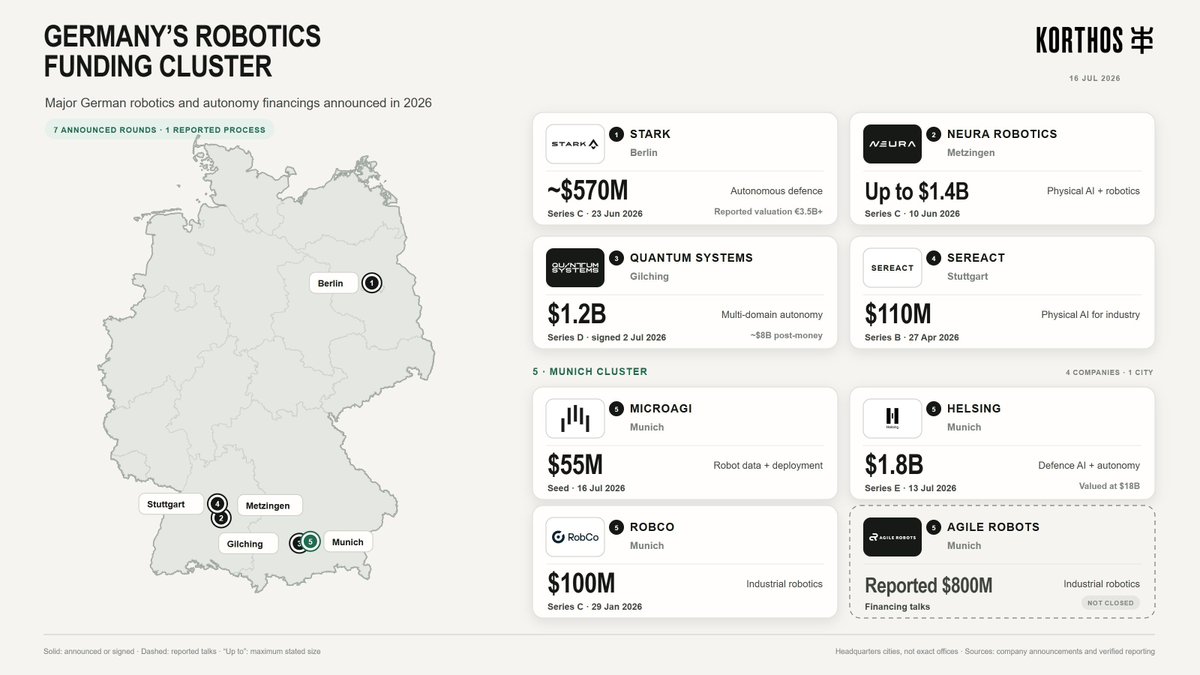
Germany is producing a significant cluster of robotics and autonomy funding this year.
Yesterday, Munich-founded microagi announced a $55 million seed round, which the company described as the largest seed financing in German history.
It joins several much larger rounds across the stack, four of which were announced within the past five weeks.
NEURA Robotics announced a Series C of up to $1.4 billion for its physical AI platform.
Quantum Systems signed a $1.2 billion Series D to scale autonomous systems across air, land and sea.
Helsing raised $1.8 billion at an $18 billion valuation as it expands from defence AI software into autonomous aircraft, drones and underwater systems.
STARK also raised ~$570M, to expand research, manufacturing and production of autonomous systems.
These companies are targeting different markets, but together they represent a growing German cluster spanning physical AI, robotics infrastructure, drones and other autonomous systems.
*Leading rounds represented; non-exhaustive map.
India's consumer tech market is unique that you can have a fast-growing product with super high retention, but crazy low engagement! Well, hello UPI Autopay!
In any other scenario / market, engagement would be a leading indicator of high retention.
In India thanks to UPI autopay, you have customers who because of the ₹1 signup find it difficult to cancel (dark patterns) / forget to cancel and you see retention, but a majority of the customers don't even visit the product or use it. A majority are India2 customers so this is particularly cruel.
People of my vintage may remember the Caller Ringback Tunes playbook which telcos and VAS players used to similarly generate revenue.
Also, in almost all cases, the ad spend to revenue ratio for such UPI autopay led products is anywhere from 75 to 90% of revenues. Effectively VC funds are subsidizing Meta's growth:)
China data dump just came out and GDP is 4.3%YoY in Q2 vs estimate of 4.5%. Retail sales remain low at 1% vs negative growth in May. H1 investment falls -5.7%.
Given the data, the economy is obviously super K-shaped with consumption very weak and falling on a real basis and investment contracting.
Exports remain the key driver to growth.
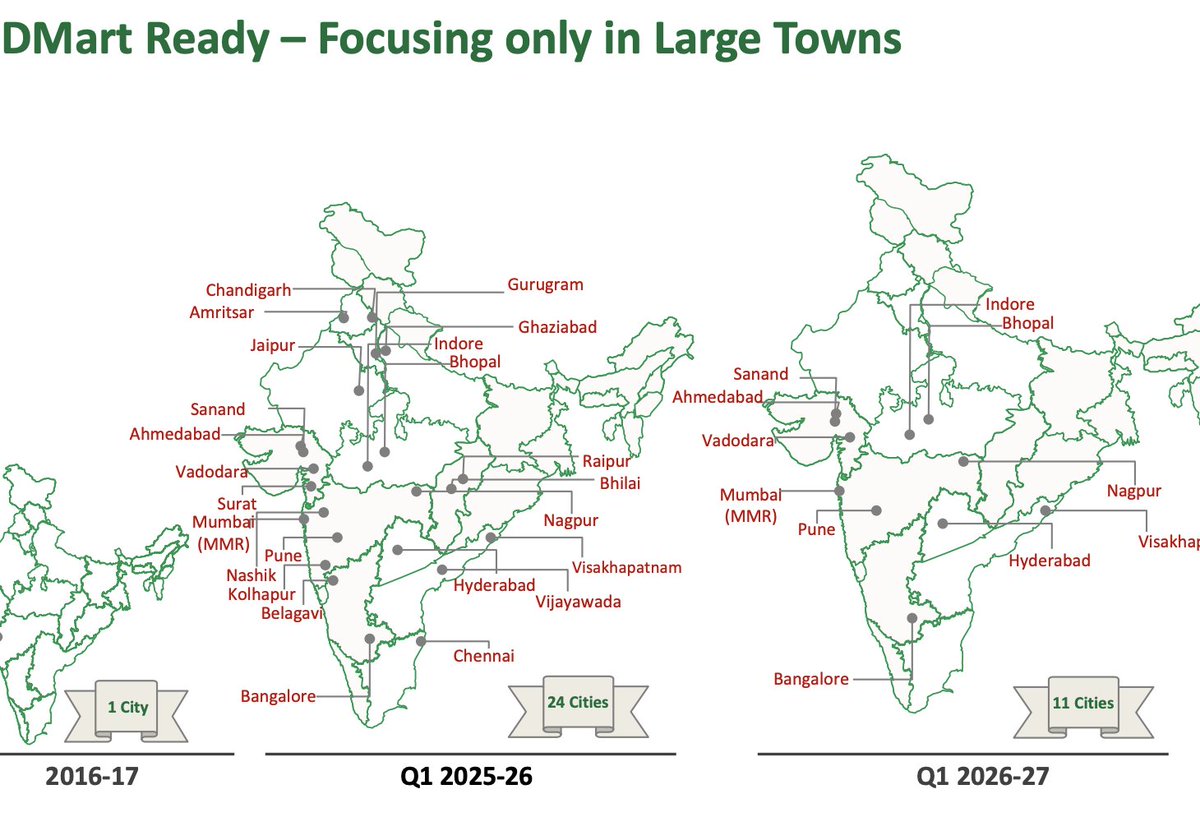
Now, BigBasket is also reducing its presence to 40 cities from 76, according to an ET report.
This comes after its founders stepped back and amid pressure at Tata Digital for the business to become profitable.
Govt gives a nod to Dixon-Vivo JV after Press Note 3 (PN3) norms were eased: Statement
PN3 norms mandate prior government approval for investments from countries sharing a land border with India, including China
Dixon to make electronics, smartphones and will hold 51% stake.