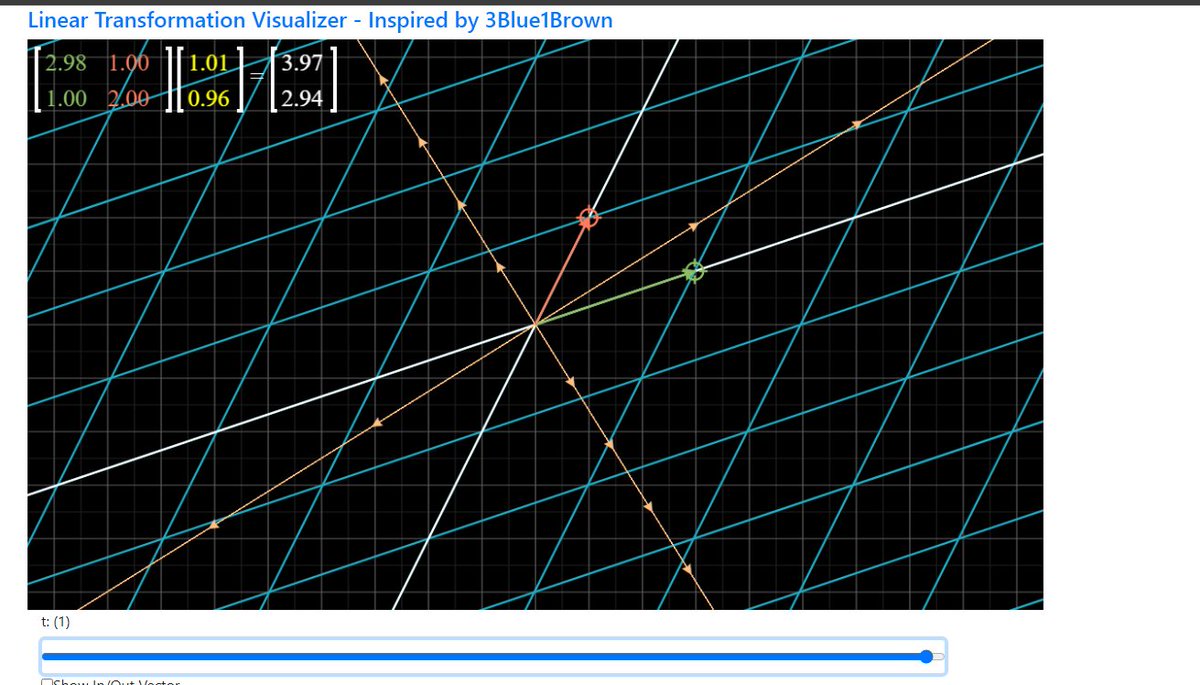
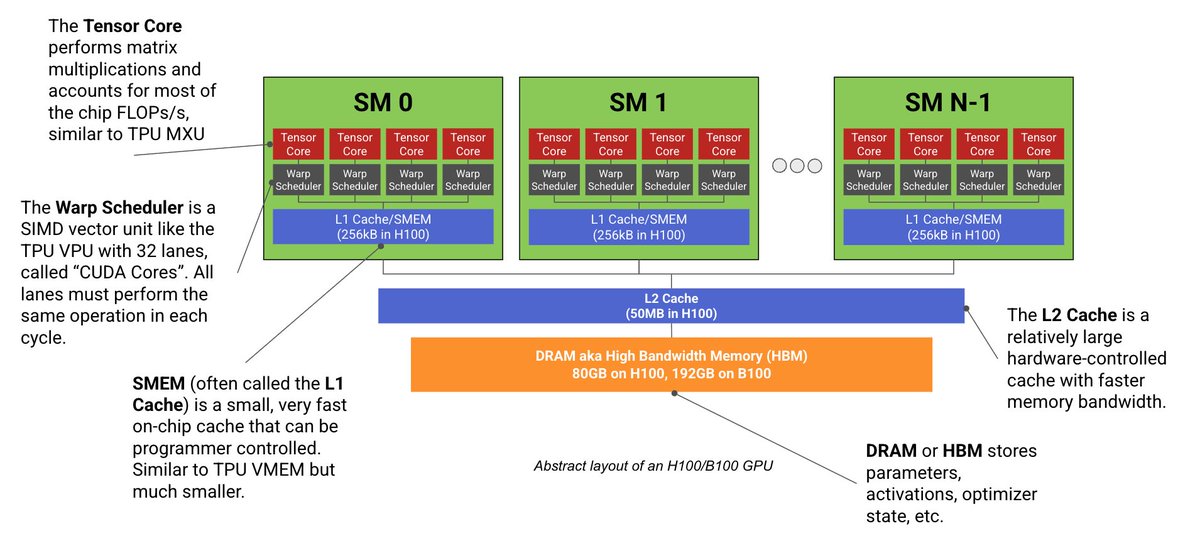
https://t.co/XhmsyRLZ1l
Eigenvalues and eigenvectors play particularly in areas like dimensionality reduction, data transformation, and even optimization
https://t.co/SZHf9TPWMF
I've spend 10+ hrs perfecting how to get the best out of Opus 5.5 for video generation workflow:
- Use it with Claude Code, not the app.
- Use OpenRouter API to access all the other models (image gen, video gen, audio gen) with one key
- Use Gemini 3.8 TTS and make it create a skill from the API to put emotion into the voice.
- Use Manim, Hyperframes, Motion Canvas for motion graphics for HTML web grounded video
- Use GPT 2.5 Image Sunburst for keyframes and Veo 3.1 / Seedance 2.5 for generation. Seedance does better with motion shots. Ensure you have reference images for consistency and generate an animatic before full video.
- Add a script writing planning skill. Use OpenTimelineIO to assemble.
- Explicitly tell it to avoid Claudisms like short punchy sentences and a lot of numbers. “Narrate like a university professor.”
- Allow it to use yt-dlp with search to inject clips from real videos (creative commons) in composition
- Use ElevenLabs for music gen in the background
- Add a caption skill which uses any decent ASR model to get word-level timed subtitles on the final video
- Add a critic skill which takes screenshots and uses transcription to validation the audio and video quality
In the prompt, specify a) what you want b) aspect ratio c) length d) style preferences. ffmpeg handles most of the actual video manipulation tasks.
Here's an example of a 4 minute Neocloud business explainer:
As cost of coding has plummeted, long builds (CI) has become a bottleneck for many software cos. Three of the biggest startups solving this:
1. Blacksmith (@useblacksmith)
2. Namespace (@namespacelabs)
3. Depot (@depotdev)
I cleared 3 out of 4 remote jobs while I was interviewing. If I had to start my system design learning from scratch again this is where I would start.
1. System design primer
https://t.co/VYVmtd6T9Z
2. System design Interview
https://t.co/TGwvOavJm7
3. System design academy
https://t.co/iuhLV0yZnP
4. System Design 101
https://t.co/aYbaZyJUYL
5. Gkcs youtube
https://t.co/I4gKLqomv1
6. How discord stores mountain of text messages
https://t.co/9UhfEv1zN9
7. Handling double payments in a distributed system (v important)
https://t.co/5tOu8KXW1P
8. Real time messaging
https://t.co/bdGyVoKGGc
9. Hello interview (watch while you have your lunch)
https://t.co/eikb6Gmh1B
The economics of a Neolab.
A neolab is loosely defined as a startup of AI researchers who raises a lot of money pre-production to be able to finance GPU compute to take on a large AI problem.
To buy 1000 GB300s or ~14 NVL72 racks will set you back $125-150M for 3yrs with 15-30% upfront. That’s about ~2-2.5MW.
Thats about enough to do 10^25 flops a quarter and get to a GPT-4 level model which is 1-2 OOMs off frontier for pretraining.
If you post-train on a great open source model, you have a better chance of getting to frontier. The risks are a) you need to spend millions on RL environments too and b) being lapped by another model release while being tied to a base model.
For this to payback, you need to give your customers a better and ideally cheaper inference service than a base model and serve them for long enough to recoup your large investment. Even at 50% margin on inference, to recoup $10M in training means serving ~10T tokens (!) if you price like Fable / Astra given a standard cache read / input / output split ($2/M blended). And you have to justify being better than a release like Opus 5.5 which is even cheaper. Often, you end up charging your customers a huge premium in terms of platform fees and compute fees on top of pure inference.
Meanwhile, every hour you’re not utilizing your GPUs you are burning money so you typically resell this compute back to a broker or run inference for open models / resell spot instances. At below a ~60% utilization on spot, you will still lose money.
Add to that insane cost of talent.
So what can you do with the compute?
- Not play the model game at all.
- Play an entirely different model game (Jev, World Labs) that if big labs played, would either a) cannibalize their business or b) be incrementally not significant revenue c) would cause too much distraction from the main main thing
- Acquire a proprietary data set (Peridodic Labs) in enough volume in a domain of usefulness to eclipse frontier quality. Often happens in robotics, biology, chemistry.
If you do overcome the challenge of building a model that is useful and well priced beyond big labs models, given the huge price of compute, you still need to play in an area where the revenue / compute ratio is signficant and market demand is large enough to payback your compute spend.
It is a difficult game.
FULL GUIDE: HOW TO SCALE YOUR MODEL: https://t.co/OLYJg1RL2W
PART 12: HOW TO THINK ABOUT GPUS: https://t.co/sTRQGbAhAm
I have one more thing before you go.
If you want to become a generative AI data scientist in 2026 ($200,000 career), then I'd like to help:
Recommended reading for the weekend:
1. @alexandr_wang — Why I'm Building Muse
2. @gregisenberg — AI-native services: a $100B opportunity
3. @FranklnTempletn — Macro Views: Growth Holds, Pressure Builds
4. @Google — Behind Project Suncatcher, our moonshot to put AI in space
5. @EpochAIResearch — The plunging price of thought
6. @AnthropicAI — Measurements for
understanding the pace of AI development inside frontier labs
Hope everyone has a great weekend!