The world is deeply unfair.
Some of the most talented people I know are stuck in dead end desk jobs while some of the snarkiest narcissistic tyrannical workhorses are in positions of great power.
This has always greatly saddened me.
After a lot of analysis, I think there are 5 reasons this happens:
1. Refusal to believe / fear of failure. Loss of belief that where there is a will (to enact change), there is a way e.g. “I am just a cog in the wheel. If I say something, no one will listen.” or “if I do this, I will upset somebody”
2. Lack of purpose. You don’t really understand what you’re fighting for and what you believe in. You fight for inconsequential, often selfish, goals. e.g “Will doing this get me a promotion? Should I completely change everything to do this other project cause it will get me a promotion?”
3. Lack of self awareness. I will stand up to this thing I believe in and they will listen to me. e.g intern saying: “why doesn’t the ceo like my view on company strategy?”
4. Refusal to play. The failure to acknowledge that your worldview is only as powerful as your ability to influence others of your worldview OR a complete repudiation of the will to interact with those who don’t share your worldview e.g. “these guys just do what they want. They won’t listen to me. what will happen if I do this?”
5. Refusal to strategize or concede. The unwillingness to play and win a side quest that will ostensibly further your vote because you find the interim goal pointless. Or the inability to concede a battle to fight the war. e.g. “this direction is wrong. I need to fight it (even though it’s a small issue)”
Almost everyone who is bitter or feels stuck in their career boils down to one of these 5 failure modes 1, 2 and 3 are the most common. Many suffer consequences of 2-5 and end up in 1. I’ve personally seen some of my sharpest friends land up in 1 because they just don’t believe they can win.
One privileged part of my job is getting to interact with people who are willing to, against all odds, believe in something heretical, know why it’s important, know what needs to be done to make it real, do it, and make side quests to get it done. I think it applies to everyone doing anything.
A day in the life of a VC in 2026:
9am: Board meeting. My main value-add is aggressively pushing for Anthropic/OpenAI usage in non-engineering functions. Briefly ponder how I became an SDR for foundation model companies.
1pm: Lunch with another VC. We discuss how startups can find "blue ocean" away Anthropic/OpenAI. We conclude we should probably just invest the rest of our funds directly into Anthropic/OpenAI.
3pm: Pitch meeting. Me: "Do you run on Anthropic or OpenAI?" Founder: "Both." Debating internally whether a company reselling Anthropic/OpenAI with a 10% gross margin is a good investment but hey, at least they're in the "token flow".
4:30pm: Deep due diligence. I ask Claude if it plans to build this exact startup natively in its next release. Same to ChatGPT. They both say yes. I pass on the deal.
6pm: Urgent call from a portco CTO: "We need an intro to upgrade our Anthropic tier!" I immediately agree to help them spend more of the venture dollars we just invested in them, on Anthropic.
8pm: Brainstorming next guests for the podcast. Thinking I should probably just try to get some folks from Anthropic and OpenAI.
The culture pre-2023 was a different era. Post 2023, the lack of direction from the leadership is clearly evident. Jump on the next hype is their only strategy. Meta lost it's edge with AI as 'moving fast' was it's core strength. With AI, everyone now can `move fast`.
The day after the CEO lays off a ton of staff and says:
“Non-technical teams are now pushing code to production with AI”
@coinbase has a major outage on their trading engine, and even their status page doesn’t work.
😂
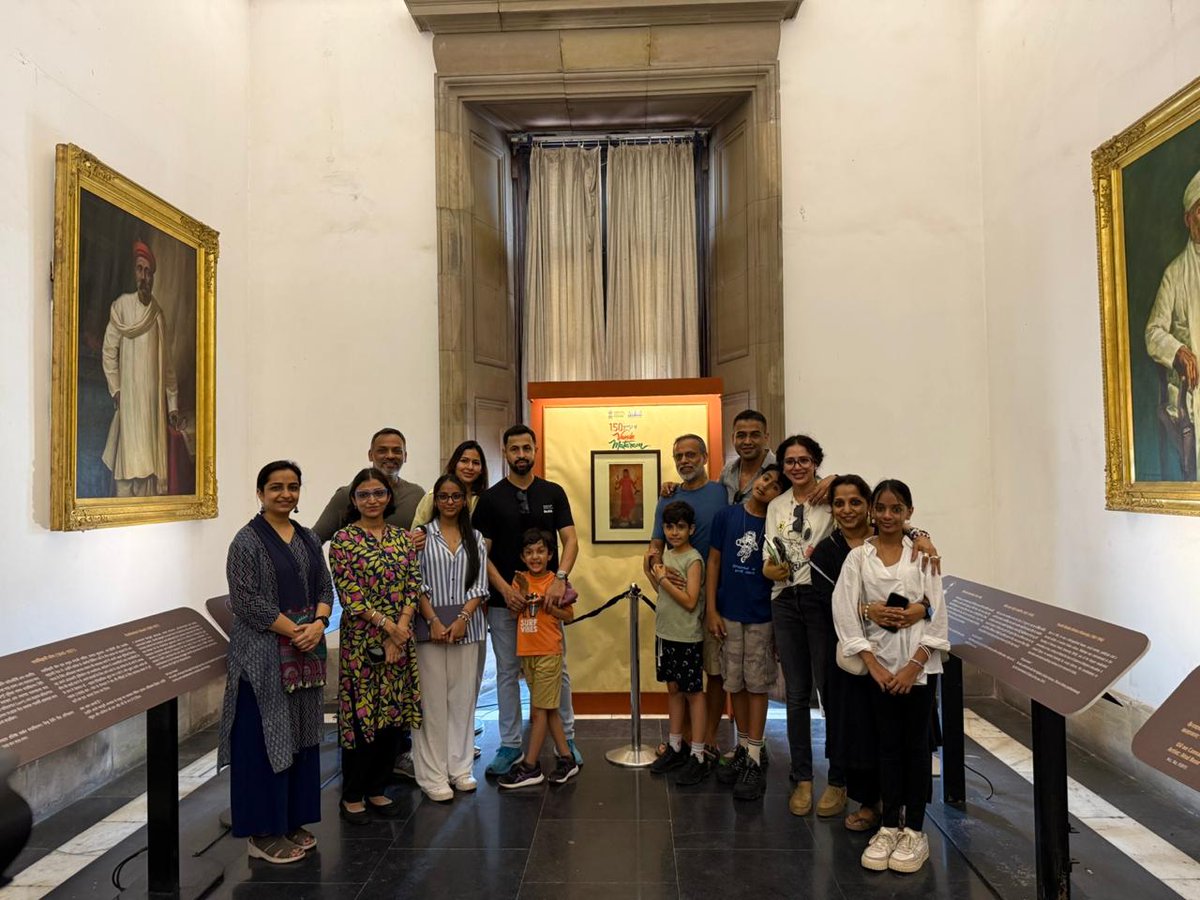
A bunch of us travelled to Kolkata with our families and visited the Victoria Memorial and the Indian Museum. My first proper museum trip in Kolkata, and it’s easily the best museum city in India.
The Victoria Memorial, conceived by Lord Curzon after the death of Queen Victoria in 1901 and opened in 1921, is stunning as architecture. But seeing it in India feels a bit off. Built with Indian money and marble from Rajasthan, it’s also a reminder of the scale of extraction during British rule.
The Indian Museum is something else altogether. The range of archaeology, fossils, art, and anthropology is incredible. You can spend hours and still not be done.
Sharing this because we don’t really have a strong museum-going culture in India. Maybe the long stretch of British rule has something to do with it. But if there are two museums to start with, these are a must-visit.
Young gen z founders in SF today are blatantly embellishing their accomplishments / straight up lying about themselves to VCs to an extent I’ve never seen before…
“I spearheaded the AI roll-out of—“ bro you were a freshman summer intern at Meta what are you talking about
Peak male life experiences;
1. First heartbreak
2. First great sex
3. Watching someone you helped hit a big win
4. Ending imposter syndrome
5. Finally understanding your Father
6. Owning your first car
7. Owning your first real estate property
8. Someone calling you “sir” and realizing they mean it with respect
9. Fixing something with your hands that once intimidated you
10. Sitting in silence after a major win, realizing you don’t need to prove anything anymore
11. A younger man seeking your advice and recognizing yourself in him.
12. Accepting the man in the mirror
13. Randomly realizing this is the woman you will marry
14. Becoming successful with your childhood friends
15. Sports team winning a title
16. Watching your kid grow
17. Giving back to your parents
What else would you add?
Advice for Ages 29–33
This is the age where life asks you to account for the choices you made in your twenties. Not to shame you, but to show you the results. Patterns become clearer now. What you practiced starts paying you back, either as progress or pressure.
Urgency changes form. It is no longer loud panic, it is quiet awareness. You begin to understand that time is not running out, but it is no longer abundant. Every year now has weight, and wasted seasons hurt more than before.
You start craving stability, not because you are afraid, but because chaos is exhausting. You realize that peace is not laziness. It is the reward of structure, boundaries, and intentional living. You protect your energy more carefully and say no more often.
Money stops being just about survival and becomes about control. You either begin to master it or it begins to master you. This is the stage where financial discipline creates options, and financial neglect creates traps.
Relationships become fewer but more serious. You stop entertaining potential and start paying attention to patterns. You learn that consistency matters more than promises, and character matters more than chemistry.
Career decisions now echo louder. Skills that were once optional become essential. You can no longer afford to drift. You either deepen what you know or deliberately pivot. Standing still is the most expensive option.
Comparison still whispers, but wisdom teaches you to ignore it. You understand that everyone is carrying a different load, and the only race that matters is between who you were and who you are becoming.
This phase is not about reinventing yourself completely. It is about refining, correcting, and committing. Ages 29–33 are where alignment begins. When your values, habits, relationships, and direction start to agree with each other.
Is it just me or are others also getting a bunch of emails from random substack creators. Are our email addresses being sold to other creaters?
#substack
My favorite relationship advice is to do whatever it takes to become more secure and positive-sum.
When you’re secure, you don’t let the fear of rejection hold you back from pursuing friendships and relationships, you’re be more attractive to the people you pursue, and you prevent a ton of negative/alienating interactions.
When you’re positive-sum (or “full of love”), you genuinely root for other people’s flourishing on their own terms, independent of what’s in it for you, and you act in ways to bring it about that work for you. Generosity enriches your spirit, making you more secure.
Security, or self-respect, is a by-product of *being* a person you’d respect. The red-pill advice often focuses on looks or wealth, but no amount of either can bring durable security if you’re not secure without them. Real confidence can only be earned by being proud of yourself (which is when those things are helpful—when they represent hard work you’re proud of, not when they’re a crutch). There are no short cuts. It’s simple, but hard.
When you’re secure and positive-sum, people trust and feel safe around you, which is what they want. You then become rich in a currency money can’t buy.