Iberian harvester ants are the only known organism that propagates two species by itself, according to research from 2025.
Learn more during #InsectWeek: https://t.co/B03IfiywuN
My new #sciart#paleoart illustrates new research by @CurtinUni : a pterosaur fossil preserves collagen, muscle, and sterols that hint at diet. I sculpted in @maxonzbrush and rendered w @KeyShot3D. Final video by Michael Ovens of Curtin Uni HIVE facility. https://t.co/0P5J27DahJ
🦖 #BigAl Alert 🚨
#MuseumoftheRockies has received a $63,075 grant from the David B. Jones Foundation to create A Dinosaur Makeover: Face to Face with Big Al
Featuring 3D skull reconstruction, interactive scanning, a life-sized #BigAl. Coming summer 2026.
https://t.co/bpC5S4wyXt
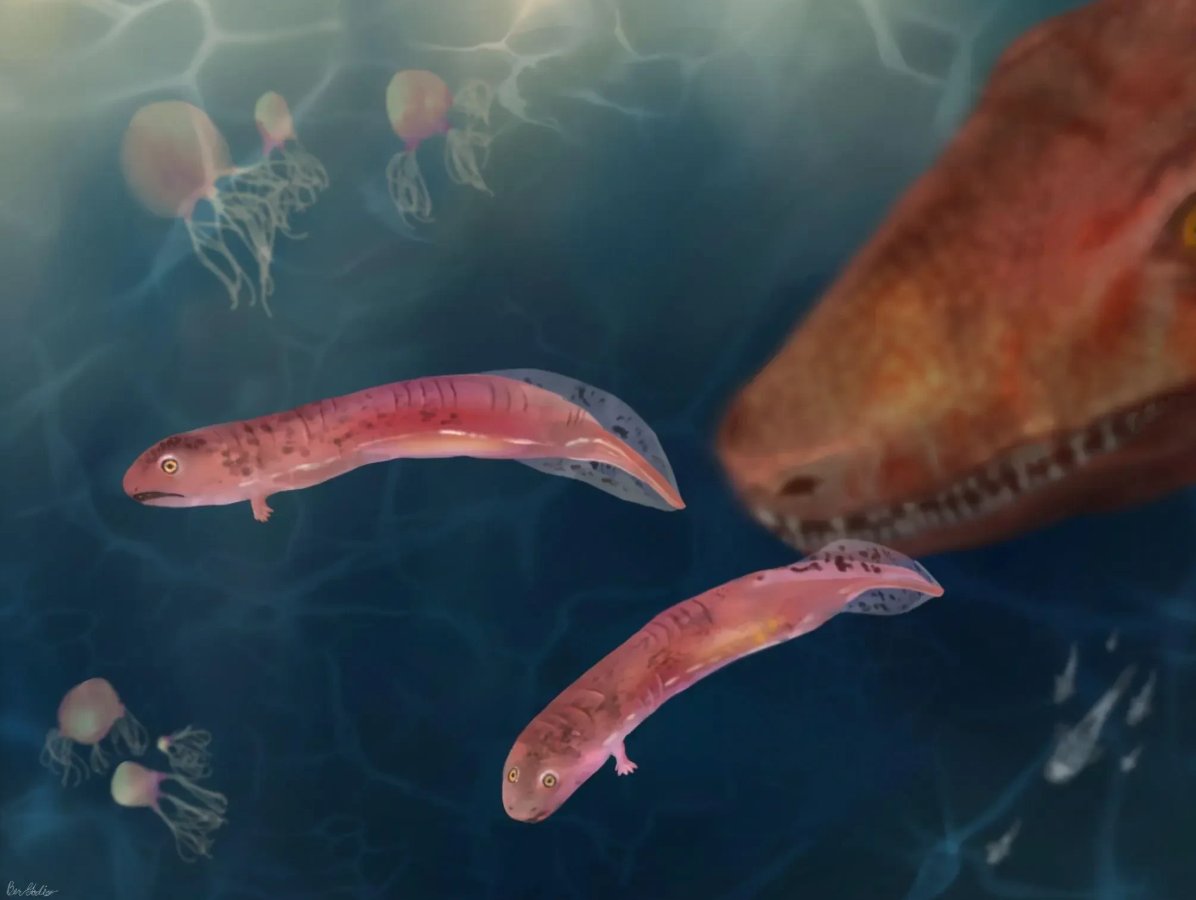
Des bébés #tétrapodes#fossiles bouleversent notre vision de la sortie des eaux !
Les premiers vertébrés à membres se développaient directement, sans phase larvaire ni métamorphose comme les amphibiens.
#Dévonien#Tetrapoda
📰https://t.co/Cc2F3ErfnN
🔎https://t.co/S7v4MYhzGv
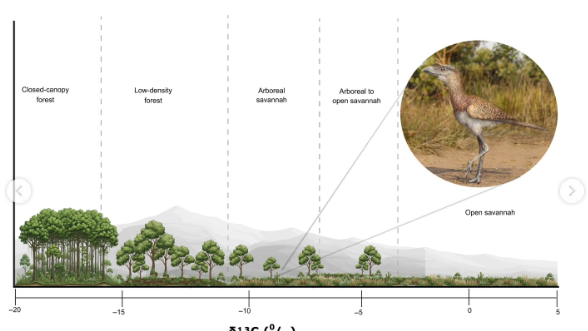
Un nouvel #oiseau de terreur découvert au Brésil🇧🇷 : #Eschatornis !
Ce prédateur du #Pléistocène (~25 000 ans), révèle que les derniers #Phorusrhacidae étaient encore plus diversifiés qu’on ne le pensait.
#Aves#Cariamiformes
📰https://t.co/U8b2Q4MxaH
🔎https://t.co/aYx2HVvVWo
The holotype of Carnotaurus sastrei preserves extensive skin impressions across large portions of the body, rather than feathers, the skin shows a mosaic of small, non-overlapping scales interspersed with larger conical feature scales arranged in distinct patterns.
#dinosaurs
From love songs to lullabies, songs spanning the globe—despite their diversity—exhibit universal patterns, according to the first comprehensive scientific analysis of the similarities and differences of music across societies around the world.
Learn more on #WorldMusicDay: https://t.co/1zGEZN2TZv
Yang et al. (2026-06 preprint, bioRxiv)
「カンブリア紀最初期から産出した微生物による仮晶に保存された軟体化石が明らかにする,体節をもつ左右相称動物の黎明」
Dawn of segmented bilaterians unveiled by soft-bodied fossils in microbial pseudomorphs from the Basal Cambrian
New study shows coccolithophore community shifts controlled the timing of the late Miocene–Pliocene biogenic bloom decline across ocean basins. https://t.co/nJnPgKcwEY
It’s a mystery that stumped Darwin and many researchers since: what exactly drives the snap shut of a Venus flytrap?
Now, researchers in Science have the answer: a rapid, one-second softening of the cell walls on the outer epidermis of the trap.
📄: https://t.co/mw3V6mzgcW
#SciencePerspective: https://t.co/Q7rWJljY6o