Advocating for restoring 4 Freedoms of Movement after Brexit in UK/EU/EEA/Switzerland (people, goods, services, capital). #SaveFOM#UKEUMobility#RejoinMarch ⭐️
🇪🇺🇬🇧 Back in London to strengthen the EU–UK partnership!
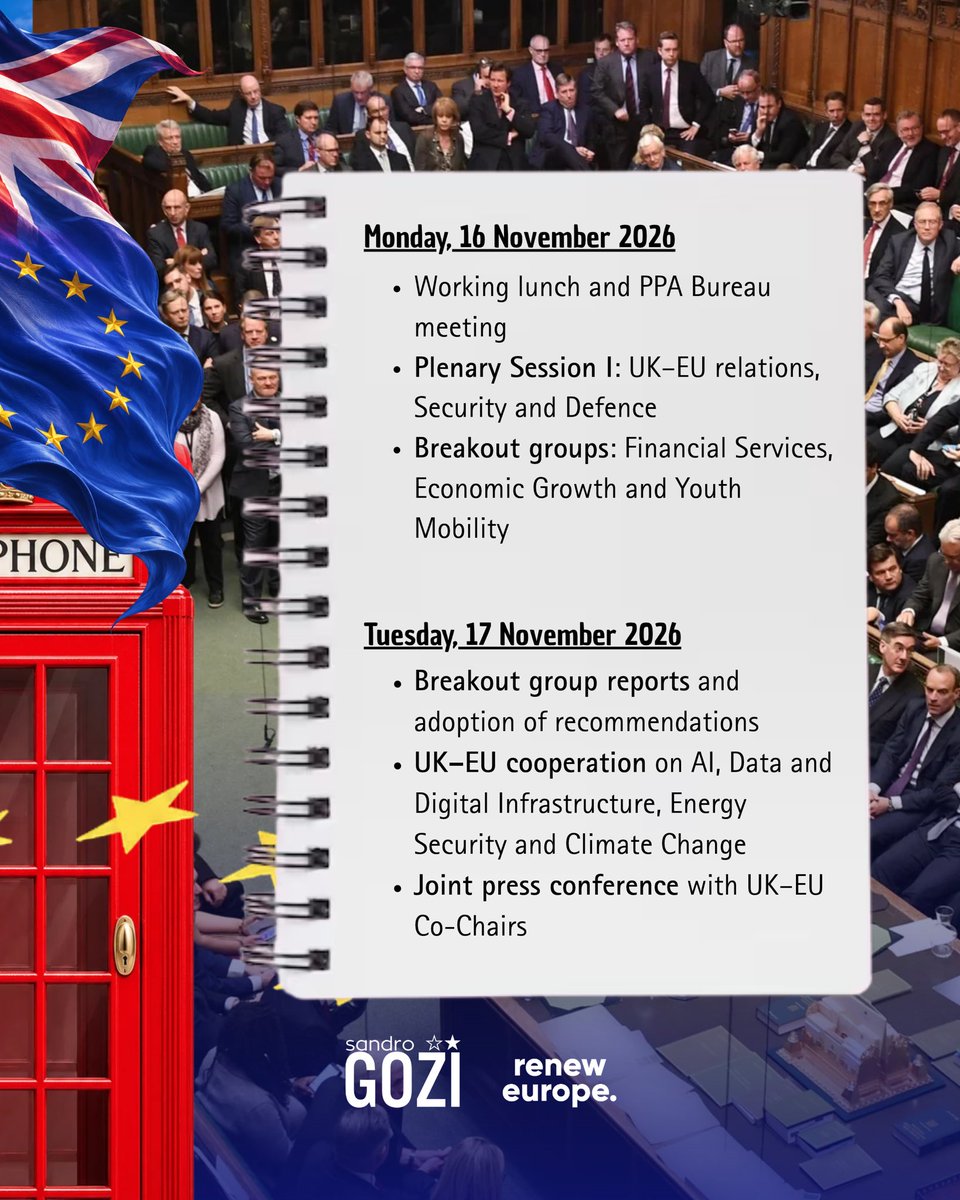
Over the next two days, I’ll be at Westminster for the EU–UK Parliamentary Partnership Assembly, working with British MPs to build a closer, stronger and more ambitious relationship between the European Union and 1/4 ⤵️
7. Opportunities don’t end when you’re 30
Imagine taking a job in Berlin at 45. Starting a business in Barcelona at 55. Retiring in the south of France at 65.
Why should these possibilities belong only to the young?
Freedom of movement is a right for every generation.
6. Erasmus+ could open even more doors
Imagine Britain returning to Erasmus+ alongside restored freedom of movement.
Longer exchanges. Placements, apprenticeships and vocational opportunities.
Students, trainees, educators and adult learners could go further, with fewer immigration obstacles.
5. Gap years without borders
Imagine leaving school and working your way around Europe.
A few months in a Paris café. A summer in Portugal. A winter in the Austrian Alps.
Earning money, meeting people and discovering what you want from life.
Not just travelling. Actually living.
4. The university year abroad returns
Imagine British university students spending a year studying in France, Spain, Germany, Italy or elsewhere in the EU.
Without immigration bureaucracy standing in the way.
Learning languages. Making friends. Building confidence. Changing lives.
3. British holiday companies could employ British people again
Remember when British tour operators could send British holiday reps across Europe for the summer?
Those jobs could return, from Mallorca to the Greek islands: a season working abroad, gaining experience and learning languages.
2. British jobs created by European entrepreneurs
Imagine European entrepreneurs moving to Britain, starting businesses, opening offices and employing British workers.
New investment. New businesses. New jobs.
Freedom of movement creates opportunities here, too.
1. A whole continent of possibilities
British people of all ages could once again live, work, study, retire or start a business across 31 other countries.
Not just for a holiday. Not just for 90 days.
The freedom to build a life, follow an opportunity or try something new.
🧵 Thread
Imagine if Andy Burnham stood up tomorrow and said:
“We are going to restore mutual freedom of movement of people between Britain and the EU.”
Imagine the excitement. The opportunities. What that one announcement could mean for millions of British people.
Many in the UK creative sector used EU Freedom of Movement every day simply to do our jobs, it's not just touring bands that are affected by Brexit.
Do your job @lisanandy and commit to helping our industry.
🧵 Thread
The campaign to solve the 90-in-180-day problem is frequently misunderstood and sometimes misrepresented.
It’s not about long holidays, tax avoidance or permanent immigration.
Here are 8 misconceptions that need correcting.
MYTH #1: Brits want to spend 180 days continuously on holiday.
NO.
It’s about repeated visits to Europe for family, personal or professional reasons without exhausting the shared Schengen allowance.
It’s about business, family life and part-year living.
MYTH #2: Brits want to avoid paying tax.
NO.
Tax residence and immigration permissions are separate legal matters.
A longer visiting allowance wouldn’t exempt anybody from their tax obligations.
This is about mobility rights, not dodging tax.
MYTH #3: Brits want 6 months per year in Europe.
NO. That’s already broadly possible under the rolling Schengen calculation.
The need is 6 months PER COUNTRY PER YEAR, or simply 6 months PER VISIT, matching the UK’s visitor allowance for Europeans.
MYTH #4: Brits want to settle permanently in Europe without visas.
NO.
Permanent settlement is a different issue, and is generally still possible using visas for those who qualify.
This is about visa-free temporary stays, mobility and part-year living.
MYTH #5: EU citizens can’t even do this in EU countries.
NO.
Of course, EU citizens have freedom of movement.
They can stay in other EU countries as long as they like if they meet applicable conditions and register as required.
Brits can’t do that any more.
MYTH #6: Brits want to avoid registration.
NO.
Many are happy to register for stays exceeding 90 days, as they did before Brexit.
British citizens no longer have the straightforward EU registration route.
Visas are now generally needed.
MYTH #7: Brits affected by this problem were doing something wrong before Brexit.
NO.
British citizens lawfully exercising EU freedom of movement rights were complying with the rules, not exploiting loopholes.
Brexit changed rights, not the legality of past conduct.