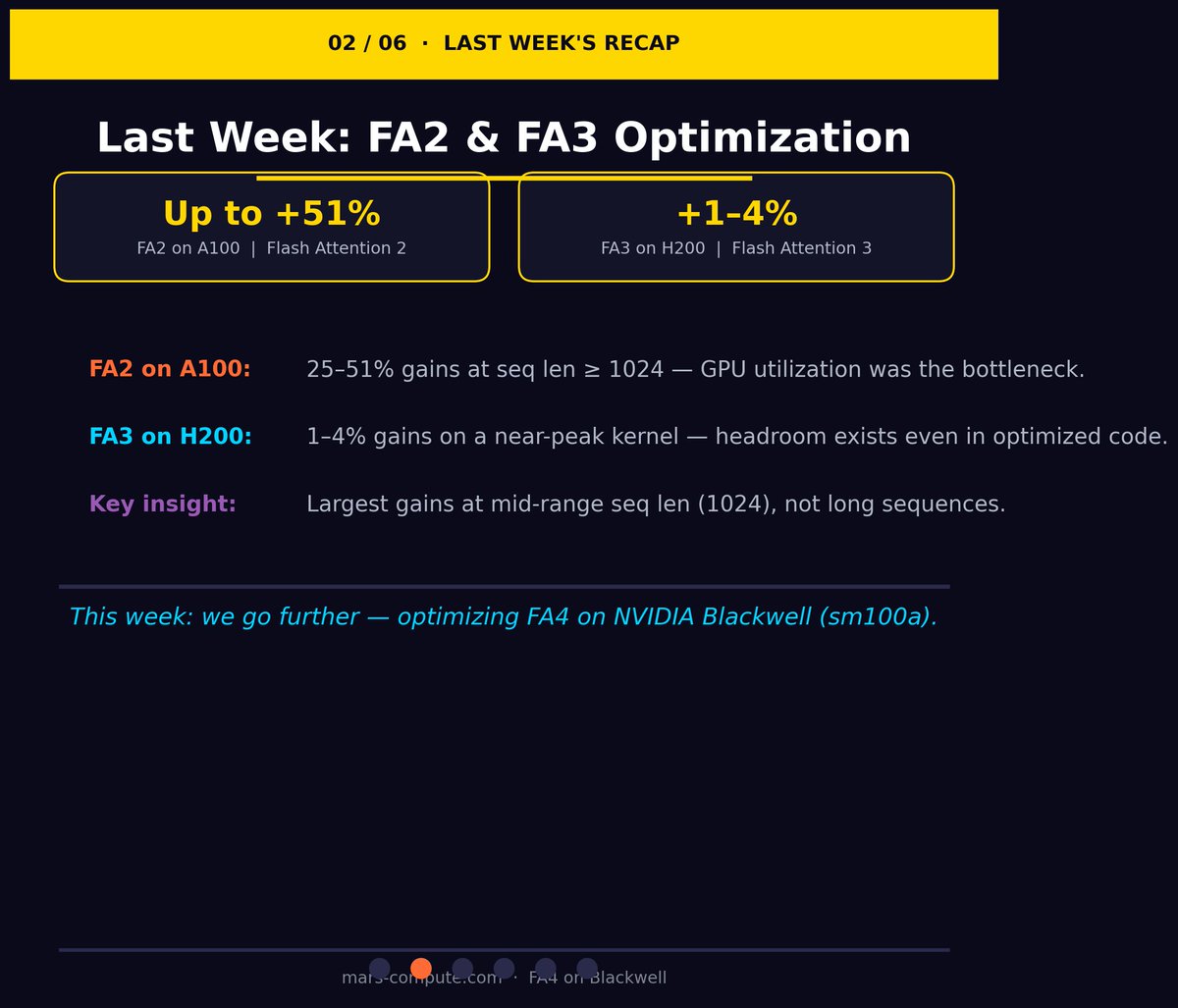
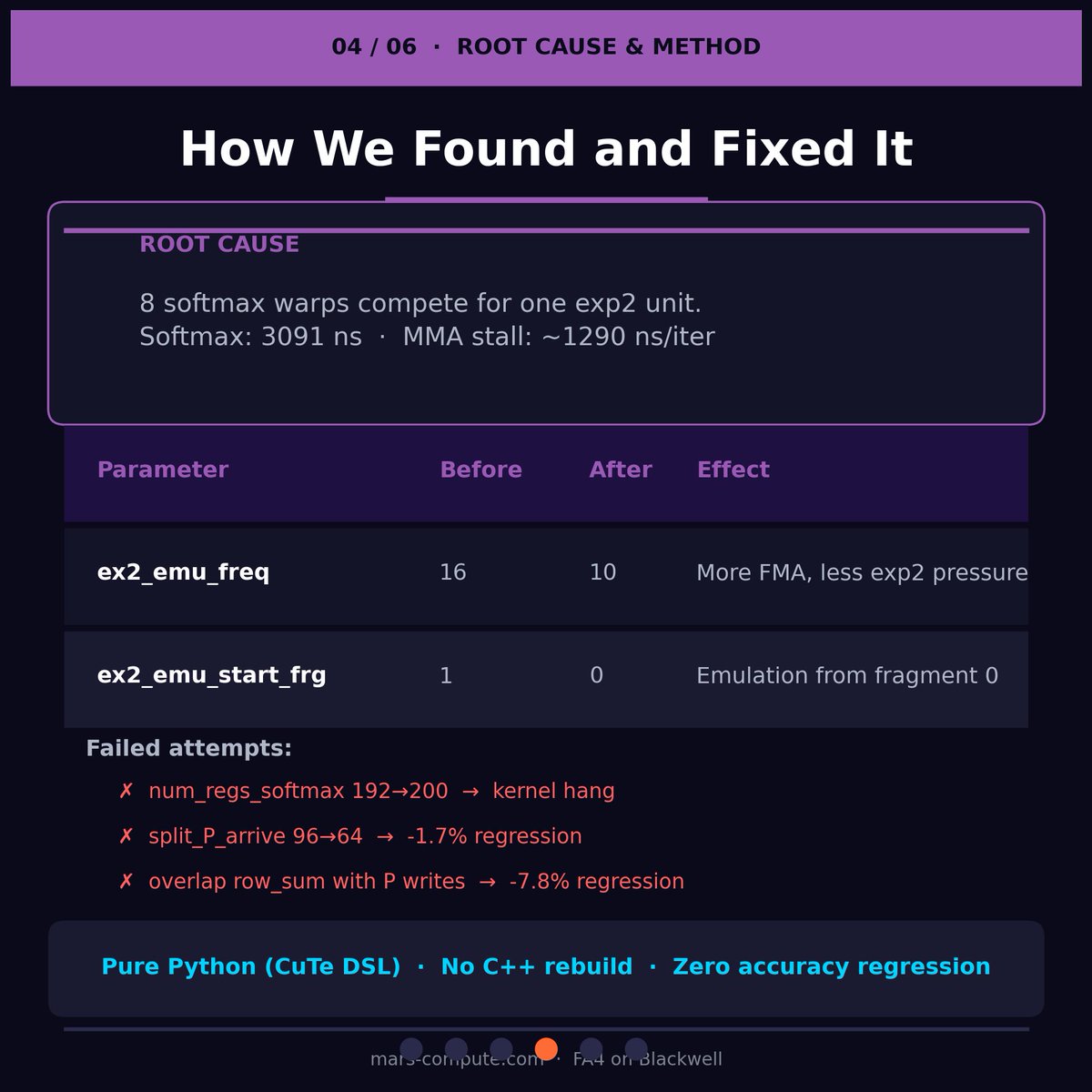
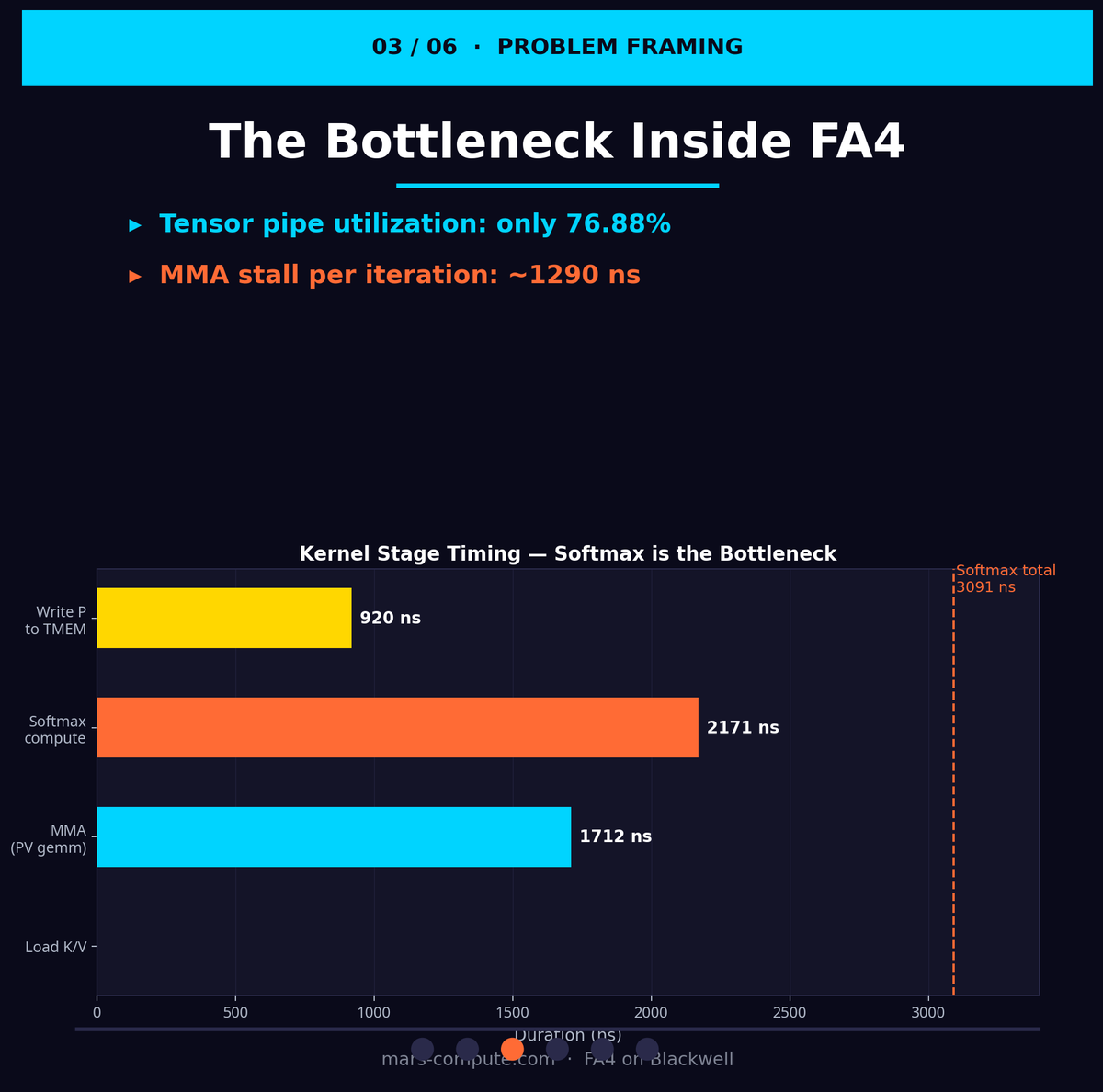
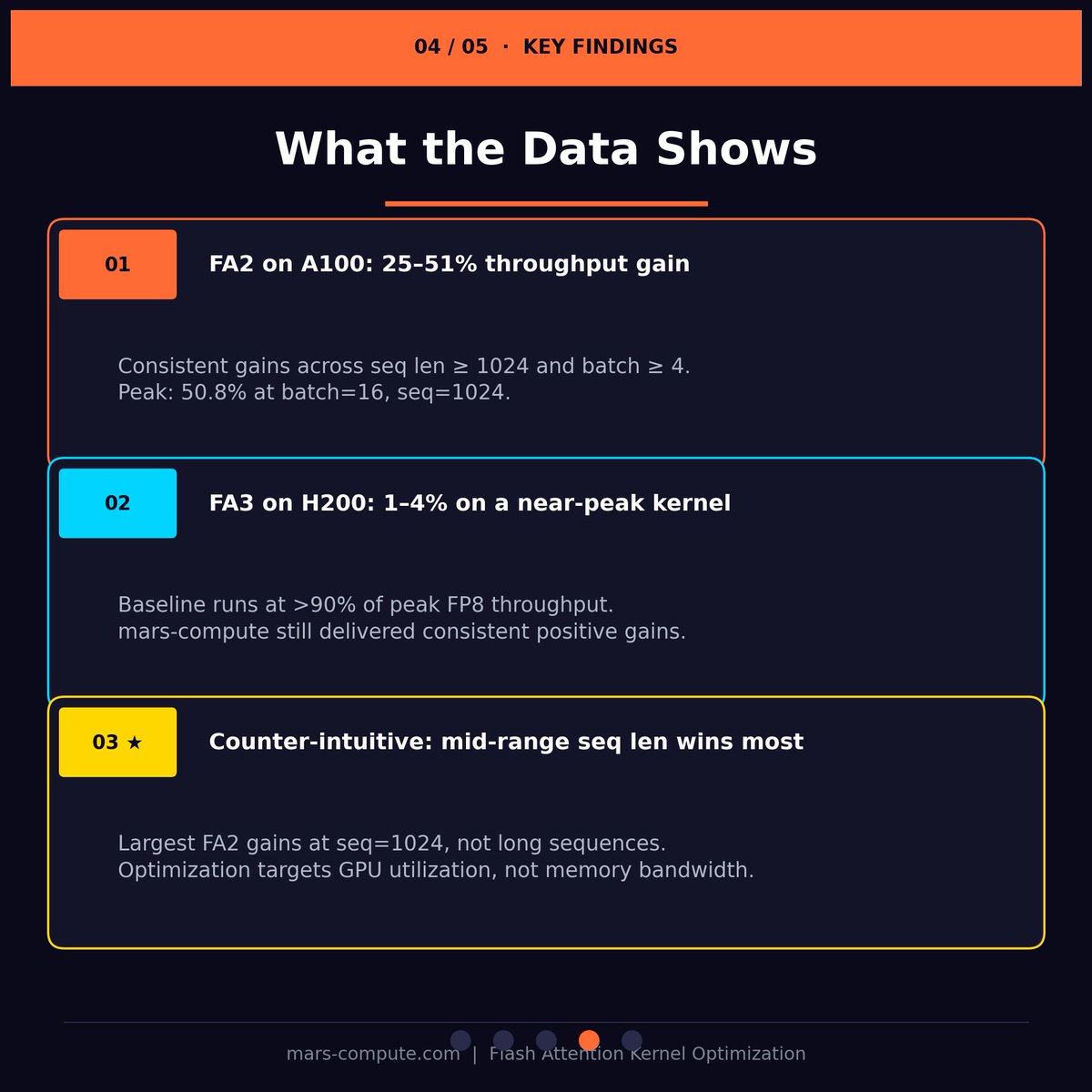
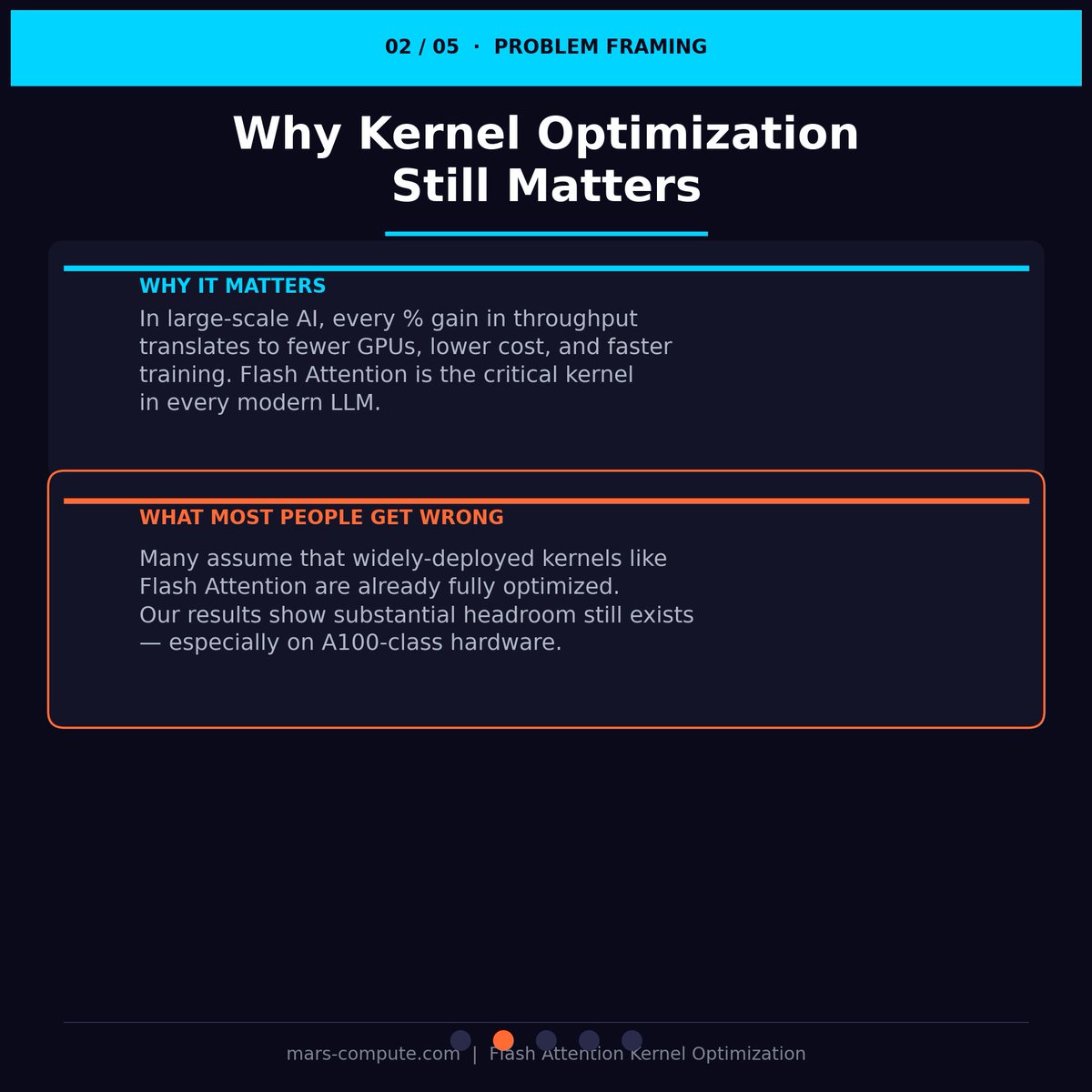
Think your AI kernels are maxed out? We just boosted Flash Attention 2 throughput by 51% on A100s. Even the hyper-optimized FA3 on H200 got a 1-4% lift with our automated tuning. The performance ceiling is higher than you think. #DeepLearning#AI#A100#H200#CUDA#mars-compute
What is the true lineage of PonyAlpha? We traced its "LLM DNA" using our new tool RepTrace (ICLR '26 Oral).
Result: Top-1 functional match with GLM 4.7. 🤯
This metric captures behavioral fingerprints, independent of weights.
🔗https://t.co/EWn9vN7bkt
🛠️ pip install reptrace
🎉 The NUS Vibe Paper team has released a new tool: PaperDebugger!
It integrates directly inside Overleaf and helps you revise your paper in real time — your strongest academic paper writing companion!
📌 GitHub (please Star ⭐): https://t.co/CZb9IxaxGv
Holy shit… this might be the most unreal academic-writing upgrade I’ve ever seen 🤯
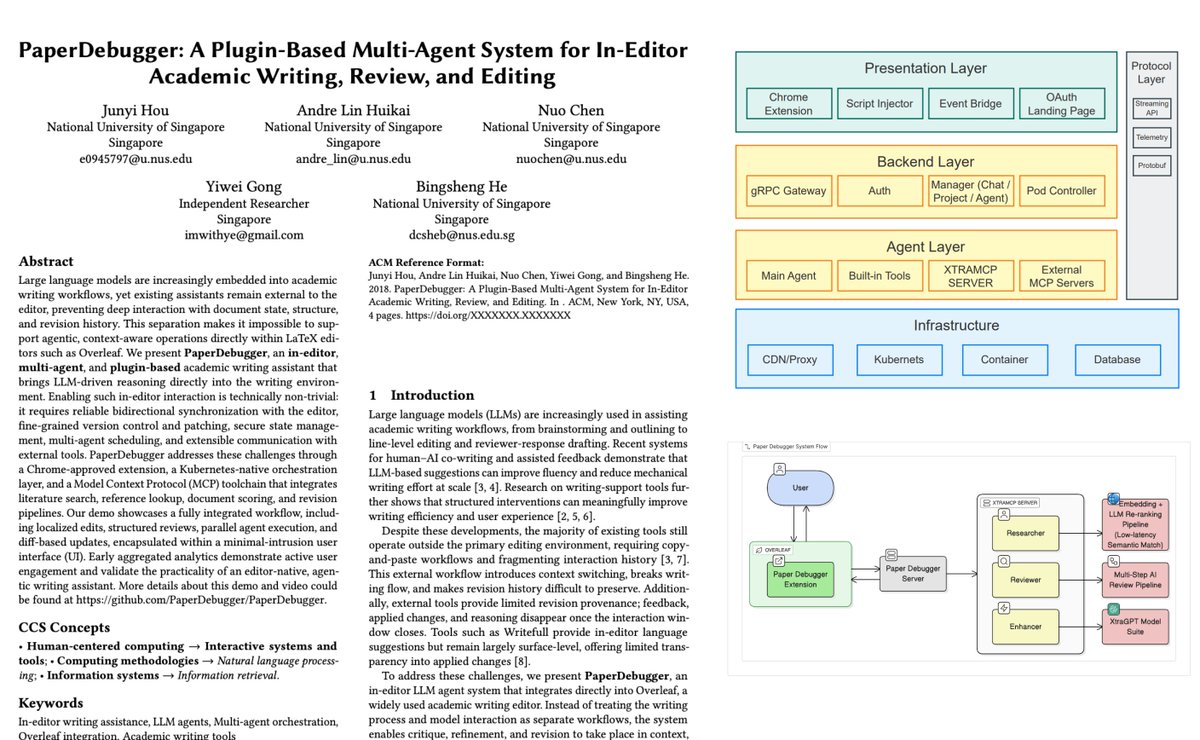
A team from NUS just dropped PaperDebugger an in-editor, multi-agent system that lives inside Overleaf and rewrites your paper with you in real time.
Not copy-paste. Not a sidebar chatbot.
Actual agentic editing inside your LaTeX editor.
Here’s why this is insane 👇
→ You highlight a messy paragraph, and it launches a full critique + rewrite pipeline
→ Returns clean before–after diffs like Git, then patches your document instantly
→ Runs Reviewer, Enhancer, Scoring, and Researcher agents in parallel
→ Uses Kubernetes pods to scale multi-agent reasoning inside the editor
→ Taps an MCP toolchain for literature search, reference lookup, and section-level enhancement
Deep research mode is even crazier:
It pulls relevant arXiv papers, summarizes them, compares your method against them, and generates citation-ready tables… all inline while you're writing.
It’s basically a mini committee of reviewers embedded in your document rewriting, critiquing, sourcing, and polishing without ever breaking flow.
If this scales, Overleaf stops being an editor… and becomes a full AI-assisted research environment.
Holy shit… this might be the most unreal academic-writing upgrade I’ve ever seen 🤯
A team from NUS just dropped PaperDebugger an in-editor, multi-agent system that lives inside Overleaf and rewrites your paper with you in real time.
Not copy-paste. Not a sidebar chatbot.
Actual agentic editing inside your LaTeX editor.
Here’s why this is insane 👇
→ You highlight a messy paragraph, and it launches a full critique + rewrite pipeline
→ Returns clean before–after diffs like Git, then patches your document instantly
→ Runs Reviewer, Enhancer, Scoring, and Researcher agents in parallel
→ Uses Kubernetes pods to scale multi-agent reasoning inside the editor
→ Taps an MCP toolchain for literature search, reference lookup, and section-level enhancement
Deep research mode is even crazier:
It pulls relevant arXiv papers, summarizes them, compares your method against them, and generates citation-ready tables… all inline while you're writing.
It’s basically a mini committee of reviewers embedded in your document rewriting, critiquing, sourcing, and polishing without ever breaking flow.
If this scales, Overleaf stops being an editor… and becomes a full AI-assisted research environment.
#LLM#OpenAI#LRM#bias
🚨 New work: More thinking ≠ more robust reasoning
We introduce THEATER, the first benchmark exposing Fake Reasoning Bias (FRB) — where LLMs & LRMs get misled by superficial reasoning cues.
🧵 Key insights:
1🔎 Authentic reasoning can be mimicked.
Insert a simple cue like “let me think” → models systematically change answers.
Both LLMs & LRMs are fooled, but LRMs drop more sharply in accuracy & robustness (esp. DeepSeek + OpenAI families).
2⚠️ Two forms of FRB:
Simple Cues: minimal hints that look like reflection → up to –15% accuracy.
Fake CoT: fabricated step-by-step reasoning that sounds logical but leads to wrong answers.
3.📊 We test 17 advanced models (DeepSeek, Qwen, OpenAI) on both:
Subjective DPO tasks (human-alignment datasets)
Factual datasets (objective tasks)
Results: LLMs > LRMs in robustness
DPO tasks = most vulnerable attack surface
4🌀 Trace analysis shows:
Simple cues hijack metacognitive confidence in LRMs
Fake CoT gets assimilated as internal thought
→ leading to a paradox: “more thinking, less robust.”
5🛠️ Mitigation?
Targeted prompts help factual tasks (+10%)
But subjective tasks resist intervention
Worse: self-reflection prompts ↓ LRM accuracy by 8%
6💡Takeaway:
Fake Reasoning Bias is a deep-seated vulnerability.
LLMs reward surface reasoning over logic.
Prompting alone isn’t enough — we need deeper solutions for trustworthy evaluators.
📖 Paper: https://t.co/qGOtATeaXL
Thanks for all collaborators @ZhenhengT@NuoJohnChen@WenxuanWang94@savenhe
We have developed some tool: 🚀 The **AI-Powered Research Proposal Evaluation System**
🔗 [https://t.co/ljxbleNZ2v](https://t.co/qRYR5zzWmN) | [GitHub](https://t.co/NCDperbG9V)
✅ AI “expert panel” ensemble reviews
✅ Support for local deployment.
Paper: https://t.co/oaGWaJdfZC
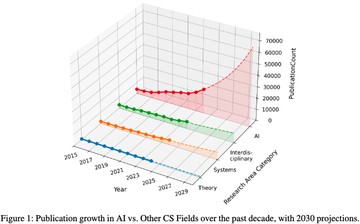
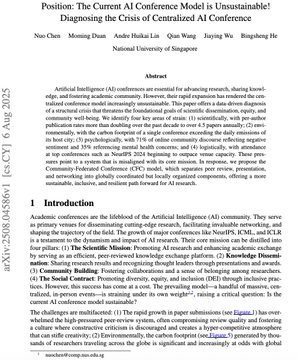
The Current AI Conference Model is Unsustainable! We analyze the phenomena of conflicts between AI conferences and their core values as follows, and conclude with our solution and a call to action.
· Publication Surge: Per-author publication rates have more than doubled over the past decade to over 4.5 papers annually.
· Exponential Output Growth: Individual contributions are increasing at an accelerating rate, leading to unsustainable publication demands.
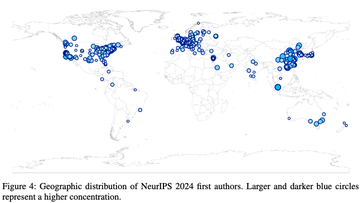
· Carbon Overload: NeurIPS 2024’s carbon emissions (>8,254 tCO₂e) alone surpass Vancouver’s daily citywide footprint.
· Mental Health Toll: Of 405 Reddit threads on AI conferences, over 71% are negative and 35% mention mental-health concerns.
· Research-Conference Mismatch: The AI research lifecycle outpaces conference schedules, often rendering results outdated before presentation.
· Venue Capacity Crisis: Attendance at top AI conferences like NeurIPS 2024 is already outstripping available venue space.
1/ 🔥 AI agents are reaching a breakthrough moment in cybersecurity.
In our latest work:
🔓 CyberGym: AI agents discovered 15 zero-days in major open-source projects
💰 BountyBench: AI agents solved real-world bug bounty tasks worth tens of thousands of dollars
🤖 Autonomously.
A pivotal shift is underway — AI agents can now autonomously do what only elite human hackers could before.
We are data people and we should leverage it to form and manage our PCs and review processes. Coming out this year in #SIGMODRecord our (with @HoseKatja) methodology and experience on making PC formation data-driven for #EDBT2023.
We publish NIID-Bench challenge https://t.co/O46FYfrWKq, a benchmark to compare federated learning algorithms on comprehensive non-IID data settings. Researchers are welcome to test their algorithms on these settings, upload their codes and participate in our leaderboard!
I'm proud to introduce the @CACMmag - East Asia and Oceania Region Special Section - co-chaired with @savenhe and Ken-ichi Kawarabayashi. We invite you to learn the excellent research from the region, with highly impactful projects
https://t.co/SsACHhfQw2
A thread: 1/n