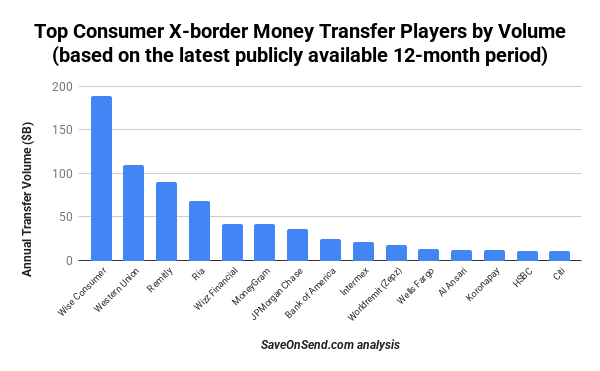
FSB and FXC claim little progress in XB P2P pricing, yet major providers’ take rates have fallen 5–25% since 2023. Hyping crises with averages of quoted prices obscures real consumer shifts to cheaper digital transfers, larger amounts, and competition.
https://t.co/zhjBVyDRsG
Al Ansari’s UAE remittance revenue fell around 10% in Q3, driven by geopolitical disruption and price cuts. Growth in Bahrain and Kuwait offset much of the decline, leaving group remittance-and-exchange revenue down just 1%, versus 8% in Q2.
https://t.co/bl6F2mw3d8
Instead of 10% of the remittances market share in USD-MXN, Bitso now claims 15%. Only $2B, or one-third of Bitso's reported volume, could be attributable to Felix.
https://t.co/x79ac6O2K1
How can a 138-page report mentioning "remittances" 39 times offer zero signal, just noise, on crypto in XB P2P? Chainalysis clearly knows the difference between observable blockchain moves and real economic activity, yet repeatedly hypes the former as the latter.
Eastern Europe’s crypto economy fell 7.9% to $642.1B in 2026, the weakest performance of any region we studied. Globally, the decline was 1.6%.
Domestic peer-to-peer volume moved in the opposite direction, rising 330% over the same period.
Across the region, users are adapting:
• Ukrainians abroad are using stablecoins to maintain financial ties with home.
• Poland emerged as the region’s crypto ATM leader.
• In Romania, instant and decentralized exchanges saw temporary surges after a tax increase on crypto gains was announced in July 2025.
War, cross-border financial needs and tax changes are shaping how people use and access crypto.
Via @manuelorozco65
For LatAm remittances, the long-term trends remain, but the 1% tax likely accelerated the shift from cash to digital, which has lower transfer costs, while immigration restrictions contributed to declining transaction counts.
Today Western Union publicly announced it is abandoning its proposed merger with Intermex. The split follows a review by Secretary @ChopraUSA and @CaliforniaDFPI, who imposed conditions on the deal requiring the firms to prevent fraud and preserve competitive access. Rather than agree to these conditions, Western Union walked away.
It's a good reminder that many state laws give state regulators the responsibility to review, block, or condition mergers, especially in sectors like financial services, insurance, and utilities. In New York, for example, @NYDFS is charged with assessing whether certain proposed mergers are contrary to the public interest.
As newly elected state officials take the helm in coming months, they will have significant opportunity to use and activate all their tools to halt corporate abuse and make life better for working people.
https://t.co/tm6QKec4A5
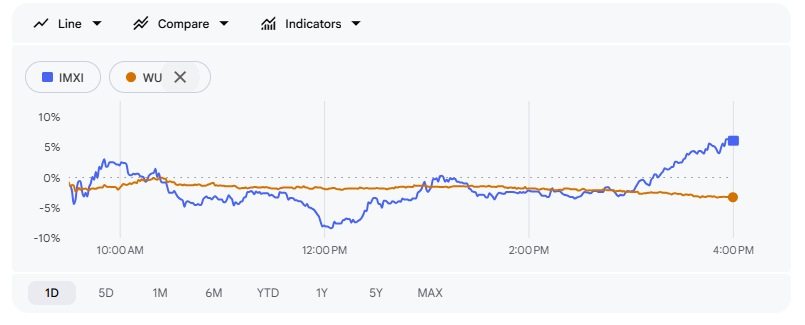
(1/3) The plot thickens: WU walked away in Dec 24, then bid $16 as IMXI fell to $9.3; deal signed Aug 25; CA approved in Feb 26; suspended in Aug as NY approved; IMXI performance collapsing; CA gave conditional approval yesterday; WU terminated; IMXI sued.
https://t.co/DMsYqKFVFX
From August 2025: WU's Board and leadership deserve most of the scorn for approving the deal, but kudos to FT Partners for helping Intermex secure a $16/share offer. Who knew cash agents would become such a contentious issue in 2025–2026, amid the digital revolution?
72% premium for a stock dropping from a cliff is impressive, almost there with a record 80% premium in a sweetheart deal among PayPal, Xoom, and Sequoia:
https://t.co/1RnRQNU9hf
Well done, @WesternUnion Board Members! Hopefully, you are at least getting a nice celebratory meal after such a prescient decision.
https://t.co/exrtgRjD8t
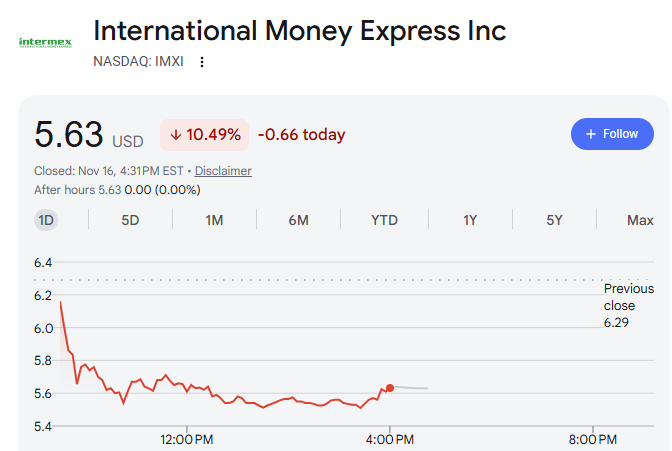
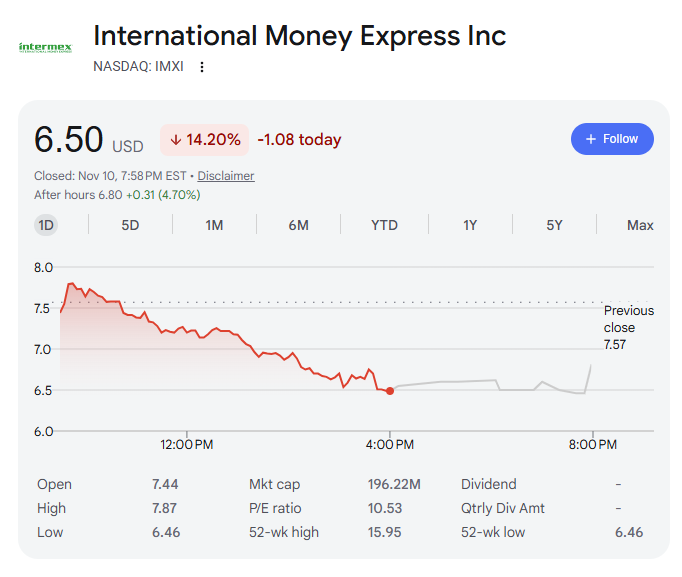
(3/3) Intermex rejected termination. Real stakes are $16/share versus $6.50 in the market, with a rapidly eroding business and substantial executive compensation interests. Intermex claims that WU didn't fulfill its obligation to pursue regulatory approval
https://t.co/Soyf6SEMfo
(1/3) The plot thickens: WU walked away in Dec 24, then bid $16 as IMXI fell to $9.3; deal signed Aug 25; CA approved in Feb 26; suspended in Aug as NY approved; IMXI performance collapsing; CA gave conditional approval yesterday; WU terminated; IMXI sued.
https://t.co/DMsYqKFVFX
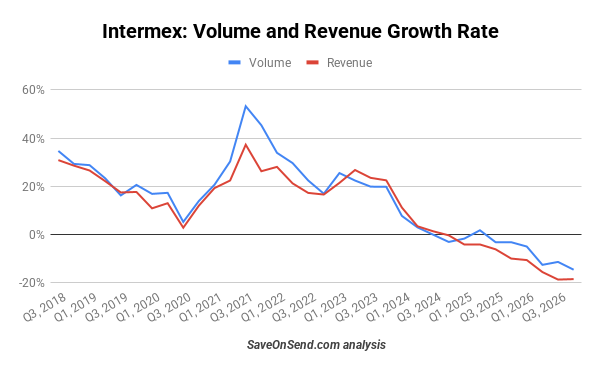
(2/3) WU claims CA demanded unacceptable changes to its biz model and agent relationships. But the real motive is likely buyer's remorse. As Intermex Q3 revenue fell 18%, WU wasn't eager to pay ~2.5x the prevailing market valuation.
https://t.co/59oX5SAtQo
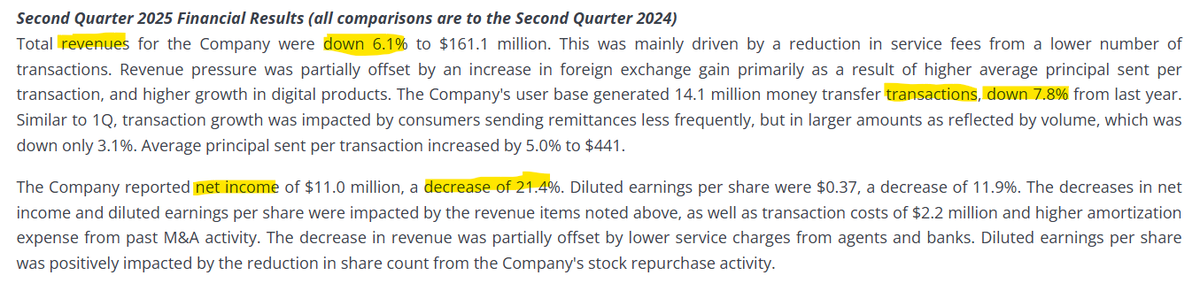
(1/2) Another horrific quarter for Intermex, with principal, txns, and revenue down 14–18%, continuing a deterioration clearly visible before WU signed the deal in Aug 25. Why would WU pay a 72% premium to the pre-rumor price or 2–3× the current value?
https://t.co/Cc7YT1Wxug
(4/4) Incremental gains must account for existing returns, agent financing, local FX conversion, liquidity providers, and who earns the yield on USDPT reserves, but we will never see that case study.
(1/4) WU is praying that stablecoins bring new cross-border volume through its payout network and monetize recipients with dollar wallets and cards. That's a far-fetched sell, so it pitches a more immediate but incongruent treasury-savings story
https://t.co/4Ie7I9MxvV
(3/4) Others need WU prefunding to maintain local liquidity. Stablecoins don't eliminate that need; they change who supplies the funding, when, and at what cost. Finally, WU already earns income on settlement assets.