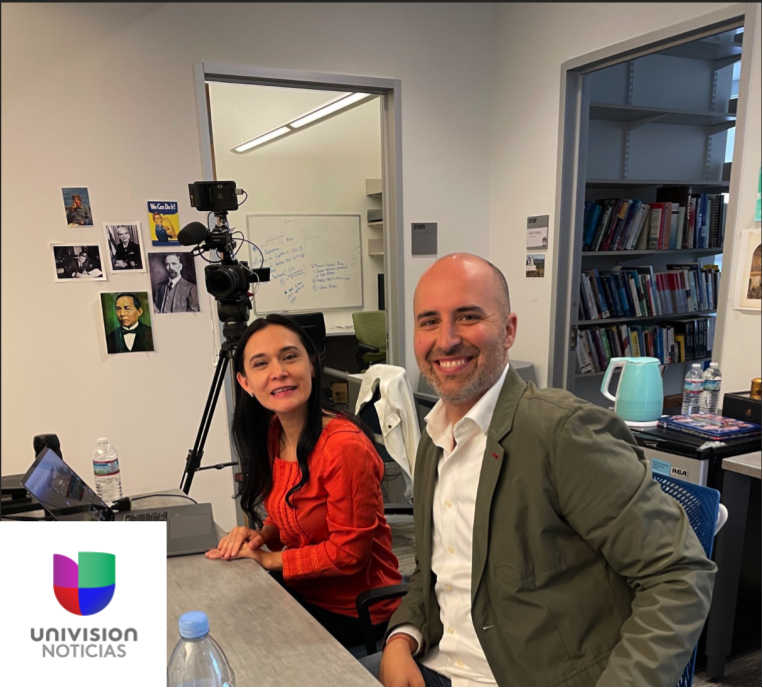
🎥 No te pierdas el especial 'Mentes Artificiales: La Nueva Era Tecnológica'.
📲 Este martes 11 de junio a las 8pm ET en el canal Noticias Univision 24/7 de @ViX. 👉 https://t.co/e5C51wECfL
#ViX#ViXStreaming#ViXGratis
If you’re at @acm_chi, join us tomorrow April 16, @saiphcita will be presenting our work 🚀.
⏰ 11:27 AM – 11:39 AM
Generative AI is built for individuals, but freelancers work collaboratively.
We explore how AI can support that without harming creative identity #CHI2026#GenAI
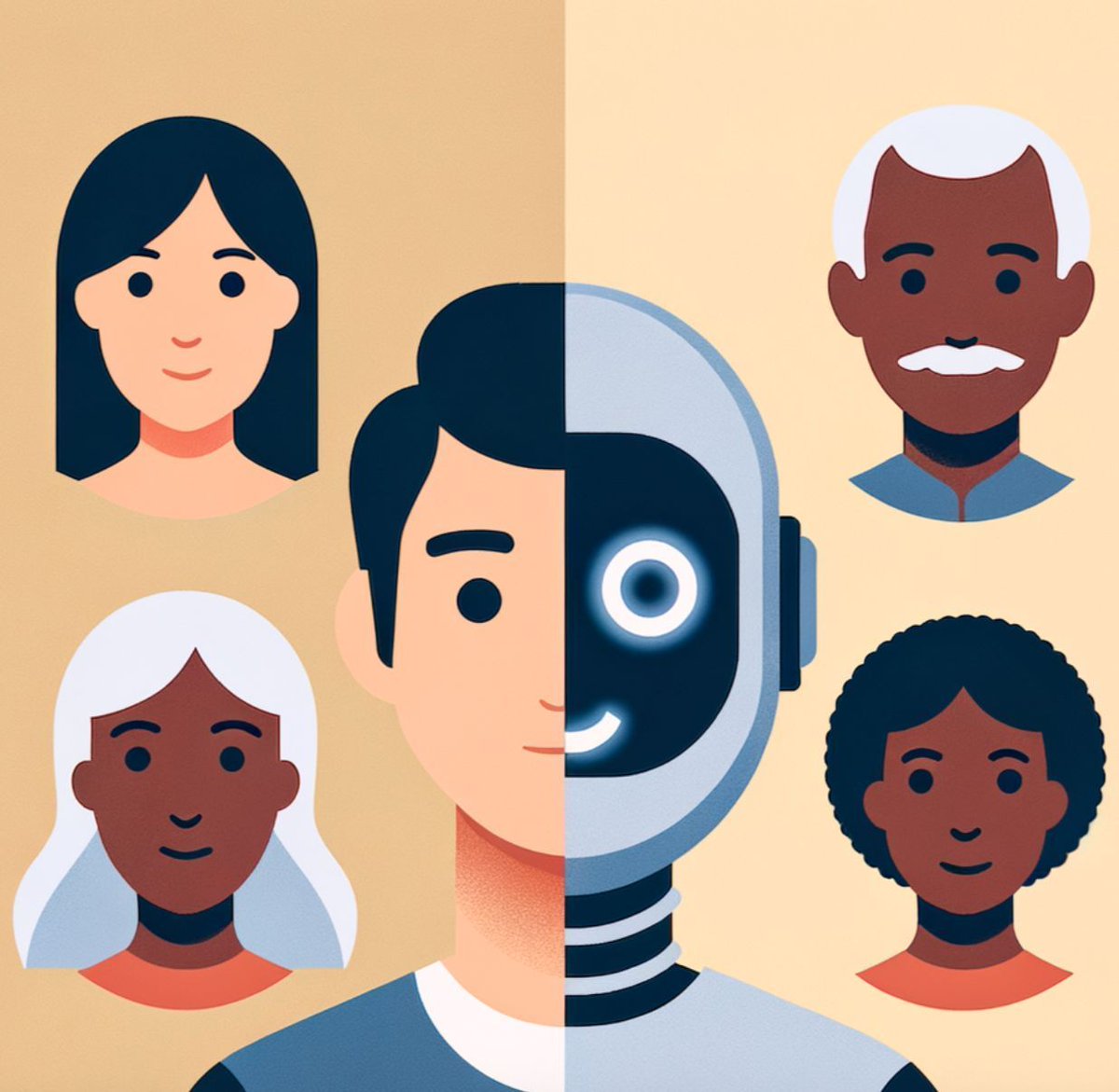
I came across a NYMag piece about what it means to raise kids in an AI-dominated world. The future always arrives unevenly. In much of the world, schools are still dealing with spotty internet, outdated textbooks, and exams that haven’t changed in decades. So, what does “futureproof” even mean in these places? #ArtificialIntelligence #AIandSociety #AIEthics #FutureOfEducation
https://t.co/Ietdms20rf
I never thought I’d see the day when AI-generated fakes would actually drive people offline.
But here we are. Deepfakes, cloned voices, and perfectly “human” bots are everywhere.
And something unexpected is happening: people are starting to miss what’s real.
https://t.co/Gzaxmo5H9e
#ArtificialIntelligence #Deepfakes
AI detection sounds futuristic… until you realize it mostly depends on invisible tags that can be deleted in two clicks.
No, social platforms can’t magically spot every fake.
The “state of the art” is fragile, and people trying to mislead others know it.
We need a shared global system to track and verify AI content. 🤝
#AI #Deepfakes #AIDetection
This week I read "The Ones Who Walk Away from Omelas" book.
A perfect city built on one child’s suffering.
It reminded me of AI progress.
We celebrate every breakthrough, new models, giant datasets, big headlines.
But someone always pays the price.
Often, it’s unseen workers labeling data for almost nothing.
Or whole communities left out, their languages and cultures erased because they’re not in the data.
We call this progress.
But who gets left behind?
This isn’t just technical, it’s moral.
If our “progress” depends on someone losing out, should we be proud?
Real progress means building AI that includes everyone in my opinion.
Can AI truly understand when a teen is in distress, or is it just scanning for a list of “worrying” words? 🤔
OpenAI’s new Parental Controls for ChatGPT try to alert parents to signs of “emotional distress” in teen conversations. The idea sounds reassuring: more safety, more oversight, less risk. 🚨
But real life isn’t that simple.
Teenagers talk in code. Slang changes almost overnight. Sometimes, the same phrase can mean completely different things based on context or culture. What one group says as a joke, another might say when they’re genuinely upset. AI rarely gets this nuance. 🧩
And teenagers are smart. If they know an AI is reading over their shoulder, they’ll switch up how they talk, use private codes, or just avoid the platform when they feel vulnerable. That defeats the point. 🕵️♂️
Plus, there’s the cultural layer: What sounds like a red flag in one region or language might be everyday talk elsewhere. AI systems trained on mostly Western data miss these differences, and that can lead to false alarms, or worse, missing what’s really wrong. 🌍
So, are we helping teens feel safer, or just teaching them to hide better? 🪤
Don’t get me wrong, tech tools can support families. But let’s not pretend parental controls will solve a problem rooted in trust, mental health, and honest connection. 🫱🏽🫲🏼
Is AI helping us connect, or just making us feel more alone?
People chat with AI for support.
It’s always available.
No judgment. No awkwardness.
But is easy comfort the same as real belonging?
We risk losing the messy, human parts of connection.
The kind that comes from listening to each other, not just to a perfect bot.
Are we trading real community for something less real, just because it’s simple?
https://t.co/iMVYngQaIM
What if AI benchmarks stopped rewarding perfect answers and started rewarding honest ones? 🤔
We train language models to give answers fast and with confidence. But in real life, knowing when to pause or even admit “I’m not sure” is a skill we respect in people.
I see it often: AI systems fill in gaps when unsure, sometimes inventing details that sound right but aren’t. The results can be anything from funny to potentially harmful.
So what if our evaluation metrics valued humility, not just accuracy? Imagine if “I don’t know” was a smart response for an algorithm instead of a failure.
OpenAI released a really interesting article about hallucinations in language models (👉 link in comments). The big insight: Hallucinations are not inevitable. Language models can actually abstain when uncertain.
If we start rewarding this behavior, maybe we get AI that is not just knowledgeable, but trustworthy.
Would you trust an AI that admits when it’s unsure? 🤖💡
Is AI making us forget what real belonging feels like? 🤖
AI “friends” are everywhere now.
Chatbots that always listen. 🗣️
No judgment.
No awkward silences.
It’s easy.
It’s safe.
But is it real?
I see teens telling bots more than people.
Adults trust AI with things they keep from friends.
“Connection” is turning smooth and simple—never messy.
But true friendship is messy. 🧩
Belonging takes work.
It means facing misunderstandings, not just avoiding them.
If AI always agrees, do we lose the skills to handle real relationships?
Will we forget how to connect with people in all their complexity?
Before frictionless AI “friendship” is our default, maybe we need to pause. ⏸️
What kind of connection do we really want?
Have you noticed this, too?
How is it showing up in your world?
What if “fair” AI is still quietly fueling old biases?
A recent study shows top language models judge African American English more harshly. The models assign worse jobs and harsher sentences—just based on how someone speaks.
Even with all the tech fixes and fairness audits, bias tied to language isn’t going away.
If real people can’t see, question, and shape these systems, “accountability” in AI is just a buzzword.
https://t.co/5kVhAHEX8A
Fashion just hit a weird new milestone.
H&M and Vogue both use AI models, but there’s a big difference. 🤖
H&M makes “digital twins” of real people.
These models keep some control and get paid. 💸
There’s always a real person behind each image.
Vogue went all in on fully generated AI for Guess.
No human at all.
The “AI” label is so small you might not notice. 👀
The result?
Vogue’s AI model is blonde, thin, flawless.
Diversity?
They claim AI images of other body types don’t get likes.
What’s really happening?
Brands save money.
Fewer creative jobs.
Less room for real stories and bodies.
Fake becomes hard to spot.
Fashion once pushed for diversity.
Now, code erases that work.
Are we seeing progress, or just the same beauty standards in a new package? 🧐
If AI decides who gets seen, who gets left out?
https://t.co/vKmHCAnlIw
https://t.co/03fbBenqqG
A new study just tested how easily an LLM like GPT-4o-mini can be nudged to cross its own persuasion “guardrails.” Researchers used carefully crafted prompts to see if the model would help persuade people, even when it wasn’t supposed to. With just a bit of effort, those guardrails slipped.
All of this was done in English.
Reading this, it makes me think how hard trying to build those same guardrails in Spanish, Hindi, Swahili, or Mandarin could be.
It’s not just about translating words.
Every language brings its own ways of reasoning, its own social rules, and totally different ideas about what’s actually persuasive or even acceptable.
Culture shapes how we try to convince each other. Some use direct arguments, others tell stories. What works in one place can feel pushy or awkward somewhere else.
If building this in English is already so tough, making it work globally brings a whole new set of challenges. We’re only at the beginning.
People say AI could save dying languages. But can it really?
In Mexico, there’s a new project using AI for indigenous languages, many on the edge of disappearing.
It sounds bold. But is it real progress, or just more hype?
What stands out to me is this:
Real people are leading the way.
They’re gathering stories and conversations straight from native speakers—not scraping random websites.
Communities are in charge, not outside tech teams.
And it’s not just about translation. These tools help people learn, share, and use their language every day.
But honestly, there’s a lot I wonder about.
What does “success” even look like in this context?
Who owns the data?
Will these tools help cultures thrive, or will they flatten what makes each language unique?
Many countries are watching.
For me, the real lesson isn’t just the tech, it’s that people have to be at the center.
Will AI really become an ally to these communities? Or is it just another outsider making big promises?
What’s your take?
https://t.co/4AkDyuwYFo
Growing up in my home country (MX), I remember doctors took time to explain, listen, and connect with me. They knew my story, not just my symptoms. I could trust that they actually cared.
I recently came across an article about patients in China. Many, especially those who feel overlooked or isolated, are turning to AI chatbots for medical advice and comfort. The bots respond instantly, never tire, and always have time.
For many, this feels like the attention and reassurance their real doctors don’t have time to give.
Sometimes, people get attached to these AI “doctors.” I do not think that is because they’re smarter, but because they offer that steady connection and warmth that’s missing from the healthcare system right now.
This makes me wonder about how we design AI for care. When people form strong attachments to chatbots, it’s often a sign of unmet human needs. But it’s risky when technology tries to fill roles that go deeper than information or advice. We need to be careful not to design AI that encourages emotional dependency, or that tries to replace the very real human connection people are searching for. And judging by the growing number of stories about people becoming attached to AI, it feels like we’re already falling short.
https://t.co/COWMBIXU22
Lately, I’ve seen these “interviews” with random people popping up all over my feed.
They look good. They sound real.
But they’re not. these clips were made by AI with Google Veo (see example below).
I checked out the comments and honestly, most people had no clue if these were legit or not. This time it was obvious, it was some silly question like, “How do you feel about the news that we’re actually AI?"
But what about when the topic feels normal, or something actually important?
If anyone can make a fake video that’s basically perfect, how are we supposed to trust what we watch online?
On the flip side, there’s something cool here too. AI video tools mean you don’t need a big budget to share your story. Maybe a local activist wants to get their message out.
Suddenly, people without big budgets can create things that stand out
So, it cuts both ways, lots of risk, but some real promise too.
Something to think about.
Every time I get an interview I get asked,
“How do you spot an AI video?”
Well, the short answer is: it's tricky.
The old giveaways, weird hands, vanishing objects, those tricks really don’t work anymore.
Honestly, I study this stuff every day and even I have trouble spotting a well-made AI video at first glance.
Do you remember the bunny trampoline that went viral? It was adorable, right? But it was 100% fake and a lot of people couldn’t tell the difference.
So what should we rely on?
Simple. We need real standards for disclosing AI-created content. Platforms should label AI videos up front, automatically, not as an afterthought. If something is AI-generated, we should know.
That’s the only way we keep trust in what we see online. #AI #VideoVerification
Everyone in AI is obsessed with giving LLMs memory: new features, products, research.
But the rush for memory is outpacing ethics and transparency.
A system that remembers you feels helpful. It adapts, recalls your style, even past chats. But where’s the line between helpful and unsettling? Who decides what’s private? Who sees your history? Do you know what’s saved or why?
It’s easy to cheer smarter chatbots. Harder to face what memory means for trust, privacy, and power.
If LLMs remember, users should know how, for how long, and control what’s kept or erased.
Ethics isn’t just what AI can do, it’s what it should do. And no one should be left guessing about how their digital life is remembered.
Last week, Xania Monet, a poet from Mississippi, hit number 25 on the Billboard Emerging Artists chart.
She made her music using AI.
The tool she used, Suno, is now being sued. The claim: it uses other people's music to train its models.
This is a win for new voices. But it's also a reminder:
When AI helps people break through, who really wins, creators or tech platforms?
It's a question we can't ignore.
https://t.co/jGUppPeCVd
Albania just made an AI, Diella, its cabinet minister for public procurement.
Some say this will end corruption. But is it really that simple?
An AI in fancy dress doesn’t fix everything. Bias, bugs, and loopholes don’t go away just because software is in charge.
If we don’t ask hard questions about how these systems work, we’re just swapping one set of problems for another.
Tech is not a magic fix. It's just another tool—one that needs real oversight.
https://t.co/noTsUUAJXw