Every man that tries to figure out the world entirely on his own ends up building a small, stupid god to replace the one he rejected. it never fails. he drops God, picks up science or stoicism or some guy on the internet who read enough books to pass for a prophet, and within six months he's talking about cold showers and circadian rhythms with the same exact tone a priest uses on sunday. the need to worship doesn't go anywhere just because you decided you're too smart for it. it just finds smaller things to attach to, and smaller gods make smaller people. nobody quits God. they trade down.
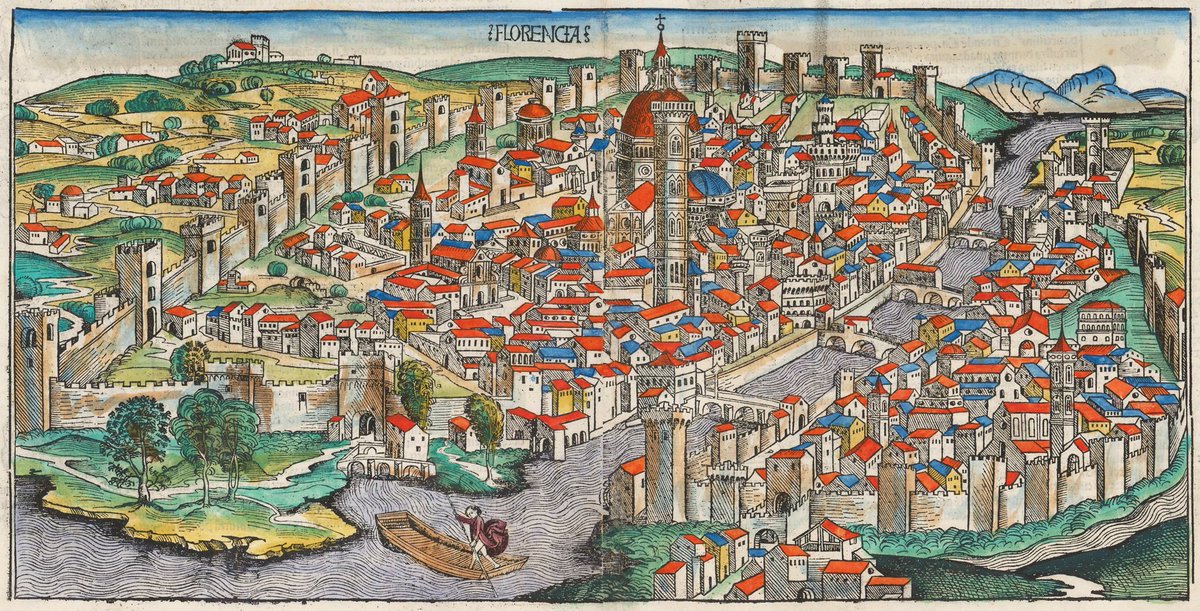
Florence was the original skunkworks: Botticelli, Lippi, Leonardo, Ghirlandaio, Donatello, Verrocchio, Perugino, Raphael. All products of the same 2.4-square-mile lab. In the 1470s Florence had 21 guilds regulating quality, controlling market entry, and running formal apprenticeship pipelines. Kids started at age 12, grinding pigments imported from Afghanistan, preparing wooden panels, and casting bronze. Verrocchio's workshop doubled as goldsmith, sculptor's studio, and engineering lab. This system produced polymaths like Michelangelo, who painted the Sistine ceiling, sculpted the David, and designed the dome of St. Peter's. Florence housed the largest bank in Europe: Banco dei Medici. It funded the masters, but more importantly? It funded the infrastructure that produced them. 40,000 people, 54 stone-carving studios, 84 woodcarving shops, and 270 wool mills behind the same city walls. A small genius factory you could walk end to end in under 20 minutes. How will we build this again?
This is actually a great example of why the OED methodology of finding a single first recorded usage to which to date the origin of words and phrases is misleading and wrongheaded
A philosophy anecdote I like is that Gilbert Ryle used to tell his students at Oxford not to pursue a PhD. He'd tell them it was “better to write a short good book later than a bad long book earlier.”