The Mass: the Fullness of Life
The Eucharist is the moment when the entire structure of creation becomes personally available to us. In the Mass, the meaning of Genesis and the fulfillment of the Cross are not remembered as distant stories. They become present. Christ offers his very self: the fullness of life that holds all things together. He invites every person to enter that fullness through communion with him. When Catholics do not attend Mass, they are not simply missing a ritual event. They are stepping away from the center of the cosmos, the center of reality. In the Mass, Christ draws creation back to its purpose. To refuse that invitation is to live at the edges of the world, fragmenting into lesser desires and losing the unity for which we were made.
The Eucharist is the Tree of Life restored. Christ gives his body and blood so that the corruption that followed Adam’s grasping might be healed from within. In communion, our potential for unity becomes actual. Our wounds meet the medicine that comes from the Cross. The tragedy of not receiving this gift is not just the absence of spiritual nourishment. It is the loss of the path toward becoming fully alive. The grace that could reshape a soul, heal its divisions, and reorient its desires remains unopened like a treasure buried in the ground.
Even more tragic is receiving the Eucharist without a heart prepared for communion. To receive the sign of perfect self-gift while clinging to self-centered pride is to resist the very transformation Christ offers. It is to take the form of unity while remaining trapped in the disintegration of sin. St. Paul warns of this danger because the Eucharist is not a symbol of a distant reality. It is the reality itself. Meeting the fullness of life while refusing to surrender anything in return becomes a deeper fragmentation, a contradiction within the soul.
The Mass is heaven touching earth. It is the ascent up the mountain of God so that human beings may breathe again the air of Paradise. Every Catholic is called to enter this ascent with awe and gratitude. When we stay away or approach without conversion, the loss is not God’s. It is ours. The one place where our lives could be gathered and made whole remains quiet and unattended. Christ continues to offer himself. He continues to wait at the center of the world with his wounds open and his life given. The tragedy is that so many walk past the gate of the Garden still open, too distracted to notice that the way home stands before them.
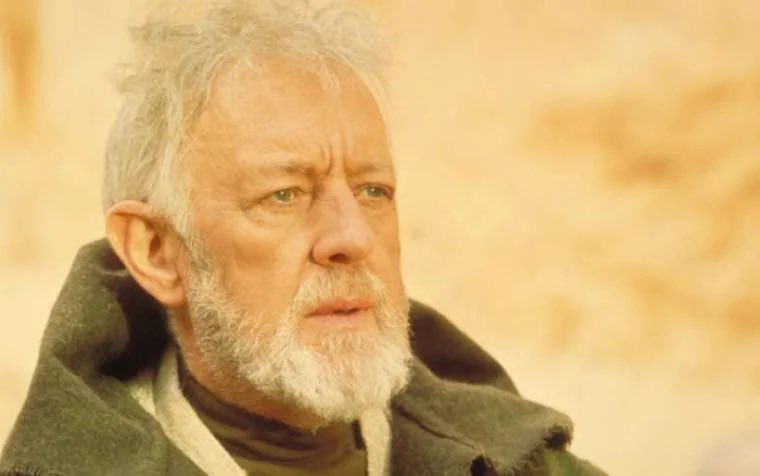
Catholic Fun Fact: Sir Alec Guinness was a devout Roman Catholic, having formally converted to the faith at age 42 in 1956. Though he was raised with Anglican influences and dabbled in atheism during his youth, two profound personal milestones ultimately prompted his religious conversion.
The Catalyst: Playing Father Brown (1954) While shooting the movie The Detective (also known as Father Brown) in France, Guinness dressed in the traditional cassock of a Catholic priest. As he walked down a local street, a young boy mistook him for a real priest, ran up, trustingly grabbed his hand, and walked with him while chatting happily. Guinness noted that this striking display of confidence shattered his deeply ingrained prejudices against the Catholic Church, realizing it could not be as "scheming or creepy" as he had been taught.
The Turning Point: His Son's Miracle
Shortly after his filming experience, his young son, Matthew, contracted polio and was paralyzed, facing a near-fatal prognosis. Desperate for help, Guinness began praying at a local Catholic church and struck a "negative bargain" with God: if his son was healed, he promised he would never stand in the way of Matthew converting to Catholicism. Matthew recovered completely.
Guinness honored his promise by enrolling Matthew in a Jesuit academy, and began aggressively studying theology with a priest. In 1956 Alec Guinness was officially received into the Roman Catholic Church. In 1957 his wife, Merula Silvia Salaman, converted to Catholicism as well, followed shortly by their son.
Guinness remained a committed, practicing Traditionalist Catholic, often associating with the Latin Mass Society, until his death in 2000.
"Communism is the scavenger of decaying civilizations. It makes its way into a country only when its culture has begun to rot from the inside."
—Bishop Fulton Sheen
Mary of Nazareth, you were a loving daughter to your parents, Saints Joachim and Anne. Teach us to honor, and care for, our parents and grandparents, especially as they age and become less independent.
Firmly rooted in the Word of Jesus, reading the Gospel every day, never stop dreaming of a land where there is peace and fraternity, nor stop looking at the world with wonder, nor stop facing the future with the light of hope. Do not let anything or anyone steal your hope.
Friends, I’ve read many biographies of Franklin Roosevelt, and I believe his battle with polio provides us a concrete example of how God orders all things—even suffering—for the good.
The charming, well-educated “golden child” was simultaneously superficial and self-absorbed early in his political career. He wanted to be president not to make people’s lives better but to enhance his own glory. He was a high aristocrat, unfamiliar with the plight of ordinary people.
But after polio, FDR entered deeply into the pain and suffering of the world.
His entire worldview was transformed, and it ultimately made him into the great statesman he became.
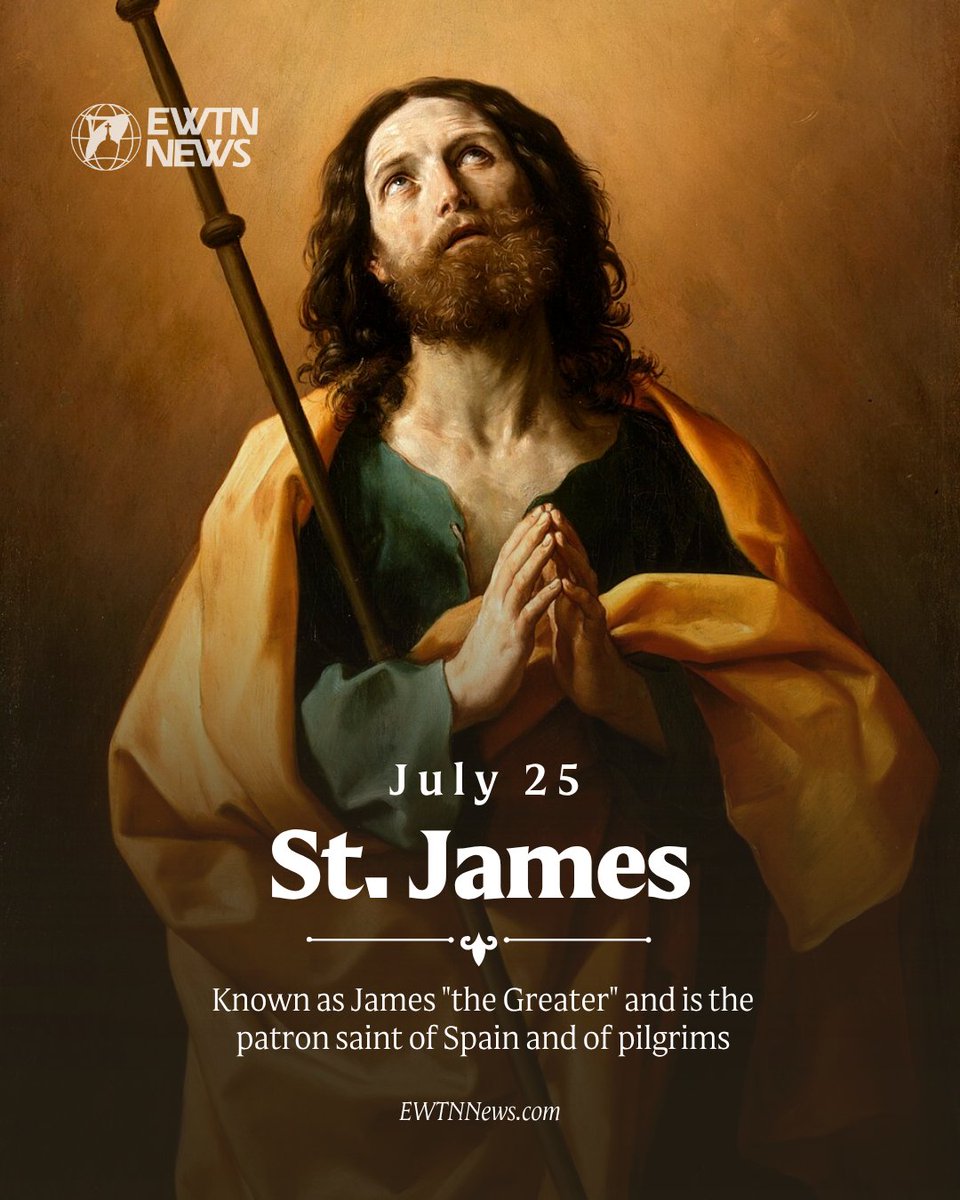
St. James the Greater was among the first to follow Christ and the first to give his life for the Gospel. He was the son of Zebedee and Salome and the brother of St. John the Apostle. A fisherman by trade, he was called by Jesus along the shores of the Sea of Galilee.
James quickly became part of Christ’s inner circle, along with Peter and John. He witnessed key moments in Jesus’ ministry, including the raising of Jairus’s daughter, the Transfiguration, and Christ’s agony in the Garden of Gethsemane. His zealous personality earned him and his brother the nickname “Sons of Thunder,” reflecting their fervent, sometimes impulsive nature.
After Christ’s Ascension and the coming of the Holy Spirit at Pentecost, James began proclaiming the Gospel. Tradition says that he traveled as far as Spain, preaching and establishing early Christian communities.
Returning to Jerusalem, St. James continued his apostolic work amid growing opposition. Around 44 A.D., he was arrested under King Herod Agrippa I and became the first Apostle to be martyred, dying by the sword. His courageous martyrdom set the precedent for the other Apostles to follow.
His witness for the Faith has inspired countless Christians through the centuries. The famous pilgrimage route, the Camino de Santiago (Way of St. James), is dedicated to him and draws pilgrims from around the world seeking spiritual renewal.
Read More: https://t.co/FRQH3aVEO0
Reflection from Pope Leo XIV
"There is, indeed, a growing awareness that peace is threatened by a lack of respect for creation, the plundering of natural resources and a progressive decline in the quality of life due to climate change...Frequently, however, in deliberations and negotiations about these issues, various fears emerge: fear of changing course, fear of losing power and fear of uncertain outcomes. Only by overcoming these fears can we work together to find the right solutions. It is here, I think, that religious leaders and communities can offer a special insight for supporting ambitious social and environmental efforts."
(Video message of Pope Leo XIV on the Occasion of the Tenth Austrian World Summit, June 16, 2026)
Cardinal Tobin: “War is not glorious, and while we are right to honor the heroism of those who have fought against tyranny and injustice, we should never pretend that the acts of war are themselves worthy of celebration.” https://t.co/4jLDegK3lb
An attempted translation for modern hearts & minds…
Matthew 13:18–23 (Expanded, Plain English)
Here is what the story means.
The seed represents truth—the announcement that God’s kingdom has entered the world through Jesus and invites every person into a new way of living.
Some people hear this message but never truly understand it. It remains only words or information. Before it can take root, competing ideas, distractions, fears, pride, or deception carry it away. A truth that is never understood cannot transform a life.
20–21
Other people receive the message with enthusiasm. They immediately recognize something beautiful and inspiring about it.
But enthusiasm alone is not enough.
Because the message has never developed deep convictions or firm roots, it cannot withstand difficulty. When following the truth becomes costly, inconvenient, unpopular, or painful, their commitment fades. They accepted the benefits of the message but were unprepared for the sacrifices that accompany it.
22
Others genuinely hear the message and begin to grow.
Over time, however, other priorities slowly take control. Worry about the future, the pursuit of wealth, the desire for comfort, status, success, pleasure, or constant distraction gradually occupy more space than the truth itself.
Nothing dramatic happens. The truth is not rejected outright—it is simply crowded out.
A life cannot produce its intended purpose when its deepest loyalties are divided.
23
Then there are those who hear the message, seek to understand it, and allow it to reshape the way they think and live.
The truth takes deep root within them. It becomes more than information; it becomes the organizing principle of their lives.
As they remain faithful over time, their lives begin to bear fruit. They become people whose character, decisions, relationships, and actions bring lasting good into the world. The amount of visible fruit differs from person to person, but every life genuinely rooted in truth becomes a source of life, wisdom, and blessing for others.
The point of the parable is not simply that people hear differently. It is that the condition of the heart determines whether truth remains an interesting idea or becomes a life that is transformed.
Gospel of the Day (Matthew 13,18-23)
Jesus said to His disciples: "Hear then the parable of the sower.
The seed sown on the path is the one who hears the word of the kingdom without understanding it, and the evil one comes and steals away what was sown in his heart.
The seed sown on rocky ground is the one who hears the word and receives it at once with joy.
But he has no root and lasts only for a time. When some tribulation or persecution comes because of the word, he immediately falls away.
The seed sown among thorns is the one who hears the word, but then worldly anxiety and the lure of riches choke the word and it bears no fruit.
But the seed sown on rich soil is the one who hears the word and understands it, who indeed bears fruit and yields a hundred or sixty or thirtyfold."
https://t.co/my56dR018E
The Justice Department sent a memorandum to federal departments and agencies with updated guidance on religious liberty and parental rights protections, based on recent U.S. Supreme Court precedent.
https://t.co/T5OHuDnyQK
“O Lord, your mercy reaches to heaven;
your faithfulness, to the clouds.
Your justice is like the mountains of God;
your judgments, like the mighty deep” (Ps 36).
Saint Bridget, pray for us.
Pope Leo XIV: “[Among] certain non-negotiable requirements… [on] the decision to use lethal force… [is to] ensure robust protection for civilians and the infrastructures necessary for their survival… When we witness the bombing of civilians, attacks on hospitals, schools or vital infrastructure, and violence that affects children, we are confronted with scandals that wound humanity itself” (Magnifica Humanitas 200, 216)
Friends, as Vice President JD Vance says, Christians can’t just leave politics to the politicians. We need Catholics in positions of high influence who bring their religious formation and sensibility into their work.
Gospel of the Day (John 20,1-2.11-18)
On the first day of the week, Mary of Magdala came to the tomb early in the morning, while it was still dark, and saw the stone removed from the tomb.
So she ran and went to Simon Peter and to the other disciple whom Jesus loved, and told them, "They have taken the Lord from the tomb, and we don't know where they put him."
But Mary stayed outside the tomb weeping. And as she wept, she bent over into the tomb
and saw two angels in white sitting there, one at the head and one at the feet where the body of Jesus had been.
And they said to her, "Woman, why are you weeping?" She said to them, "They have taken my Lord, and I don't know where they laid him."
When she had said this, she turned around and saw Jesus there, but did not know it was Jesus.
Jesus said to her, "Woman, why are you weeping? Whom are you looking for?" She thought it was the gardener and said to him, "Sir, if you carried him away, tell me where you laid him, and I will take him."
Jesus said to her, "Mary!" She turned and said to him in Hebrew, "Rabbouni," which means Teacher.
Jesus said to her, "Stop holding on to me, for I have not yet ascended to the Father. But go to my brothers and tell them, 'I am going to my Father and your Father, to my God and your God.'"
Mary of Magdala went and announced to the disciples, "I have seen the Lord," and what he told her.
https://t.co/BNB1yXKhub








![FeserEdward's tweet photo. Pope Leo XIV: “[Among] certain non-negotiable requirements… [on] the decision to use lethal force… [is to] ensure robust protection for civilians and the infrastructures necessary for their survival… When we witness the bombing of civilians, attacks on hospitals, schools or vital infrastructure, and violence that affects children, we are confronted with scandals that wound humanity itself” (Magnifica Humanitas 200, 216)](https://pbs.twimg.com/media/HN3gmH8aYAARvct.jpg)


