Avec le montage de la LPL le move est vraiment luuuuunairrreee
C'est 100% l'étincelle qui lance le reverse sweep
Les junglers ....vraiment les gars savent pas se controler (je suis jungler j'aurais fait pareil)
@SirDodo@kindeducator Do you know how climate works? It's not like we're living in independent bubbles here and there, where our ecological actions should have a direct impact on our local climates, unfortunately.
Chinese animation is finally entering the age of the Three Kingdoms.
On July 10, Three Kingdoms: The Beginning, the first Three Kingdoms-themed work from Light Chaser Animation, one of China's top animation studios, is set to hit theaters.
The film does not begin with Cao Cao (曹操) already elevated to a legend. Instead, it returns to a time when nothing had yet been decided: a young Cao Cao, a young Yuan Shao (袁绍), the late Eastern Han dynasty (25-220) just beginning to crack, and an era in which heroes, ambitious men, political schemers, and betrayers all stepped onto the same stage.
I was deeply honored to accompany the Light Chaser production team two years ago on their research trip to the ruins of the Han-Wei imperial city in Luoyang (洛阳) and Cao Cao's mausoleum in Anyang (安阳).
Days ago, I was also extremely honored to be invited to watch the film. As far as I understand, this was its first screening for anyone outside the production team and China's film authorities.
My first reaction was: stunning.
The visual style is rich and textured, and the historical research is remarkably solid. From clothing, architecture, objects, rituals, and urban spaces to the smallest details of everyday life, the film makes a serious effort to recreate what China looked and felt like 1,800 years ago.
It does not reduce the Three Kingdoms to a simple "battle spectacle." Instead, it tries to bring the audience back into the real world on the eve of an empire's collapse.
Light Chaser also released the main character posters days ago. I selected four faces from them-four figures who, in many ways, were the switches that turned the late Eastern Han dynasty into an age of chaos.
Top left: Cao Cao.
As a young man, he was not yet the controversial warlord later debated for centuries, but an ambitious young official eager to achieve greatness. He once wanted to serve the empire and make a declining state strong again. A renowned commentator of his age described him as "a capable minister in times of order, and a treacherous hero in times of chaos."
When the old order completely collapsed, he chose another path.
He brought the emperor under his control and became the de facto ruler of the court. With extraordinary political skill and military talent, he unified northern China. Yet at the Battle of Red Cliffs (赤壁), China's own version of Trojan War, he was defeated along the Yangtze River by Liu Bei and Sun Quan, whose forces were far smaller than his own.
In 220, Cao Cao died. Soon after, his son Cao Pi (曹丕) forced Emperor Xian of Han, who had long since lost real power, to abdicate, and established Cao's own empire, Wei.
China had formally entered the Three Kingdoms era.
But the story of the Cao family also became a kind of historical loop. Decades later, the Sima family (司马), whom they had elevated and relied upon, used almost the same method to sideline the Cao Wei emperors, replace them, and ultimately become the victors who reunified China in 280.
Top right: Yuan Shao.
He is the film's second lead.
Yuan Shao was born into one of the most powerful political families in China. For four generations, members of his clan had held some of the highest offices in the empire. His pedigree was extraordinary.
As a young man, Yuan Shao also had noble ideals. He, too, once hoped to save the country. He and Cao Cao had once stood side by side, and when Cao Cao fell on hard times, Yuan Shao had once extended a helping hand.
But one of history's cruelest truths is this:
When two people stand at the threshold of chaos, one may see the future clearly, while the other may only set disaster in motion.
In the late Eastern Han dynasty, eunuchs and imperial relatives took turns interfering in state affairs, and the empire was already gravely ill.
Yuan Shao proposed bringing regional military forces into the capital to eliminate the eunuchs.
What followed was almost a political prisoner's dilemma.
The Grand General He Jin (何进) hesitated over whether to eliminate the eunuchs, while the eunuchs knew that if they did not strike first, they would be destroyed.
As a result, He Jin was assassinated by the desperate eunuchs.
Soon after, Yuan Shao's troops stormed the palace and wiped out the eunuch faction.
Both sides had tried to survive. But in the end, they dragged each other into ruin.
The old order was shattered. But no new order emerged. A power vacuum appeared.
Some believe Yuan Shao deliberately used this to remove both the imperial relatives and the eunuchs, hoping to take their power over. Others believe he simply lacked strategy and misjudged the situation.
Just as every reader has their own Hamlet, I believe everyone will have their own judgment after reading Records of the Three Kingdoms, Romance of the Three Kingdoms, and watching this animated film.
But one thing is certain: Yuan Shao's moment at the center of power was only temporary.
The man who truly understood the age of chaos, mastered it, defeated Yuan Shao, and ultimately rose from it was his former friend:
Cao Cao.
Bottom left: Dong Zhuo (董卓).
He came from the northwest, a warlord with a powerful army under his command. It was precisely because of Yuan Shao's plan that Dong Zhuo was able to lead his troops into the capital.
At the empire's most vulnerable moment, Dong Zhuo seized control of the court.
He was brutal, cunning, and utterly without restraint. He deposed, poisoned, and enthroned emperors, held the imperial court hostage, and tore away the last shred of dignity from the Eastern Han dynasty.
From that moment on, China truly slid into an age of chaos.
Bottom right: Lv Bu (吕布).
The widely recognized god of war of his age and even beyond.
He had once served Ding Yuan (丁原), but Dong Zhuo saw Lv Bu's courage and status and began to drive a wedge between them. He eventually persuaded Lv Bu to kill Ding Yuan and defect to his side.
For a time, the two even addressed each other as father and son.
But Dong Zhuo was violent and suspicious, and Lv Bu was hardly a man of unwavering loyalty. On top of that, Lv Bu had an affair with one of Dong Zhuo's maids.
In the end, Lv Bu personally assassinated the formidable Dong Zhuo.
That maid, whose name was not recorded in the official histories, was later transformed in the novel Romance of the Three Kingdoms into Diaochan (貂蝉), one of the four top beauties of China.
Yet killing Dong Zhuo did not give Lv Bu a stable foothold.
For more than a decade afterward, he drifted between different powers: attachment, betrayal. Then attachment again, and betrayal again.
He remained the invincible warrior. But in the eyes of the other warlords, he gradually became the most dangerous kind of man in a chaotic age: the strongest, and the least trustworthy.
That is what makes the Three Kingdoms so fascinating.
It is not simply a legend of heroes. It is the story of an empire collapsing, and of humanity, ambition, loyalty, betrayal, and fate all spinning out of control at once.
And this time, Light Chaser chooses to begin at the very beginning-before Cao Cao became Cao Cao, before the Three Kingdoms became legend, and before an age of heroes and betrayers entered the memory forever.
So basically now we have America accusing China of using slaves to pick cotton, Japanese saying China is populist and militarist, Canadians saying China oppresses indigenous people, and Indians saying China has a caste system.
So basically China is a mirror.
@LazyG292149@Tiagoxcd @Khosei88 @Ame100cibles nan mais espérer et soutenir son équipe c'est une chose, trash en perma toutes les autres et nourrir sa delulu c'en est une autre. Le nombre d'Ultra KC dans les chats Twitch qui trashtalk des top players en les comparant aux joueurs KC... (pourtant j'adore le roster, mais vas-y)
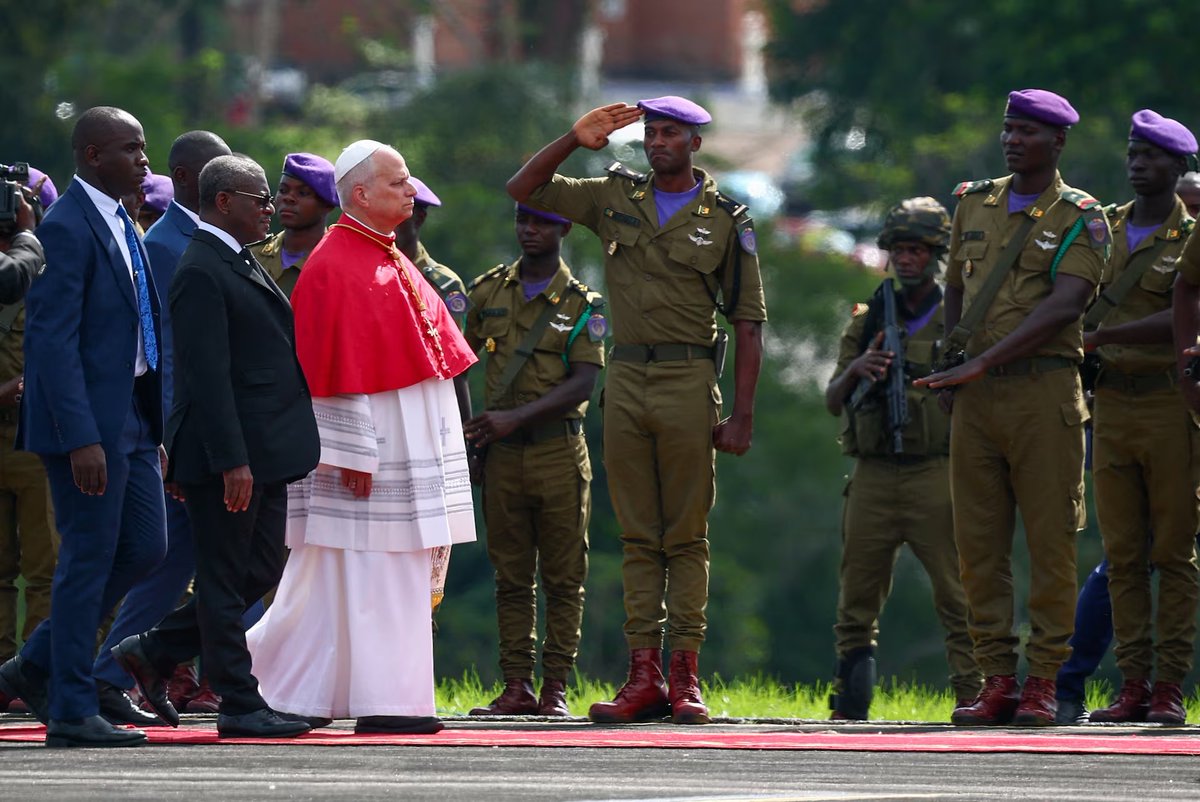
People don't realize how big Catholicism is. Leo's in Africa where there are 288 mil Catholics. That's bigger than the global Eastern Orthodox church and 4 times the size of the US RC Church.
People think hes obsessed with US politics. Believe me he has other things on his mind.
me when trying to read a storybook in chinese:
just opened page one and already lost. they said this is for children. so if i don't understand a thing… what does that make me? a very confused toddler? 🥲
🇫🇷 La France sera bien présente !
C'est officiel, j'ai l'immense honneur de vous partager que j'ai été nommé Manager de l'Équipe de France pour l'Esports Nations Cup @ENC_EN 🏆
La scène esport française est immense, la communauté derrière nous est incroyable et ensemble,
nous allons relever le défi face aux meilleures nations du monde.
On espère que vous serez au rendez-vous !
#ENC2026 #Esports #France
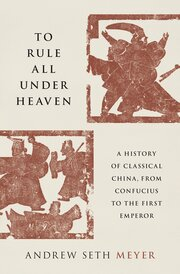
With all the talk about China's fascination with the Greco-Roman classics, if you're looking for a great read on China's Warring States period, check out Andrew Seth Meyer's new book, "To Rule All under Heaven: A History of Classical China, from Confucius to the First Emperor" 👇