Excited to share our new review.
Natural small RNA-based defense informs engineering of host-induced gene silencing in plant disease resistance - ScienceDirect https://t.co/5Hgfrpd2By
The Codex lead at OpenAI @thsottiaux dropped out of his PhD in two weeks. His take on education now: "It's important to follow your instincts and do things that give you energy. "
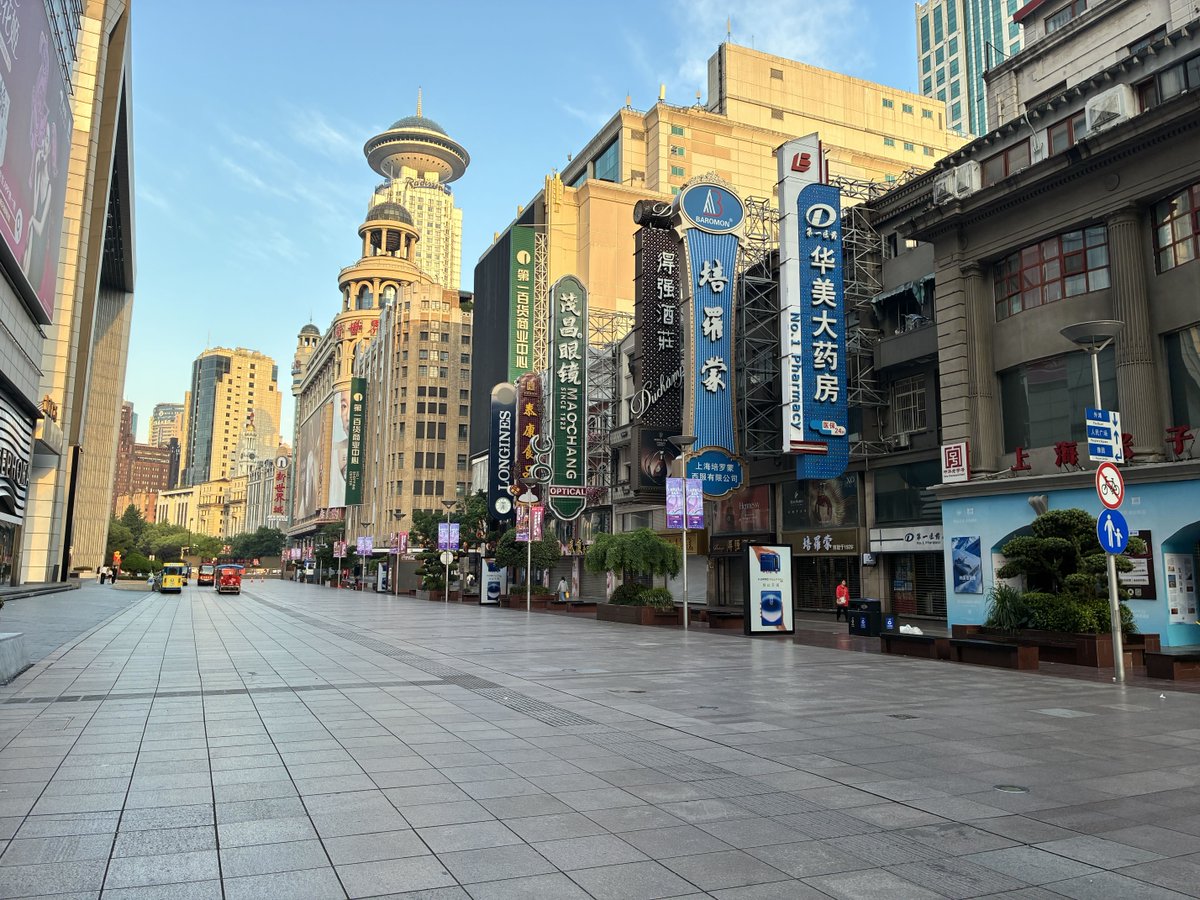
I'm back in Shanghai after ~two years to visit local companies and universities (like Westlake and Fudan).
Quick notes from a visit to a gene therapy company:
1. Visited a company that went from founding (2021) to gene therapy tested in patients in about 2 years (2023).
2. The same company is doing investigator-initiated trials in China and then jumping straight to Phase II in the United States.
3. You can buy nonhuman primates in China for about 150,000 RMB, roughly 5x cheaper than in the West. (A few years ago, primates in China were ~50,000 RMB.)
4. This company outsources their CMC for phase I trials. It costs them 2 million RMB total to pay a CDMO to manufacture their gene therapy, or about $300,000 USD. If they want to do GMP-grade manufacturing (which they need in cases where they want to go straight to Phase II in the US), then it costs about 10 million RMB. My understanding is that this is also about 5x cheaper than in the West.
5. In the West, insurance companies price therapies based on how much they are worth; i.e. a one-time gene therapy costs millions because treating the disease with the status quo over a lifetime costs 4-5x more.
But in China, the government tends to set prices based on how much a therapy costs to make. This means that many companies doing genuinely original, first-in-class drug development are not incentivized to do so, or need to look to Europe or America to recoup their R&D and make money. But China is now allowing these first-in-class therapies to be priced higher in the Chinese market to incentivize their development, another sign that the country is moving beyond "me too" drug candidates.
Exactly! Advanced tools help us as biologists dive deeper, uncover underlying rules and principles, and leverage them to build more meaningful and interpretable frameworks.
@anshulkundaje articulates something the AI-for-biology practitioners (or AI-for-science for that matter) need to hear more: we are far from a stage that scale alone solves biology. Deep domain expertise and principled interpretation (as opposed to cherry-picking of results) is how we actually make progress. There's too much hubris right now in assuming one can brute-force their way through biological complexity without understanding it.
In Brief: China revamps its clinical trial rules, aiming to position itself as a go-to country for early cell and gene therapies https://t.co/YHvuRl7rbg
https://t.co/TJEaGMBAAq
Excited to see our octameric NLR paper online! Not only brides love a big ring !
An activated wheat CCG10-NLR immune receptor forms an octameric resistosome https://t.co/gSio4BCBS5
Amazing! My PhD classmate, her own lab’s work!! They identified a regulatory node that rewires resource allocation under nitrogen constraint, and engineering this node significantly improved rice yield. Super cool!!! https://t.co/mU2zQCMXYd
Excited to share our new preprint! 🧬🌱Many thanks to all authors!
We identified that trans-species RNA interference is an inducible and spatially regulated arm of plant innate immunity mediated by a specialized ARGONAUTE protein.
#PlantImmunity#RNAi
Super excited to preprint this work and extremely proud of my team @TheSainsburyLab. Many thanks to fantastic collaborators @XiaoqiFeng_m@Tolga_Bzkrt and @Cerhou
This work is spearheaded by the amazing postdoc Min Wang @Min_Wang6
Below is a thread 👇👇👇
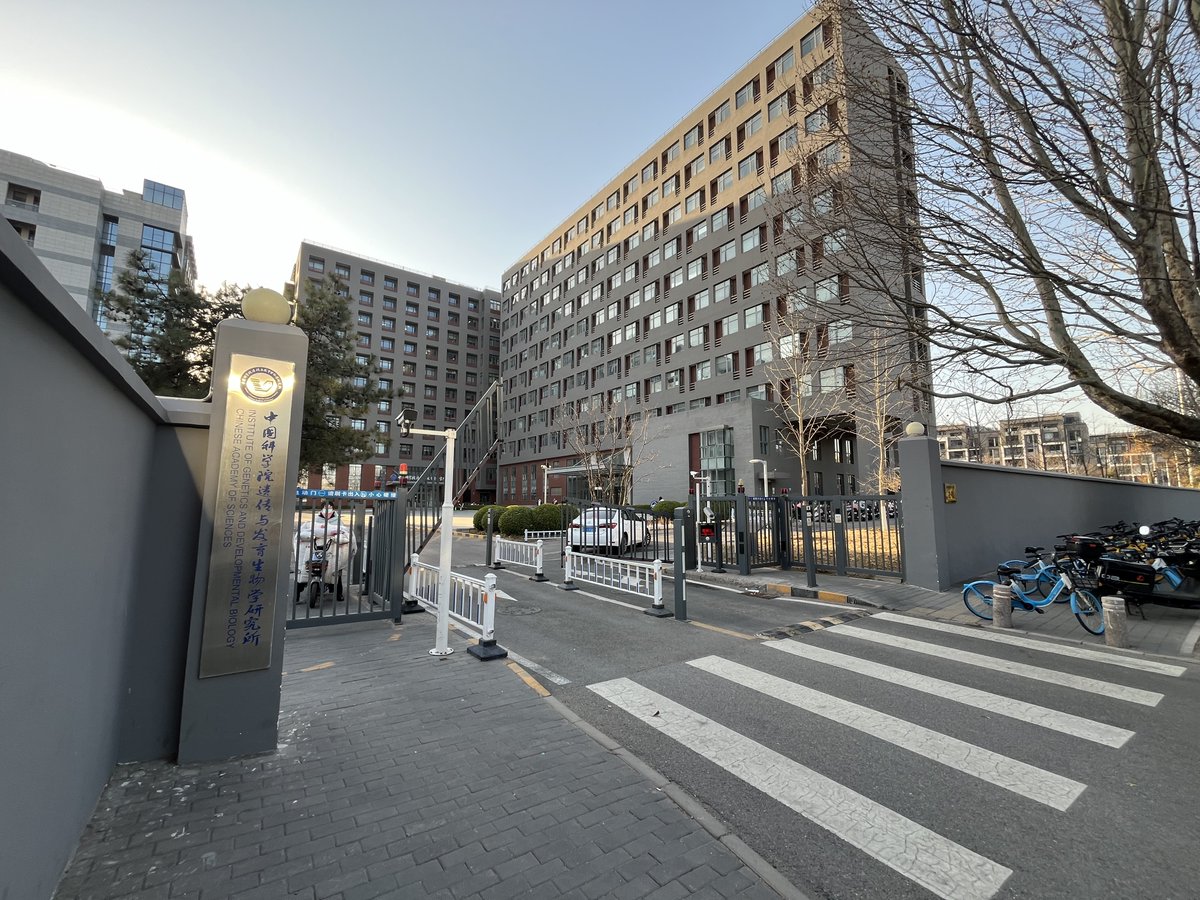
This is actually my PhD institute. It really is a great place. If you talk with the scientists and PIs there, you’ll see how much they love their science, and how great and nice they are.
When I first visited Beijing, I went down to one of the Chinese Academy of Sciences buildings to visit a famous plant biologist there.
The building itself was drab and gray; unremarkable from the exterior. But the scientists inside had been publishing a steady stream of important plant biotechnology papers in Nature, Science, Cell, etc. These scientists had been the first to demonstrate base editing and prime editing in crops, for example, and I wanted to understand their success.
When my taxi dropped me off in front of the building, I was initially concerned because a big gate blocked off the entrance. There was no security guard; only a large keypad affixed to a brass door. After a few moments standing there, pondering my next move, the door swung open and two young people (perhaps students) walked out.
I frantically gestured at the door and pleased with them (in English) that I'd like to enter the building. They smiled, said nothing, and gestured for me to come inside. It was all actually quite easy. Security cameras are ubiquitous in China, but not a single guard ever asked me what I was doing there.
After walking through a parking lot, I stepped into the building itself. A secretary at the desk looked up at me, but didn't say anything.
The building's lobby was completely filled with Communist messaging; remarks about how the Party and TOGETHERNESS leads to GREAT SCIENTIFIC DISCOVERIES. One entire wall of the lobby was filled with patents; dozens and dozens of scientific patents, mostly about esoteric methods to engineer crops. There were also little jars filled with seeds; presumably GMOs that had been developed in this building.
I took the elevator to the top floor and knocked on the door of the scientist I had wanted to meet. This person has a very big laboratory, occupying half of the floor. As I walked to their office, I passed by large portraits of Party leaders. I also walked through a common room space that was only sparsely-filled. Two scientists (both wearing masks) were working out on a small treadmill and stationary bike. They were sweating profusely.
After a lovely conversation with this Beijing scientist (they were really welcoming, and offered me tea) we took a tour of their laboratory. Remember that this is one of the most important and prolific groups in all of China, and so I expected fancy machines and perhaps robots and a huge greenhouse; how else could they publish a Nature paper every few weeks?
When they opened the door to their tissue culture room, though, all I saw were 12 young students -- heads down -- intensely focused on their work. There were no robots; no automation of any kind. It was all quite boring, human capital. There were no secrets to their success.
I rode the elevator back down and walked out the building, without any smog in the air, and hailed a taxi back to my hotel.
I am excited to see the @arcinstitute family grow! 24 new brilliant minds join Arc as Core Investigators and Innovation/Ignite awardees... from autoimmunity to AI, microbiomes to language models. Y'all, welcome to the place where impossible ideas get a GPU and/or a pipette.
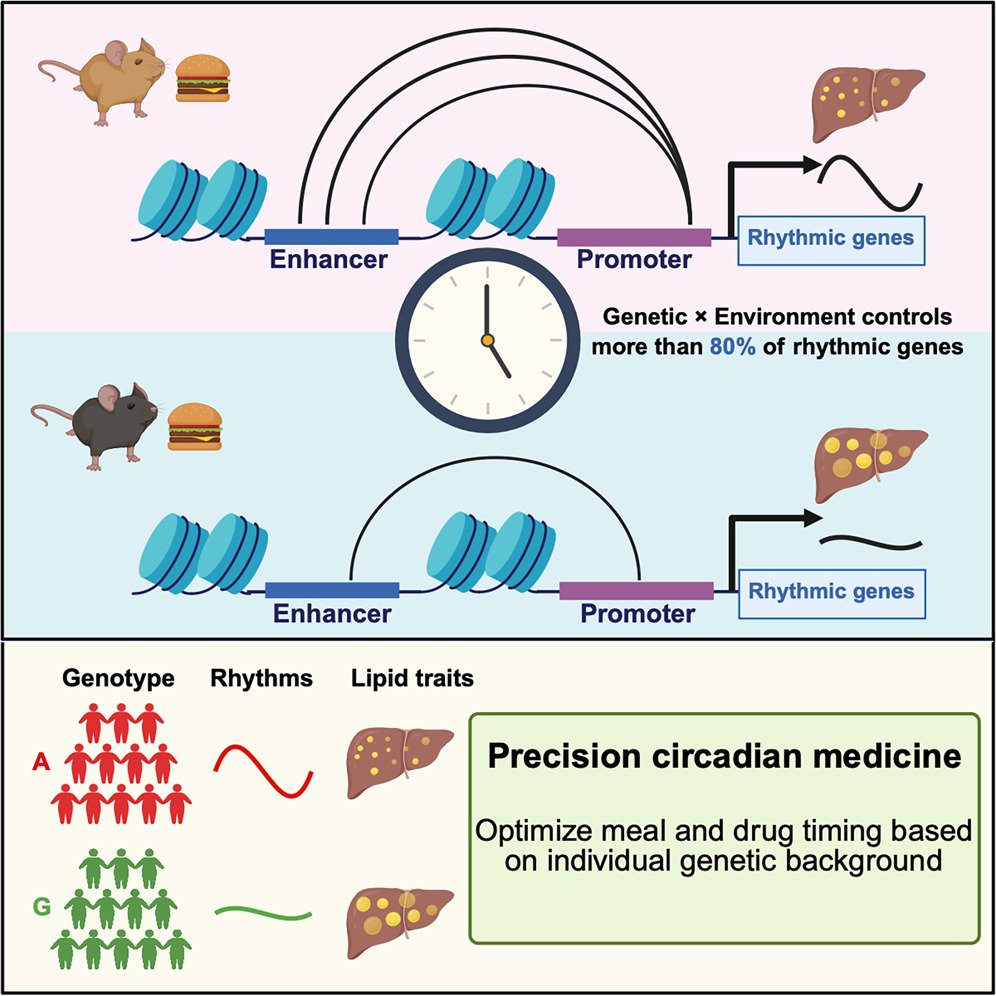
Our paper ‘Genetics–nutrition interactions control diurnal enhancer–promoter dynamics and liver lipid metabolism’ is now online @Cell_Metabolism.
You can download it for free before Oct 14 via this link: https://t.co/8FPgyCi6iU
In the latest issue! Advancing protein evolution with inverse folding models integrating structural and evolutionary constraints https://t.co/EOMWF5qGya