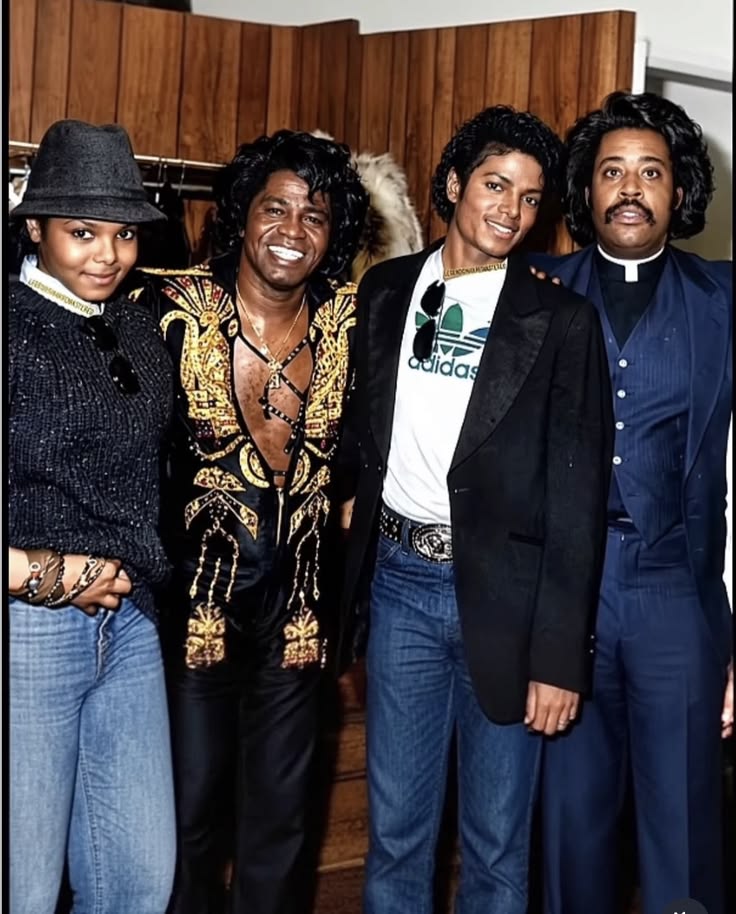
A rare glimpse into the 1970s, Janet Jackson, James Brown, Michael Jackson, and Al Sharpton captured together backstage during a memorable era in music and culture.
📷 1979.
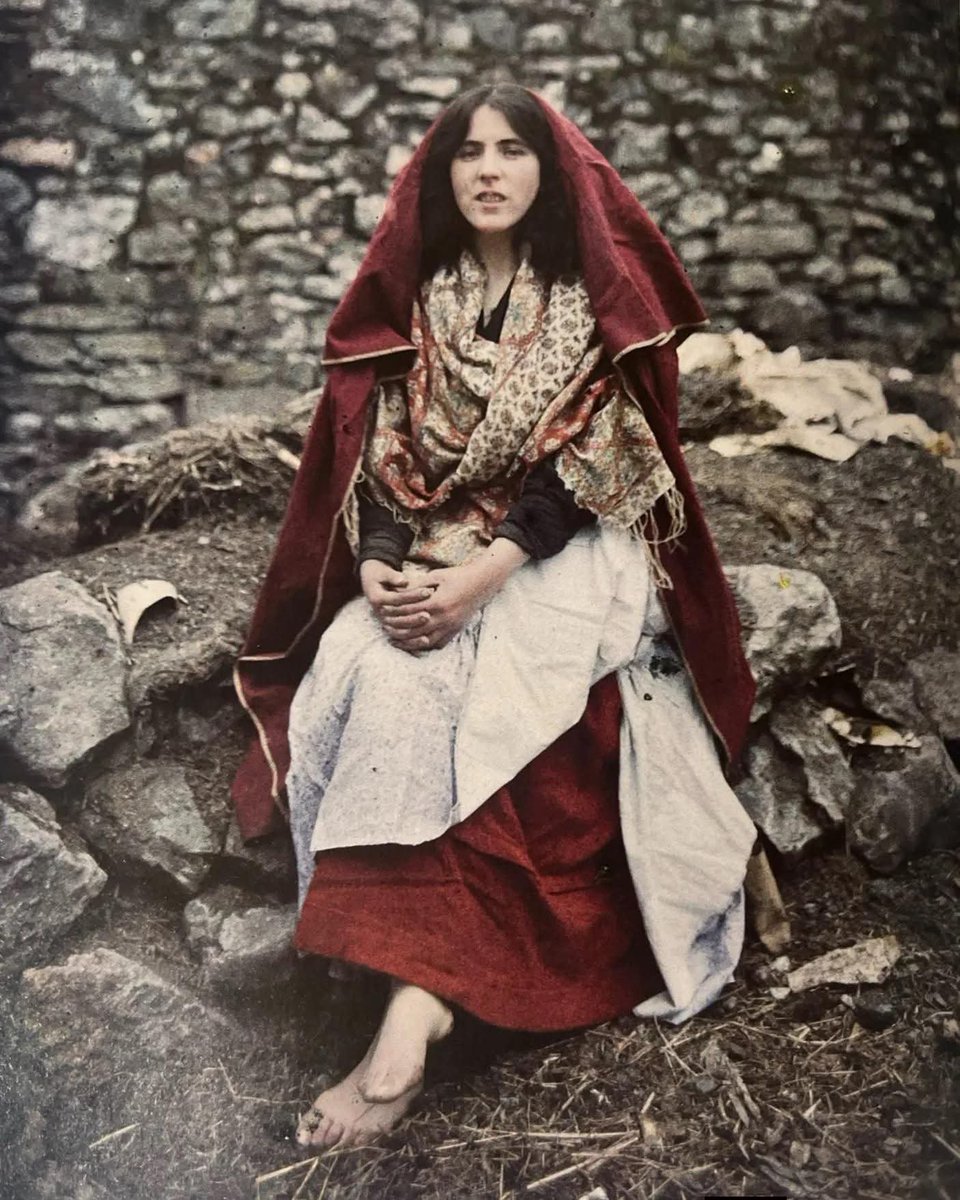
An autochrome color photograph of a young Irish girl in her traditional clothes from the Claddagh in Galway, Ireland, taken on May 26, 1913, by French photographers Marguerite Mespoulet and Madeleine Mignon-Alba....
She sits barefoot on the rough earth, framed by a weathered stone wall, her expression steady and self-possessed. Draped in a deep red cloak and what’s likely a Galway shawl—woven in muted florals and worn with layered modesty—she wears the traditional dress of a Claddagh girl, a style once instantly recognizable along the windswept west coast of Ireland.
This image captures more than clothing; it reflects a way of life that has nearly vanished. The Claddagh was once a fiercely independent fishing village just outside Galway City, defined by its tight-knit community, Gaelic language, and deep-rooted traditions. Homes were simple thatched cottages, and daily life revolved around the sea. Men fished in Galway Hookers—sturdy, dark-sailed boats crafted for the Atlantic's wild temper. Women like her maintained the homes, tended to their families, and kept the traditions alive, including the now-iconic Claddagh ring: hands holding a heart beneath a crown, symbolizing friendship, love, and loyalty.
Her shawl, likely woven in the 19th century or early 20th, was both practical and symbolic—a sign of status, identity, and warmth in a damp and wind-bitten landscape. Today, such clothing has nearly disappeared, but in her stillness and strength, we catch a glimpse of a culture quietly proud, richly textured, and deeply feminine.
#archaeohistories
Michael Jackson riding a special subway train with Second Lady Joan Mondale and New York City Mayor Ed Koch in October 1978.....A rare glimpse of Michael during his early rise to fame.
📷 1978.
Freddie Mercury and Mary Austin met in London in the late 60s.
He was still trying to make a name for himself as a musician, and she was working in a clothing store. They soon began a relationship and moved in together.
In 1976, Freddie told Mary that he was attracted to men. Their romantic relationship ended, though their bond did not. They remained close friends and shared many years of trust and affection. Mary was also there for him at various stages of his career.
When Freddie fell ill, Mary stayed by his side. She was with him during his final moments in 1991. Throughout his life, Freddie considered her an essential part of his life and even called her his “common-law wife.”
“Being hated by idiots is the price you pay for not being one of them.”
- Jean Cocteau
Jean Cocteau (1889–1963) was an extraordinarily versatile French artist who rarely confined himself to a single creative pursuit. He wrote poetry and novels, directed films, designed ballets, and constantly drew. In 1929, while recovering in a clinic, he completed Les Enfants Terribles in just 17 days. Years later, during its film adaptation, Cocteau became so absorbed in production that he reportedly yelled “cut” during a scene, prompting director Jean-Pierre Melville to remove him from the set.
Even a vacation in southern France became an artistic undertaking. While staying at the villa of his friend Francine Weisweiller, Cocteau initially asked permission to make a drawing above the fireplace. He soon expanded far beyond that small project, eventually covering walls, ceilings, and furnishings with roughly 200 works. He affectionately described the transformed home as his “tattooed villa,” with artists such as Picasso and Matisse encouraging his creativity.
Cocteau brought the same imagination to filmmaking. Decades before digital effects existed, he created surreal illusions using remarkably simple techniques. To make characters appear to move through mirrors, he filmed reflective pools of liquid mercury from above, while reversed footage allowed unnatural movements to appear strangely convincing.
Throughout his life, Cocteau seemed capable of turning almost anything into a canvas for his imagination. A novel could emerge in a matter of days, a friend’s home could become an enormous artwork, and an ordinary mirror could be transformed into a mysterious passageway to another world.
Sylvester Stallone with his dad Frank Stallone Sr. and brother Frank Stallone Jr. in Gioia del Colle, Apulia, Italy in 1965....
Sylvester was 19 when he visited Gioia del Colle, the southern Italian town from which his paternal family originated. His father, Francesco “Frank” Stallone Sr., was born in Gioia del Colle in 1919 and emigrated to the United States as a child. Sylvester’s grandfather Silvestro had worked as a barber before the family left Italy.
Stallone had grown up in a turbulent household. His parents had an extremely contentious marriage and divorced when he was young. Stallone later described his father as exceptionally tough and said he himself became aggressive and difficult as a teenager. He attended numerous schools, was expelled from several, and spent time at a school for troubled youths.
Around 17, he went to the American College of Switzerland, where he became involved in acting. He later struggled financially while pursuing acting, taking small roles before writing the screenplay that became Rocky. Released in 1976, the film turned him into an international star.
Nearly six decades after this visit, Sylvester and Frank returned to Gioia del Colle in September 2023. Both were awarded honorary citizenship in a public ceremony.
During that 2023 return, Stallone visited the building where his grandfather had operated his barbershop and was presented with the original key to the shop. He held it up before the crowd, connecting his family’s emigration from this small Italian town directly to the life that eventually produced Rocky.
#archaeohistories
So when Beyoncé pays homage to a Latin singer, she’s “overstepping her boundaries”……
But Fat Joe claiming he’s the “Blackest ni**a ever” is acceptable?
More than 3,500 years ago, the ancient Minoans of Crete created what is believed to be one of the world's oldest depictions of a swing.
Known as “The Swinging Goddess,” this remarkable terracotta figure was discovered at Hagia Triada in southern Crete and dates to around 1500–1450 BC, during the height of the Minoan civilization.
The figure shows a female suspended between two columns topped with birds, symbols often associated with divine presence in Minoan religion. Many archaeologists believe the scene represents the descent or appearance of a goddess from the heavens to the earthly world, a sacred moment known as an epiphany.
Today, this extraordinary artifact is preserved in the Archaeological Museum of Heraklion, offering a rare glimpse into the spiritual beliefs and artistic achievements of Bronze Age Crete.
More than three and a half millennia later, the Swinging Goddess remains one of the most fascinating and unique treasures of ancient Greece.
#archaeohistories
During pregnancy, a small number of the baby's cells naturally pass through the placenta and enter the mother's blood circulation. This phenomenon, called fetal microchimerism, allows tiny groups of these fetal cells to settle in the mother's body and persist there for decades following childbirth.
What makes this particularly fascinating is that many of these fetal cells function similarly to stem cells. They can travel throughout the body, integrate into various tissues, and, in certain instances, respond to sites of injury.
Studies conducted over the last twenty years have detected fetal cells in areas undergoing repair, such as healing heart muscle, regenerating skin, recovering liver tissue, and other organs involved in regeneration. Some of these cells seem able to differentiate into the specific cell types required for repair, for example, becoming cardiac muscle cells, liver cells, or immune cells. Others may play a supportive role by secreting substances that promote tissue healing and dampen inflammation.
While their effects are not entirely predictable, fetal cells are repeatedly found in tissues actively engaged in repair.
[Kara et al. (2012): "Fetal Cells Traffic to Injured Maternal Myocardium and Undergo Cardiac Differentiation" (Circulation Research)]
[Wang et al. (2004): "Fetal cells in mother rats contribute to the remodeling of liver and kidney after injury" (Biochemical and Biophysical Research Communications)]
9 year old girl sold by her Afghan parents to a man to be his wife. Remember, Muhammed married his wife at 6 years old and consummated the marriage at 9. Sharia law will not stand in America!
Cardi B opens up about working hard to provide for her four children despite the stigma around being a working mother, saying she hopes they’ll one day understand the sacrifices she made for them. ❤️👀
Born on August 29, 1917, in Harlem, New York, Isabel Sanford became one of the most important Black actresses in American television, building a career at a time when Black performers were often restricted to supporting roles and stereotypical characters. Sanford began performing in theater before moving into film and television, eventually gaining national attention as Louise Jefferson on *All in the Family*. When *The Jeffersons* premiered in 1975, she continued the role alongside Sherman Hemsley, portraying a Black woman whose family had achieved significant economic success and moved from Queens to Manhattan. The show became one of the longest running sitcoms in American television history, and Sanford's Louise Jefferson became one of the medium's most recognizable Black female characters.
Sanford's achievement went beyond simply being a successful actress. In 1981, she made television history when she won the Primetime Emmy Award for Outstanding Lead Actress in a Comedy Series for playing Louise Jefferson, becoming the first Black actress to win that category. The Television Academy notes that Diahann Carroll had previously become the first Black actress nominated in the category for *Julia* in 1969, making Sanford's victory an important step in the gradual recognition of Black women in leading television roles. *The Jeffersons* also gave audiences something that had been relatively uncommon on American television, a successful Black family whose stories were not limited to poverty or racial struggle. Louise was intelligent, outspoken, warm and independent, and her relationship with George Jefferson allowed the series to explore class, marriage, racism and changing ideas about Black success through comedy. Sanford remained closely associated with the character for more than a decade, and her performance helped establish a lasting place for Black women in television comedy. She continued acting after *The Jeffersons* ended in 1985 and received recognition for her contributions to the entertainment industry. Sanford died in 2004 at the age of 86, but her legacy remains especially significant because she helped open the door for later generations of Black actresses to occupy leading roles rather than being confined to the margins of television.
President Donald Trump ordered American flags lowered across the United States for one week Tuesday, as he mourned the death of country music icon Dolly Parton, telling the legendary singer, "The World loves you."
#DollyParton#Lovelytitv
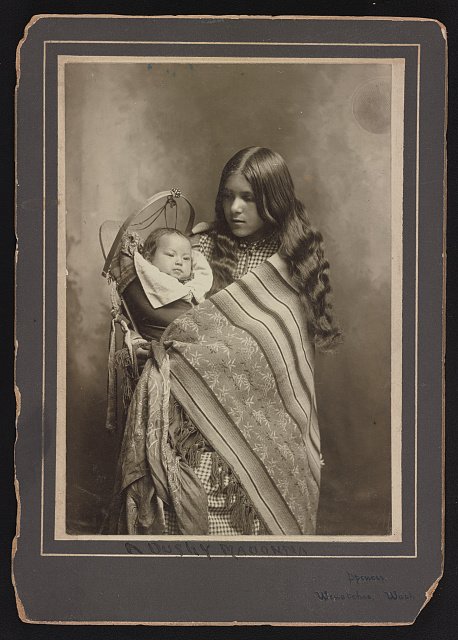
In 1902, a Plateau Indigenous woman carrying her baby in a cradleboard was doing far more than caring for a child. She was carrying knowledge that had passed through generations of women at a moment when the world around them was being radically altered.
Across the Columbia Plateau, women were central to family and economic life. They gathered roots and berries, processed and preserved food, made clothing, baskets and woven bags, and developed highly specialized artistic traditions. Knowledge of particular gathering places could pass through families, including from mothers to daughters.
Their craftsmanship could be remarkably complex. An early twentieth-century collector visiting Spokane communities encountered an elderly woman who was among the few people he found who still possessed knowledge of a difficult double-weaving technique. Such skills were not simply decorative. They represented generations of observation, teaching and memory.
The cradleboard belonged to this working world. It kept an infant close while allowing a woman's hands to remain free for travel, gathering and other responsibilities. Motherhood was not separated from daily work. Babies moved through the landscape with their mothers.
But in 1902, that landscape was changing.
The Spokane Reservation had been established in 1881, restricting Spokane people to a fraction of the territory their ancestors had traditionally used. Federal assimilation policies pushed the disruption further. Under the Dawes Act, communally held Native lands were divided into individual allotments, a policy designed in part to dismantle traditional tribal systems. Allotment of the Spokane Reservation began in 1902 and continued through 1908.
For women whose knowledge depended upon access to particular root beds, berry grounds, waterways and seasonal gathering places, losing land could also mean losing access to the physical geography of cultural memory.
By then, traditional food systems were already under pressure. Salmon resources had declined, access to hunting and gathering territories had contracted, and valuable agricultural lands throughout the region had increasingly passed into non-Native hands.
Yet Indigenous women continued raising children, producing intricate beadwork and weaving, gathering food when access permitted, and transmitting knowledge.
A cradleboard from this period therefore tells a much larger story. Inside it was a new generation being carried through one of the most disruptive periods in Plateau history, surrounded by women working to preserve knowledge that federal policy was actively trying to replace.
#archaeohistories











![Rainmaker1973's tweet photo. During pregnancy, a small number of the baby's cells naturally pass through the placenta and enter the mother's blood circulation. This phenomenon, called fetal microchimerism, allows tiny groups of these fetal cells to settle in the mother's body and persist there for decades following childbirth.
What makes this particularly fascinating is that many of these fetal cells function similarly to stem cells. They can travel throughout the body, integrate into various tissues, and, in certain instances, respond to sites of injury.
Studies conducted over the last twenty years have detected fetal cells in areas undergoing repair, such as healing heart muscle, regenerating skin, recovering liver tissue, and other organs involved in regeneration. Some of these cells seem able to differentiate into the specific cell types required for repair, for example, becoming cardiac muscle cells, liver cells, or immune cells. Others may play a supportive role by secreting substances that promote tissue healing and dampen inflammation.
While their effects are not entirely predictable, fetal cells are repeatedly found in tissues actively engaged in repair.
[Kara et al. (2012): "Fetal Cells Traffic to Injured Maternal Myocardium and Undergo Cardiac Differentiation" (Circulation Research)]
[Wang et al. (2004): "Fetal cells in mother rats contribute to the remodeling of liver and kidney after injury" (Biochemical and Biophysical Research Communications)]](https://pbs.twimg.com/media/HRWtNFEWkAAZlcU.jpg)