Whether lost in a 30-year-old data set or a 1,000-year-old leech book, scientists are using new machine learning and AI tools to find promising drugs lost to time.
@sci_steph explores this and more in a new editorial: https://t.co/8VhONic8Uc
Hepatic stellate cells are most directly responsible for liver fibrosis, but what else is involved?
@AndrewSaintsing reports on a study from @PittTweet researchers that implicates trehalose metabolism in the intestine.
Read more: https://t.co/Wyi7l3FFPt
Antidepressants have been used to treat pain, but often take too long to work.
@GLopez_924 spoke with scientists @IcahnMountSinai about a recent study that features a non-FDA approved antidepressant that may provide fast and long-lasting pain relief.
https://t.co/TUhL0hdIhY
In a high-throughput screen of repurposed drugs, @MichaelBollong@scrippsresearch and his team identified a drug that turns back time on aged lung stem cells.
It may be a new treatment for idiopathic pulmonary fibrosis, he told @sci_steph.
Read more: https://t.co/DuAjhhEIo6
Today, the FDA approved the first new type of drug for schizophrenia in 70 years. Check out @allisonpwhitten's deep dive into the story behind this new drug for @DrugDiscovNews: https://t.co/xfWLDmufMu
“People think of statistics as just sitting at the computer and working on math and methods, but we're really motivated to develop these statistics to improve public health,” @rebeccajk13 @CDCgov told @sci_steph about her maternal GBS vaccine model.
https://t.co/GzjUWW74ZO
What if doctors could treat heart attacks with a strong dose of regeneration?
In this new DDN Dialogues podcast, @allisonpwhitten spoke with experts who are not too far off from turning that into a reality.
🎧Listen here: https://t.co/WRCGHynFaU
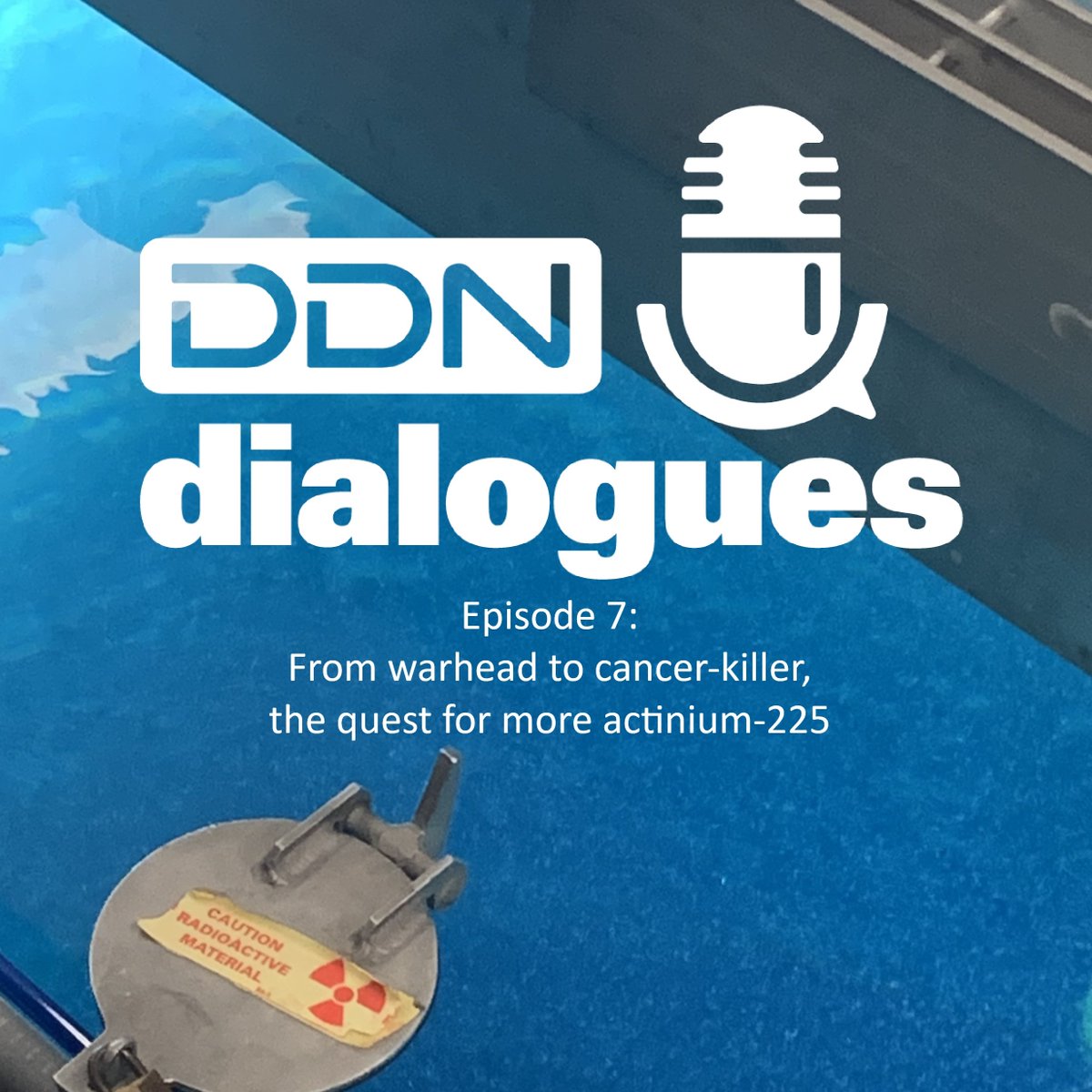
From interview to the blue glow of a nuclear reactor, @sci_steph gives a behind-the-scenes look into the making of the DDN Dialogues podcast episode: From warhead to cancer-killer, the quest for more actinium-225.
https://t.co/p97QCPeRyN
In medieval Europe, a toothache could kill you.
But, people did have access to cures for all sorts of maladies in medical manuscripts, @JAndrewKlein, history of medicine curator @TheHuntington, told @sci_steph in a new DDN Dialogues podcast.
Listen here: https://t.co/b5OaRbqg4p
Who would have thought a glob of honey and a splash of vinegar would be so good at killing bacteria? People back in ancient times, of course!
🎧 Listen to @sci_steph’s podcast episode about searching historical medical texts for modern-day therapies:
https://t.co/Pfa0As6W8O
Meet the robots manufacturing cell therapies!
“Our approach to automation is always very respectful of the biology team...we adapt the robots to the biology. We don't ask them to adapt biology to the robots,” Fred Parietti @multiplylabs told @sci_steph.
https://t.co/xj9lEv4eE9
Our Chief Scientist Mike Sapieha, Ph.D. joined the @DrugDiscovNews DDN Dialogues podcast with host @sci_steph to break down our senolytic model and #UBX1325’s recent clinical trial success in improving vision and eye health in patients with #DME.
https://t.co/xlQx8bztv4
Barely alive but not quite dead, senescent cells cause a lot of damage, especially in the retina.
Check out @sci_steph’s podcast about how scientists @UMontreal and @UnityBiotech developed a drug that kills these undead cells in diabetic macular edema.
https://t.co/zHPrXrmULO
As the zombies of the body, senescent cells spew out damaging molecules as they refuse to die.
But a new drug developed by a team @UnityBiotech and @UMontreal killed these cells in the diabetic macular edema eye,
🎧 @sci_steph reports in a new episode:
https://t.co/wp9lhDhd7P
Researchers led by Mike Sapieha @UMontreal and @UnityBiotech developed a new class of drugs for diabetic macular edema that targets senescent cells in the eye.
🎧Find out more in @sci_steph’s latest DDN Dialogues podcast episode.
https://t.co/Hr2Ele4ns9
I had so much fun making this podcast episode and would love if you gave it a listen! Also, check out our episode page for some photos I took at the @UCIrvine nuclear reactor lab! ⚛️ https://t.co/5pbi5jxUiE
Actinium-225 emits high energy alpha particles that bust up tumor DNA, killing cancer cells.
Researchers at #ServaEnergy developed a new way to make more of it for clinical trials and eventual treatments.
🎧 @sci_steph reports in a new podcast episode:
https://t.co/phuhED2a8I
Amoebae hunt and eat bacteria hiding in biofilms.
By studying the compounds that amoebae produce to break down these antibiotic tolerant biofilms, “we as researchers can see what it produces and mimic it” @IBiofilms@ReichmanUni told @sci_steph.
Read on:
https://t.co/yEly9h0huq