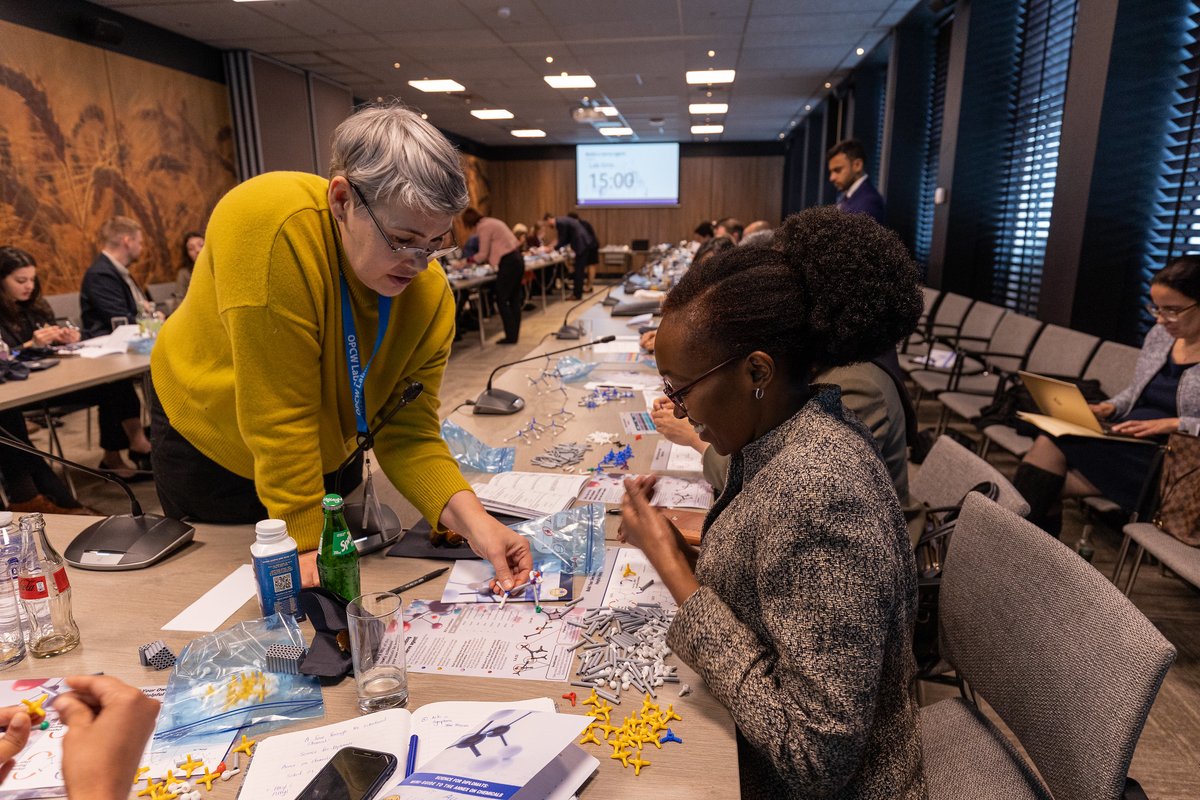
Last week's Science For Diplomats session offered an in-depth look at the evolution and function of Personal Protective Equipment (PPE) in the context of chemical safety.
The session explored the materials and mechanisms that make PPE effective: from particulate filtration and chemical adsorption using activated carbon, to gas-tight suits that block vapours, gases, and liquids.
It also highlighted innovations on the horizon:
🔬 Nanofibres and metal-organic frameworks for improved filtration
🧠 Smart materials for personalised, data-driven protection
🚁 Drone-assisted site surveillance for safer operations in contaminated zones
As science advances, so must policy. Bringing scientists and policymakers together is essential for effective implementation of the Chemical Weapons Convention.
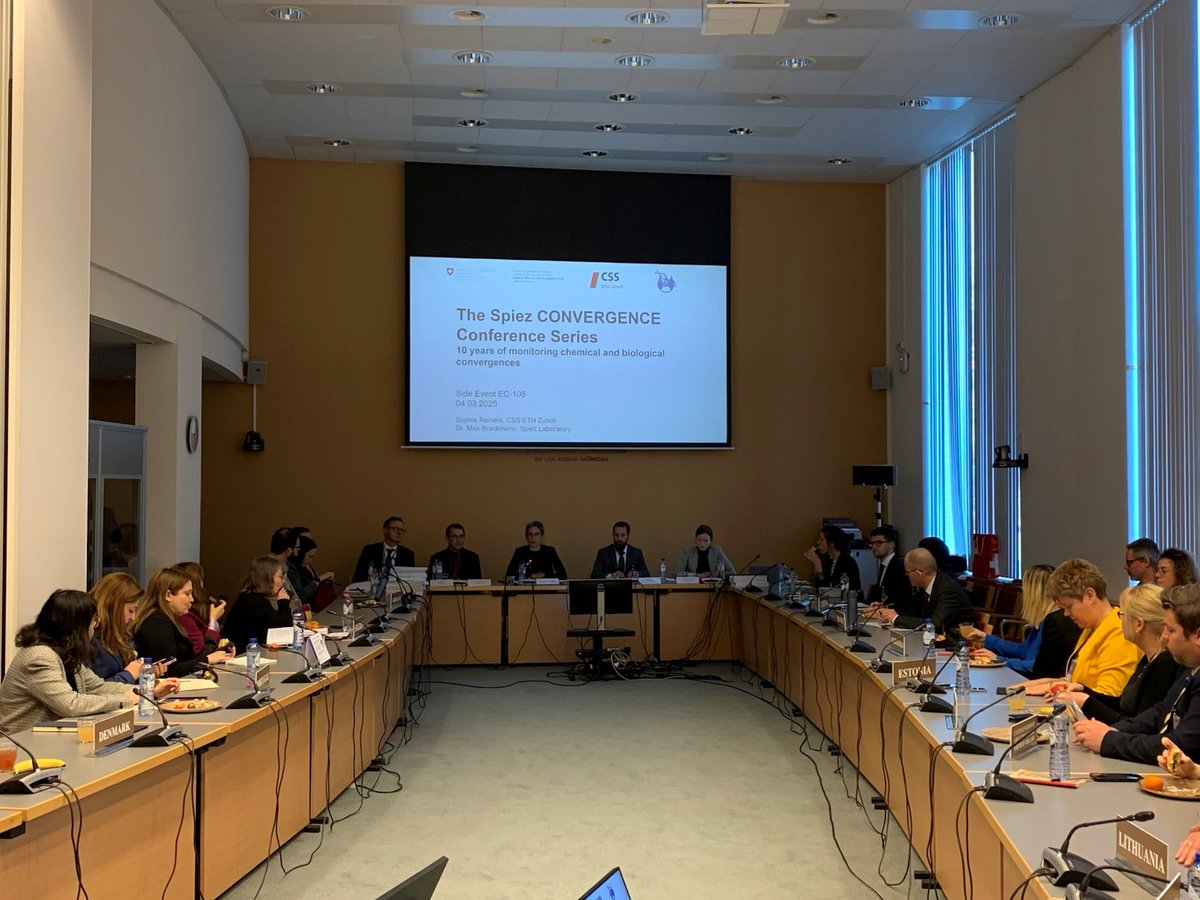
Today at the @OPCW Executive Council, 🇨🇭co-hosted a Side Event together with @SpiezLab about the 10 years anniversary of #SpiezCONVERGENCE conference. Great opportunity to stress the importance of science- and evidence-based decision making @OPCW!
Uniting science and diplomacy is key to advancing the #ChemicalWeaponsConvention 🫱🏽🫲🏿👩🏿🔬
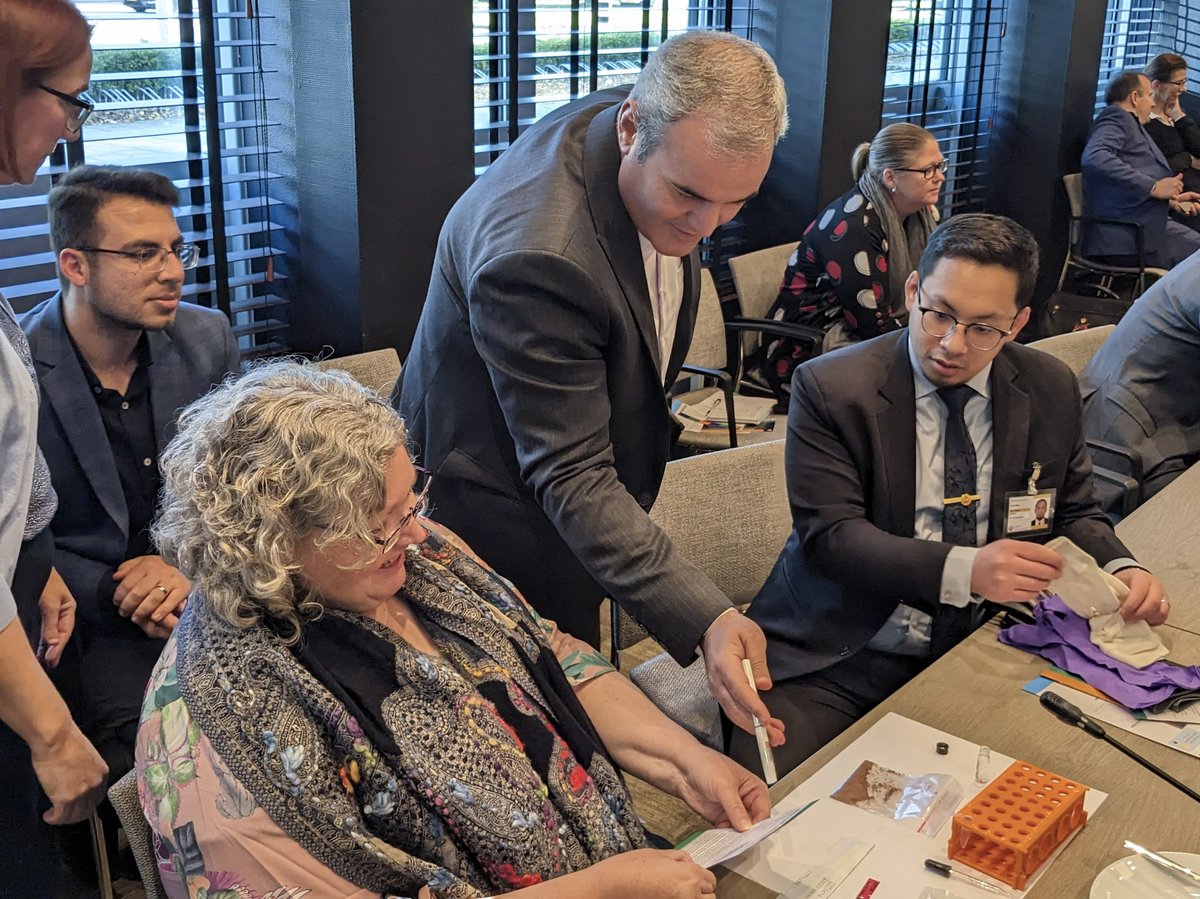
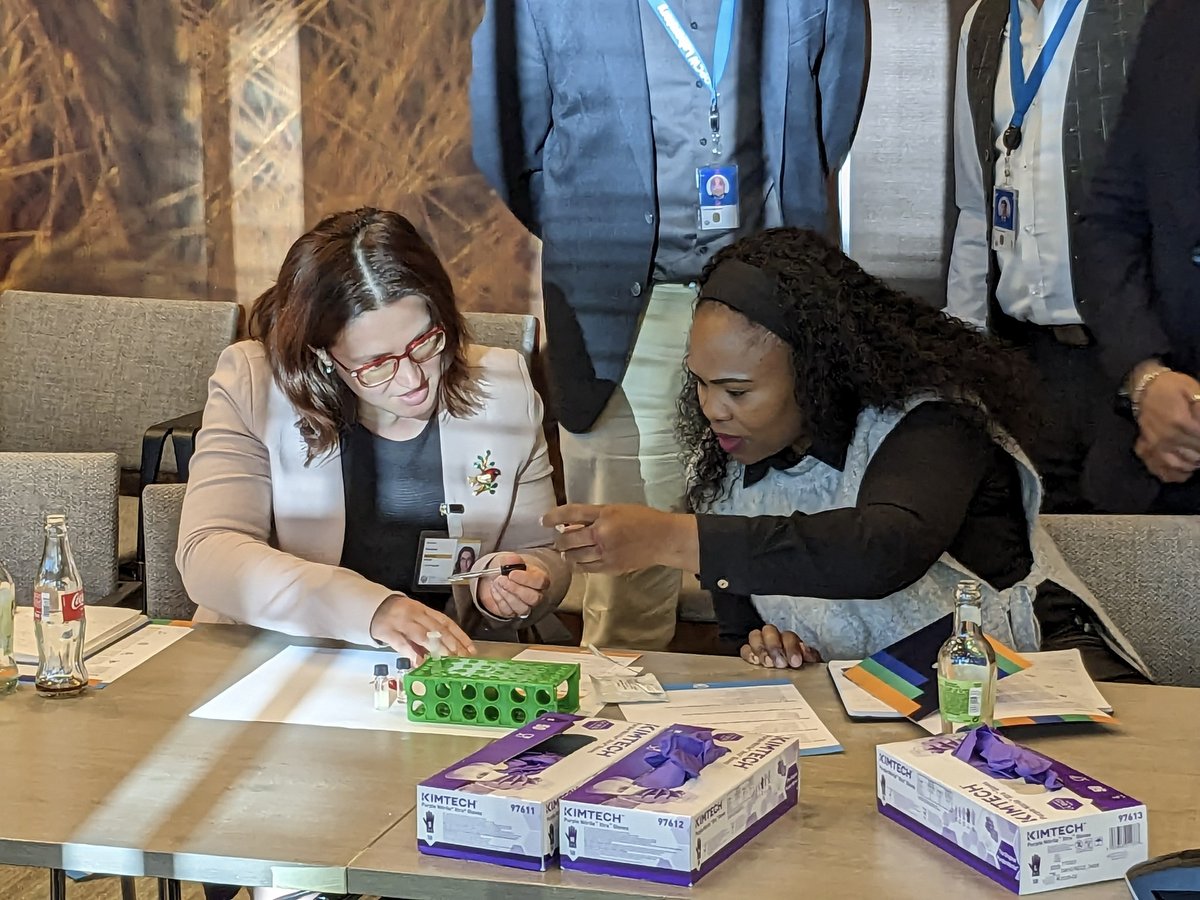
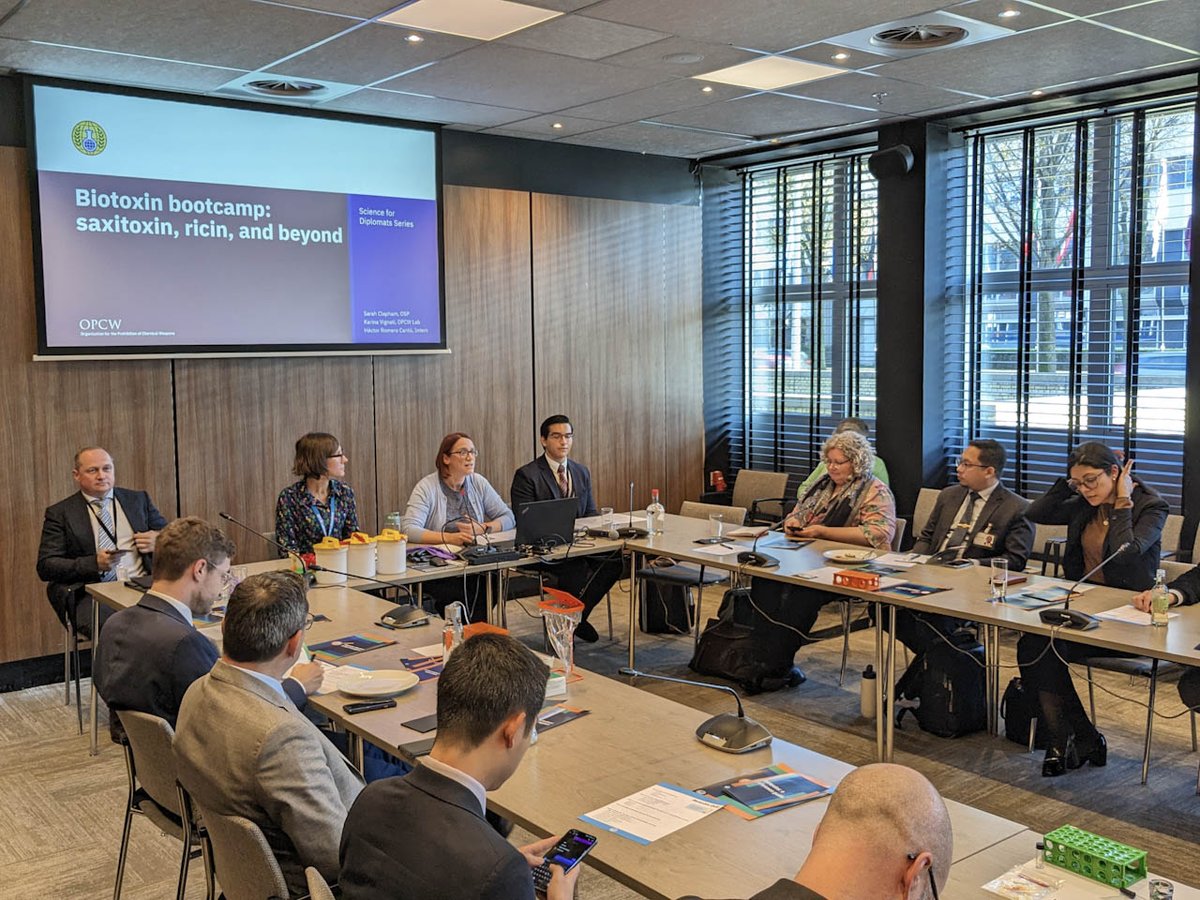
At #CSP28, the #OPCW presented ‘Science for Diplomats’, a knowledge-sharing initiative where experts engage diplomats on science and technology relevant to the CWC.
Today at #CSP28, a side event was organised by 🇳🇱 and 🇺🇸 on Riot Control Agents as a method of warfare including a presentation on the #OPCW Scientific Advisory Board’s 2017 report on RCAs. The SAB examined the range of chemicals that have been considered or declared as Riot Control Agents, and provided independent scientific advice for the OPCW to consider.
#Science allows the 🌍 to congregate around objective facts where common ground can be found.
@usembthehague@NLatOPCW
'Science for Diplomats' is an #OPCW knowledge-sharing initiative where experts engage diplomats on science and technology relevant to the #ChemicalWeaponsConvention. Today's interactive presentation focused on scheduled #chemicals and newly scheduled nerve agents.
#CSP27
'Science for Diplomats' is an #OPCW knowledge-sharing initiative where experts engage diplomats on science and technology relevant to the #ChemicalWeaponsConvention. Today's interactive presentation focused on scheduled #chemicals and newly scheduled nerve agents.
#CSP27
'Science for Diplomats' is an #OPCW knowledge-sharing initiative where experts engage diplomats on science and technology relevant to the #ChemicalWeaponsConvention. Today's interactive presentation focused on scheduled #chemicals and newly scheduled nerve agents.
#CSP27
This week #OPCW's Scientific Advisory Board held its first in-person session since the start of the pandemic.
The SAB is comprised of 25 independent experts and advises the OPCW Director-General on #science and #technology issues relevant to the #ChemicalWeaponsConvention.
🧪Science sits at the heart of the Chemical Weapons Convention
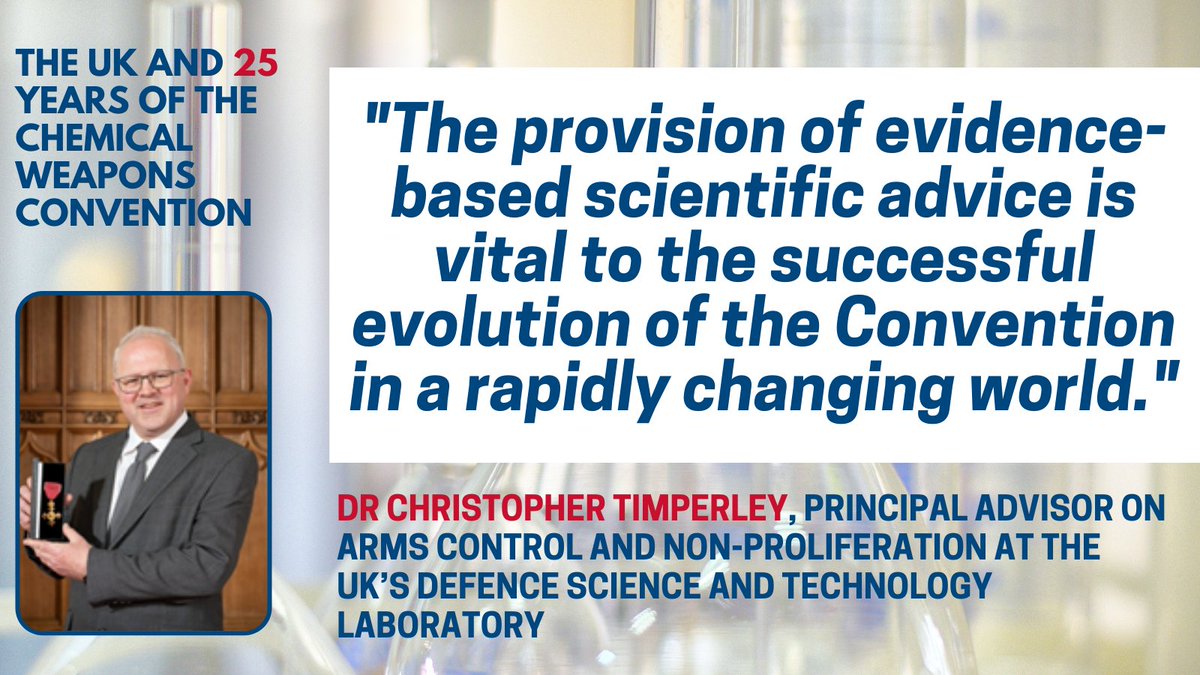
Our next guest blog celebrating #CWC25#OPCW25 comes from Dr Christopher Timperley
Dr Timperley is Principal Advisor on Arms Control and Non-Proliferation at @dstlmod
Read his thoughts: https://t.co/e7mng0EJYu
📢Our team is also hiring a "Project Consultant BWC Science & Technology"!
📍The position is home-based (travels expected)
🗓️Application deadline: 06 March 2022
Find out more about the role and how you can apply here 👉https://t.co/chND1oV5MC
📢Our team is also hiring a "Project Consultant BWC Science & Technology"!
📍The position is home-based (travels expected)
🗓️Application deadline: 06 March 2022
Find out more about the role and how you can apply here 👉https://t.co/chND1oV5MC
When combating public health crises like the opioid epidemic, knowledge is power.
Learn how new PNNL research is updating the libraries used by first responders to identify and understand hazardous substances like fentanyl they encounter in the field: https://t.co/5l0Y3ZwBz9