Refining my skills in genomic analysis 🧬
This time, taking a deeper dive into #Ensembl and #VEP with Jorge Batista da Rocha. A really interesting workshop by @emblebi and @iscbsc!
#Bioinformatics#Genomics
🧬🎉 DAY 3 RECAP | Exploring Genetic Variants with Ensembl VEP! 🔍
And that’s a wrap! 🚀 The final session of the ISCB-SC × EMBL-EBI EduSearch Series with Ensembl brought our three-day genomics learning journey to a close with a deep dive into genetic variant analysis.
🔬 Session 3: Ensembl Genome Data Platform — Using the Ensembl Variant Effect Predictor to Annotate and Explore Variants
Our speaker, Jorge Batista da Rocha (Ensembl Outreach Project Leader, EMBL-EBI), introduced participants to the Ensembl Variant Effect Predictor (VEP), demonstrating how genetic variants can be annotated and explored to better understand their potential effects on genes and biological processes.
A huge thank you to Jorge for sharing his expertise, and to all the participants who joined us throughout these three sessions! ❤️
🌍 Three days, three sessions, one shared goal: making genomic data more accessible to everyone.
We’re grateful to the Ensembl team at EMBL-EBI, ISCB Student Council, and our collaborating Regional Student Groups — RSG-India, RSG-Nigeria, and RSG-Türkiye — for making this learning initiative possible.
Thank you for being part of the EduSearch journey. Stay tuned for more opportunities to learn, connect, and explore bioinformatics together! 💻✨
#Ensembl #Bioinformatics #Genomics #VariantEffectPredictor #VEP #ComputationalBiology #EMBLEBI #ISCBSC #EduSearch
@ensembl@RSG_nigeria@ISCB_RSG_India
🎉 ¡Paso histórico! El Real Decreto 1025/2026 reconoce por primera vez la Biología Computacional y Bioinformática como especialidad de conocimiento en la universidad española.
Una reivindicación de toda nuestra comunidad que hoy se hace realidad. 🧬💻
👉 https://t.co/E7zKONnwQW
@unirioja Podéis recuperar la charla que impartí a doctorandos de la @unirioja sobre ética e integridad en la investigación científica en este video del canal de YouTube la universidad, a partir del minuto 18'25''
@hebusto@CNB_CSIC@CSIC@CIBER_ISCIII@SEBBM_es
https://t.co/pnSsJqzjVB
🌱💻 We're hiring! The IBMCP Bioinformatics Core Facility is looking for a Bioinformatics Specialist to support omics data analysis, reproducible workflows, Linux infrastructure and researcher training.
📅 Deadline: 15 December
👉 https://t.co/qvaYFAa77x
@CSIC@UPV
🧬🌱 Did you know that a protein can change its function simply by moving to a different part of the cell?
Researchers at CRAG have uncovered how the protein AGO1 travels between the nucleus and the cytoplasm to control gene silencing in plants.
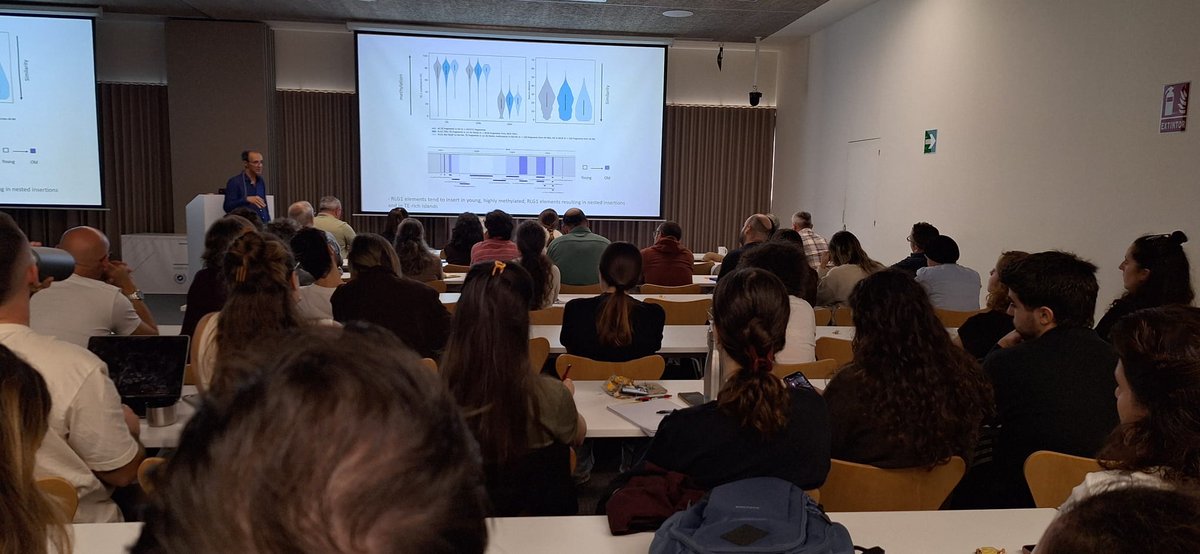
🗣️ Today, the researcher Josep Maria Casacuberta from the Centro de Investigación en Agrigenómica (@cragenomica) came to visit us to share his research with an amazing talk as part of our #IHSMLaMayoraSeminars series
chatomics! How to level up Real-life bioinformatics skill: from dealing with one sample to a lot of samples. with a real example! #bioinformatics https://t.co/BQA4ykC1i8
🧬Parte del ADN repetitivo puede contribuir a controlar genes situados a gran distancia
🔎Un estudio con participación del IBBTEC revela el papel de KMT2B y los elementos LINE-1, con apoyo de una @ERC_Research
https://t.co/4pmNFsdDOl
🔬 Hoy, 7 de noviembre, recordamos a 3 pioneras de la ciencia: nacían Marie Curie (radiactividad) y Lise Meitner (fisión nuclear) ⚛️, y nos dejaba Margarita Salas (biología molecular) 🧬
Un legado inolvidable, descubre más sobre ellas en @mujerconciencia https://t.co/IsHqUt08ZU
🏆 Ángel Carracedo Álvarez, PNI 2026 Gregorio Marañón en Medicina y Ciencias de la Salud.
Por su trayectoria en medicina forense y genómica. Es catedrático de Medicina Legal en la Universidad de Santiago de Compostela (@UniversidadeUSC).
Today marks the final day of “R para todos: El poder para explorar tus datos”! 📊
Throughout this course, @adagoiz_so has introduced us to essential concepts and tools for managing and analyzing large datasets using #RStudio.
A great learning experience! 🚀 #DataScience
I've been exploring #Positron these past few days. Having Python and R in one IDE seems useful for #bioinformatics.
I've been writing Python functions for BLAST+ (BLASTN, BLASTP and makeblastdb) to reuse in future projects. I'll keep expanding the toolkit!
Carlos Guzmán has been included in the Stanford/Elsevier “World’s Top 2% Scientists” ranking, the international list that identifies the world’s top 2% most-cited scientists.
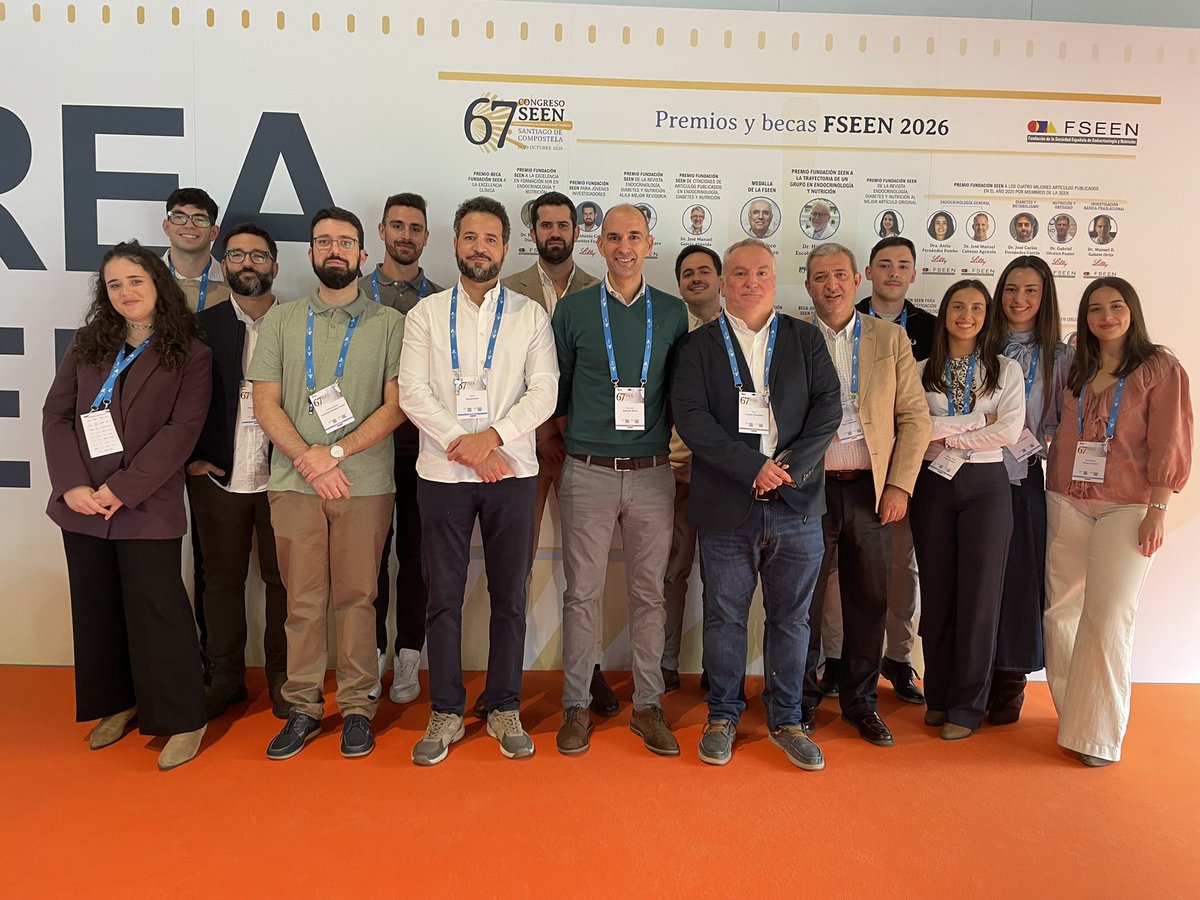
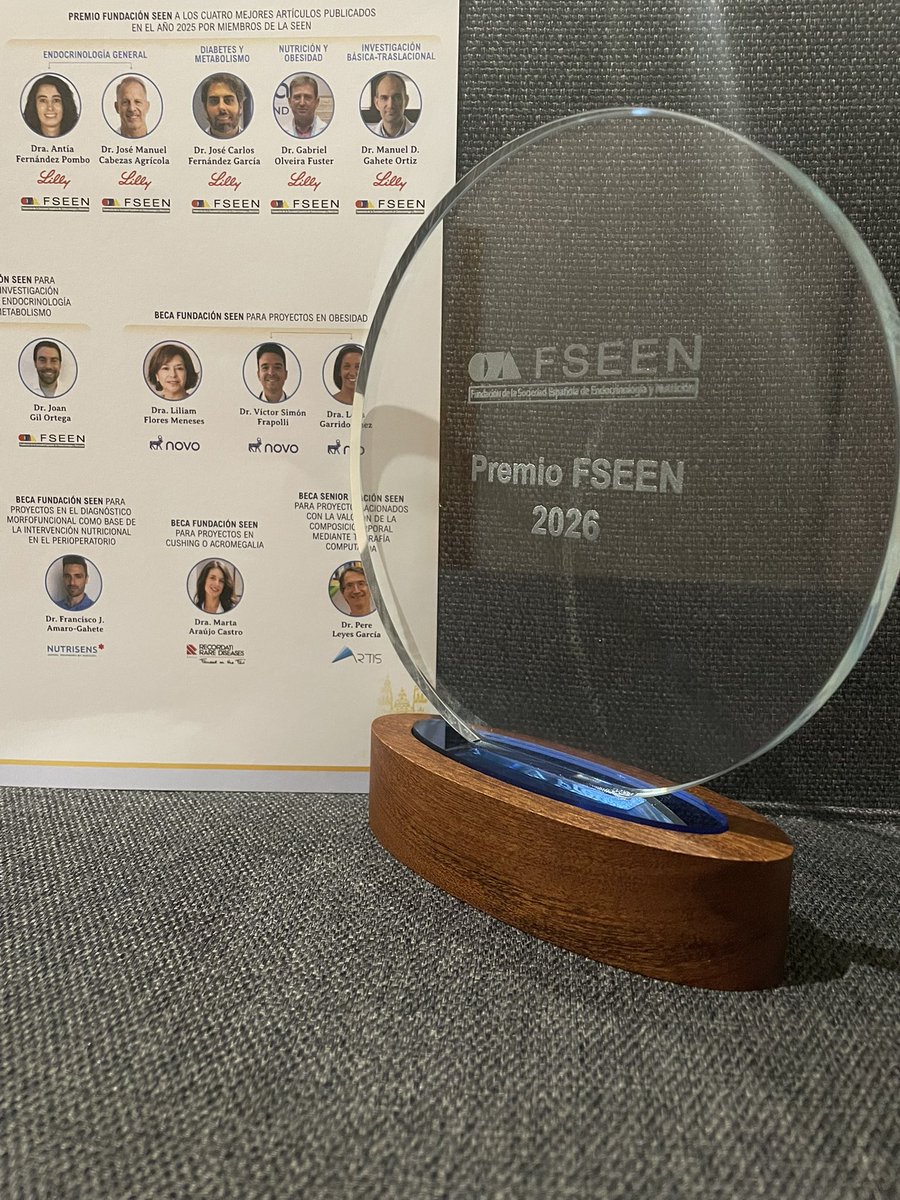
🏆 Cerramos #SEEN2026 con una gran alegría: ¡Premio a la Mejor Publicación en Investigación Traslacional! 🔬👏
Gracias a la @SociedadSEEN y a todo el equipo de @MolHepatolGC30. Este premio es fruto del esfuerzo, el compromiso y el trabajo conjunto.
¡haciendo ciencia en equipo!
The tidyplots package is an excellent tool for creating data visualizations in R. But the package itself is not the only highlight. It also comes with exceptionally well-written documentation.
Jan Broder Engler, the developer of tidyplots, has not only created the package but also written a full paper that explains how to use it in practice. The tidyplots paper is a great example of how package documentation can be done well. It clearly introduces the main ideas behind the package and shows how complex visualizations can be created with concise and readable code.
Throughout the paper, the tidyplots workflow is explained step by step. It shows how the package builds on ggplot2 while adding convenient helper functions and a tidyverse-style syntax. This approach makes it easier to create clean and consistent plots without writing long and complicated ggplot2 code.
Another strong aspect of the paper is the combination of explanations and practical examples. This makes it easy to follow along and understand how different types of visualizations are created while keeping the syntax consistent across tasks.
If you want to improve your data visualization workflow in R, the tidyplots paper is definitely worth reading. You can find it here: https://t.co/FhqkEY0N6b
If you would like to explore topics like this further, you can join my newsletter where I regularly share tips on statistical methods, data science, AI, and programming in R and Python.
Further details: https://t.co/ktUcWo9XpO
#Data #Python #programming #DataAnalytics #ggplot2 #datascienceeducation #datavis #DataVisualization #RStats