Dr. Tess Lawrie: Who Is Really in Charge?
The United States has officially withdrawn from the World Health Organization. Dr. Tess Lawrie, a former WHO consultant and co-founder of the World Council for Health, has a sobering assessment of what that actually means.
Del Bigtree sits down with Dr. Lawrie to walk through a two-year investigation conducted by Australian nurse Lucinda Van Buren, who began asking questions after her hospital was designated a WHO Collaborating Center and she was threatened with termination for refusing the Covid vaccine.
What Van Buren found, working entirely voluntarily and without pay, is that the WHO is not the source of global health policy. It is the messaging and implementation tool for a network of over 800 WHO Collaborating Centers operating in 80 countries, with 70 active centers in the United States alone.
These centers, embedded in universities, government agencies, and research institutions, receive funding through private partnerships with pharmaceutical companies, philanthropic organizations, including the Gates Foundation, and corporations.
The WHO's own guide describes the arrangement as a win-win, with collaborating centers gaining access to "funding opportunities from private partners." The WHO sets the public-facing narrative. The collaborating centers set the agenda behind it.
When the U.S. withdrew from the WHO, it stopped contributing a relatively small government funding share. The 70 collaborating centers remained in place. The infrastructure did not change.
The investigation surfaces several specific findings. The FDA's Center for Biologics Evaluation and Research holds a WHO Collaborating Center designation and was the body that rubber-stamped the Covid vaccines for global distribution, with Peter Marks on record as the FDA's point person for Covid vaccine safety.
The CDC's Viral Special Pathogens Branch, operating under its Division of High Consequence Pathogens and Pathology, has published research on Lassa fever, Crimean-Congo hemorrhagic fever, hantavirus, Marburg, and monkeypox. Its leadership has military backgrounds, including work at a zoonotic research unit in Peru. The CDC was set up in 1946, the same year as the WHO, with origins traceable to Rockefeller Foundation-funded naval military research units tasked during World War Two with finding pathogens of military importance.
Its first major public health recommendation was DDT spraying, later found to cause polio-like symptoms and neurodegenerative disease. Johns Hopkins University holds a collaborating center designation specifically tied to WHO's Immunization 2030 agenda, a program targeting vaccination from birth through old age, with a library of 500 vaccines planned by 2030.
Dr. Lawrie also notes that after she presented the collaborating center data at a meeting in October, the WHO's publicly accessible collaborating center database was taken down. FOIA requests sent to U.S. collaborating centers have been largely ignored.
The Better Way Conference, the World Council for Health's first U.S. event, is taking place in Providence, Rhode Island. Speakers include Bret Weinstein, Dr. Bryan Ardis, and Jan Jekielek. Del will serve as emcee on day one.
Livestreaming is available for those who cannot attend in person, and HighWire viewers receive a 10% discount with code HIGHWIRE10. You can purchase tickets here: https://t.co/plme4BlQd4
Donations to support the ongoing investigation can be made at https://t.co/veBLuKbb7Z.
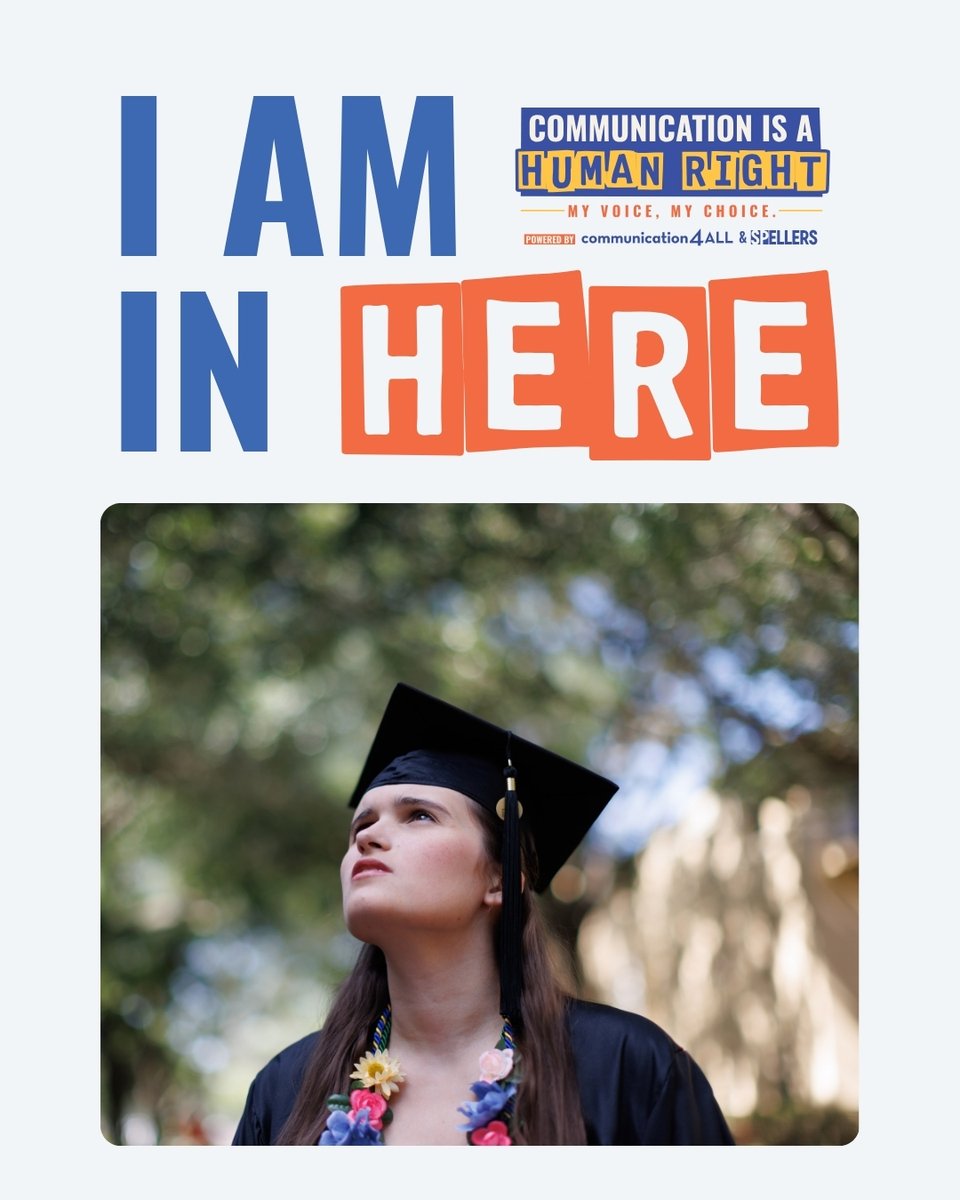
@HawaiiAutism ✊ Join us in taking action for and with typers! From California, where typers are being denied funding for their devices in regional centers, to NY, where the Communication Bill of Rights has been gutted by @PatFahy46, we must fight back together.
https://t.co/ALJH9F5pyr
@HawaiiAutism 🔠 Typing opens lives, giving access to education, relationships, dreams, freedom, and more.
If you are a typer, join C4A, SPELLERS Freedom Foundation, and @HawaiiAutism by telling your story! Tell us how text-based communication became your voice, and what freedom feels like.
@PatriciaFahy46 💪 Same fight. Two coasts. Right now. This is why this campaign exists. Please join us in uplifting Autistic nonspeakers this #AutismAction April!
https://t.co/nFYZUgOLxC
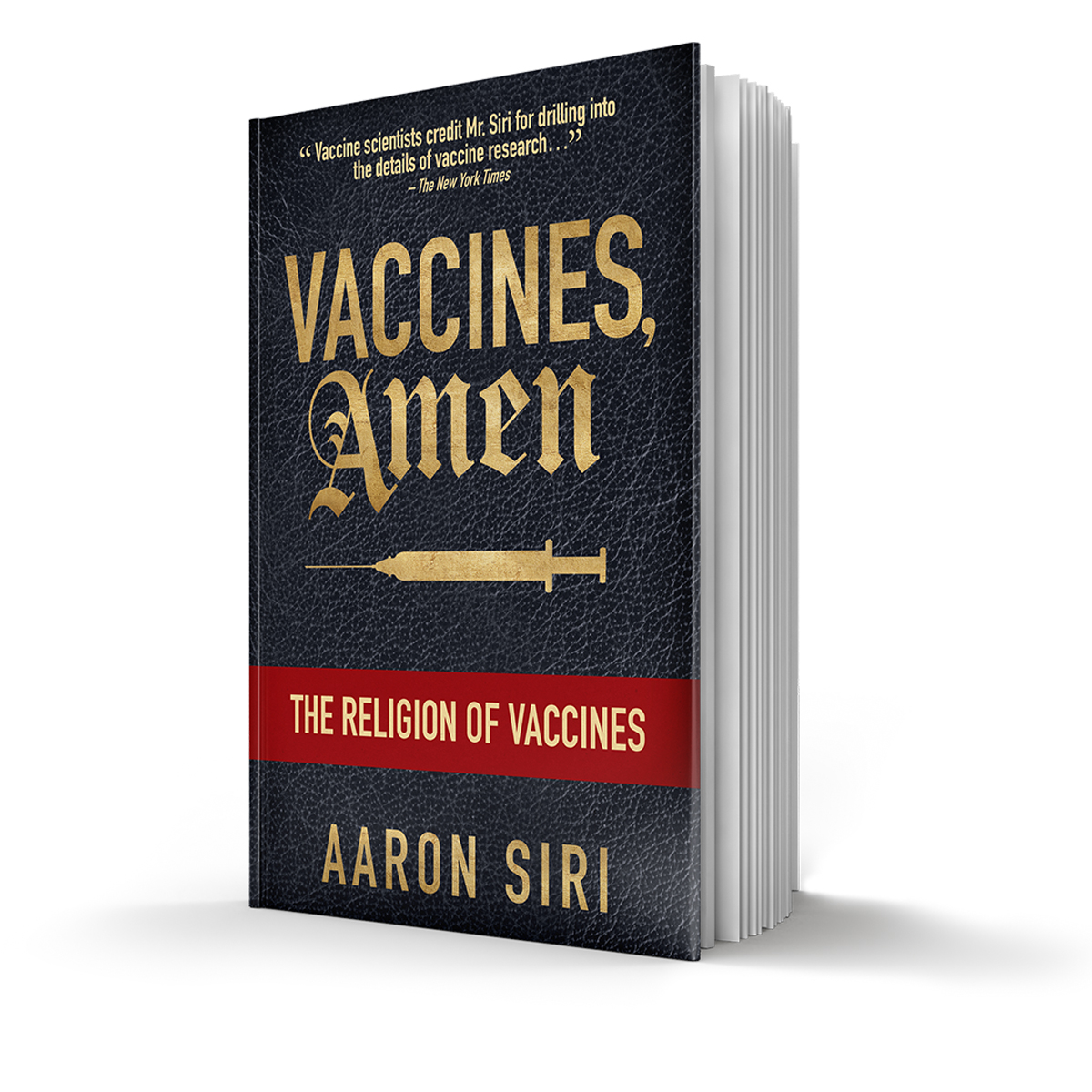
An excerpt from the intro to Vaccines, Amen:
Ever hear someone say, “I believe in cars” or “I believe in tools”? I cannot recall ever hearing anyone say they believe in a certain product. But I hear people say, “I believe in vaccines” all the time, especially in response to evidence regarding vaccines.
The expression “I believe in vaccines” carries a truism. The properties often attributed to vaccines require faith. Belief. This is because most claims about vaccines are not grounded in evidence. They are beliefs. It is why challenging claims about vaccines—meaning challenging beliefs—often results in an emotional, not logical, reaction.
This is also why wading into this topic is not for the faint of heart. Nor is it for anyone seeking to avoid controversy. Just the word “vaccines” evokes emotions for many.
Falling Into Vaccine Law
For this reason, among many others, I likely would have laughed if someone had told me eighteen years ago that I would be managing a law firm, with over 100 professionals, working on vaccine injury, exemptions, and policy. Back then, I was working on high-stakes, multi-billion-dollar lawsuits at one of the country’s premier law firms. Even after starting my own law firm over a decade ago, I continued to handle mostly high-stakes business litigation matters.
Then, one fateful day, I learned something I could not unlearn: of all the corporations I was defending, I would likely never have to defend a pharmaceutical company against claims that children were seriously injured or killed by a vaccine. Why? Because in 1986, Congress granted these companies financial immunity for injuries caused by childhood vaccines in a law titled the National Childhood Vaccine Injury Act (the 1986 Act).
I learned that, because of the 1986 Act, parents of seriously injured or deceased children must sue the federal government’s health department, instead of the company that profited from the product that harmed their children. From that one data point, my journey regarding vaccines began. What I have uncovered along the way has frequently been unbelievable.
This journey, spanning over a decade of litigating vaccine lawsuits of all stripes across the country, has been unique. This is partly because, unlike doctors, who can appeal to their credentials, I do not get to just say, “trust me.” I need to prove claims I assert with real data. Real proof. Something that will hold up in court. Non-authoritative science will not do. Unreliable data will not do. This means my vaccine litigation work requires me to study the primary sources and carefully review and scrutinize the studies and data that support each claim.
In the course of that legal work, I have worked with well over a hundred immunologists, infectious disease doctors, pediatricians, and other medical professionals. I have deposed these specialists as well, including the world’s leading vaccinologists. This work requires an understanding of vaccinology, immunology, infectious disease, and pediatrics, among other disciplines, with regard to these products. Want to talk about any other drug, medical procedure, etc.? I am not your man. But vaccines, those I know.
Incredibly, most of the information needed to understand vaccine safety is freely available on federal government websites and public databases. Most doctors and parents never bother to look or don’t know it exists. Those who do know and look often learn things they cannot unlearn.
Parents Who Do Not Vaccinate
According to the CDC and public health authorities, parents who choose not to vaccinate their children are typically highly educated. CDC data reflect that half of American children are not fully vaccinated, and at least 1 in 88 toddlers in America are completely unvaccinated. Why would the parents of these children, constituting a large part of the nation’s brain trust, choose not to vaccinate their children?
After all, parents who choose not to vaccinate are, as the CDC laments, typically very highly educated. They are often scientifically literate. Many are medical professionals. Leading scientists. What is it that they have learned or experienced that convinced them to forgo what many believe is the greatest medical achievement of all time?
The answer, I have found, is that they often have had an experience which caused them to scratch below the surface of common conclusory statements about vaccines. They seek the substance that underpins these statements. What they then learn, they cannot unlearn. Cannot unsee.
As an ardent vaccine promoter, Emily K. Brunson, MPH, PhD, explains about those who choose not to vaccinate: “I think we need to avoid the trap of thinking that information or knowledge is enough, because for a lot of the people, and when you look at hesitancy and parental vaccine hesitancy in the US, the group who is most likely to purposefully choose to not vaccinate are highly educated. In speaking with them, these are people who have read the primary literature themselves, and they’re correctly interpreting it, so it’s not a misunderstanding.”
Keep in mind that for those who choose not to vaccinate, that choice often comes with serious consequences. Including expulsion from school. Exclusion from social circles. Being labeled anti-science or worse. It also requires overcoming powerful, almost crushing societal pressure to vaccinate one’s child, and rejecting the near-universal advice of public health agencies. Choosing not to vaccinate is not for the faint of heart and, in my experience, is rarely a decision made lightly. Meaning whatever these parents learned, it must have been powerful enough to overcome incredible social pressures and penalties.
This also comports with my experience that in many cases, parents do not choose to not vaccinate. They choose to stop vaccinating. Their completely unvaccinated children often have an older sibling who is partially vaccinated. But, even among those with a personal experience, it is those who carefully investigate vaccine products who typically reach the conclusion to not vaccinate with sufficient intellectual rigor and confidence to overcome the powerful societal pressures and penalties of not vaccinating.
Other than knowledge and experience, I have found that those choosing to not vaccinate hail from nearly every demographic, race, ethnicity, religion, and walk of life. They are scattered almost haphazardly across all verticals and horizontals of American life, with the only real predictive clustering being around those who use their intellect to research these products.
Vaccine Zealots
There is something else I found surprising in my journey regarding vaccines. The popular conception is that those who do not vaccinate are fanatics. Anti-science. Irrational. Emotional. Zealots. But my experience has generally been the opposite.
To be sure, there are some who take issue with vaccines who meet the foregoing description. They are also the ones who can often be the loudest. But they are, in my experience, the very tiny but vocal tip of the iceberg. The remainder—submerged silently and quietly under the water, not wanting any publicity of any kind, and who do not dare speak their views in mixed company—make up the vast majority of those who choose not to vaccinate. These folks, as a group, are highly knowledgeable and educated about these products. They can speak rationally about them. They are typically science-literate and put that ability to good use in researching these products. They are far from zealots. They are just parents seeking to make good decisions for their children.
As for parents who do vaccinate, almost all such parents I have met appear to have never really thought much about these products, nor have they viewed this as a decision to be made. They just go with the flow. They have never encountered any issue with their children that they have associated with vaccination. They often do what the media typically says good parents are expected to do—trust their doctors. That is not to say they do not hold orthodox views about vaccines, but those views are susceptible to change upon presentation of actual evidence.
Then there is what I call the “Vaccines Amen” crowd. This is the group of parents, doctors, and public health professionals I have dealt with—a small army of them—who have a fervent belief in vaccines. This group is often impervious to reason or data, even when it is provided from their oracle, the CDC. This group attributes properties to one or more vaccines that simply do not exist. They overstate the benefits and cannot accept even official government data showing that many of their core beliefs regarding vaccines are false. When these beliefs are challenged, this crowd gets angry. They often entrench and, instead of addressing the evidence or accepting the clear reality, demand instead that everyone must adopt their beliefs. And for those who refuse to adopt their beliefs, they demand that the refusers be censored, have their rights taken away, and be mandated to be injected. This is the “Vaccines Amen” crowd.
Let me put it this way: the fanatics are not those who choose not to vaccinate. The fanatics are those who think everyone must be vaccinated whether or not they want to engage in this medical procedure. Let me also state that I think most pediatricians, doctors, and public health authorities mean well. They believe they are engaging in God’s work. And that is often the problem that makes them blind to reality.
The title of this book, Vaccines, Amen, comes from this ironic and strange reality I live in every day in which the so-called “antivaxxers” I encounter are often very knowledgeable about the primary sources underpinning the purported safety and efficacy of these products. They often can discuss the literature, pre- and post-licensure, calmly and rationally. They can certainly be upset that their child has been excluded from school, but they are not emotional about the actual products they have chosen not to give their child. Discussing those, these parents are rational.
On the flip side, I have found the opposite to be the case among the Vaccines Amen crowd, including a significant proportion of medical professionals. When challenged about vaccines, they are often emotional about the products themselves. They lack an understanding of the pre- and post-licensure literature and much else about these products. They regurgitate canned answers they have never researched—essentially mantras. When these mantras are challenged with evidence, it causes cognitive dissonance that often results in anger or a similar emotional response, not a logical response. Most critically, their beliefs in these products persist despite clear, unequivocal evidence to the contrary. This is why I call them “beliefs”—because that is what they are.
Choosing to vaccinate is an important decision that should not be made based on dogma. It should be based on evidence. And you are more likely to receive factual, evidence-based information about vaccines from someone who has been required to litigate and prove or disprove claims made about vaccines with evidence, than you will from someone who just repeats mantras about these products. It is also why the claims in this book are supported by citation to primary sources or reliable evidence.
Parents will spend hours researching before choosing to buy or lease a car or a house. Stress over car seats and stroller purchases. Research which foods are healthiest. It similarly behooves all parents to give the same level of attention to understanding the dozens of products—and they are products—pharmaceutical companies and the CDC seek to inject into their children. Whatever you choose, let me suggest doing so from a place of knowledge.
My Bias
My personal ideological position regarding vaccines is that vaccines should not be mandated. Everyone should be able to get a vaccine, any vaccine, and get as many as they want. But civil and individual rights demand that no one should be coerced into receiving an unwanted medical product or procedure, including a vaccine.
In fact, my rule of thumb is that the more a product needs to be coerced, the more one should be concerned about that product. Parents who make the often socially ostracizing, rights-crushing decision to not vaccinate often have a good reason. Yet, it is these same parents, and their children, who vaccine mandates adversely impact.
Do some vaccines have potential benefits? Yes. Virtually every drug has some benefit. That is even true of most drugs withdrawn from the market due to serious safety or efficacy issues. That does not mean every drug makes sense for every person. It does not mean the potential benefits outweigh the risks. It does not mean that reasonable minds cannot differ on this calculus. They can. Some may choose a speculative benefit even where there is a known harm, and vice versa. The point is that there must be liberty to choose.
The right to choose is certainly my bias, and I tried to keep that bias in mind as I drafted and presented the facts and information in this book. Meaning I sought to be as objective as possible. For that reason, and because there is skepticism regarding any statements made regarding vaccines, as noted, the proof to support each material assertion is included within this book.
Now, I would love to jump into vaccine safety because it is probably the most interesting part of this book, but I know many cannot hear anything about vaccine safety without yelling or wanting to yell, “we must trust the experts!” or “we would all be dead without vaccines!” So, the first three parts of this book will address those claims before we get to vaccine safety in Part IV.
With that—hold on tight. You are about to learn things you can never unlearn.
Amazon: https://t.co/WGMHbkhPL4
Moderna’s new C-19 vaccine was licensed because FDA found it as “safe” as Moderna’s current C-19 vaccine. How comforting.
2.7% of serious adverse events in the old and new C-19 vaccine groups were apparently written off by FDA because the rate in each group was similar, hence “safe” by FDA standards; but not safe by any logical, thinking, caring person’s standard. When did we get to the point where this is acceptable?
MNEXSPIKE Package Insert: https://t.co/hUYACGDawc
Serious Adverse Event: https://t.co/u2iHUCLf5G
Thank you @SenRonJohnson for bravely standing up for the vaccine injured and making it possible for this document, detailing so much that has gone wrong with our nation's vaccine program, to now reside on the U.S. Senate website. Truth uncaged. https://t.co/55IAoibsU7
WATCH NEW CUT OF FOLLOW THE SILENCED!
Traditionally, movie studios have final say over a film’s edit. Directors sometimes get the chance to release a “director’s cut” — typically a longer version that restores scenes left on the cutting room floor.
But have you ever heard of a shorter producer’s cut? Neither had we… until now.
Follow The Silenced premiered globally on May 15, 2025, to overwhelmingly positive reviews. Audiences praised its message and impact. The one consistent critique? It’s a bit long.
Because we genuinely value our audience, the producers of Follow The Silenced are proud to present this producer’s cut — same powerful story, same uncompromising message, just a little tighter.
Please watch, and share if you care!
You can download the film for free at followthesilenceddotcom