Lipidologist, Director of CV Disease Prevention, Lipid Clinic, McConnell Heart Health Center, Columbus, Ohio. National Lipid Association, 🏊🏽♂️⚽️🏒#CBJ 🏀🚀🐶
Will be starting a series on how to interpret the lipid panel (profile). When I analyze the panel, I proceed in this order: (1) TG, (2) Non-HDL-C, and then it does not matter in what order you proceed: Total Cholesterol, LDL-C & then HDL-C. You might be surprised to see how TG are measured. Note apoB and Lp(a) are not part of the lipid panel. @nationallipid@escardio@escardio@atherosociety@FamilyHeartFdn
Any ratio using HDL-C is very inadvisable. Labs need to stop reporting it and clinicians need to stop looking at it and for sure never under any circumstances make clinical decisions using it
Cholesterol Connect® can help to address the heart disease crisis in our country through FREE screening and no-insurance required access to a Family Heart Care Navigator (personalized support about your lab results, concerns).
Order your test: https://t.co/ydlYhZGLjq #KnowLpa
98.9% of the 60million+ people living with Lp(a) have NEVER been screened. Lp(a) is a genetic driver for heart attack/stroke. We can help millions of Americans at risk for cardiovascular disease test their levels and learn how to stay in the ‘safe zone’-LDL recommended levels.
Role of apolipoprotein B in the clinical management of cardiovascular risk in adults: An Expert Clinical Consensus from the @nationallipid@LipidJournal@dan_soffer@CBallantyneMD @jpenamd @SethShayMartin - 👏 https://t.co/FfqYC9NnOW Highlights 👉
➡️ApoB and non-HDL-C stratify ASCVD risk more accurately than LDL-C.
➡️Discordance between apoB and LDL-C, and non-HDL-C and LDL-C, is common.
➡️With discordance, apoB and non-HDL-C correlate more closely with ASCVD risk.
➡️ApoB thresholds are proposed that may be considered for treatment intensification.
There is the need to evaluate levels of circulating ApoB, in association to LDL-C and non-HDL-C, as marker of cardiovascular risk in diabetic patients not only in tertiary care settings. Read this review to know why 👉 https://t.co/adoUEPbSLm
@ELS_Cardiology @society_eas#CVPrev
Excess Apolipoprotein B and Cardiovascular Risk in Women and Men | Journal of the American College of Cardiology https://t.co/BzKly2p9pz
ApoB provides important predictive value beyond LDL-C…
See editorial same issue.
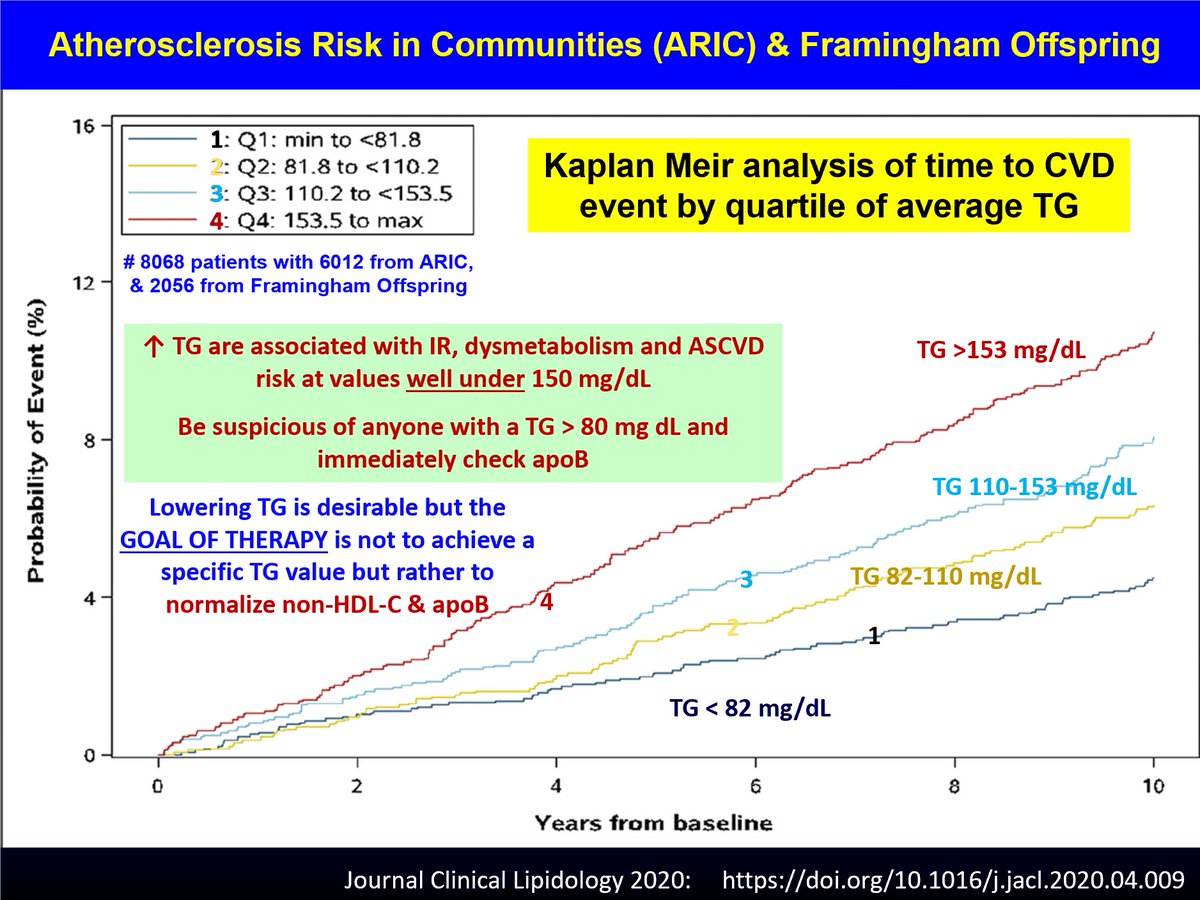
Clinical interventions suggest ApoB-containing lipoprotein may be more relevant than triglyceride and cholesterol composition
🔗https://t.co/adoUEPbkVO
@ELS_Cardiology @society_eas#CVPrev#EASSoMe
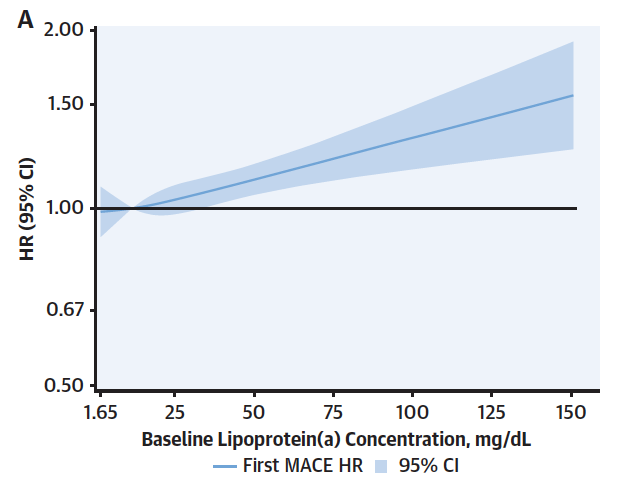
A new and important paper from JACC on EPA and Lp(a) from REDUCE-IT. Baseline Lp(a) was highly predictive of events in people with high TG and controlled LDL-C, and risk was linear, not threshold. EPA was a/w benefit irrespective of Lp(a) levels. Expands data to people with high TGs, and also more data that Lp(a) risk is independent of LDL-C and apoB. Now we need to wait for outcomes data on Lp(a) lowering.
https://t.co/f3x06ooB1C
👉Mixed plaque on coronary CT angiography predicts atherosclerotic events in asymptomatic intermediate-risk individuals
☝️WHAT THIS STUDY ADDS
The presence of mixed plaque on CCTA is associated with an increased risk of long-term major adverse cardiovascular events (MACEs) in asymptomatic patients at intermediate risk of cardiovascular disease. The non-calcified plaque segment stenosis score is a superior predictor of long-term MACE than CAC score
☝️HOW THIS STUDY MIGHT AFFECT RESEARCH, PRACTICE OR POLICY
Contemporary primary prevention strategies using non-invasive imaging may be better focused on identifying non-calcified plaque rather than coronary calcification in light of our study findings. Future randomised, prospective trials are required to determine whether initiation of treatment based on the presence of mixed plaque on CCTA significantly impacts outcomes.
🔓Open access
https://t.co/yeITaNqMWw
When patients don’t get PCSK9i treatment, they live at increased risk of heart attack or stroke. No one should lose a loved one bc an insurance company denial. Increasing fair access is a crucial step to saving more families & more hearts. #KnowFH#KnowLpa#Access
I still don't understand why colchicine continues to be disrespected - three positive outcome studies and CCTA plaque studies showing benefit, all for a 2a recommendation? https://t.co/3hiEYBxo8A
There are lots of advances coming in the fight against cardiovascular disease. But maybe the one that will have the most impact will be our ability to overcome clinical inertia and realize we need to aggressively treat CVD risk factors about 20 years sooner than we currently do.
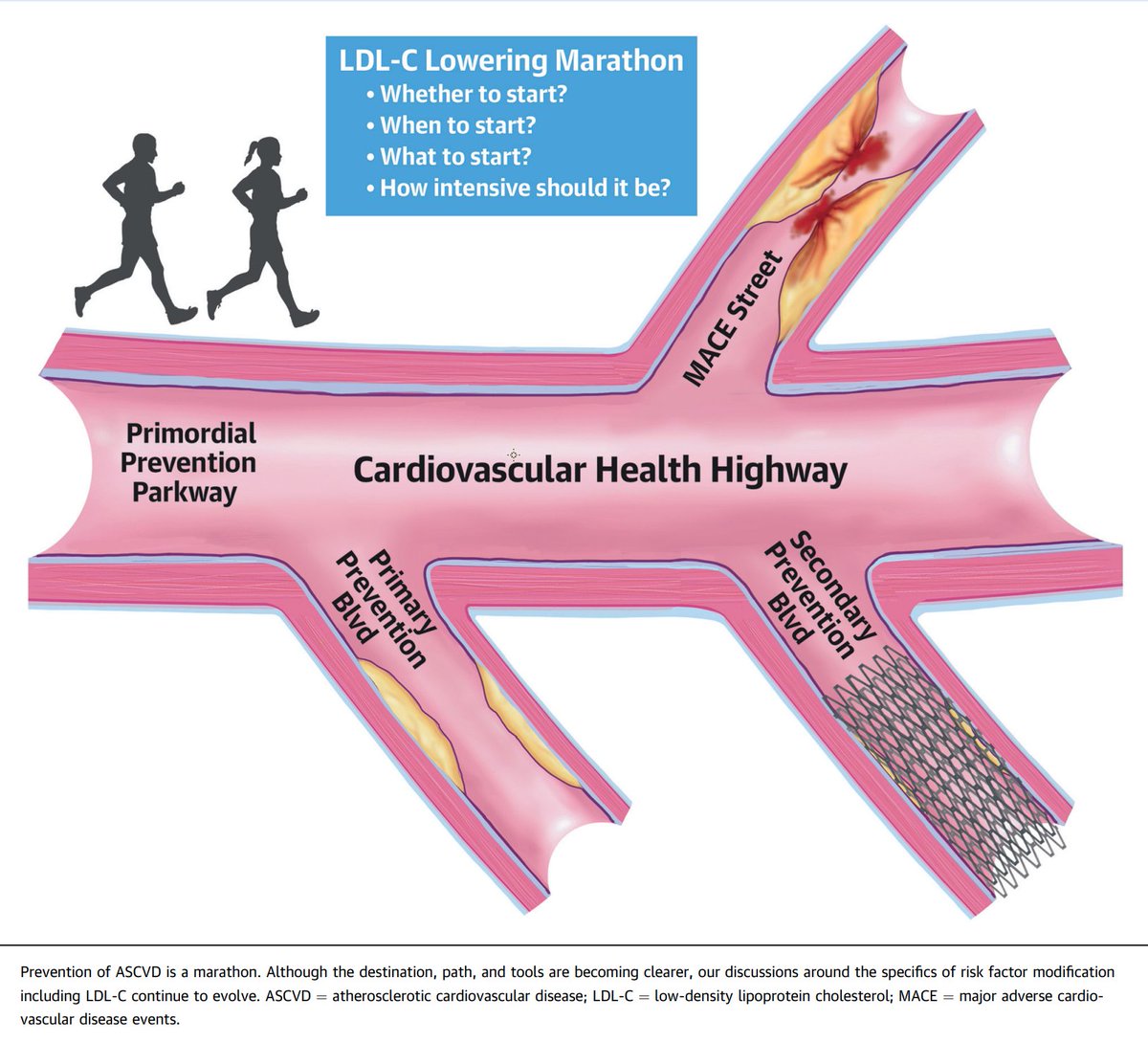
Just published in @JACCJournals was a SADLY not open-access paper on the 5 year data on the incredible ability of evolocumab in reducing MACE in ASCVD patients. Even better was the editorial which had this great graphic - they state - "prevention of ASCVD is a marathon - one that requires long-term focus, intensity, commitment, attention, & persistence." I say folks can "pay the primary prevention doc now or pay the cardiologist/undertaker later." Please respect apoB. Study & editorial is at https://t.co/mpEkgSZ6st and editorial at https://t.co/355pYqmlXN @nationallipid@society_eas