I wanted to see which of my posts actually land instead of guessing, so I built a small self-hosted X stats dashboard with the help of Grok Bot. Follower growth, per-post impressions and engagement, one Go binary. Open source: https://t.co/oRx21bjM0E
First snow is showing up on the peaks in Little Cottonwood. Every year I tell myself I'll be in ski shape before opening day. Every year the laptop wins. Still counting down.
figma shipped Specs. markdown on the canvas that coding agents read over MCP. paste the link, they get frames, diagrams, Code Connect, the brief.
i've lost count of agents hallucinating a requirement that lived in some Notion page nobody linked. boring fix. finally
Open weights running on a pair of Mac Studios is a fun week for anyone who keeps a desk full of Apple hardware. I care less about the benchmark and more about whether my agents can run all day without a meter running.
Learn to build custom harnesses, folks!
Here is a highly recommended paper from Google on recursive agent harnessing.
Great insights if you work on evolving your harnesses.
It also offers an important discussion of recursive self-improvement and evolving harnesses for open-world tasks.
They focus on improving your agent harness at test time without a verifier. This allows interesting scaling properties.
Harness^2 proposes several edits to the harness for the current task, tests them against each other, and keeps the combination that works best. Lessons from those edits then update a second harness that the agent carries to future tasks.
Results:
It improved GLM-5 and Gemini 3.5 Flash in every configuration tested across WorkBuddy-Bench, JobBench, and LAB. Running five candidate edits in parallel adds another 2.9 to 3.9 points on WorkBuddy-Bench.
ReasoningBank, a memory baseline, fell up to 6.6 points below the base harness on coding tasks in the same comparison.
https://t.co/auhAUHtHzh
Chat with Paper: https://t.co/B2QKDEQoHx
@JoannaStern The question I care about for local: can it run an agent loop for hours without thermal or memory surprises. Curious what you see on long sessions, not just first token.
We're open-sourcing Muse Spark Open!
This is an important release which is the most capable US open-weight model yet. 🇺🇸
- 816B parameters (42B active)
- 1M token context window
- Built for coding and long-horizon agents
- Runs locally on two Apple M5 Ultra Mac Studios
More here: https://t.co/ylGmz7BNg0
Building an agent should not mean a week of glue code before anyone can use it. I want going from idea to a deployed agent to feel like one short CLI session. That is what I am working on with CastAgent. https://t.co/1eVwyGrjVY
@hwchase17 Async subagents and heartbeats get a lot simpler when each agent gets its own microVM that can stay up and wake on its own. The providers already solved that part. With CastAgent I'm focused on making it easy to deploy your agent onto them.
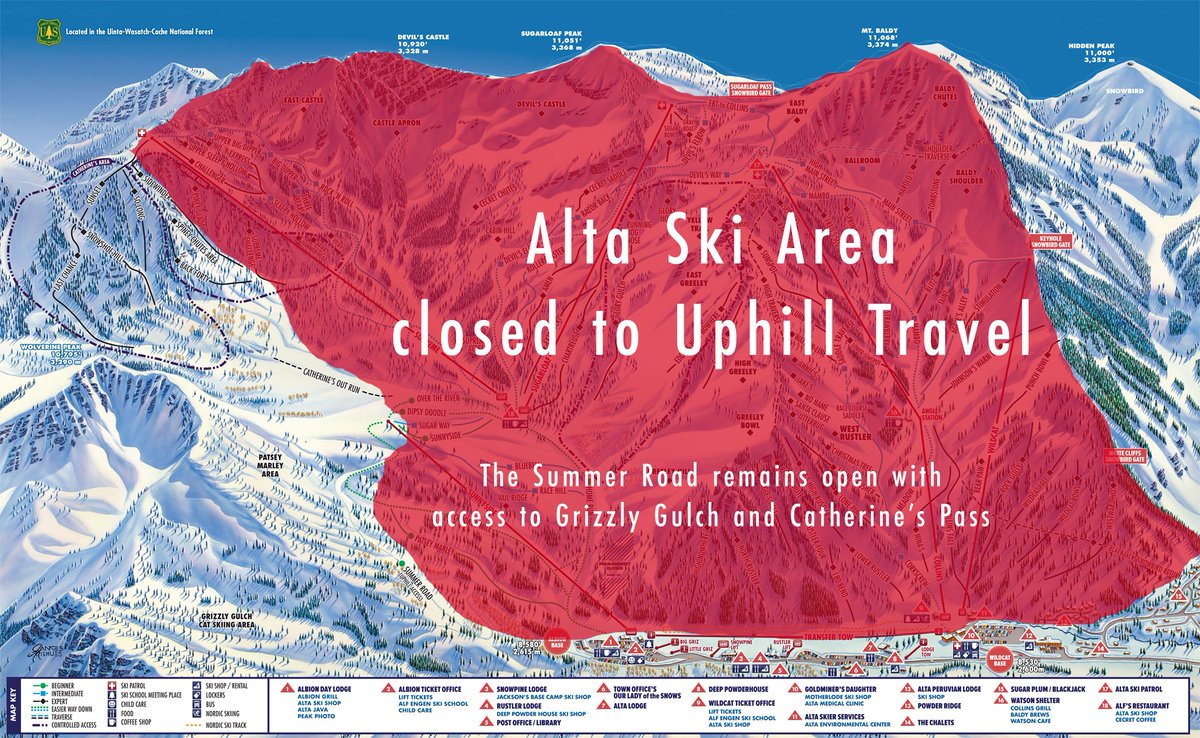
Alta Ski Area will close to all Uphill Travel at 8pm on October 15th for helicopter longline work—estimated opening at 5pm on October 16th.
The Summer Road is open with access to Cathinere's Pass: https://t.co/JFr6NXLNKi
@UDOTavy@utavy_@WasatchBCAlli@alta_of@AltaCentral
Never seen anything grow as fast as @Grok@Bot!
And there is no free tier, which means people are deriving real value in excess of what they pay.
As the saying goes, you get what you pay for.
Rebooting my X presence... I build products, and lately that means agents. Working on Gander, live review for markdown your agent is still writing, and CastAgent, a CLI for building and deploying agents. Notes here on what works and what breaks.
Introducing Grok Voice 3.0, the world’s most intelligent speech-to-speech model.
It excels at resolving customer calls, responds in under a second, and costs less than other frontier models.