Calling Roman history lovers, especially teachers! We've launched Roman Inscriptions of Britain in Schools materials to provide better access to the diverse voices of Roman Britain and to support the teaching of classical subjects. @UoNArts
https://t.co/Yy0IPSLkrB
Yesterday @adivea presented our research-in-progress on ancient associations and their role in Roman economy at Pilsen @ccs_zcu see presentation at https://t.co/N72vX4lSXN @VojtechKase@pettulda
#SDAM Project's coding/writing retreat in progress! We are all smiling, because for the first time we are able to plot (almost) *all* of the Greek and Latin #inscriptions on one map. More exciting research to follow! @adivea@VojtechKase@pettulda
#SDAM Project's coding/writing retreat in progress! We are all smiling, because for the first time we are able to plot (almost) *all* of the Greek and Latin #inscriptions on one map. More exciting research to follow! @adivea@VojtechKase@pettulda
1/n check out our new @sdam_au article with @pettulda & @adivea exploring division of labor in the ancient Roman cities across different urban contexts by means of a quantitative analysis of Latin epigraphy just out in @PLOSONE (https://t.co/j9msJuiLxc)
For #digital and/or classical folk around Aarhus tomorrow: #DigitalClassics in 2022 with my own take on #digitalepigraphy in 2022 and @adivea on the challenges of doing large-scale research in history and archaeology
1/8 check out a new preprint by @VojtechKase, @pettulda, & @adivea exploring division of labor in the ancient Roman cities across different urban contexts by means of a quantitative analysis of Latin epigraphy (https://t.co/Hksu2MTPOW)
7/8 We encourage other researchers to build upon our analyses and to reuse our code within their own research. Check out our #FAIR#Python#Jupyter notebooks on GitHub (https://t.co/SHEDkGAncv).
As part of the @sdam_au project, they created FAIR & Open-source pipelines, combining Python and R, to aggregate, streamline and analyze large corpora of inscriptions and explore the development of Mediterranean communities over several centuries.
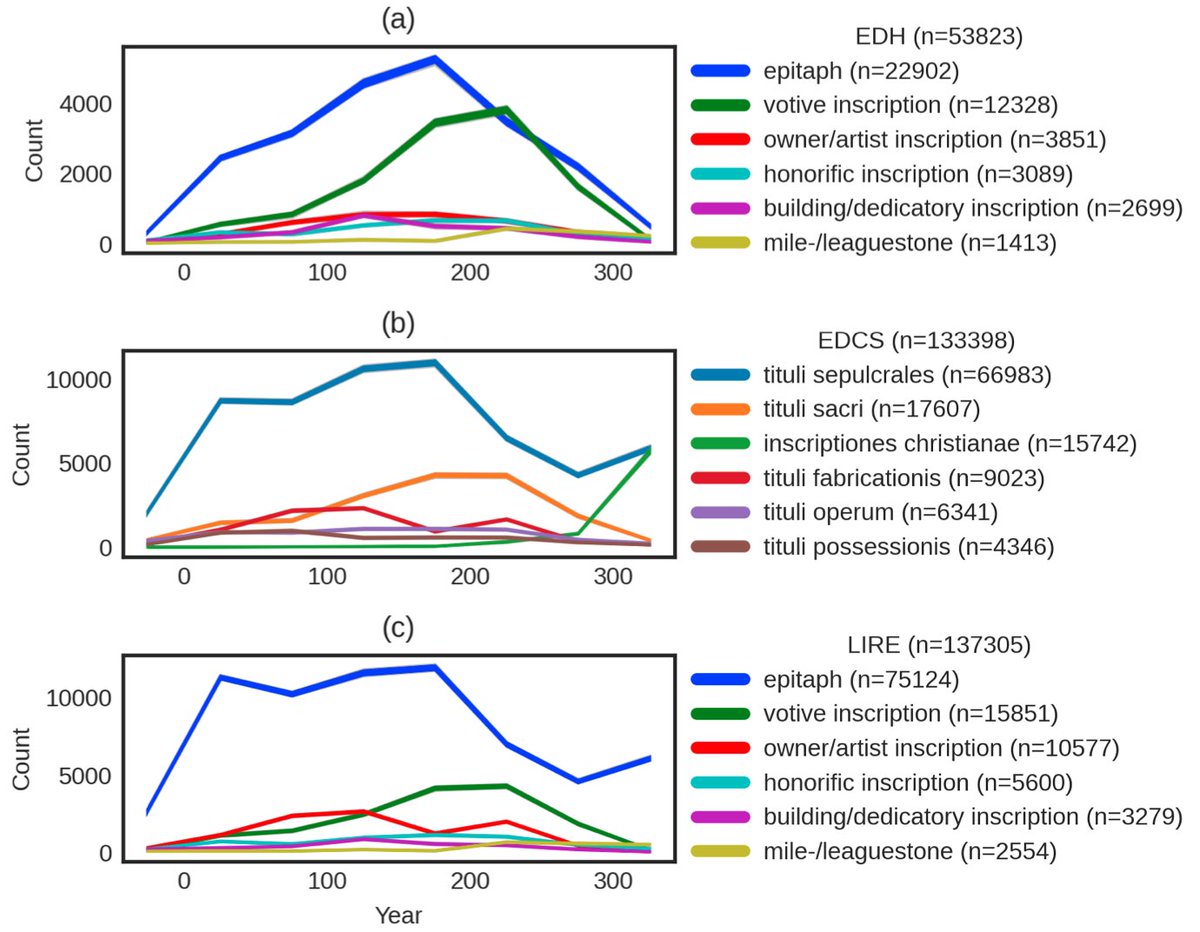
A new article has been published! “Inscriptions as data: digital epigraphy in macro-historical perspective” by @pettulda, @VojtechKase, @adivea
https://t.co/f0g5DamWga
Our latest article has been just published!!! Can we use #inscriptions as data to inform our understanding of past societies? And do it in #FAIR & #reproducible manner while acknowledging the issues of historic datasets? Read HOW in the article #EpigraphyTuesday#digitalepigraphy
our new paper with @pettulda and @adivea from @sdam_au "Classifying Latin inscriptions of the Roman Empire: A Machine-Learning Approach" is out as part of @CompHumResearch 2021 conference proceedings. Check it out from here: https://t.co/eNIfYgUd0q.
#EpigraphyTuesday on a Wednesday
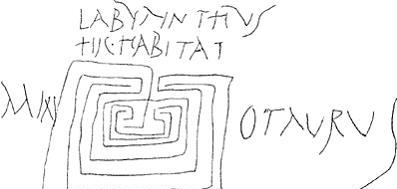
Do you feel a bit lost in your epigraphic activities? Don't worry! We are showing you an exit on today's #DayofLabyrinth! Register for the https://t.co/krHbPtTUPx workshop (#iepi6) and find new ways of #epigraphy in our community!