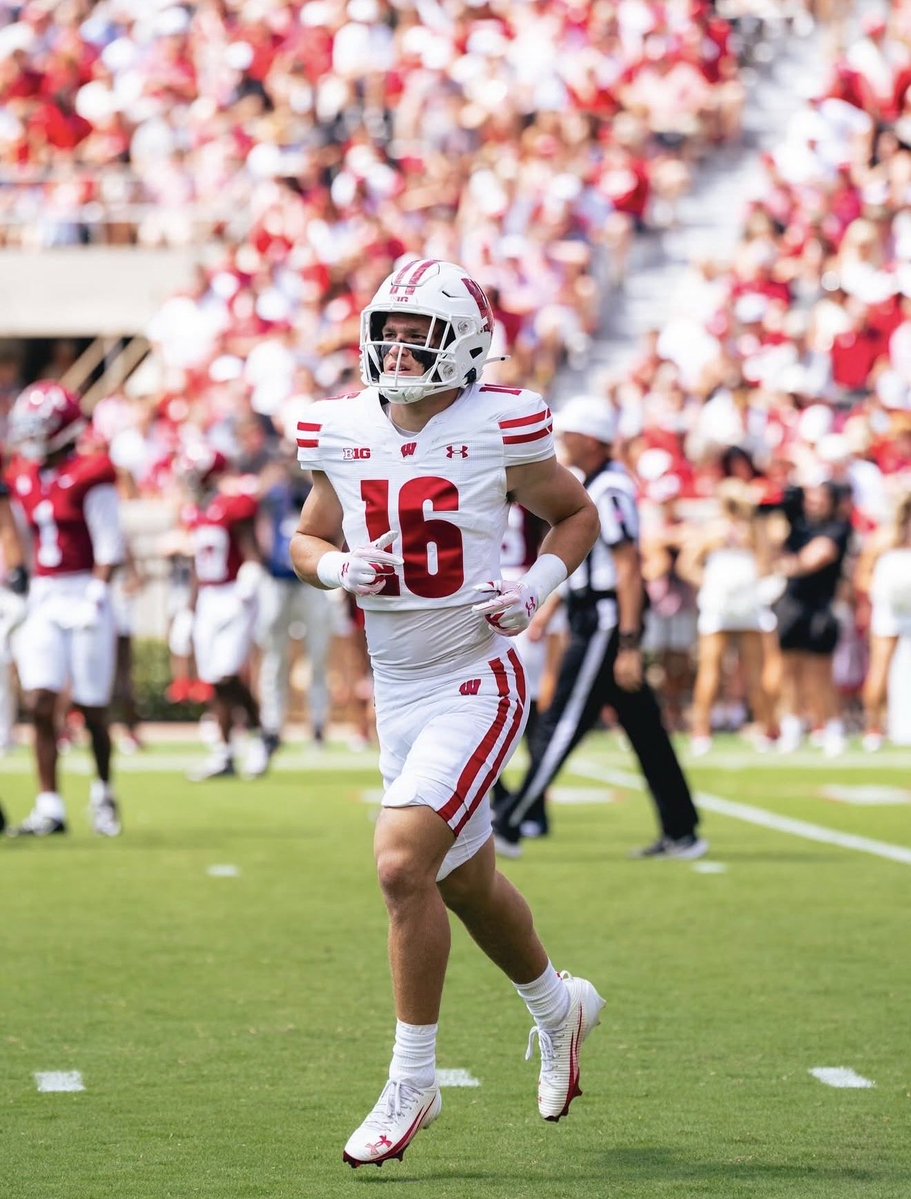
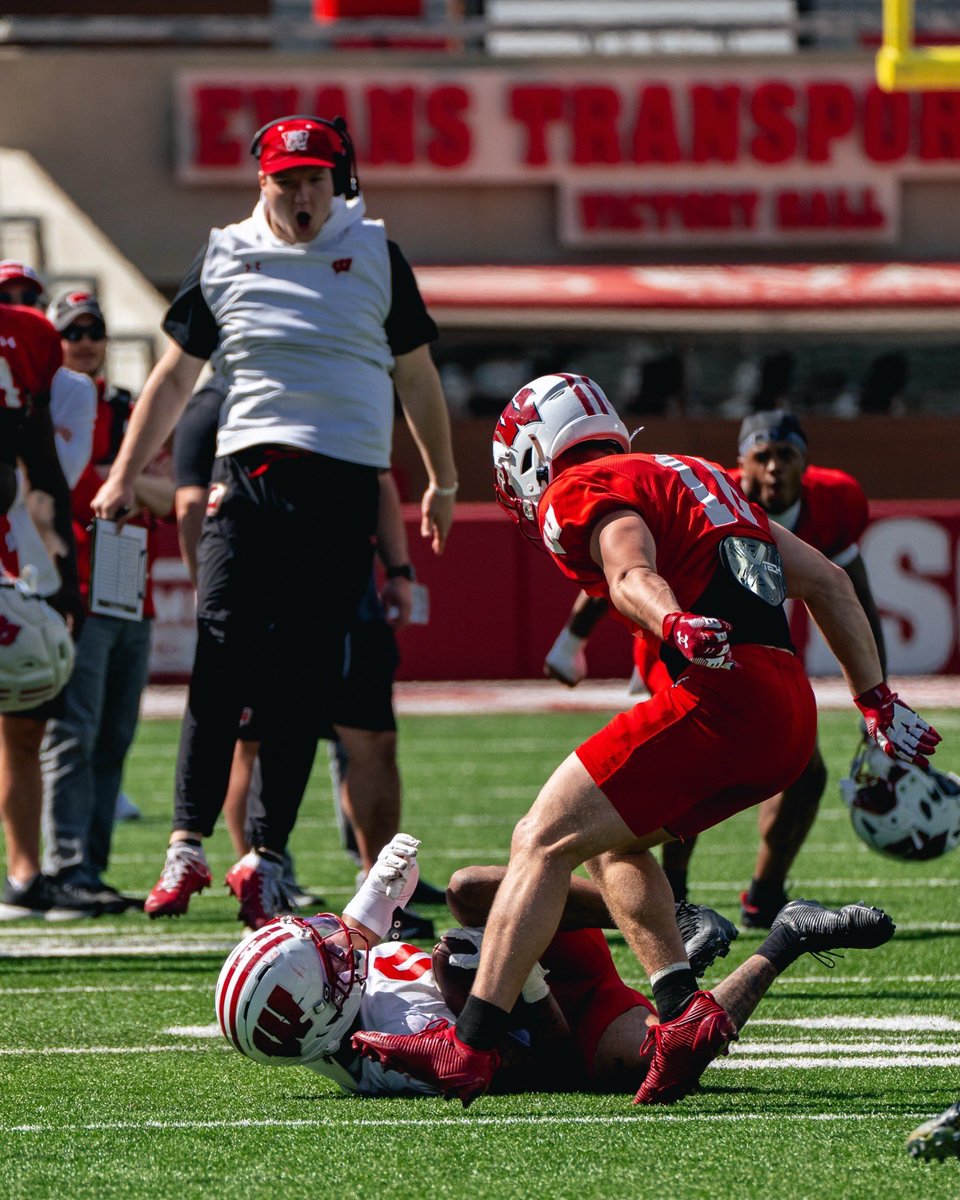
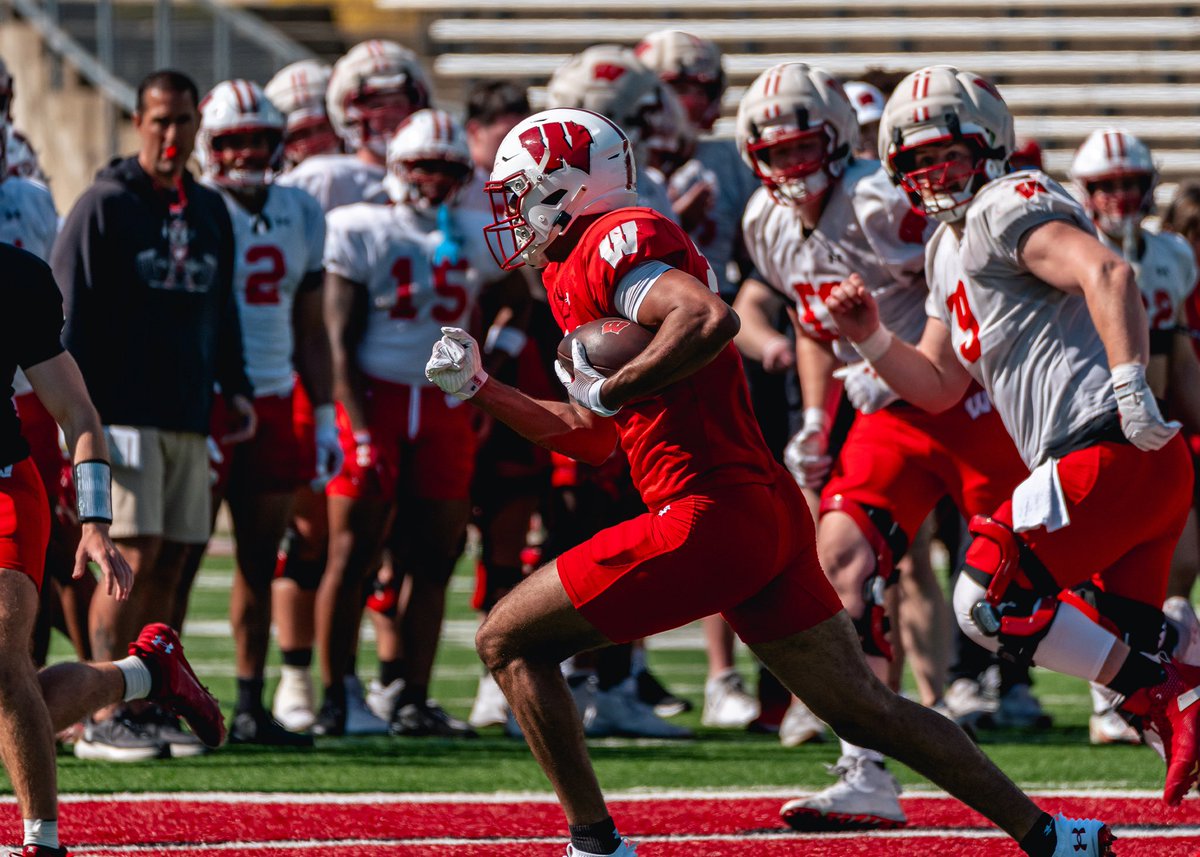
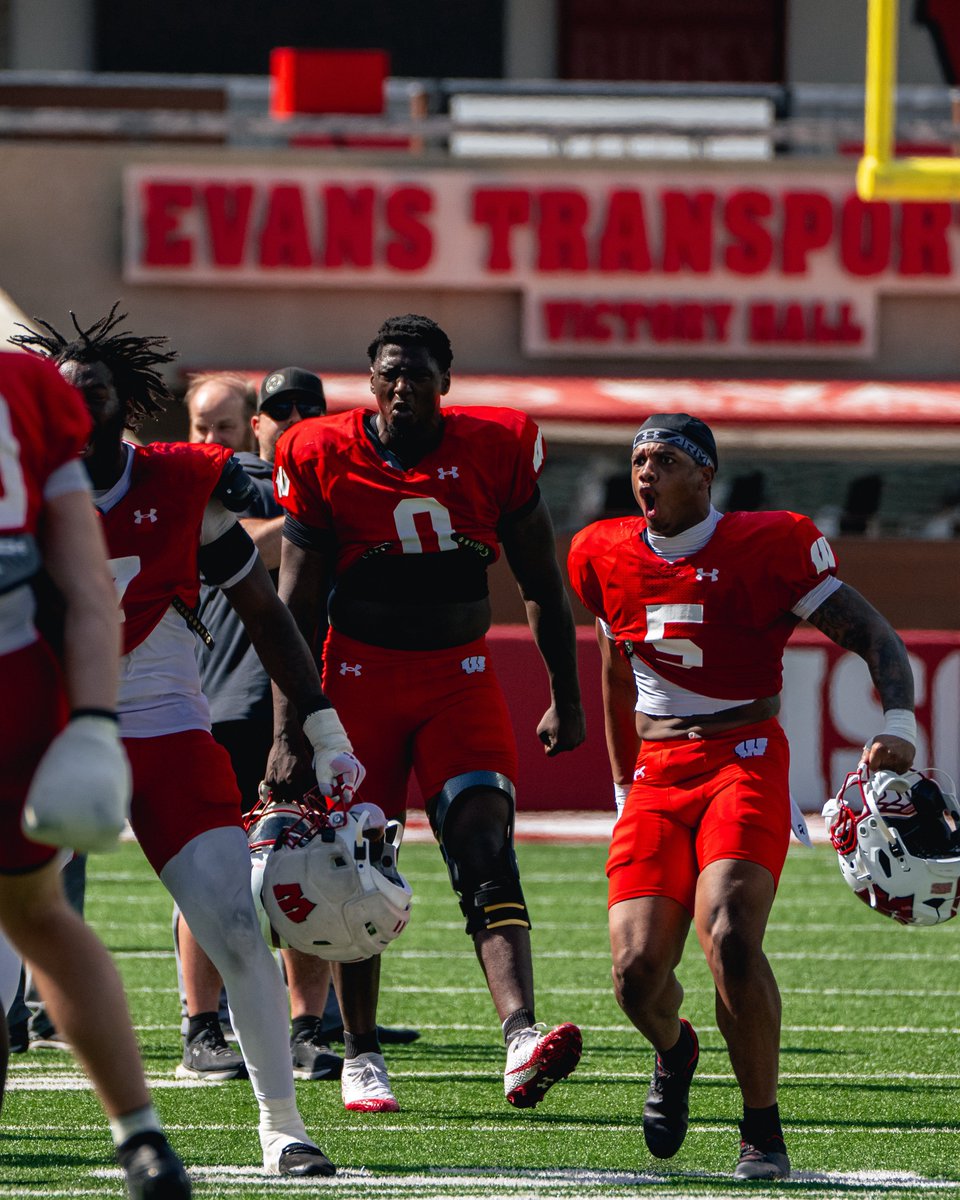
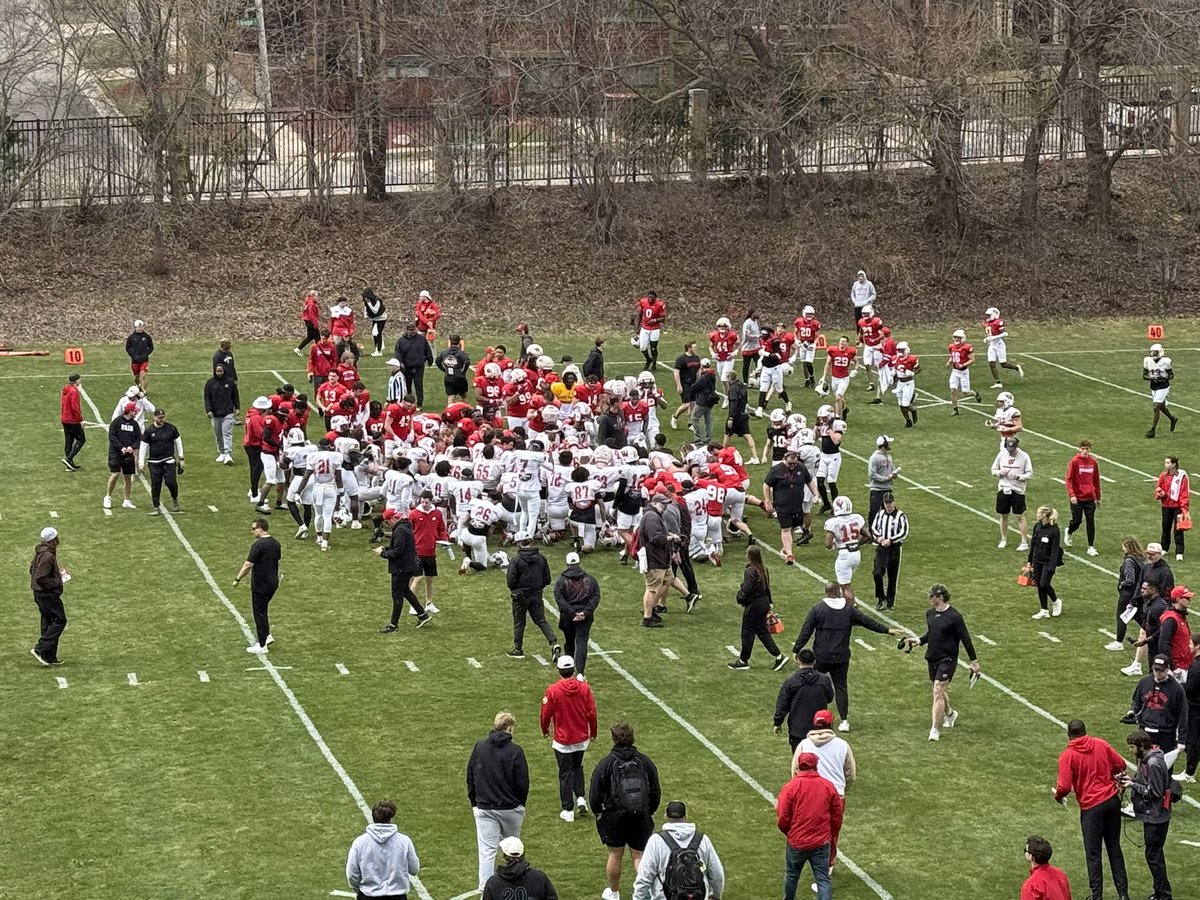
Tuesday Standouts:
Gavin Lahm
Darrion Dupree
Donovan Dunmore
Grant Dean
Emmett Bork
Raphael Dunn
Jacob Harris
Taylor Schaefer
Hammond Russell
Rigby
#Badgers
Vehicle compliance isn't just about registration.
Many fleets struggle with determining which requirements apply, keeping up with renewals, maintaining records, and managing regulatory obligations across multiple agencies.
What would you consider the biggest vehicle compliance challenge for your operation?
We've put together a free eBook that explores five of the most common challenges and offers practical guidance for navigating them.
Download the free eBook for a deeper dive: https://t.co/YZwRTlxR20
#Badgers first practice in pads is in the books.
Some standouts:
LB Jon Jon Kamara
S Grant Dean
QB Ryan Hopkins
EDGE Liam Danitz
TE Nizyi Davis
DB Cairo Skanes
Few Standouts from Saturday. Busy, busy day:
-Carsen Eloms
-Jaylen Williams
-Darrion Dupree
-Bryce West
-Grant Stec
-Jon Jon Kamara
-Grant Dean
-Liam Danitz
-Nick Clayton
-Catalano
-Wilkins
🦡The Wisconsin NIL Bill Passed, and It's a Great Day to Be a Badger Fan 🏈
DISCLAIMER: Lots of words. And then more words. If you're not supremely interested in this topic, I'd skip.
The Wisconsin NIL bill passed the state Senate on March 17th in a 17-16 vote, allocating $14.6 million annually in state funds to cover UW-Madison's athletic facility debt service. The reaction from a segment of Badger fans has been predictable — taxpayer money flowing to an athletic department feels wrong on its face, particularly during a stretch of disappointing football. That frustration is understandable. But a lot of the argument against this bill rests on weak premises.
First, some context on the numbers being debated. The $757 million figure represents the total annual economic footprint of UW Athletics — meaning the full ripple effect of the program on the state economy, including fan spending on hotels, bars, restaurants, and travel on top of what flows through the athletic department's own books — per the 2022 ESI study commissioned by UW-Madison [1], which also found the program generates $16 million in annual state tax revenue. The $280 million figure that has circulated in this debate is a separate number entirely — the estimated annual statewide economic loss if football continues to decline, per the UW Crowe Center for Research on the Wisconsin Economy [2], driven by reduced attendance, gameday spending, and tourism. Those are two very different figures describing two very different things.
This bill does not create new facility debt. It shifts who services existing debt — moving it from athletic program operating revenue to a state general appropriation. While that shift does create a new taxpayer obligation, it functions as a highly leveraged investment in the state's most visible tourism and marketing engine. It also frees up program dollars to compete under the new House settlement framework. Under that settlement, schools must now direct institutional operating dollars toward a $20.5 million annual revenue sharing cap for athletes. Wisconsin was already spending a significant portion of its operating revenue servicing facility debt, leaving less to deploy toward that cap than competitors whose facility costs were already subsidized. This bill corrects a structural disadvantage, not a coaching one.
A central premise of the case for this bill is that winning produces economic activity. Not just at Camp Randall, but across the state. Bars and restaurants filling up on Saturdays. Watch parties. Gear purchases. Travel. Badger-related transactions rippling through communities that never appear in a stadium attendance count. Every sports fan understands this intuitively because we have all lived it. We invest more in good teams. We show up more, we spend more, we care more. You do not need a commissioned economic study to acknowledge what losing is doing to Badger-related business activity in real time. The data supports it anyway — peer-reviewed research from Ohio State finds that each additional win increases a program's total revenue by over $800,000 [3], and Wisconsin's own Crowe Center data shows season ticket sales dropped from 42,000 to 38,000 after just one bad season [2]. That is observed behavior, not a projection.
Even if you want to challenge the methodology of the economic studies — and there are legitimate critiques of consultant-commissioned impact reports — you still have to reckon with the directional truth. A better football program means more eyeballs, more transactions, and more economic activity distributed across the state. Sports fandom has worked that way across major college and pro sports markets since sports fandom became a thing.
The relationship between resources and winning is also documented. A study of Power Five programs spanning 2005 to 2022 found that facility spending correlates more strongly with on-field success than coaching salaries or recruiting budgets combined [4]. Research from Athletic Director University supports the full cycle: better resources produce better recruiting and facilities, which produce better rosters, which produce wins, which produce revenue, which get reinvested into the next cycle [5]. That cycle runs in both directions. Wisconsin has been in the downward version of it. This bill interrupts that trajectory. Fully funding the $20.5 million cap does not guarantee Big Ten championships in an era where peers are doing the same, but failing to fund it makes sustained relevance materially less likely.
On roster spending specifically — the direct NIL-to-wins link is still maturing in the academic literature given how recently the framework changed, but the directional evidence is clear. CBS Sports analysis of the 2025 College Football Playoff field found the biggest spenders predictably occupied the top of the bracket [6]. More importantly, peer-reviewed research published in Applied Economics concluded that if current NIL spending patterns persist as absolute spending levels rise, the talent gap between elite programs and the rest of the Power Five will widen materially over time [7]. Wisconsin cannot afford to find out what that widening looks like from the wrong side of it.
Is anyone really surprised by any of this?
A fair critic will note that the correlation between resources and wins runs in both directions — successful programs attract more investment, not just the other way around. That is true, and worth acknowledging. But in public policy arguments, waiting for perfect causal proof before acting is rarely a viable standard. What matters here is the asymmetry of risk. If this investment does not move the needle as much as the data suggests, Wisconsin is out $14 million annually on a program that was already generating $757 million in state economic activity. If the data is right and Wisconsin opts out, the talent gap widens, the downward cycle accelerates, and the economic and competitive damage compounds in ways that become structurally difficult to reverse. The downside of acting is modest and recoverable. The downside of inaction is not.
This entire argument is deliberately coach-agnostic. CBS Sports data shows Wisconsin under Paul Chryst had the lowest recruiting spending in the nation — under $400,000 per season [8]. This bill does not bet on any particular coach. It raises the floor and ceiling for whoever is on the sideline. Money does not transform a limited coach into an elite one, but it gives any coach materially better tools than Wisconsin has provided in years. If the ceiling still is not good enough, you find someone else — and that someone else will be operating with a structurally stronger program than the one that existed before this bill passed.
The argument that Wisconsin's alumni base or the university's endowment should have covered this gap misunderstands how both work. University endowments are overwhelmingly restricted funds — designated by donors for specific academic purposes like research, scholarships, and faculty. They are not a discretionary pool available to the athletic department. And under the House settlement, revenue sharing must flow as institutional operating dollars, not donor collective contributions. Alumni generosity and institutional operating budget are structurally separate under the new rules. One cannot substitute for the other regardless of the size of either.
So here is the actual question worth asking. If we agree that winning produces more Badger-related economic activity across the state — and the data and our lived expeirence as sports fans say we should — and if we agree that better-resourced programs raise a coach's floor and ceiling — and the data says we should — then what is the most plausible downside scenario for this bill? A taxpayer obligation that ends up closer to budget neutral than advertised and a marginal improvement in the probability of sustained competitive football in Wisconsin. For $14 million a year, this bill meaningfully increases the likelihood of long stretches of virtuous cycles — wins producing revenue, revenue producing better rosters, better rosters producing more wins. It increases the probability that Badger fans get some relief on Saturdays from all the bullshit in the world. Given everything this state's football program generates for Wisconsin's economy and quality of life, that is a rational bet.
So yes — it is a great day to be a Badger fan. This bill does not fix everything, and next September is not guaranteed to look different from the last few. But Wisconsin just made a rational, evidence-backed decision to stop bringing a knife to a gunfight. The structural disadvantage quietly undermining this program for years has been addressed. The tools are on the table. What gets built with them is still to be determined — but the program now has a legitimate shot at the kind of sustained success that fills bars across the state, sells out Camp Randall, and gives Badger fans something to look forward to every fall. That is worth celebrating. #OnWisconsin
References
[1] UW-Madison Athletics Economic Impact Study, ESI Econsult Solutions (2022) — https://t.co/T1cyKYGIES
[2] UW Crowe Center for Research on the Wisconsin Economy, Football Losses and State Economic Impact (2025) — https://t.co/m3ZhUh3pSk
[3] Logan & Bergman, Revenue Per Quality of College Football Recruit, Ohio State University (2020) — https://t.co/uF5igycafA
[4] Samford University Sports Analytics, Spending Smart: Power Five Football Programs and the Effect on Wins, 2005–2022 — https://t.co/WZcUFqFJqP
[5] Athletic Director University, Analysis of College Football Return on Investment — https://t.co/noBZUH0VQ2
[6] CBS Sports, College Football Playoff 2025 NIL Spending Power Analysis — https://t.co/2Uc35PkZ0R
[7] Applied Economics, The Impact of NIL Contracts on Student-Athlete College Choice (2024) — https://t.co/mvLc0llDpU
[8] CBS Sports, College Football Recruiting Expenses by Conference (2022) — https://t.co/rZg0UgkkS4
🚨 Wisconsin's NIL bill (SB 1075) is heading to a Senate floor vote in the next few days. It passed the Assembly 95-1. It should be a layup.
It's not. Three Republican senators voted against it in committee. The bill could die.
If you care about Wisconsin athletics — about the Badgers, about Madison's economy, about 600+ student-athletes across 23 sports — you need to understand what's at stake and who to call. This is long. Read it anyway. Then share it.
— — —
THE BILL: WHAT IT ACTUALLY DOES
AB 1034 / SB 1075 does three things:
1. Authorizes UW to directly compensate athletes for their name, image, and likeness — finally putting Wisconsin on the same playing field as 32+ other states that have already passed NIL laws.
2. Provides $14.6M/year in state funding for athletic facility debt, freeing up equivalent revenue so UW can meet the $20.5M revenue-sharing cap required under the House v. NCAA settlement.
3. Establishes athlete protections: disclosure requirements, agent rights, and guardrails on endorsement categories.
That's it. This isn't radical. This is catching up.
— — —
THE MONEY: WHY $14.6M IS THE BEST INVESTMENT WISCONSIN CAN MAKE
UW Athletics generates $757 MILLION in annual economic impact statewide. That's not a talking point — that's from an Econsult Solutions study. It supports 5,600+ jobs and produces $16 million in direct state tax revenue.
So let's do the math on the state's $14.6M investment:
• It represents less than 2% of the $757M economic engine it preserves
• The $16M in tax revenue it generates effectively pays for itself before you count a single multiplier effect
• Each home football game alone drives $19M in statewide economic activity — seven games per season, that's $133M just from football Saturdays
Now let's look at the cost of NOT passing it.
A 2025 study by UW-Madison economists (the CROWE Report) estimated that continued program decline could cost Wisconsin $280 MILLION ANNUALLY in lost economic activity. That includes $160M in lost consumer spending in Madison and $20M in reduced football profits.
The state is being asked to invest $14.6M to protect a $757M economic ecosystem. The ROI isn't good — it's absurd. In the positive sense.
— — —
THE COMPETITIVE CRISIS: WISCONSIN IS BEING LEFT BEHIND
Here's the NIL spending landscape Wisconsin is competing in:
• Ohio State: ~$35M in football NIL (2025). Won the national championship.
• Texas: $22.2M
• Georgia: $18.3M
• Michigan: $16.3M — paid one quarterback recruit $12M+
• Penn State: $13.7M
• Oregon: Backed by Phil Knight. Functionally unlimited.
Wisconsin? Under $10M. Bottom third of the Big Ten. AD Chris McIntosh has said this publicly.
The results are exactly what you'd expect:
• Luke Fickell's record: 17-21 overall, 2-11 vs. ranked teams
• Back-to-back bowl absences for the first time since 1991-92
• Three consecutive graduate-transfer QBs because Wisconsin can't attract elite portal talent
• Blue-chip recruits flipping on signing day (Amari Latimer to West Virginia)
• The Xavier Lucas tampering case — a four-star CB who signed with Wisconsin, then tried to transfer to Miami 15 days later, prompting a first-of-its-kind lawsuit
• Season ticket sales dropped from 42,197 to 38,082
This is a program in competitive freefall. And every day without NIL legislation, the gap widens.
— — —
THE RESEARCH: THIS ISN'T JUST ABOUT FOOTBALL
If anyone tries to frame this as "just sports," hit them with the peer-reviewed data:
📈 ENROLLMENT: A Harvard Business School study (Chung, 2013, Marketing Science) found football success increases applications by 17.7%. To achieve the same effect without athletics, a school would need to cut tuition by 3.8%. Athletic success is the single most cost-effective advertising a university has.
💰 DONATIONS: An NBER study (Anderson, 2017, Review of Economics & Statistics) found each unexpected football win increases alumni athletic giving by $134,000. A great season with five wins above expectations yields a 28% increase in donations.
🏛️ STATE FUNDING: Humphreys (2006, International Journal of Sport Finance) found schools with D-I football programs receive 6-8% more in state appropriations, with successful programs receiving an additional 3-8% bump.
📺 MEDIA VALUE: LSU's 2019 championship run generated $200M+ in media exposure in seven weeks. Every Big Ten Saturday is a multi-hour advertisement for UW-Madison, for Madison, and for the State of Wisconsin.
🏘️ PROPERTY VALUES: Research published in the Journal of Urban Economics found rents approximately 8% higher in cities with major sports programs. A Journal of Sports Economics study found housing values near stadiums increase 4.7%.
🎓 GRADUATION RATES: Tucker (2004, Economics of Education Review) found athletic success positively affects graduation rates — social connections from attending games improve academic engagement and lower attrition.
🤝 COMMUNITY: Multiple studies (Clopton 2008-09, Heere & Katz 2014-16) demonstrate college athletics create community bonds that transcend normal social boundaries, strengthening civic identity and social cohesion.
This is not just a sports bill. This is an economic development bill, an education bill, a state branding bill, and a community investment bill.
— — —
THE BIPARTISAN CASE
For Republicans: The Supreme Court ruled unanimously in NCAA v. Alston (2021) that compensation restrictions are illegal price-fixing. Letting athletes earn what the market bears is a property rights and free enterprise position. This is the free market working.
For Democrats: Athletes generating $113.6M in football revenue deserve fair compensation. Strong institutional NIL frameworks advance Title IX equity. Every dollar of NIL earnings paid to athletes in Wisconsin generates state income tax revenue and local consumer spending that currently flows to Ohio, Texas, and Oregon.
For everyone: 32+ states have already done this. We're not pioneering anything. We're just not falling further behind.
— — —
THE THREAT TO OLYMPIC AND WOMEN'S SPORTS
This is the part people miss. Football generates a $72M surplus that subsidizes ALL other sports at Wisconsin. Men's basketball contributes too. Every other program — women's hockey, volleyball, track, swimming, rowing, softball, soccer — depends on football revenue.
AD McIntosh testified before the legislature that without this bill, the department faces "painful reductions" that represent "a significant threat to our Olympic sports, our women's sports." Wisconsin currently supports 23 varsity sports and 600+ student-athletes. That number shrinks without this bill.
A vote against this bill is a vote to cut women's sports at the University of Wisconsin.
— — —
WHO NEEDS TO HEAR FROM YOU — RIGHT NOW
The Assembly already passed it 95-1. The Senate vote is THE ballgame. Here's who matters:
✅ SPONSORS (thank them, amplify them):
@RepAlexDallman — Rep. Alex Dallman, bill author
@SenLeMahieu — Senate Majority Leader Devin LeMahieu, co-sponsor
⚠️ KEY SWING VOTES (call and email — be respectful, be specific, be persistent):
Sen. Julian Bradley — voted NO in committee
Sen. Patrick Testin — Senate President Pro Tempore, voted NO
Sen. Rob Stafsholt — voted NO
🏛️ LEADERSHIP:
@GovEvers — Gov. Tony Evers (UW-Madison alum — BA, MS, PhD)
@SpeakerVos — Speaker Robin Vos
@SenFeyen — Sen. Dan Feyen, committee chair who passed it 3-2
🏟️ UNIVERSITY:
@UWBadgers — Chris McIntosh, Athletic Director
@JayORothman — Jay Rothman, UW System President
@CoachFickell — Luke Fickell
— — —
THE WINDOW IS CLOSING
The Senate's final session is happening NOW — mid-March 2026. If SB 1075 doesn't pass without amendments, it dies. The Assembly won't reconvene until 2027. That means another FULL YEAR with no NIL legislation while every other Big Ten program continues building advantages.
Wisconsin didn't fall behind overnight. It fell behind because it didn't act while everyone else did. This is the moment to fix that.
Call your state senator. Email them. Tag them. Share this post. Talk to every Badger fan you know.
$757 million in economic impact. 5,600 jobs. 23 sports. 600+ athletes. The math is simple. The time is now.
On, Wisconsin. 🔴⚪
#OnWisconsin #NIL #Badgers #PassTheBill #SB1075 #WisconsinNIL
Re-Ranking the Classes: 2025
The #Badgers had a number of true freshmen see the field this fall, and a handful more could be ready to contribute in year two.
https://t.co/ukGQeInVMA (On3+)
Wisconsin LB Mason Posa postgame: "We’ve been pounding the rock the entire season.
And, we are there. We’re there.
Next year, I promise you, and I swear by it, we're gonna change this program. It is going to be a winning program." #badgers
FREE: Caught up with Badgers freshman safety @_TheGrantDean earlier this week to talk about his contributions on special teams, his "welcome to college football" moment, and much more.
LINK: https://t.co/tQWHHbjYaS
📸: Wisconsin Athletics
Prior to today's Luke Fickell news, freshman LB Cooper Catalano made it clear where the Badgers locker room stands 👇
“𝗛𝗘'𝗦 𝗢𝗨𝗥 𝗛𝗘𝗔𝗗 𝗖𝗢𝗔𝗖𝗛, 𝗔𝗡𝗗 𝗪𝗘 𝗔𝗟𝗟 𝗛𝗔𝗩𝗘 𝟭𝟬𝟬% 𝗖𝗢𝗡𝗙𝗜𝗗𝗘𝗡𝗖𝗘 𝗜𝗡 𝗛𝗜𝗠."