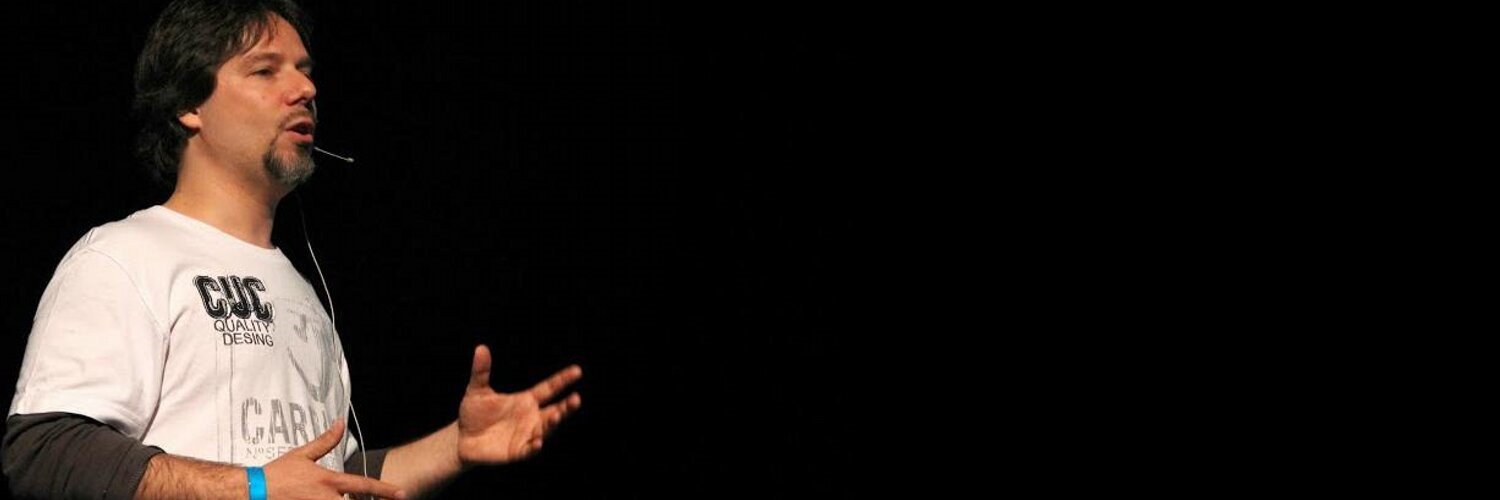
Fun experiment. I asked chatGPT to create a short bio of myself with these restrictions:
1. No mention to past experience or jobs
2. No mention to technologies
3. No mention to academic education or publications
It can use our hundreds of interactions it has recorded. This is what I got:
I specialize in redefining problems before solving them. Rather than optimizing existing designs, I seek new design spaces that eliminate unnecessary assumptions, simplify architectures, and unlock capabilities that previously appeared impossible. I thrive where established solutions no longer suffice and progress depends on questioning the problem itself.
I'm a Problem Designer.
I identify and frame worthwhile problems.
Our series on Bit2's features continues. This time: client-side smart contracts and what programmable payment logic looks like when it doesn't touch the blockchain.
Most smart contracts run on every validating node. That makes computation expensive, public, and limited by network throughput. But most payment logic, like spending policies, rate limits, authorizations, conditional transfers, only involves the parties in the payment.
Bit2 keeps it that way. A lightweight virtual machine lets users define programmable spending policies directly in their wallet. No third-party custody, no blockchain execution costs, no global consensus for decisions that don't require it.
For autonomous agents managing funds without human supervision, this isn't optional. It's infrastructure.
Latest entry in our series on the features defining Bit2, Fairgate's Bitcoin-native payment layer for the agentic economy and the world of autonomous commerce already upon us.
https://t.co/XxPtrkW14x
Today we are publishing the first Ill Bloom findings: affected-address checker + on-chain analysis to help users identify exposed addresses and protect their assets.
🔗 https://t.co/NLod0LR3cd
⚠️ We will never ask for seed phrases, private keys, signatures, or approvals, or ask users to send funds to "recover" or protect a wallet.
This article explains why Bit2 (a new Bitcoin L2 based on client-side validation) is immune to the Mass Exit Problem.
Even if the entire Bit2 infrastructure fails, there's no bank-run scenario. Funds remain safe, and users can exit whenever they choose—or simply swap their BTC and avoid the exit process altogether.
Our series on Bit2's features continues. This time: what self-custody actually means in a Layer 2 payment network.
https://t.co/b2PiRCXxt5
Holding your private keys is only part of the story. A user truly controls their assets only if they can spend them, recover them, and withdraw them under adverse conditions.
Three properties determine whether that's real: Unilateral Access, Uncensorable Exit, and Mass Exit Safety.
Most networks satisfy one or two during normal operation. The real test is whether all three hold when everything goes wrong simultaneously.
Bit2 was designed around that standard from the start.
Discover the latest entry in our series on the features defining Bit2, Fairgate's Bitcoin-native payment layer for the agentic economy.
Crowdfunding was supposed to make funding more open.
But in practice, it still depends on banks, cards, supported countries, platform approvals, and payment processors.
@geyserfund takes a different route: Bitcoin-native crowdfunding.
@metamick14@steliosrammos
More in the thread 🧵
¿La inteligencia artificial hará más seguro a Bitcoin? 🤔
Para Sergio Demián Lerner (@SDLerner), la respuesta no es tan simple.
Iván Gómez (@Ivadango) conversa con el fundador de @rootstock_io sobre seguridad, BitVMX y el futuro de Bitcoin 👇
#Podcast#SDE
For a large subset (let's say 80%), we can say with very high probability they belong to one dominant miner. For the remaining 20% I wouldn't.
Anyway, CZ argument also applies for all forgotten coins without any specific reference to Patoshi.
There is no need to select Patoshi coins only.
At @FairGateLabs we published 12 papers on Bitcoin & BitVMX in the last 2 years, and we aim to publish 3 more papers before EOY. That much we love Bitcoin.
1. BitVMX: A CPU for Universal Computation on Bitcoin
https://t.co/7i0KJJJkNd
2. Union: A Trust-minimized Bridge for Rootstock
https://t.co/CNeNGMa1E5
ESSPI: ECDSA/Schnorr Signed Program Input for BitVMX
https://t.co/CiDi3Hf8St
3. TOOP: A TRANSFER OF OWNERSHIP PROTOCOL OVER BITCOIN
https://t.co/PmbOZOhoms
4. A NOTE ON THE SECURITY OF THE BITVM3 GARBLING SCHEME
https://t.co/lMOK6TOb2w
5. FLEX — Capital-Efficient Optimistic Bridges with On-Demand Security Bonds for Bitcoin
https://t.co/WACFCYj1Ds
6. WISCH: Efficient data signing via correlated signatures
https://t.co/YRLufb4WPZ
7. A FORMAL ANALYSIS OF FLEX AND FLEX2
https://t.co/htCDxWgZPN
8. APoW: Auditable Proof-of-Work Against Block Withholding Attacks
https://t.co/h0bWYjsEGp
9. OHMG: One hot modular garbling
https://t.co/CcKYaX5Dhg
10. OTS-PC: OTS-based Payment Channels for the Lightning Network
https://t.co/5TThOMpWK0
11. BATTLE for Bitcoin: Capital-Efficient Optimistic Bridges with Large Committees
https://t.co/q3f64NbUId
12. BATTLE – Bonded Adversarial TournamenT with Logarithmic Escalation
https://t.co/72t1qUxJN4
What is both hilarious and deeply ironic about BIP-110 is that once Bitcoin enables quantum-safe signatures, either the public keys or the signatures themselves will be so large that they can carry arbitrary spam data.
At that point, every current attempt to stop spam by restricting OP_RETURN or similar mechanisms will be futile.
Our series on Bit2's features continues! Today we go back to the foundation: the premise and architectural principles that shaped everything else.
Most systems start with a technology and search for a use case. Bit2 started the other way around.
In 2025, we asked a simpler question: what properties must a payment network have to support agentic commerce? Every architectural decision followed from there.
The answer became a premise and a set of principles, each one designed to eliminate an entire class of future bottlenecks, trust assumptions, or privacy failures before a single line of code was written.
Thirteenth entry in our series on the features defining Fairgate's Bit2 and the agentic economy already upon us.
https://t.co/7gc4pOBSJ3
Payment speed, peer-to-peer neutrality, and the privacy-compliance tradeoff in stablecoin infrastructure.
These are the questions shaping agentic payment architecture right now, and they are no longer theoretical.
We cover all of it in the latest Agentic Economy Briefing 👇
https://t.co/YtguclZyTt
Our series on Bit2's features continues! This time: stablecoins, and why they're first-class citizens in Bit2.
Agents prefer stablecoins. Research on popular LLMs suggests nearly 53% of agentic commerce would be conducted in USD-denominated stablecoins when given the choice.
Bit2 was built with that in mind. Full confidentiality by default. Compliance tools that work at the edges, not through surveillance of every transaction. Cryptographic proofs instead of data exposure.
Privacy and compliance shouldn’t be a trade-off. Bit2 is designed to deliver both.
Twelfth entry in our series on the features defining Bit2 and the agentic economy that’s already upon us.
https://t.co/87wtMlPsuo
Respect.
A couple of years ago I told Alisia that the transaction fee revenue alone would not be enough to sustain the infrastructure for a decade of organic growth.
I knew it from my experience with Rootstock, which grew steadily but very slowly at the beginning.
Anyway, I invite Botanix projects to come to Rootstock to host your apps.
Rootstock has been running and growing since 2018.