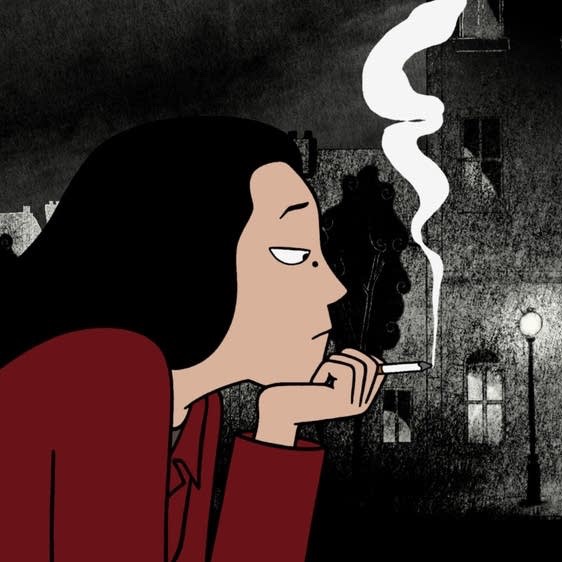
“Sometimes they simply cannot metabolise the amount of social theatre, disguised aggression, and psychological negotiation required to survive certain female circles.”
Female friendships can become an incredibly complex dance of manipulation, gaslighting, people-pleasing, love, care, selfishness, selflessness, jealousy, envy, and competition.
There is often immense tenderness there, but also an entire subterranean social game operating beneath the surface.
If you are good at managing these dynamics, regulating your reactions, reading subtext, and still participating in the game while remaining human, you will probably have a decent number of close female friendships. But even a little social awkwardness, emotional transparency, or inability to tolerate masked behaviour can make female friendships extremely difficult to navigate.
Your friends can slowly become your bullies, and it takes an enormous amount of emotional labour to keep moving through those dynamics when you do not naturally possess the social machinery required for them. You begin noticing the injustice, indirectness, performative sweetness, hidden hostility, constant testing, and you cannot keep pretending it is normal.
That is why some women do not have many female friends. It is not always because they are jealous, male-centred, or a “red flag.” Sometimes they simply cannot metabolise the amount of social theatre, disguised aggression, and psychological negotiation required to survive certain female circles.
The amount of mindspace you have to pay to remain inside such relationships can be enormous.
i love gay new york summer side quests so much why was everyone i know either at the madonna grindr times square concert, the phoebe bridgers $1 MSG show, or meeting the vampire lestat today
sometimes i think about the absolute hell in which whales must live, enduring endless, inescapable machine noise from boats that also wrecks their ability to communicate with one another
Imagine being a black athlete dominating such
a predominantly white sport while looking fly and alternative in an era where black athletes were barely even allowed to express themself without being persecuted? Truly revolutionary
A turkey vulture can smell a dead animal from over a mile away, literally.
Their sense of smell is so refined that natural gas companies have used them to find pipeline leaks.
In the late 1950s, ornithologist Kenneth Stager was investigating whether turkey vultures find carrion by sight or smell, a question that had been debated since Audubon ran flawed experiments on it in the 1820s.
Stager visited engineers at California's Union Oil Company, hoping to use ethyl mercaptan (the chemical added to natural gas to make leaks detectable) as an experimental scent source. The engineers told him, "Of course turkey vultures can smell. We've known that for years."
The Union Oil engineers had been pumping high concentrations of ethyl mercaptan through pipelines and watching the sky. Ethyl mercaptan is also released by decomposing flesh, so to a vulture, a gas leak smells exactly like a dead mouse under a log.
The engineers would patrol a 42-mile section of pipeline after the dose, and wherever vultures were circling or sitting on the ground, there was a leak.
Stager confirmed it scientifically with controlled field experiments using compressed-air ethyl mercaptan emitters. His 1964 paper, "The Role of Olfaction in Food Location by the Turkey Vulture," became the definitive proof that vultures find their food by smell.
Ive talked about how gothic horror is a fear of the remains of a now dead decadence of the past, ie haunted castles or old haunted mansions. Our modern version of this is evidently empty shopping malls and anamatronic pizzaria arcades
In 1965, a 17-year-old girl in Sicily was kidnapped, assaulted, and held captive for over a week.
Then her attacker offered her a deal:
Marry him, and everything would be “forgiven.”
At the time, Italian law allowed rapists to avoid punishment if they married their victims.
It was called “reparatory marriage.”
The logic was horrifying:
A woman’s “honor” mattered more than her consent.
If she married the man who violated her, her reputation could supposedly be restored — and the rapist could walk free.
Most women had no real choice.
Families pressured them.
Communities expected obedience.
The law itself encouraged silence.
But Franca Viola said no.
At 17 years old, traumatized and publicly shamed, she refused to marry the man who assaulted her.
That single word changed Italy forever.
Her decision sparked outrage in her town.
Neighbors turned against her family.
Their vineyards and olive groves were burned in retaliation.
But Franca’s father stood beside her and supported her decision to press charges.
In 1966, Franca testified publicly against her attacker in court.
At a time when most victims were expected to stay silent forever, she spoke openly in front of the entire country.
Italy watched in shock.
Her attacker, Filippo Melodia, was convicted and sentenced to prison.
For the first time in Italian history, a woman had publicly rejected “reparatory marriage” and won.
The case became international news.
But the law itself still remained.
For another 15 years, rapists in Italy could technically still escape punishment by marrying their victims.
Then finally, in 1981, Italy abolished the law completely.
And many activists pointed to Franca Viola as the moment the country first began confronting the cruelty of that system.
Years later, Franca married a childhood friend who had stood beside her through everything.
Not because she needed her “honor restored.”
But because she deserved love, dignity, and a life defined by her own choices.
That’s why her story still matters.
Franca Viola wasn’t just resisting one man.
She was resisting an entire culture that treated women’s suffering as something to hide rather than something to fight.
At 17 years old, she stood against her attacker, her community, and even the law itself.
And eventually, the law changed.
Sometimes history moves because powerful people decide to act.
And sometimes history moves because one terrified teenager quietly refuses to surrender.
Waking up heartbroken. Marjane Satrapi revolutionized not just Iranian storytelling but also broke barriers in the graphic novel medium and subsequently adult feature animation. She’s a one of a kind voice whose timely tale of resilience is as revolutionary now as it was when she penned Persepolis.
56 is so young especially for such a vivid writer and filmmaker. RIP.