"Want to make a change, don't know how. Still gonna try it, don't know when". Neuroad by day, sometimes by night. Amateur in a lot of stuff. Expert in nothing.
🔎Unique case🔍
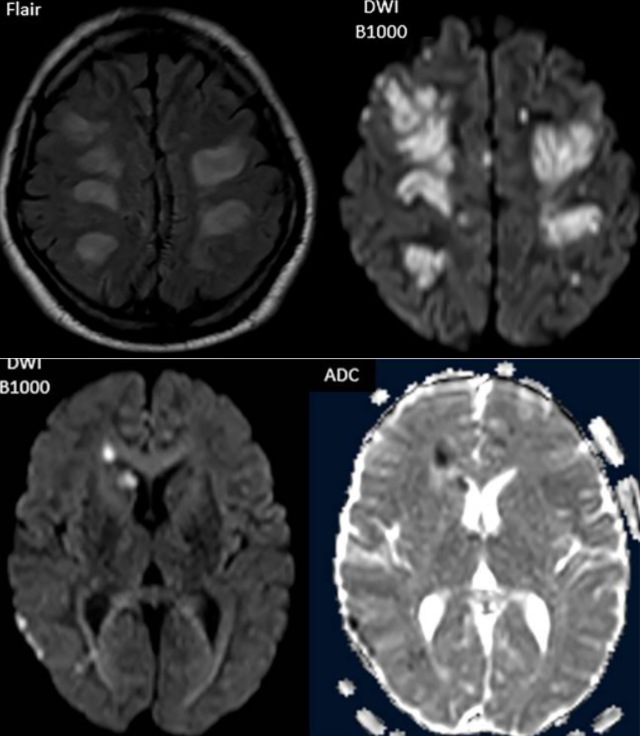
71♂ T2DM. Recently underwent CABG on DAPT
Found unresponsive after 12 hours of going to sleep.
Severe hypoglycemia.
Home blood sugar was LOW.
Came gasping w/ GCS 3.
Initial CT head 🆗
MR ~ 48hrs 👇
Short 🧵 (1|14)
🕵️♂️A 46-year-old immunocompetent man presents with subacute confusion and speech disturbance, later developing seizures. Initial work-up is unremarkable, but neurological status rapidly worsens. CSF PCR eventually identifies the pathogen.
What is the most likely cause?
Case 168: Occipital Bone Osteolytic Lesion Biopsy
86-years old with a right occipital bone expansile osteolytic lesion for biopsy
The video discusses the case, the biopsy and an overview of skull/calvarial biopsies and why we as radiologists should be doing more of these.
https://t.co/P0HAQzzYcT
#ctbiopsy #irrad #skull #skullbiopsy #calvarium #plasmacytoma
🫁 CTD-ILD Specific Signs: From Classic to Emerging
In CTD-associated ILD, several CT findings can help distinguish UIP due to CTD from IPF. These include:
🔹 Anterior Upper Lobe Sign
🔹 Four Corners Sign
🔹 Straight Edge Sign
🔹 Exuberant Honeycombing
✅ These were initially described in UIP with honeycombing, and later extended to probable UIP (except exuberant honeycombing, which requires honeycombing).
📌 What’s New?
Recent work has highlighted variant fibrotic patterns in CTD-ILD, especially in SLE-ILD, but possibly not limited to it:
🔸 Island-like Fibrosis Sign
Defined as: Isolated fibrotic islands within relatively preserved lung, often subpleural, lacking confluence or bridging fibrosis.
— Suggests patchy fibrotic remodeling.
🔸 Heterogeneous Lung Destruction Sign
Defined as: Mosaic zones of advanced destruction, with irregular distortion, traction bronchiectasis, and alternating spared and severely affected areas.
— Reflects nonuniform fibrotic damage.
These signs, described in Chelala et al., Radiology 2025, are being investigated as CTD-ILD indicators across multiple CTDs—not just SLE—and not necessarily limited to UIP.
💡 They’re also now being explored in fibrosing NSIP and fibrotic OP, expanding their diagnostic value beyond UIP.
🎥 2 Case Videos:
1.39M, Dermatomyositis – shows Island-like Fibrosis
2.26F, Overlap Syndrome – shows Island-like Fibrosis and Heterogeneous Lung Destruction
#CTDILD #HRCT #Radiology #Pulmonology #InterstitialLungDisease #SLE #NSIP #Dermatomyositis
📚 References:
•Brady SL et al. Radiology, 2021
•Chelala L et al. Radiology, 2025
This review highlights important neurotoxic complications associated with commonly used and emerging cancer therapies, emphasizing the critical role of neuroimaging in their detection and differentiation from disease progression and other entities.
https://t.co/XqjxfuMJLz
Starting neurorad fellowship soon and want to brush up on your @headneckrads? Watch my newest rapid case review with RadDiscord here: https://t.co/bOzPwJ15Jn
It’s an honor to promote free education in Musculoskeletal Ultrasound (#MSUS) and Rheumatology.
We are happy to share the MSUS Database: over 1,000 images and videos of sonoanatomy and pathology, accessible with a single click from anywhere in the world 🌍 🌎 , even where there’s no textbook, mentor, or ultrasound machine, so students, residents, and practicing physicians can learn and compare cases in real time.
In the MSUS Database you will find:
1️⃣Shoulder Anatomy and Pathology
2️⃣Elbow Anatomy and Pathology
3️⃣Hand Anatomy and Pathology
4️⃣Hip Anatomy and Pathology
5️⃣Knee Anatomy and Pathology
6️⃣Foot Anatomy and Pathology
7️⃣Spine
8️⃣Soft Tissue
9️⃣Nerves
🔟Muscle
1️⃣1️⃣Interventional
1️⃣2️⃣Hyaluronic Acid
1️⃣3️⃣PRP
1️⃣4️⃣Doppler
1️⃣5️⃣Elastography
1️⃣6️⃣Trauma
1️⃣7️⃣Rheumatoid Arthritis
1️⃣8️⃣CPPD
1️⃣9️⃣And more…
📸 🎥 We’re expanding this library every week to its improvement! 🤝🌍
Special thanks to Giorgio Tamborrini of UZR Ultrasound Center (@rheumatology) for conceiving and leading this project and inviting me to contribute. It’s also a privilege to collaborate with MSUS experts such as:
🔹Dr. Jörg Dünkel of @SportklinikBern
🔹Dr. Alberto Schek @aschek3582
🔗 Explore & share: https://t.co/QYhHBlw5dz
❗️To find specific images or videos, go to the Photostream and use the 🔎 (magnifying glass) icon just below 👇 the “secondary menu”, or explore each album individually in its dedicated folder 📂
#MSUSDatabase #GlobalUltrasound #POCUS #FreeEducation #Rheumatology #MSUS #OpenEducation #FOAMed #USguidedInjections #PRP #SportsMed
MRI findings of genetic diseases often misdiagnosed as MS. A-D LHON B CADASIL. D CANVAS. E Krabbe disease F Cobalamin C disease. G polymerase gamma gene disease. H Alexander J/K CADASIL L Spastic paraplegia 5 with diffuse leukoencephalopathy https://t.co/h0aW7Cd4hJ
How much has our understanding of interstitial lung disease changed in 10 years? 🫁📈 This article looks at how ILD classification, imaging, and care have evolved, especially for fibrotic ILDs. A must-read for anyone in this fast-moving field. #Radiology
https://t.co/NL4ISJj6YX
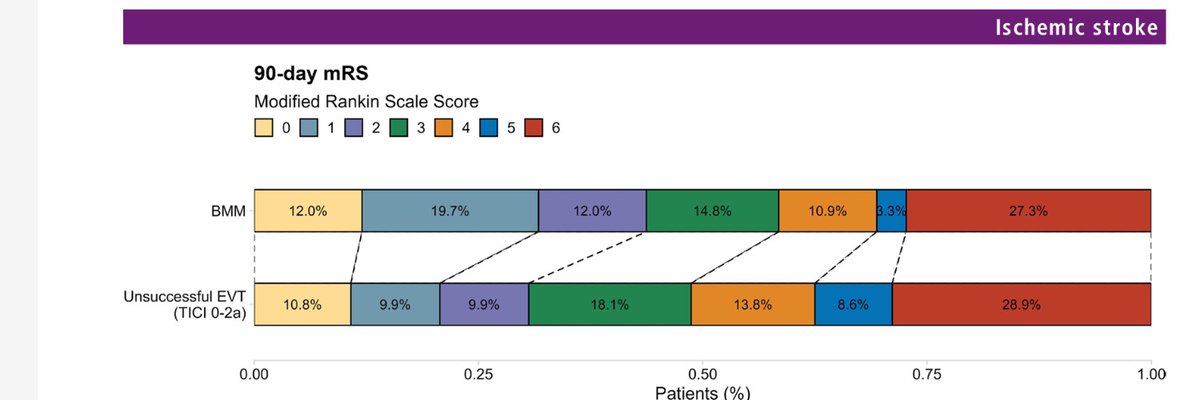
Thrombectomy for MeVO and DVO: The End of the Road or Just a Detour? | Stroke: Vascular and Interventional Neurology https://t.co/UegReplBlO @StrokeAHA_ASA@svinsociety@SVINJournal
From the October-December 2024 Issue of #Neurographics: Structured Approach for Imaging and Treatment of Spontaneous Intracranial Hypotension: a Case-Based Review https://t.co/gZkudu5wyE
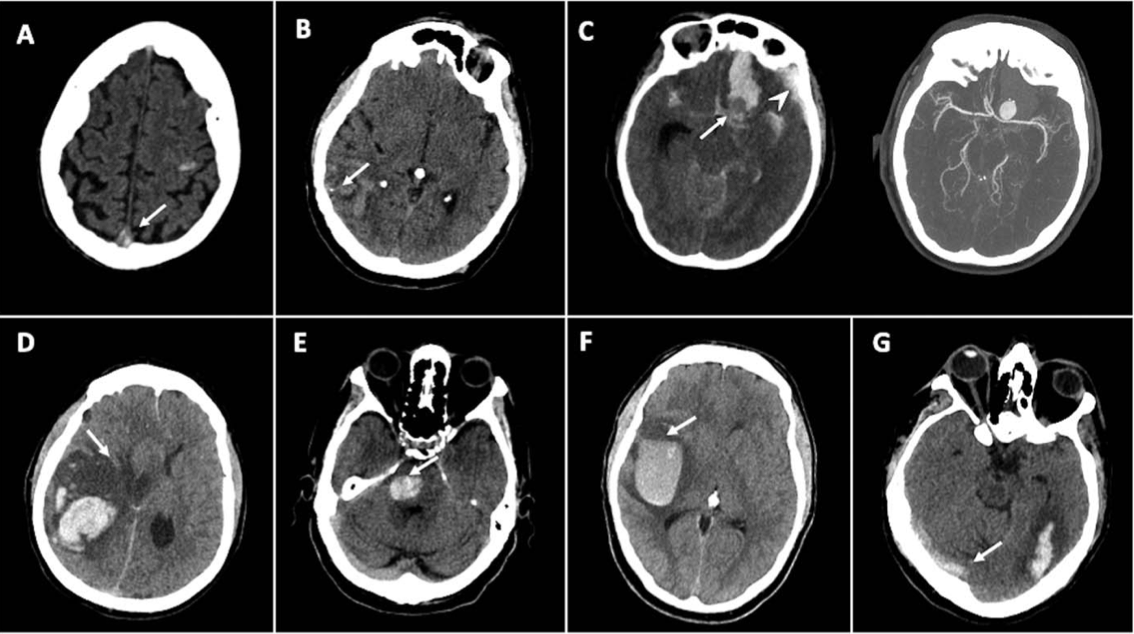
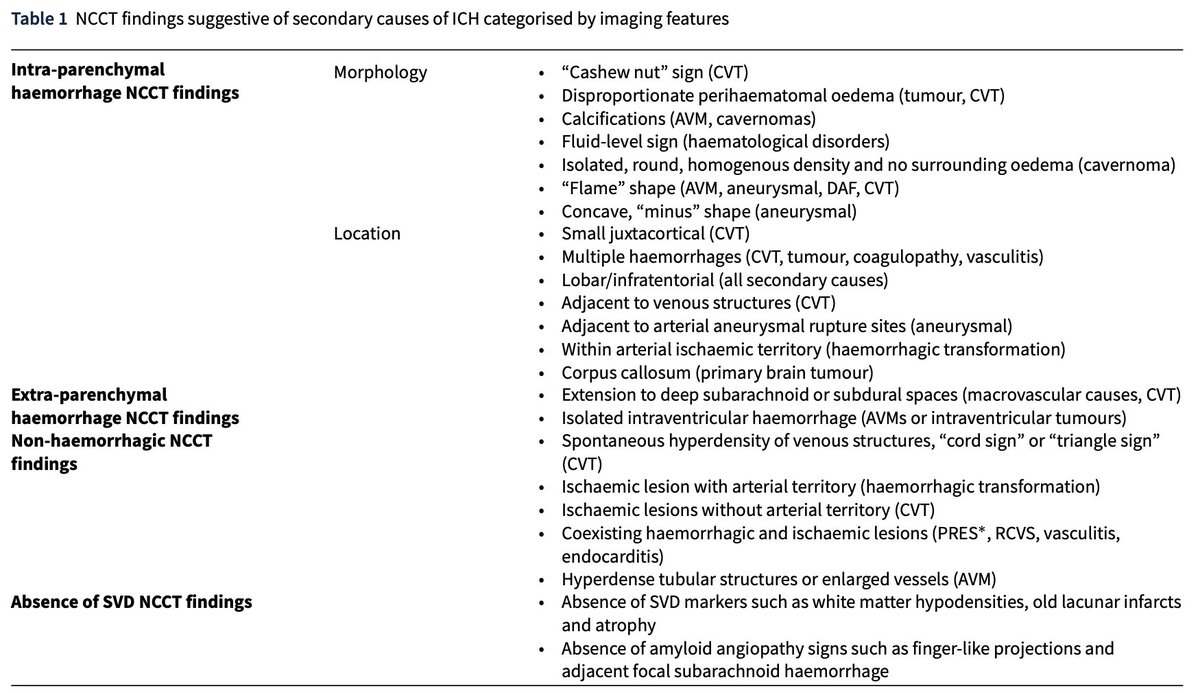
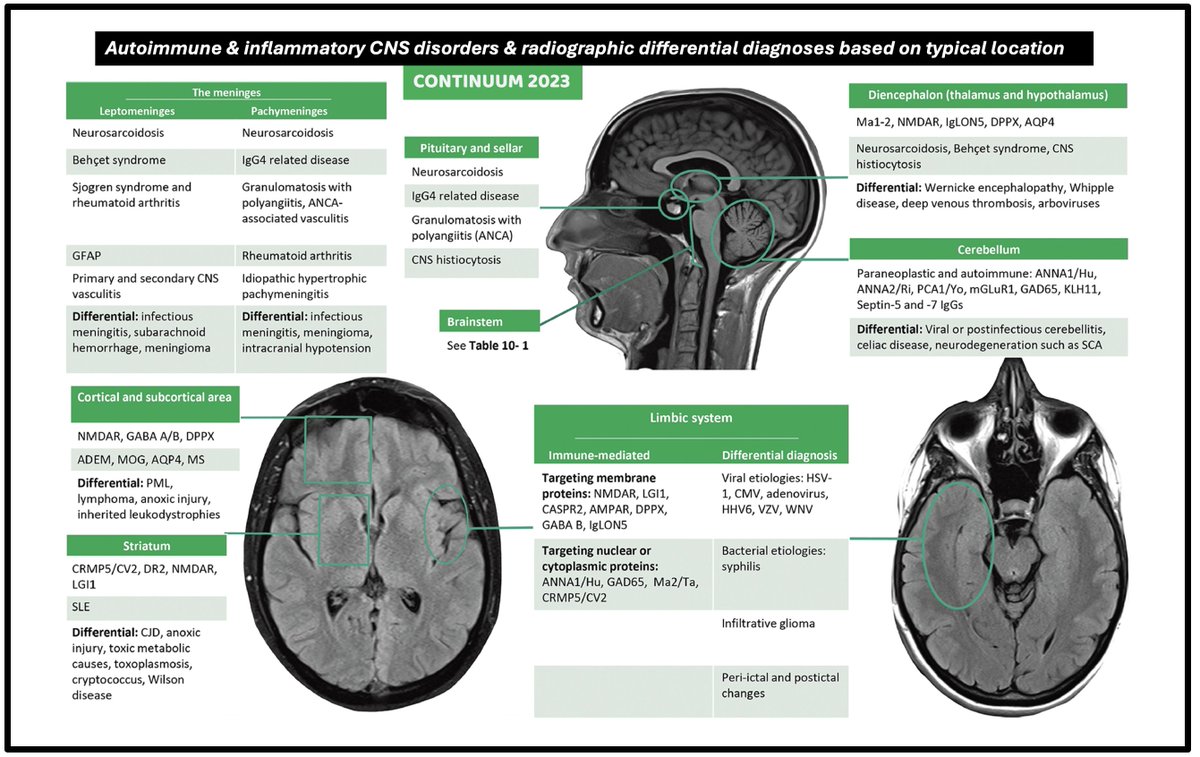
on-call FAQ . Paper(s) I keep for quick reference. The second is to reinforce the appropriateness criteria of the signs (not an expert in this field). Just a user with the General Rad Suit
#neurotools#neuroimaging
ima1,2: https://t.co/YNSiDDlOTO
ima3: https://t.co/LQH1b8FibU
🧵/ Late breaking science results from #ISC25 will be posted to this thread at the time of presentation.
(bookmark this post)
DISTAL
ESCAPE-MeVO
DISCOUNT
TRANSPORT2
C3FIT
PRESTIGE-AF
ANGEL-TNK
HOPE
A recent study showed that morning coffee drinkers had a 12% lower risk of all-cause mortality and a 31% lower risk of dying from cardiovascular disease over a 10-year period.
This benefit was specific to morning coffee drinkers, as no similar protective effects were observed when coffee was consumed in the afternoon or evening.
Moderate coffee consumption stood out as being most beneficial for reducing all-cause mortality among morning drinkers:
- 1–2 cups per day was associated with a 16% lower risk
- 2–3 cups per day was associated with a 28% lower risk
- 3+ cups per day was associated with a 21% lower risk
There were no additional benefits associated with "all-day" coffee drinking, which was defined as drinking coffee in the morning, afternoon, and evening.
Even though morning intake was uniquely protective, higher coffee consumption—regardless of timing—was linked to a 14–19% lower all-cause mortality risk and an even greater 28–40% lower risk of dying from cardiovascular disease.
While this study can't prove causation, there appears to be a health benefit associated with enjoying this beverage early in the day that might relate to the unique polyphenols, motivation to exercise, better sleep, or resetting circadian rhythms.
Study PMID: 39776171