“I wish it need not have happened in my time."
"So do I, and so do all who live to see such times. But that is not for them to decide. All we have to decide is what to do with the time that is given us.”
I totally envision Trump renaming the San Andreas Fault to Joe Biden’s Fault, and I am just putting this out there so I can say I predicted it one day.
In Tokyo tomorrow? Celebrate America’s 250th birthday by watching the Tokyo Tower, Rainbow Bridge, and Tokyo Aqua Symphony illuminated! Snap a photo or video of Red, White, and Blue lighting up the night sky. We’d love to share your photos!
Simply use #A250inJapan
Light-up Times:
🇺🇸🇯🇵Tokyo Tower: Friday, July 3, 2026 7:00 PM – midnight
🇺🇸🇯🇵Rainbow Bridge: Friday, July 3, 2026 7:00 PM – midnight
🇺🇸🇯🇵Tokyo Aqua Symphony: Friday, July 3, 2026 6:30PM – 9:30 PM
A perfect Thursday in Spain as a 37 year old man:
10:00 - Wake up
10:30 - Mother brings breakfast to bed
11:30 - Take two buses to a €900/month job
12:30 - 2 hour coffee break
13:30 - Receive a call that squatters have occupied apartment
14:00 - Eat lunch for €4, complain it used to be €2
15:00 - Siesta
16:30 - Join protest against tourists ruining Barcelona
20:00 - Talk with an unemployed friend how Spain has the highest quality of life
22:00 - Have sex with two neighbors while drinking sangria
00:00 - Sleep in a childhood bedroom under a Real Madrid poster
Life in Spain is simply paradise
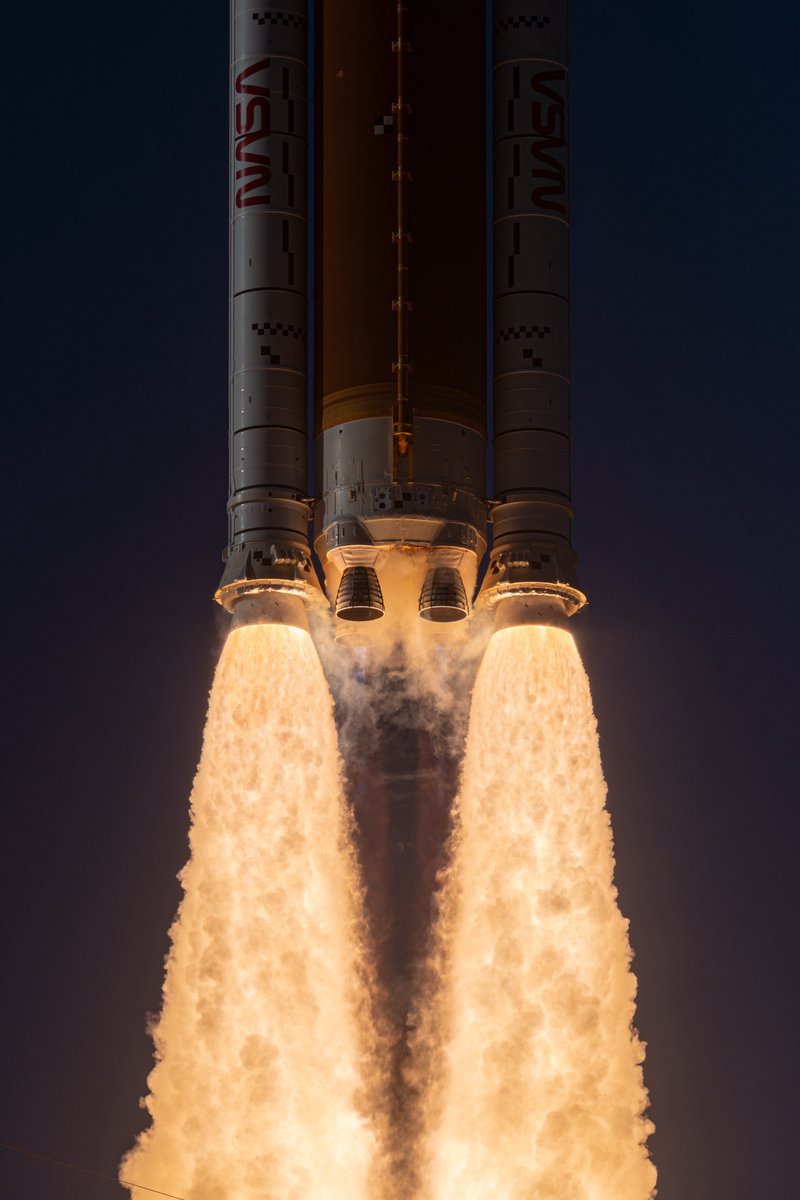
Congratulations to the Artemis II crew – but the case for sending astronauts into space is rapidly shrinking | Martin Rees and Donald Goldsmith
https://t.co/kKZZS4kfCa
The world stopped to watch Artemis II.
Moments like this remind us what is possible and inspire the next generation to dream bigger and take us even further.
We are just getting started on this grand adventure. It is time to start believing again.
May I offer a different perspective on the whole transatlantic family feud brewing over NATO.
Europeans are furious at what they call American unilateralism and "wars of choice," while Americans are done subsidizing allies who won't lift a finger when Washington actually needs them. Given all the sentimentality and historical baggage, there’s been a lot of bad blood and high grade insults thrown both ways.
A lot of pride here is at stake. But given that I am not American or European, what I can provide is an Asian perspective. The whole thing looks very different as there are no blood ties or cultural nostalgia to pull me either way. Because of distance, the default Asian lens on America has always been colder, clearer, and far more pragmatic than the European one.
Asians have never lived under the illusion that their relationship to the US is one based on shared values. If they ever did, the illusion was shattered during the Cold War. Instead, Asian nations saw the relationship to America as a cold, interest-driven bargain in a dangerous neighborhood full of communists, insurgents, and bigger powers.
Fast forward to today, and this lesson still holds. Japan, South Korea, the Philippines, Vietnam, Singapore and Indonesia all partner with America because their interests (not values) align - especially when it comes to countering China.
These nations have reasons to be alarmed about Beijing's ambitions in the South China Sea, around Taiwan, and across the Indo-Pacific. They don't need lectures about democracy or liberal international order to see the value in US forward presence, intelligence sharing, tech transfers, and security guarantees. It's a straight-up transactional deal: the US keeps the sea lanes open and the PLA at bay. Meanwhile, Asian nations host your bases, buy your weapons, and join your alliances (Quad, AUKUS, etc.). When interests diverge, they adjust pragmatically, without the drama and meltdown.
Probably not many in the West know this, but one of the forces that shaped this attitude was the US pullout of Vietnam and the rest of America’s Cold War shenanigans. Lee Kuan Yew was one of America’s loudest cheerleaders in Southeast Asia. In 1967 he flew to Washington, testified to Congress, and begged Lyndon Johnson (and later Nixon) not to cut and run in Vietnam. He warned that a hasty US exit would trigger the dominoes - Vietnam, Cambodia, Laos, and then pressure on the rest of Southeast Asia.
Singapore became a logistical hub, providing a haven for US troops on R&R, oil refineries supplying the American war machine, and Lockheed servicing aircraft. At one point, US military-related spending made up 15% of Singapore’s entire GDP. Singapore didn’t support the war because it loved American democracy but because it kept the communists tied up and bought Southeast Asia time to build up its own economy and military.
Then came the pullout - the Paris Accords in 1973 and then Saigon falls in 1975. Despite all the lobbying, despite the blood and resources America had spent, domestic politics in the US (the anti-war movement, Congress, Vietnam syndrome etc.) ended it. LKY watched in disbelief as the superpower that had promised to hold the line simply walked away.
The lesson was that American commitments are real only as long as they serve American interests and American voters don’t get tired. It’s a brutal one to internalize. LKY was disappointed and noted American “unreliability” but Singapore didn’t collapse into panic or anti-Americanism. They just recalibrated and kept pursuing pragmatism by building its own deterrent, diversifying partners, and later offered the US naval logistics access (Sembawang port) when the Philippines kicked them out of Subic Bay in the early 1990s.
Malaysia drew the same conclusion. The Tunku was pro-Western and anti-communist early on, but Malaysia never joined SEATO and pushed ZOPFAN (Zone of Peace, Freedom and Neutrality) instead. When the British announced their East-of-Suez withdrawal in 1968 and Nixon’s Doctrine (1969) told Asians “you defend yourselves first, we’ll just help,” Kuala Lumpur accelerated its neutralist tilt.
The message was clear - don’t count on Washington to bleed indefinitely for distant allies.
South Korea is similarly pragmatic but it operates under far higher stakes due to baggage from the Korean War and the ongoing North Korean threat. American intervention literally saved the South from conquest, resulting in a bond that is forged in blood. While South Korea had to learn the same lessons - that the American umbrella isn’t permanent, sharing a border with a nuclear-armed adversary forces tighter coupling with Washington.
The reverberations of Nixon’s 1973 opening to Beijing cannot be understated. It shocked the entire region that America, the great anti-communist crusader, suddenly would cozy up to Mao to counter the Soviets. If Washington could flip on core principles when interests demanded it, why should smaller states pretend the relationship was about anything deeper?
The core Asian critique of the European approach to dealing with America is that it is entirely bound up in moral values and civilizational kinship. This means that every disagreement feels like a betrayal and breeds resentment on both sides.
Because Europe is so hyped up on abstract values, it makes NATO feel like a sacred club that America is disrespecting. Asia's interest-based lens sees alliances as tools - useful until they're not. Maybe Europe thinks the Asian approach is cynical but the irony is that this is actually what keeps Indo-Pacific partners far more reliable counterweights to China than many NATO members ever were against Russia.
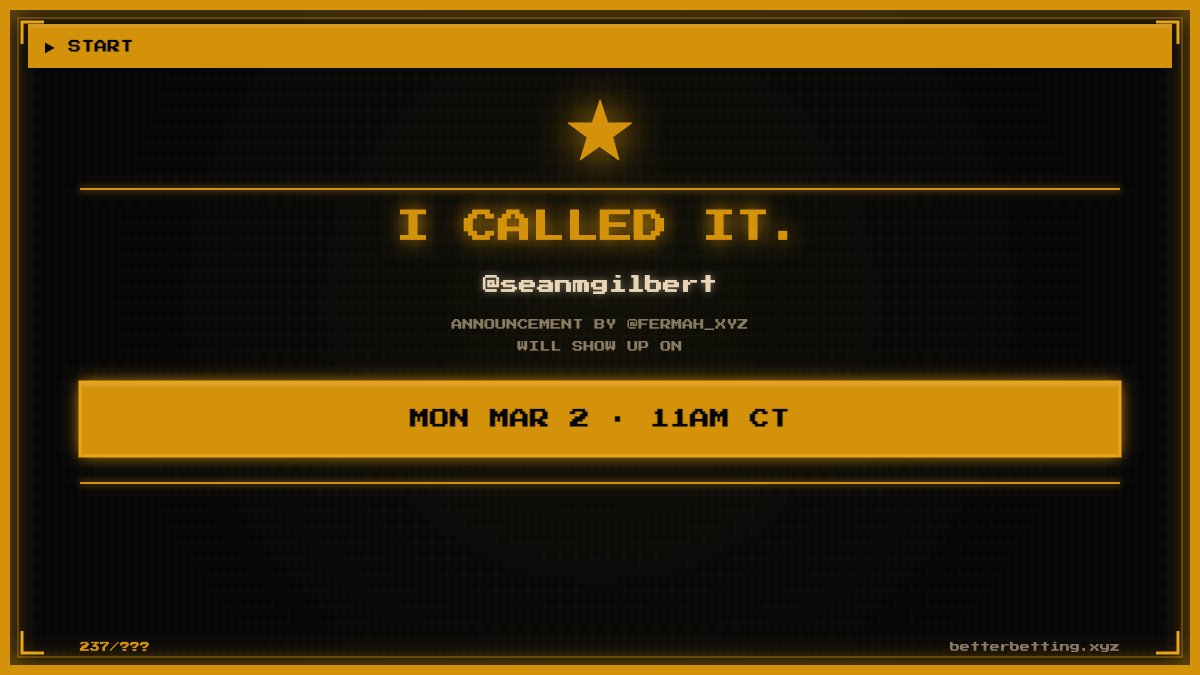
BIG announcement dropping. And we are not telling you when.
but YOU can call it 🎯
go to [betterbetting . xyz] → drop your prediction → get a shareable card
closest calls go on our Hall of Fame.
no money involved. no prizes. just bragging rights.
if you are feeling bold: quote this with your card + tag someone who thinks they can call it better
Incredible to see @fermah_xyz transition from testnet to mainnet.
Big shout out to the whole team for all their hard work, and keep an eye out for what the team is cooking up next 👀
Big news: Universal Proof Market is live on mainnet.
The system is designed to support heterogeneous proof systems and hardware profiles.
@zksync is the first network going live on the proof market. Huge milestone not only for Fermah, but for ZKsync in it's big decentralization vision of building every stack right.
We are building it right and are increasing load gradually, to ensure top liveness for proof requesters and high utilization rate for compute providers :
- More zk networks submitting proof requests
- More compute providers joining supply
This is the first production step toward that model.
Incredibly proud of the world-class team at Fermah!






![fermah_xyz's tweet photo. BIG announcement dropping. And we are not telling you when.
but YOU can call it 🎯
go to [betterbetting . xyz] → drop your prediction → get a shareable card
closest calls go on our Hall of Fame.
no money involved. no prizes. just bragging rights.
if you are feeling bold: quote this with your card + tag someone who thinks they can call it better](https://pbs.twimg.com/media/HCLVPR0bQAId-Ks.jpg)


