College/Grad student most annoying nightmare
act 1: you write your thesis, then you realize your table of contents’ numbers are not aligned
act 2: no easy way to format a table of contents (unbelievable right?)
>For all students out there, I built a simple and open source web app to solve this time sink
https://t.co/037ZQEfnRj
Unlike skeletal muscle, your heart’s motors seem to cooperate like a train crew that never stops. Understanding how they communicate is crucial to unlock molecular mechanisms of heart disease and develop targeted therapies.
Research spotlight 🚨 - Mishaps of a Human Mutation Inside a Pig Heart
The study "Perinatal death in pig models of hypertrophic cardiomyopathy carrying sarcomere pathogenic variants" by Flisikowska, Petersen, Mearini, Huber, Kurome, Stoff, Schlossarek, Lucas-Hahn, Wolf, Montag, Schnieke and Carrier doi: https://t.co/SBK2mX3loj
reported the second case where the introduction of a human mutation that causes heart disease into a pig heart resulted in death shortly before/after birth.
Specifically, the mutation was on cardiac myosin, the molecular motor of the heart (whether pig or human or any mammal!).
Thought-provoking fact: the pig heart is considered to be physiologically closer to the human heart than hearts from small mammals like mice and rats.
Indeed, there was a pig-human transplant done in the year 2022, pushing the frontiers of xenotransplantation - such a cool, long word.
Although the enigmatic susceptibility of pig hearts to myosin mutations remains to be explained (and perhaps is the key to understand why the transplant failed after 2 months) this work represents an exciting step towards the treatment of heart disease via gene engineering.
From the Lab 🚨 Half the function, full therapeutic benefit?
A few months ago, I was given a presentation about cardiac molecular motors. (full study here: https://t.co/YElEtxU8l2, a collaborative effort between the Warshaw Lab, Yengo Lab and Sivaramakrishnan Lab)
Right after the presentation, I received a question along the lines:
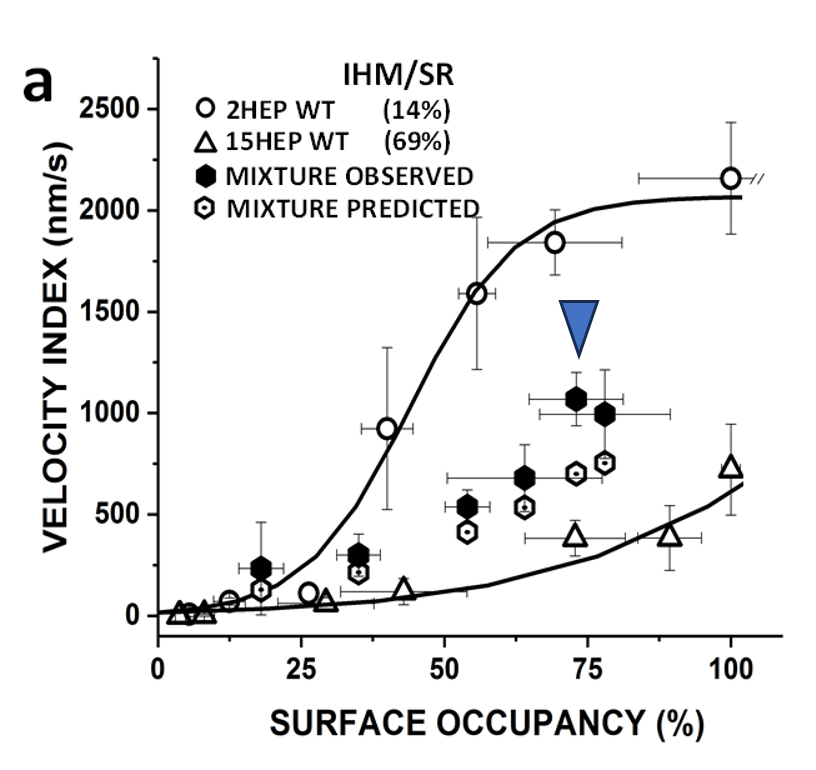
You have a heart with a heterozygous pathogenic mutation (let's assume 50/50 but allelic expression imbalance is a thing) that incapacitates the molecular motors responsible for the heart contraction, what fraction of the total number of broken motors do one really need to rescue in order to make things normal again? Is it 100% of them, or the more hopeful scenario, maybe just rescue of say 10% of the motors gets you closer to a happier heart?
The highlighted data point in the figure (blue arrow), represents a condition where 100 nM of a human cardiac myosin construct - attached to an artificial surface - with ~80% of motors out of play was mixed with 25 nM of a myosin construct that had effectively no motors out of play, produced a 2X increase in mechanical outcome (gliding of actin filaments). Thus, it might be possible to offer the educated guess of 1/2 of the total number of broken motors as an answer! I will be the first one to admit that this result comes from a reductionist experiment that does not fully recapitulates what happens inside our beating hearts, but it does allow the scientific community to ask more questions, improve mechanistic interpretations, and design further experiments, with the ultimate goal of improving the treatment of heart disease!
Research spotlight 🚨
Can we see the inside of the heart muscle while is working?
Sort-of...
The study "Annotating the X-ray diffraction pattern of vertebrate striated muscle" by Koubassova, Dutta, Ma, Tsaturyan, Irving, Padrón, and Craig
doi: https://t.co/2e8Do3AQGv
explains the use of X-ray diffraction techniques to try to see whats going on at the protein level while a cardiac muscle is beating!
Unfortunately, there is something called the "phase problem" that complicates things, however, here, they have used a highly accurate cryo-electron microscopy model of the cardiac thick filament to essentially back-calculate what the X-ray diffraction pattern should be, which can then be contrasted with the experimental diffraction patterns to tease out what protein contributes what, thus advancing our understanding about how to interpret this type of crucial data that allow us to have a peak inside cardiac muscle in health, disease, and therapeutic drug design!
Research spotlight 🚨 - Is Your Heart Too Stiff?
The study "Direction‑dependent contributions of cardiac myofilament networks to myocardial passive stiffness reveal a major disparity for titin" by
Wagner, Loescher, Unger, Kühn, Klotz, Liashkovich, Ciechanska, Schillers, Koser, Freundt, Hessel, and Linke doi: https://t.co/59fCfvxRDl
explains that our heart in fact need to have some degree of passive stiffness, but highlights that we still don't completely understand if its equally stiff in all directions, and if not, what molecular components are responsible for this?
The study reports that contributions from molecules that make up cardiac stiffness are not exactly the same whether is longitudinal or transversal. This is an extremely interesting observation, considering that many heart diseases impact cardiac stiffness!
From bench to beside 🚨 - A Summary that Captivates
Authors Maron, Olivotto, and van Sinttruije captured my attention with their plain language summary of the SEQUOIA-HCM study: aficamten for symptomatic obstructive hypertrophic cardiomyopathy
https://t.co/CykAkIbeiE
Aficamten is a small molecule drug targeting the molecular motor that powers heart contractions, with the goal of taking a broken motor impacted by pathological mutations and return it to its wild-type behavior.
Without extending myself too much, I want to emphasize how simple but informative I found this summary. So much that it prompt me to share it in this format, with the hope that it might continue inspiring people to create summaries as digestible as this one!
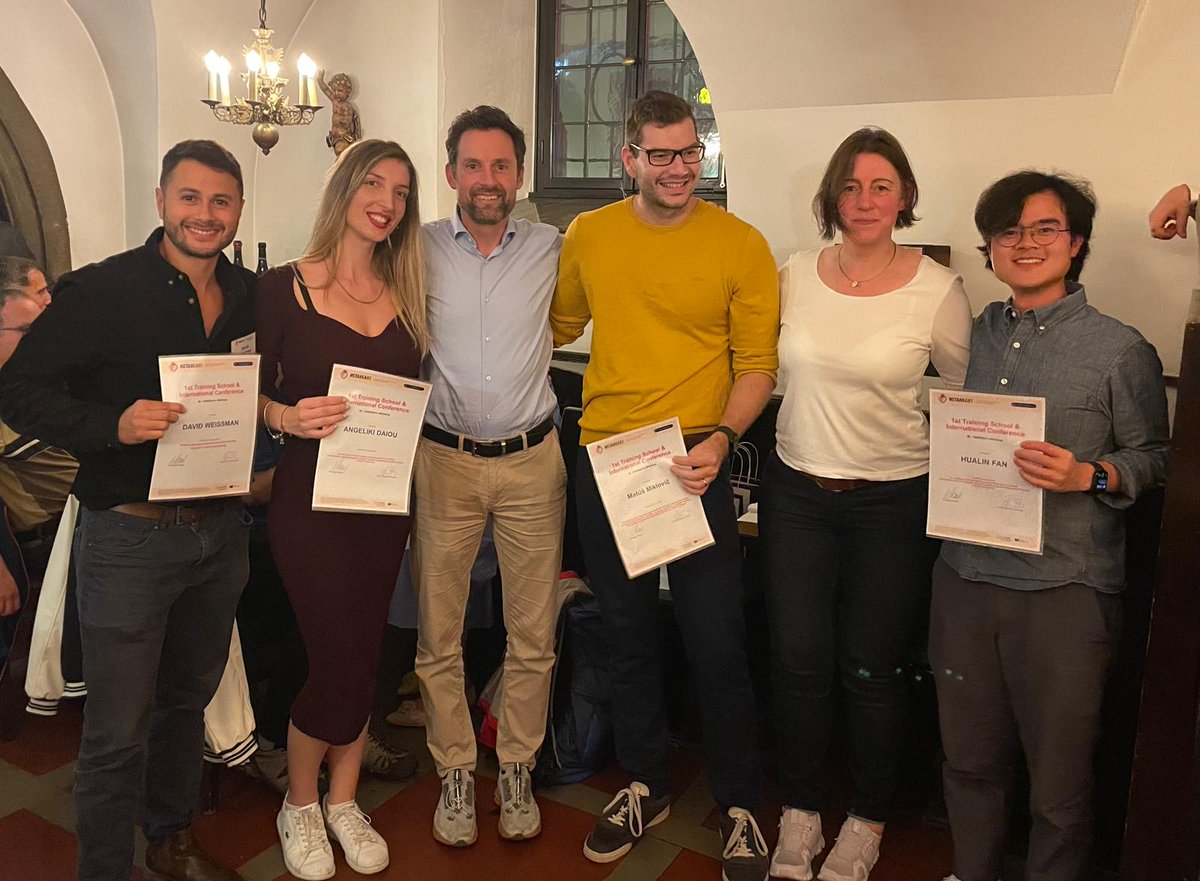
📃📣 📣📣September news!
➡️Great success for our 1st Training School in Wurzburg on @OroborosI, Seahorse & @IonOptix with 18 students & postdocs
➡️ International conference with 4 awardees for their great presentation: Angeliki Dajou, Hualin Fan, Matus Miklovic & David Weissman
@manorlaboratory Intuition: imagine recognizing a soda bottle looking at the cap from above(2D), and you want to capture the boundaries of the whole bottle(3D). Doesn't matter if the bottle is pear shaped or hourglass shaped, as long as you know how to follow the contour, you'll solve the shape.
Clever use of Machine Learning addressing 3D biological data segmentation from @manorlaboratory. Essentially, if you know what to look for in 2D, you can teach a model to approximate its depth, irrespective of the nature of the depth data. (1/2) https://t.co/on3mp7DqLA
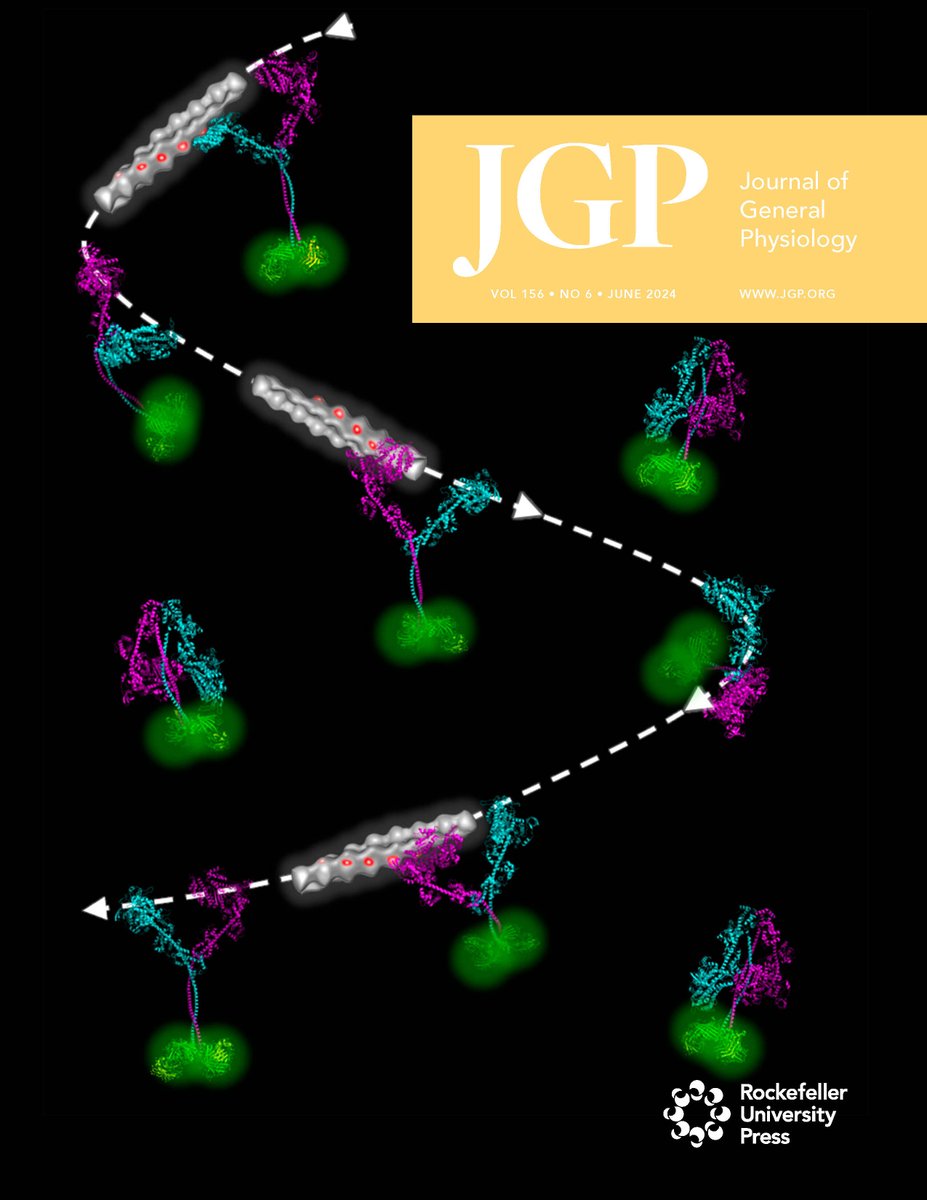
Our study on Human Cardiac Myosin Molecular Mechanics got the JGenPhysiol June 2024 cover image! Credits to all co-authors, with special mention of the Warshaw lab mentoring team.
Our June issue is out https://t.co/KKhHURaA7D
Human cardiac myosin molecular motors power the heart by moving actin. The cover shows myosin, surface-attached by their green fluorescent protein tails, propelling actin. From @SDuno_Miranda et al. (https://t.co/b0zHqAJjBp)