@aztecnetwork (committee-based ZK rollup): Each proposal is gated by randomly sampled, small committees who must attest to it. This increases inclusion delay under censorship but protects the young proof system from rogue proposals.
If the committees censor, the escape hatch lets a proposer publish without attestations every ~3d for a very large bond. Inclusion delay is between minutes and days under censorship but Aztec’s in-protocol privacy can resist some censorship completely.
Learn more here: https://t.co/YzONh273Ql
gnosispay hacker used @RelayProtocol to escape gnosis chain.
think about this deeply:
they fled Gnosis Chain after having both their USDC.e and EURe frozen there, for the censorship resistance bastion that is USDC on Base, so they chose the true hacker option:
Relay EOA bridge
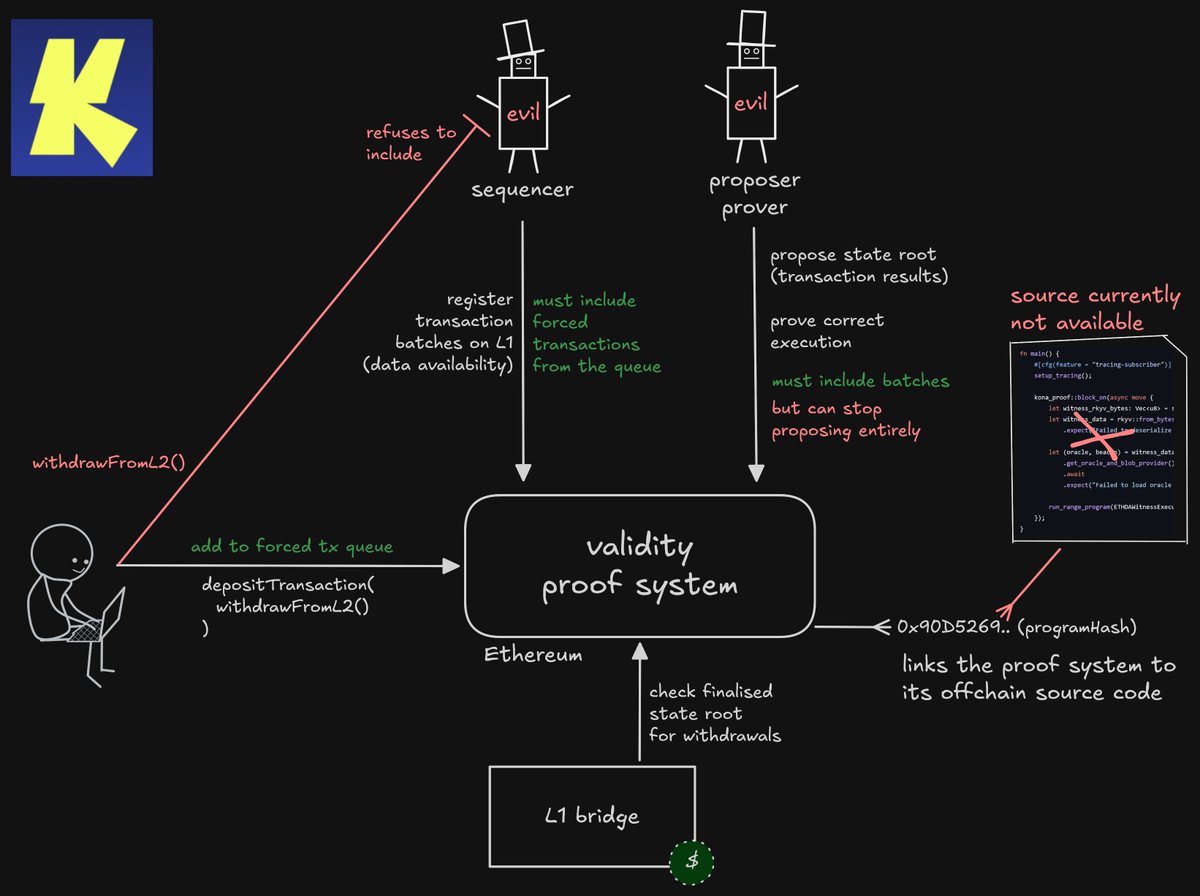
Forced transactions are essential on the path to Stage 1 and beyond. They are necessary for emergency withdrawals under censorship, but not sufficient. For most L2s, other necessary steps are securing the proposer-failure path and upgrades to plausibly guarantee exits for users.
We are in contact with the Katana and Agglayer teams, who work together with us on the glorious path to freedom (Stage 1 decentralisation and beyond). Expect more progress soon!
@MayaStone420 that's not easy to verify, the tornadocash.eth ENS always points at the latest gov-voted version on ipfs. @pcaversaccio verified this one afaik: ipfs://bafybeie5hxovqc4ifcnrnhvmjbefxgeix6oqvzaspyytdxiyscji22v5pu
may i interest you in the TornadoCash HACK?🗣️
It stole deposits and was only fixed after 2 months because nobody detected it..
but it's IMMUTABLE!? - not the ENS domain!
how much? the hacker got free money laundering included because they stole directly from the private pool
@fortydexies@donnoh_eth there is the butterfly-effect.eth ENS (https://t.co/R9lSbXbY50) who did a lot of proposals and torn gov in general but the proposer of 44 (the malicious proposal) was not his address: https://t.co/nwtPsbLilE