@FU_joehudson Yes!
When we “should” we fail to take responsibility for ourselves. Should is external and outside of us and also not generated in a present tense. “Want” may be good, it may be bad, it may be helpful or not, but it’s true. And that is orienting.
I’ve been reading Viktor Frankl’s book, “Man’s Search for Meaning” - his philosophy of Logotherapy emphasizes how man’s search for meaning transcends man’s pursuit for pleasure or power. He created this philosophy during and after his time in Auschwitz and other camps. Please check it out!
Dr. Gabor Maté reframes ADHD with profound compassion:
In stressed families, a highly sensitive child absorbs the tension → tunes out as a survival coping mechanism.
These kids often have deep empathy, warm hearts, and hidden talents — but crave emotional security above all.
Not "fix the behavior" — make them feel truly safe and understood.
48-sec clip hits the heart
Parents/anyone touched by ADHD — does this resonate?
@Okla_OAG Privatization of Medicaid in Oklahoma has multiple fraudulent aspects some of which apparently are sanctioned by the states rules. Families and small business are being fleeced through substandard care and big business in bed with the rule makers. Please continue investigating
@ok_hca We have been trying to get providers paneled with the MCOS for our counseling practice which has worked with you for over 10 years. People prevented from getting care. 3 providers waiting 110 days, 83 days and 75 days. Mcos: No answers. Can someone fix this madness?
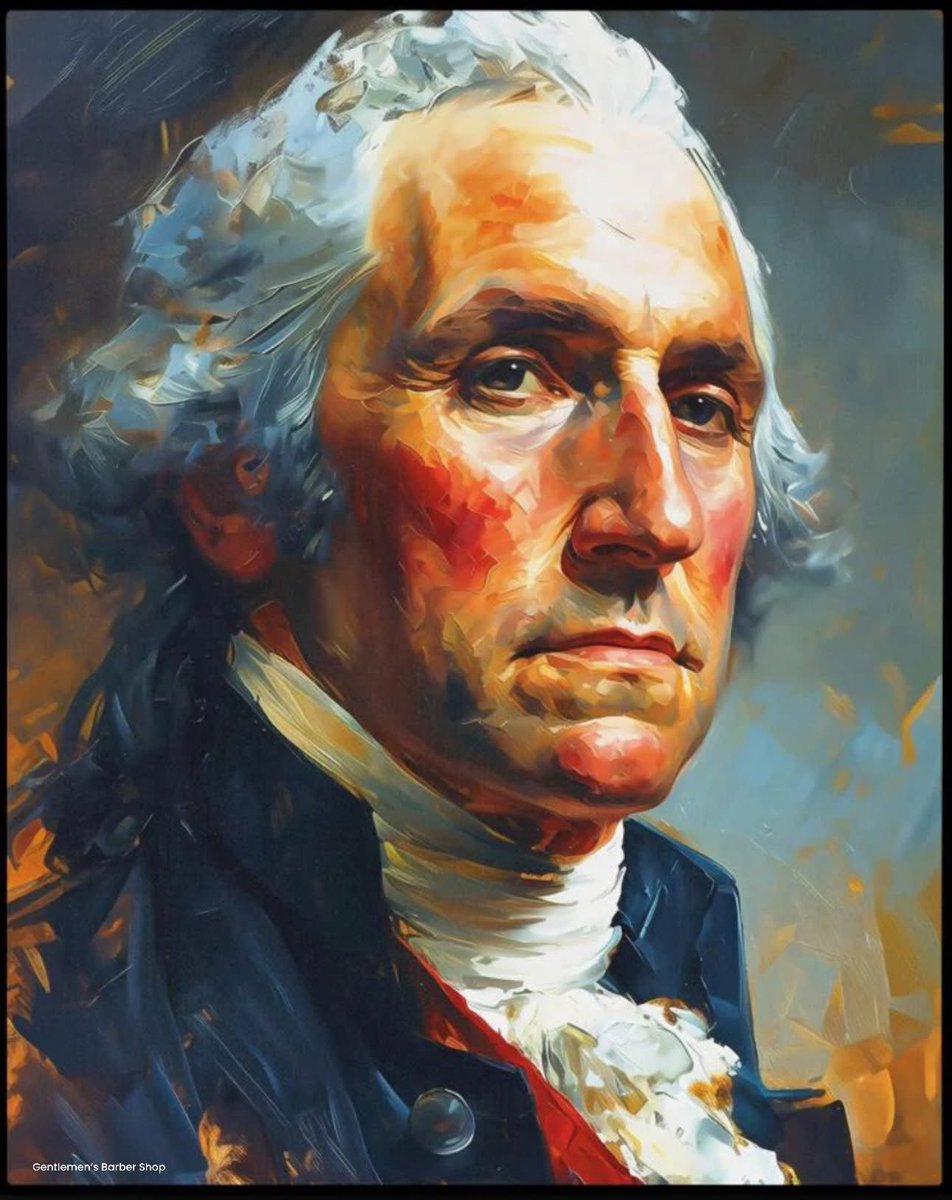
In 1783, King George III asked an American painter what George Washington would do now that he had virtually won the war. The painter replied that the General intended to return to his farm in Virginia. The King was stunned. He reportedly said, "If he does that, he will be the greatest man in the world."
Throughout history, victorious generals almost always seized the throne. From Caesar to Cromwell, military success usually meant political dictatorship. The concept of voluntarily walking away from absolute power was practically unheard of.
But George Washington wasn't like other men.
By December 4, 1783, the British surrender at Yorktown was past, and peace was finally assured. Washington commanded a powerful, seasoned army that adored him. Conversely, many of his officers were unpaid and angry at the inefficient Congress. They had the guns, the manpower, and the loyalty to install a new monarch.
He could have been King George I of America.
Instead, on this day in history, Washington walked into the Long Room at Fraunces Tavern in lower Manhattan. The room was filled with his most loyal officers—men like Henry Knox and Baron von Steuben—who had frozen with him at Valley Forge and bled with him for eight long years.
The atmosphere wasn't celebratory. It was heavy with inevitable separation. Washington, usually stoic and commercially reserved, poured a glass of wine and looked at his brothers-in-arms with visible emotion.
"With a heart full of love and gratitude, I now take leave of you," he said, his voice shaking. "I most devoutly wish that your latter days may be as prosperous and happy as your former ones have been glorious and honorable."
He didn't order them. He didn't demand their allegiance. He hugged them.
One by one, the hardened soldiers wept openly. Washington embraced each man in silence. There was no pomp, no ceremony, and no speeches about future conquests. It was just a quiet goodbye between warriors who had done the impossible.
Immediately after leaving the tavern, Washington didn't march on Congress to demand payment or power. He rode to Annapolis, Maryland, resigned his commission, and went home to Mount Vernon to plant crops.
He did the impossible.
He refused the crown.
He trusted the people.
By stepping down, he ensured that the United States would be a republic ruled by laws, not a kingdom ruled by force. He proved that the military serves the people, not the other way around. It was the final, and perhaps greatest, victory of the Revolution.
The world watched in awe as the American Cincinnatus returned his sword to its sheath, proving that character is the strongest constitution of all.
Sources: Mount Vernon Ladies' Association / Library of Congress
You sabotage yourself every day without knowing it, every time you repress your "negative" emotions.
Feeling your fear dissolves chronic anxiety
Feeling your sadness unlocks vitality
Feeling your anger transforms depression
What I teach my CEO clients:
1. Your mind doesn't understand your emotions.
It believes:
"Fear will make me incapable”
"Sadness will go on forever"
"Anger will make me hurt people"
⠀
None of these are true; we've all felt better after a good cry. But they FEEL true when you resist your emotions.
It’s not the emotion that hurts. It’s the resistance to it that hurts. And it's not just painful, it takes a HUGE amount of energy for your muscles to hold them in.
This is how it works for fear, sadness, and anger.
1. Fear
When you resist fear, it becomes chronic anxiety. That’s when you DO become incapable. You spin in worst-case scenarios. You freeze when it’s time to act. You overthink every move.
2. Sadness
When you resist sadness, it becomes angst and numbness. You get stuck, you stop trusting yourself, and you lose touch with what matters. And it does seem to never end.
3. Anger
Resisted anger looks like self-criticism, passive aggression, and ultimately depression. It's like putting a kink in a hose. It will build and build until it explodes, or leak out in different ways.
Your emotions themselves aren't a problem. But when you repress them, resist them, or try to control them, they begin to distort. They stop being guides and start becoming "burdens."
⠀
So what happens when you don't resist them?
1. Fear unresisted is beautiful.
It’s not the anxiety or panic we often associate it with. Unresisted, fear is excitement without the breath. It is an exuberance for life.
2. Sadness unresisted unlocks your vitality.
We've all cried and seen that at the end of a good cry, when we don't judge ourselves for how we cried or judged ourselves for feeling sad, we feel much better.
3. Anger unresisted = Clarity and determination
It’s not the chaotic, destructive force we often associate with anger. It points you to what you care about. Because you don't get angry about anything you don't care about.
The bottom line is this:
Your emotions are messengers.
And the moment you stop resisting them is the moment you rediscover your clarity, aliveness, and energy.
@OKHealthPlans@ok_hca It’s been a disaster for providers and the public they serve. Outcomes and access moving the wrong way since implementation. We need to do better for the people.