Girl dad, entrepreneur, generalist, startups, founded @qaoncloud & scaled it to 7 figures, now building the future with agentic AI. DM for collab. @oxfordalumni
Sometimes people ask me for career advice, and the only thing I can say that applies across basically every role is don’t work for an insecure manager.
Sridhar Vembu was a hero to an entire generation of Indian B2B startup founders including me.
Watching him dismiss students protesting exam fraud as a foreign plot to “destroy India” is painful and heartbreaking.
Our idols aging into this is a tragedy nobody warned us about.
Extremely excited to announce our first air-to-air kill of a flying moth by an autonomous micro-drone. This is a big step towards completely eradicating mosquitoes.
just want to remind you one more time that significantly lowering the cost of housing would solve, overnight, almost every single problem in the country
Just had a long chat with @OpenAI new live voice mode and it’s completely blown me away. And there’s also the complete chat history that hets transcribed and updated for future reference as well. This is what Siri should have been all along.
Women are born with every egg they’ll ever have. The count falls from about a million to roughly 25,000 by 37, and the eggs that remain keep aging. No one can make a new one. That’s the timer on fertility, and why IVF gets harder with age.
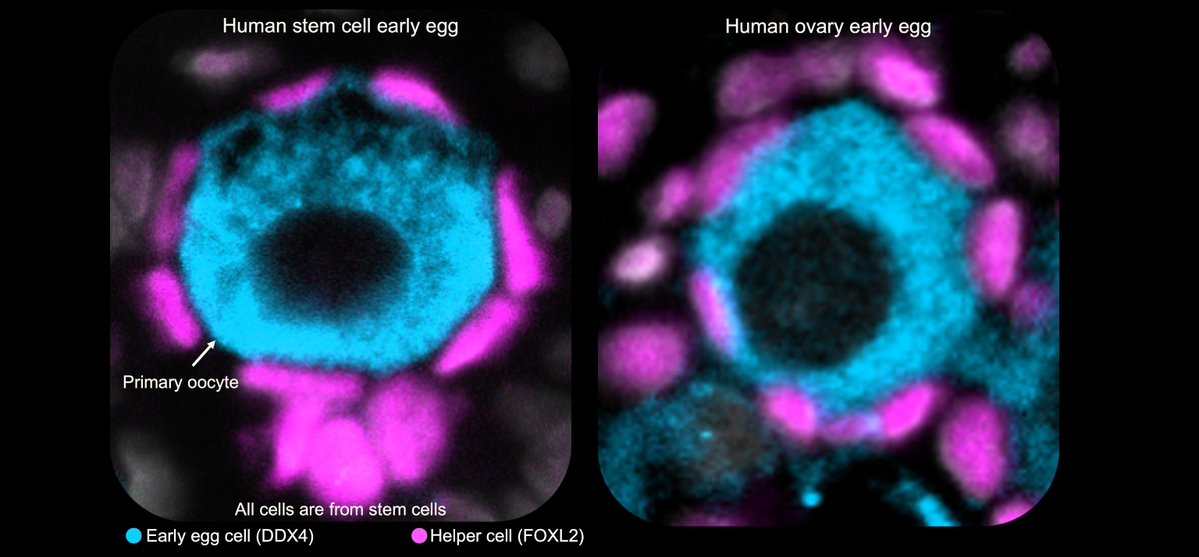
@Conception says it just built a way around it. From a blood draw, they grew human eggs inside a tiny ovary also made from stem cells. The eggs have begun meiosis, the special division that halves a cell's 46 chromosomes to 23. That halving is what makes an egg an egg. A world first, they say. It matters because the starting cell is skin or blood, so ovarian age stops setting the limit.
The road here ran through mice. In 2016 Katsuhiko Hayashi's lab turned a mouse skin cell into an egg, then live pups. Humans stalled for years. Mitinori Saitou's team reached the egg's ancestor, but no one could build the follicle an egg ripens in or start meiosis in a dish. Conception says it cleared both.
These eggs only began meiosis. They haven't completed it, nothing's been fertilized, nothing published, no safety data.
If it holds, it reaches cancer survivors, women in early menopause, women who started late, two-dad families. Half the world, at every age. This could be truly revolutionary.
I’m so excited to share this update on @Conception –
We’ve generated the first early human eggs derived from stem cells.
This is a big deal -- the potential to redefine fertility is real.
As engineering, product, design, DS, etc. melt into a new kind of role, I was reflecting on what roles might look like in the future. For example, when I look at the Claude Code team I see what I think is five archetypes:
1. Prototyper: comes up with brand new ideas; churns out many ideas, most of which don't ship
2. Builder: quickly turns a prototype/idea into production-grade product/infra
3. Sweeper: cleans up the UI, simplifies the code and system, unships, optimizes performance
4. Grower: takes a product that has been built and iterates on it to improve Product-Market Fit
5. Maintainer: owns a mature system to make it secure, reliable, fast, and efficient as it scales
Many people span across 2 roles, and sometimes 3 roles. I also notice that these roles are not really tied to job function -- eg. across Anthropic, some designers match category 1, some 2, some 3; same for engineers, PM, DS.
A healthy team needs a mix of these, depending on the product:
- A product that is new and pre-PMF needs people that are strong at 1+2+3
- A product that is growing and has found PMF needs 2+3+4 and some 5
- A product that has strong PMF needs 3+4+5 and some 2
Maybe product roles of the future will look more like this, and less like the domain-specific roles of today?
I have a little different incident to share.
During my stay in Birmingham, I often studied at a quiet café near the campus of the University of Wolverhampton. One evening, I noticed a young Indian student sitting alone, staring at his laptop with tears in his eyes. We struck up a conversation over tea, and he confessed that he was about to abandon his master’s degree because he couldn’t pay the final installment of his tuition after his father unexpectedly lost his job back home.
I quietly contacted the university and settled the outstanding balance without telling him beforehand. He insisted on repaying me, but I asked for only one promise, that one day, when he was able, he would help someone else in need.
A few months later, a message arrived “Today I graduated. You didn’t just save my education you restored my faith in humanity.”
Compassion has never cared about nationality. It simply sees a fellow human being.